Kidney, Ureter, and Bladder X-Ray: Complete Guide
Understanding KUB X-rays: Purpose, procedure, safety, and what results mean.
Kidney, Ureter, and Bladder X-Ray: What You Need to Know
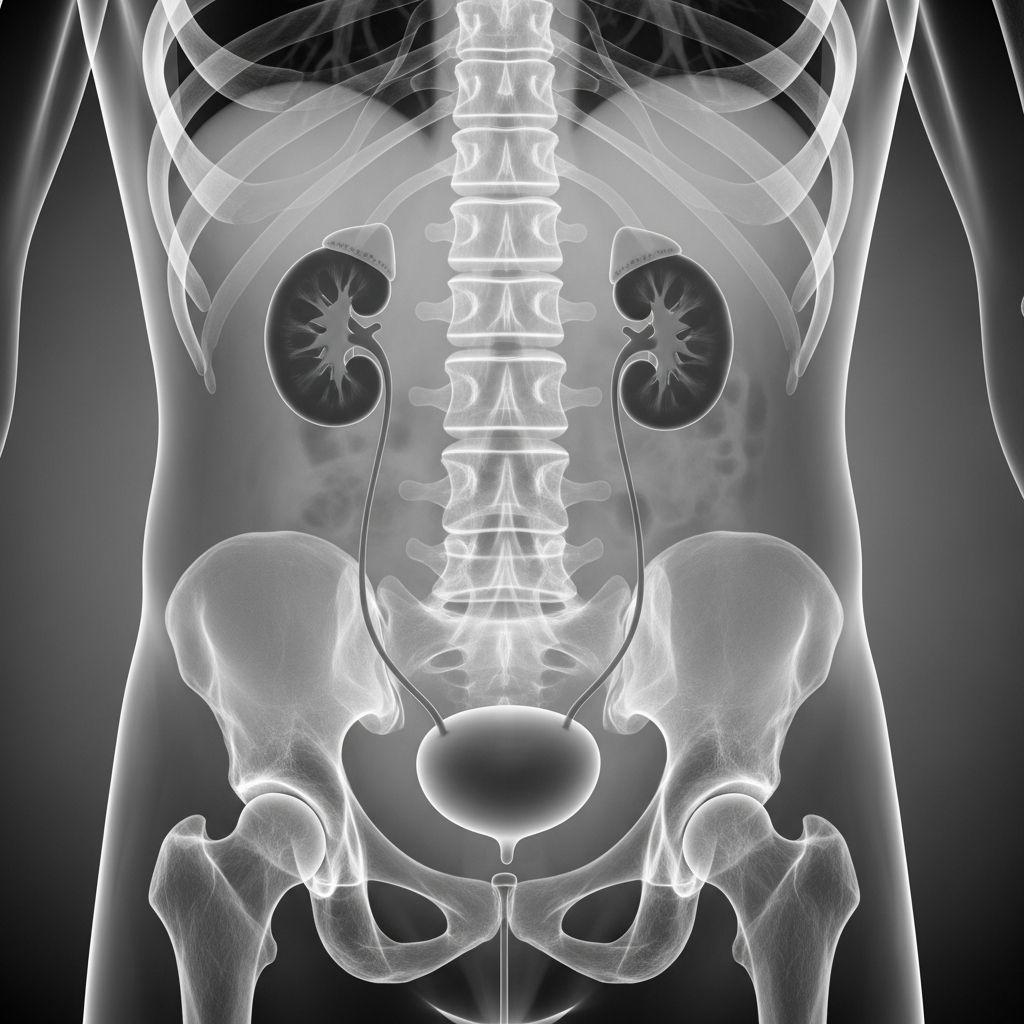
A kidney, ureter, and bladder (KUB) X-ray is a diagnostic imaging test that provides doctors with detailed images of the urinary system and portions of the gastrointestinal tract. This straightforward radiographic examination uses X-ray energy to visualize internal structures and help identify various medical conditions affecting the abdomen. The KUB X-ray remains one of the most commonly ordered imaging tests in clinical practice due to its accessibility, affordability, and effectiveness in evaluating acute abdominal conditions.
What is a KUB X-Ray?
A KUB X-ray is a type of abdominal radiograph specifically designed to visualize the kidneys, ureters, and bladder, along with other abdominal organs and structures. The test uses electromagnetic radiation to create detailed images of internal anatomy that are recorded on digital media or traditional film. Unlike more complex imaging modalities, a KUB X-ray captures a two-dimensional view of the abdomen and is often the first imaging test ordered when patients present with unexplained abdominal pain or suspected urinary tract abnormalities.
The KUB X-ray represents a standard radiological examination that can be performed in various settings, including hospital radiology departments, outpatient imaging centers, and emergency departments. The simplicity and speed of the procedure make it an ideal initial diagnostic tool for evaluating patients with acute symptoms.
Purpose and Indications for KUB X-Ray
Healthcare providers order KUB X-rays for numerous clinical reasons. The primary purpose is to diagnose the underlying cause of abdominal pain, which may stem from various etiologies including masses, obstructions, perforations, or inflammatory processes. The test is particularly valuable in identifying structural abnormalities and pathological conditions affecting the urinary and gastrointestinal systems.
Common Reasons for Ordering a KUB X-Ray
Physicians may recommend a KUB X-ray when patients present with specific symptoms or clinical concerns:
- Unexplained or acute abdominal pain of unknown origin
- Suspected kidney stones or urolithiasis
- Suspected gallstones or biliary colic
- Symptoms suggestive of intestinal obstruction or ileus
- Foreign body ingestion, particularly radiopaque objects
- Evaluation of gastrointestinal perforation
- Assessment of abdominal masses or tumors
- Verification of proper placement of medical devices such as feeding tubes or ureteral stents
- Investigation of urinary retention or voiding difficulties
- Evaluation of hematuria or blood in the urine
What Conditions Can a KUB X-Ray Detect?
The KUB X-ray can reveal numerous pathological conditions affecting the urinary and gastrointestinal systems. Understanding what the test can identify helps patients appreciate its diagnostic value and potential clinical importance.
Urinary System Findings
The KUB X-ray is particularly effective at detecting kidney stones and certain types of gallstones, especially those containing calcium deposits that make them radiopaque. The test can show the size, location, and number of stones present. Additionally, the examination can reveal abnormalities in kidney size and position, assessing whether the kidneys are appropriately located and normally configured. The test may also identify hydronephrosis (swelling of the kidney due to urine backup) and other obstructive uropathies.
Gastrointestinal Findings
Beyond urinary system evaluation, the KUB X-ray excels at detecting gastrointestinal pathology. Intestinal obstructions are readily apparent on KUB images, showing characteristic patterns of bowel gas distribution that indicate mechanical blockage. The test can identify foreign objects within the gastrointestinal tract, confirming their presence and general location. Certain abdominal tumors or masses may be visible, and the examination can reveal signs of gastrointestinal perforation, demonstrated by free air in the peritoneal cavity (pneumoperitoneum). Fluid collections within the abdominal cavity may also be identified on the radiograph.
Related Stories



Preparation for Your KUB X-Ray
One of the advantages of a KUB X-ray is the minimal preparation required. Unlike some imaging studies that necessitate fasting or bowel cleansing, the KUB X-ray typically requires no special dietary restrictions or advance preparation, making it ideal for emergency and acute care situations.
Pre-Procedure Instructions
- Wear comfortable, loose-fitting clothing that can be easily removed
- Inform the imaging facility of any potential pregnancy or recent pregnancy
- Remove all metallic objects, including jewelry, body piercings, and watches
- Inform the technologist of any recent abdominal surgery or procedures
- Notify staff of any known allergies to contrast media (if contrast-enhanced imaging is considered)
- Advise the facility of any mobility limitations or physical conditions affecting positioning
Upon arrival at the imaging facility, you will be asked to change into a hospital gown or robe to ensure clear visualization of the abdomen. The radiologic technologist will explain the procedure and answer any questions you may have about the examination process.
How the KUB X-Ray Procedure is Performed
The KUB X-ray procedure is straightforward and typically completed within 5-10 minutes. Understanding the step-by-step process can help reduce anxiety and ensure optimal cooperation during the examination.
Step-by-Step Procedure
Positioning: The radiologic technologist will position your body to optimally visualize the organs of interest. You may be asked to stand, lie flat on your back (supine), or lie on your side (lateral decubitus position). Your position depends on which anatomical views your physician requires. The abdominal area to be examined will be carefully aligned between the X-ray source and the imaging plate containing the film or digital detector.
Radiation Protection: A lead apron may be placed over parts of your body that are not being imaged. This protective device significantly reduces radiation exposure to sensitive organs and tissues not involved in the examination. If you are a woman of childbearing age, special precautions will be taken to minimize fetal radiation exposure if pregnancy is possible.
Image Acquisition: Once you are positioned correctly, the technologist will ask you to remain completely still while the X-ray images are captured. Remaining motionless is critical to prevent image blur and distortion. The technologist will step behind a protective barrier while the X-ray machine directs its beam through your abdomen onto the imaging plate. You will hear a brief beeping sound as the image is acquired, but you will feel no pain or discomfort from the radiation itself.
Multiple Views: Your physician may require imaging from multiple angles to fully evaluate the anatomy. In such cases, you may need to change positions, and the technologist will explain any position changes needed. Additional images are obtained following the same positioning and protection procedures.
Patient Comfort: If you experience discomfort during positioning or have difficulty maintaining a required position due to pain or mobility limitations, inform the technologist immediately. They can often modify positioning to maximize comfort while maintaining diagnostic quality.
Understanding Your KUB X-Ray Results
After your X-ray images are acquired, a radiologist—a physician with specialized training in medical imaging—reviews and interprets the images. This process typically takes a few hours to a day, depending on the clinical urgency and the facility’s workload. Your referring physician will discuss the results with you and explain any findings relevant to your clinical condition.
What Results May Show
Normal KUB X-ray results indicate appropriately sized and positioned kidneys, ureters, and bladder with no evidence of obstruction, masses, or structural abnormality. The bowel loops should demonstrate normal gas patterns without evidence of obstruction or perforation.
Abnormal findings may include:
- Radiopaque stones: Calcium-containing kidney or gallstones visible as discrete dense objects
- Bowel obstruction: Characteristic patterns of gas distribution indicating mechanical blockage
- Perforation: Free air within the peritoneal cavity (pneumoperitoneum) appearing as a dark stripe along the abdominal wall
- Foreign objects: Radiopaque ingested items visible within the gastrointestinal tract
- Masses or tumors: Abnormal soft tissue densities or distortion of normal anatomical contours
- Fluid collections: Areas of fluid accumulation within the abdominal cavity
- Device placement: Confirmation or malposition of feeding tubes, stents, or catheters
Radiation Safety and Risks
The KUB X-ray uses ionizing radiation, which carries a small risk of cellular damage. However, the radiation dose from a single KUB examination is minimal and comparable to natural background radiation exposure over several days or weeks. For most patients, the diagnostic benefit significantly outweighs the minimal radiation risk.
Certain populations require special consideration regarding radiation exposure. Pregnant women should inform their healthcare provider, as X-rays can be performed during pregnancy if medically necessary, with appropriate protective measures. Young children should receive X-rays only when clinically indicated, as they are more sensitive to radiation effects. Patients who have received multiple recent X-rays or other radiation procedures should notify their imaging facility to ensure cumulative radiation doses remain within safe limits.
Limitations of KUB X-Ray
While the KUB X-ray is valuable for initial evaluation, it has certain limitations. Radiolucent (non-calcium-containing) kidney stones are not visible on standard X-rays and may require ultrasound or CT imaging for detection. Soft tissue structures like the kidneys may not show fine anatomical detail, and subtle abnormalities might be missed. Very small foreign objects may not be visualized, and the two-dimensional nature of X-rays may create overlapping structures that obscure pathology.
When more detailed imaging is required, your physician may recommend additional studies such as ultrasound, CT urography, or magnetic resonance imaging (MRI) for comprehensive evaluation.
When Additional Imaging May Be Needed
The KUB X-ray often serves as a preliminary diagnostic test, with more advanced imaging ordered based on initial findings or clinical suspicion. If the KUB X-ray is normal but clinical symptoms persist, or if findings require clarification, your physician may recommend:
- Ultrasound: Useful for detecting radiolucent stones and evaluating soft tissue structures
- CT urography: Provides detailed three-dimensional imaging of the urinary tract with high sensitivity for stone detection
- MRI: Helpful for evaluating soft tissue abnormalities without radiation exposure
- Intravenous pyelogram (IVP): Contrast-enhanced imaging that shows urinary tract function and anatomy
Frequently Asked Questions About KUB X-Ray
Is a KUB X-ray painful?
The X-ray procedure itself is painless. However, positioning your body for the examination may cause discomfort if you have recent injuries, surgery, or conditions causing abdominal pain. Inform the technologist of any pain or mobility limitations so they can provide assistance and modify positioning when possible.
How long does a KUB X-ray take?
The actual imaging portion typically takes 5-10 minutes. Including preparation and positioning, the entire visit usually lasts 15-30 minutes.
Can I eat or drink before my KUB X-ray?
Yes, there are no dietary restrictions for a standard KUB X-ray. You may eat and drink normally before the procedure.
When will I receive my results?
Results are typically available within a few hours to one business day. Your referring physician will contact you with the results and discuss any findings and next steps in your care.
Is KUB X-ray safe during pregnancy?
The radiation dose from a KUB X-ray is very low. If you are pregnant or suspect pregnancy, inform your healthcare provider immediately. Your physician will determine whether the imaging is necessary and will take appropriate protective measures if the examination proceeds.
What should I wear to my KUB X-ray appointment?
Wear comfortable, loose-fitting clothing without metal fasteners (zippers and buttons are acceptable). You will change into a gown for the procedure, so choose clothing that is easy to remove and put back on.
Conclusion
The kidney, ureter, and bladder X-ray is a safe, efficient, and cost-effective diagnostic tool that provides valuable information about abdominal pathology. Whether evaluating unexplained abdominal pain, suspected kidney stones, or assessing device placement, the KUB X-ray offers immediate diagnostic capability with minimal preparation and risk. Understanding the purpose, procedure, and interpretation of this common imaging test empowers patients to participate actively in their healthcare and make informed decisions about their diagnostic and treatment plans. Always discuss any questions or concerns about the KUB X-ray with your healthcare provider or the radiologic technologist performing the procedure.
References
- Kidney, Ureter, and Bladder (KUB) X-Ray Study — Healthline. 2024. https://www.healthline.com/health/kidney-ureter-and-bladder-x-ray-study
- Urinary Tract Imaging — National Institute of Diabetes and Digestive and Kidney Diseases (NIDDK), U.S. Department of Health and Human Services. 2024. https://www.niddk.nih.gov/health-information/diagnostic-tests/urinary-tract-imaging
- Kidney, Ureter, and Bladder X-ray — University of Rochester Medical Center. 2024. https://www.urmc.rochester.edu/encyclopedia/content?contenttypeid=92&contentid=P07719
- Abdominal X-Ray — UF Health, University of Florida. 2024. https://ufhealth.org/conditions-and-treatments/abdominal-x-ray
- Intravenous Pyelogram (IVP) — Radiology Info, Radiological Society of North America. 2024. https://www.radiologyinfo.org/en/info/ivp
- Computerized Tomography (CT) Urogram — Mayo Clinic. 2024. https://www.mayoclinic.org/tests-procedures/ct-urogram/about/pac-20393602
Similar Articles








Read full bio of medha deb