Klippel-Trenaunay Syndrome: What It Is, Symptoms, and Treatment
Comprehensive guide to Klippel-Trenaunay syndrome: symptoms, diagnosis, management, and living with this rare vascular disorder.
What is Klippel-Trenaunay syndrome?
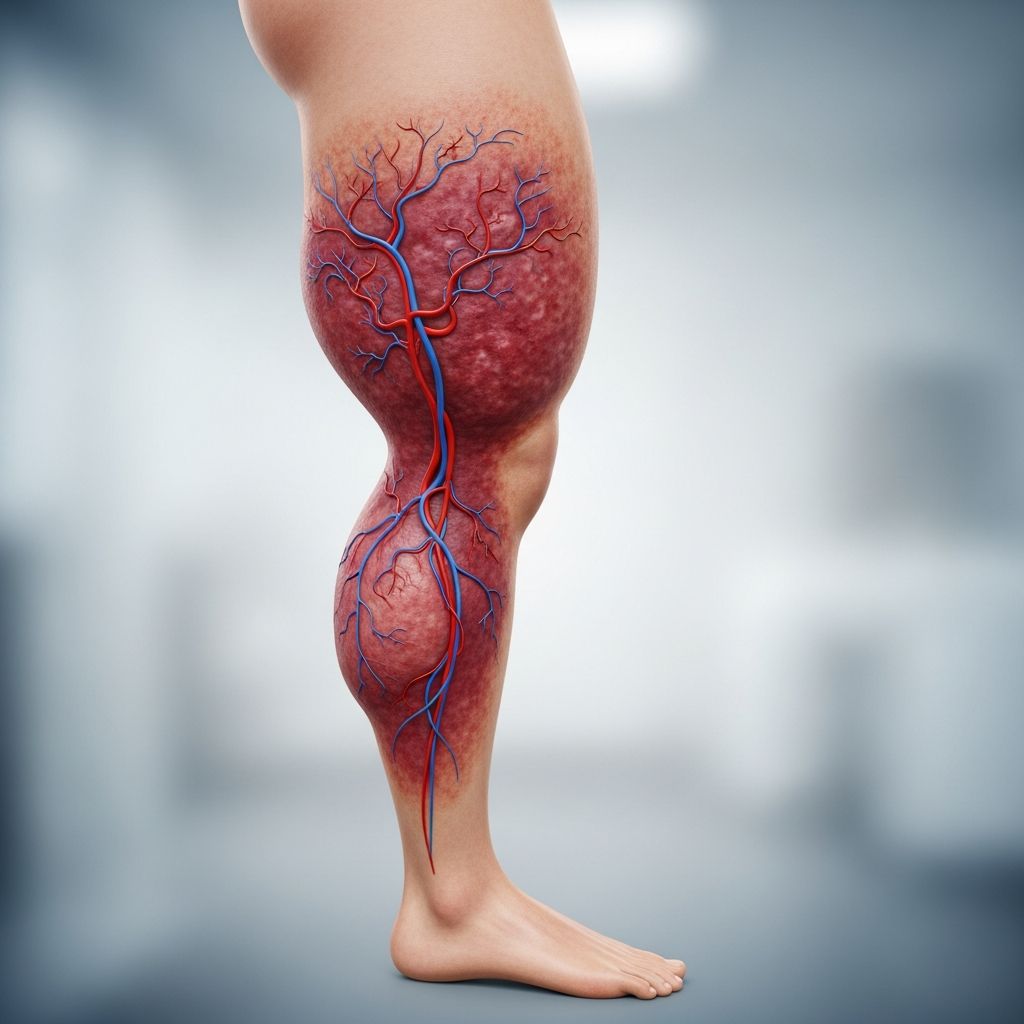
Klippel-Trenaunay syndrome (KTS) is a rare congenital vascular disorder characterized by a triad of clinical features: capillary malformation (port-wine stain), venous and lymphatic malformations, and soft tissue or bone overgrowth, most commonly affecting one lower limb.
This condition arises from errors in vascular development during embryonic stages, leading to abnormal blood and lymphatic vessels alongside hypertrophic changes in affected tissues. KTS typically manifests at birth and can involve the lower extremity unilaterally, though upper limbs, trunk, or both legs may be affected in rarer cases.
Unlike related syndromes such as Parkes Weber (which includes arteriovenous fistulas), KTS primarily involves slow-flow vascular malformations without significant arterial involvement.
Who gets Klippel-Trenaunay syndrome (Epidemiology)?
KTS is a rare disorder with an estimated incidence of approximately 1 in 100,000 live births, though exact prevalence is uncertain due to underdiagnosis and variable presentations.
It affects males and females equally and occurs sporadically without strong familial patterns, though somatic mutations in genes like PIK3CA have been implicated in overgrowth components. The lower limb is involved in over 90% of cases, often unilaterally, with upper extremity involvement less common and sometimes reclassified as CLOVES syndrome.
What causes Klippel-Trenaunay syndrome?
The precise etiology remains unclear, but KTS results from somatic mosaicism—post-zygotic mutations affecting vascular endothelial cell development.
Key genetic associations include activating mutations in the PIK3CA gene (part of the PI3K/AKT/mTOR pathway), driving abnormal cell proliferation and vessel malformation. Environmental factors are not established, and inheritance is non-Mendelian, occurring sporadically.
What are the clinical features of Klippel-Trenaunay syndrome?
Capillary malformation
The hallmark is a port-wine stain—a flat, pink-to-purple vascular birthmark, often geographic in distribution, covering part or all of the affected limb.
These stains typically follow dermatomes and may darken or hypertrophy with age, developing nodules, vesicles, or hyperkeratosis. Vesicles can leak serous fluid or bleed, increasing infection risk.
Venous malformation
Abnormal superficial and deep veins are ubiquitous, including persistent embryonic marginal veins along the limb’s length.
Varicosities may not be evident at birth but progress, causing pain, thrombosis, or bleeding. Pelvic or visceral involvement can lead to hematuria, rectal bleeding, or vaginal hemorrhage.
Lymphatic malformation
Lymphatic anomalies range from hypoplasia (causing lymphedema) to hyperplasia with vesicles that ooze lymph or blood.
These contribute to chronic swelling, recurrent cellulitis, and tissue fibrosis. Internal lymphatic malformations may affect genitals or viscera.
Overgrowth (Hypertrophy)
Asymmetric limb enlargement involves bone lengthening, soft tissue hypertrophy (especially fat and muscle), and sometimes macrodactyly.
Overgrowth progresses during childhood, leading to leg length discrepancy (LLD), gait issues, scoliosis, and joint contractures. Foot involvement includes toe enlargement and deformities.
Other features
- Hyperpigmentation or purpura on dependency.
- Glaucoma or cataracts if facial involvement.
- Coagulopathy (localized consumptive or low fibrinogen).
- Chronic pain from nerve compression or thrombosis.
- Gastrointestinal/genitourinary bleeding from visceral lesions.
Related Stories



Diagnosis
Diagnosis is clinical, based on the triad, confirmed by imaging.
Clinical evaluation
History and exam focus on stain distribution, vein anomalies, limb girth/length asymmetry, and complications like pain or infection.
Investigations
- Duplex ultrasound: Assesses venous flow, reflux, and malformations.
- MRI/MR angiography: Maps vascular/lymphatic extent, tissue overgrowth, and visceral involvement.
- Scanogram: Measures leg length discrepancy.
- CT venography: Detects deep vein thrombosis.
- Labs: Coagulation profile (D-dimer, fibrinogen), genetic testing for PIK3CA.
Prenatal ultrasound rarely detects it.
Differential diagnoses
| Differential | Key Distinguishing Features |
|---|---|
| Parkes Weber syndrome | Arteriovenous fistulas, fast-flow, limb warmth/hyperemia. |
| CLOVES syndrome | Bilateral, truncal fat overgrowth, scoliosis, spinal anomalies. |
| Proteus syndrome | Progressive, asymmetric overgrowth, epidermal nevi. |
| Diffuse capillary malformation with overgrowth (DCMO) | No venous/lymphatic anomalies. |
| Isolated port-wine stain | No hypertrophy or malformations. |
Complications
- Pain: Neuropathic from overgrowth, vascular from thrombosis.
- Infections: Cellulitis from lymphatic stasis.
- Thrombosis/embolism: Superficial/deep vein issues.
- Bleeding: Visceral or cutaneous.
- Musculoskeletal: LLD, arthritis, contractures.
- Psychosocial: Body image distress.
Management
Multidisciplinary, symptomatic, at specialized centers.
Conservative
- Compression garments for edema/varicosities.
- Pain management (NSAIDs, gabapentin).
- Physiotherapy for mobility.
- Orthotics/shoe lifts for LLD.
Interventional
- Laser (pulsed dye): Fades port-wine stains.
- Sclerotherapy/embolization: Venous malformations.
- Sirolimus/mTOR inhibitors: For lymphatic overgrowth (off-label).
- Surgery: Debulking, epiphysiodesis, vein ligation.
Monitoring
Regular orthopedic, vascular, coagulation assessments; early intervention prevents morbidity.
Prevention
No known prevention, as it’s congenital/sporadic. Genetic counseling for families.
Prognosis
Variable; most lead active lives with management. Complications like chronic pain/LLD impact quality of life, but early care improves outcomes.
Guidelines
Refer to vascular anomaly centers. Boston Children’s guidelines emphasize early imaging/treatment.
Patient support groups
Klippel-Trenaunay (K-T) Support Group (k-t.org) provides resources.
Frequently Asked Questions (FAQs)
Q: Is KTS hereditary?
A: No, it is sporadic due to somatic mutations, not inherited.
Q: Can KTS be cured?
A: No cure exists; management focuses on symptoms and complications.
Q: Does the port-wine stain fade?
A: Laser therapy can lighten it, but complete fading is rare.
Q: What is the main treatment for leg length difference?
A: Orthopedic interventions like epiphysiodesis or lifts.
Q: Are there new treatments?
A: mTOR inhibitors like sirolimus show promise for overgrowth.
References
- Klippel-Trenaunay syndrome — Beacon Health System. 2023. https://www.beaconhealthsystem.org/library/diseases-and-conditions/klippel-trenaunay-syndrome?content_id=CON-20374143
- Klippel-Trenaunay Syndrome — NORD (National Organization for Rare Disorders). 2024. https://rarediseases.org/rare-diseases/klippel-trenaunay-syndrome/
- Clinical Practice Guidelines for Klippel-Trenaunay Syndrome (KTS) — Boston Children’s Hospital / K-T.org. 2016-01-06. https://k-t.org/assets/images/content/BCH-Klippel-Trenaunay-Syndrome-Management-Guidelines-1-6-2016.pdf
- Klippel-Trénaunay Syndrome — Seattle Children’s Hospital. 2024. https://www.seattlechildrens.org/conditions/klippel-trenaunay-syndrome-kts/
- Klippel-Trenaunay syndrome — HealthFinder (Florida Dept. of Health). 2023. https://quality.healthfinder.fl.gov/health-encyclopedia/HIE/1/000150
- Klippel-Trenaunay syndrome – Diagnosis and treatment — Mayo Clinic. 2024. https://www.mayoclinic.org/diseases-conditions/klippel-trenaunay/diagnosis-treatment/drc-20374155
- Klippel-Trenaunay-Weber Syndrome — NCBI StatPearls (NIH). 2023-10-01. https://www.ncbi.nlm.nih.gov/books/NBK558989/
Similar Articles








Read full bio of medha deb