Knee Joint: Anatomy, Function & Structure
Comprehensive guide to knee joint anatomy, function, and structure for optimal joint health.
Understanding the Knee Joint: Complete Anatomy and Function Guide
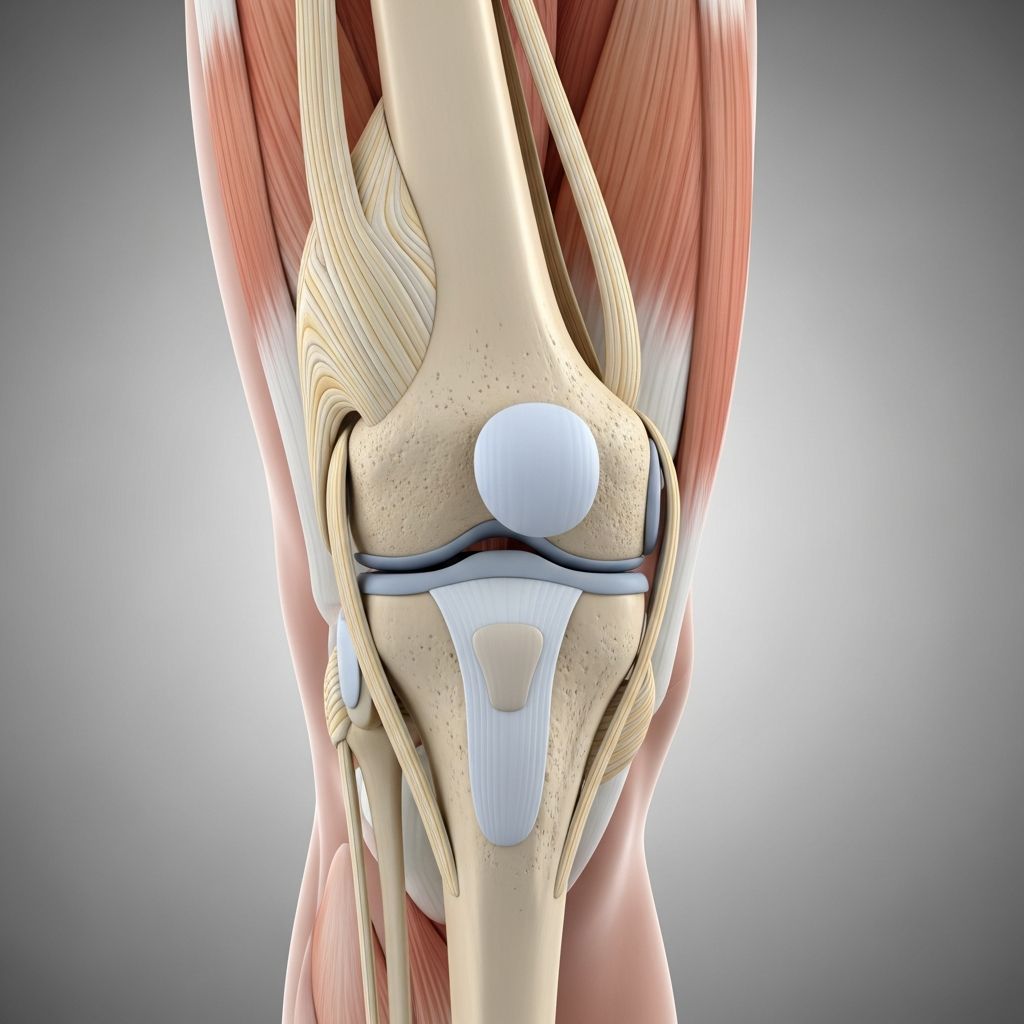
The knee is the largest joint in the human body and bears the weight of your entire upper body during movement and standing. This complex structure represents a remarkable feat of biological engineering, comprising multiple bone structures, cartilage, ligaments, muscles, and connective tissues that work together to provide stability, mobility, and support. Understanding how your knee joint is constructed and functions is essential for maintaining joint health and recognizing when something might be wrong.
The knee joint is classified as a hinge joint, similar to a door’s hinges, allowing movement primarily in one plane. However, unlike a simple hinge, the knee is far more sophisticated, containing a synovial joint system with a fluid-filled sac that acts as a protective cushion, ensuring smooth movement with minimal friction. This remarkable design enables us to perform everyday activities like walking, running, climbing stairs, and sitting with ease.
The Bones of the Knee Joint
Three main bones form the foundation of the knee joint structure: the femur (thighbone), the tibia (shinbone), and the patella (kneecap). These bones meet at specific points called articulations or articulating surfaces, creating the functional components that allow your leg to bend and straighten.
The Femur (Thighbone)
The femur is the longest and strongest bone in your body, extending from your hip to your knee. At its lower end, the femur has two rounded knobs called condyles. These femoral condyles are massive structures designed to sustain great stresses since they support your body’s weight. The rounded ends of the femur’s condyles are incredibly smooth, allowing for fluid movement across the tibia.
The Tibia (Shinbone)
The tibia is your shinbone, the larger bone in your lower leg. The upper surface of the tibia features two rounded areas that correspond to the femur’s condyles. These articulating surfaces are separated by a slight gap and are covered with smooth cartilage to facilitate movement. The tibia is the primary weight-bearing bone of your lower leg, transferring forces from your knee down through your ankle to the ground.
The Patella (Kneecap)
The patella is a unique sesamoid bone, meaning it’s the largest bone in your body that’s embedded within a tendon. Located at the front of your knee, the kneecap rests upon the ends of the femur and serves to prevent the tibia from moving too far forward when the leg is bent. This specialized structure has two main jobs: protecting the knee joint itself and helping your quadriceps muscle move your leg effectively.
The patella is shaped like an oval with a slight point at the bottom (apex). The top portion (base) connects to your quadriceps muscle via the quadriceps tendon, while the patellar ligament connects the bottom of the patella to the tibia.
Articulations: Where Bones Meet
The knee joint features two main articulations where bones connect:
Tibiofemoral Articulation
This is the site where the lateral and medial surfaces of the femur connect to the tibia. This articulation is responsible for the primary movement of your knee joint, allowing flexion (bending) and extension (straightening) of the leg.
Patellofemoral Articulation
This articulation is where the patella attaches to the femur. This connection allows the kneecap to move smoothly along the femoral grooves as you bend and straighten your leg, ensuring proper tracking and force distribution.
Related Stories



Cartilage: The Knee’s Protective Cushioning
Cartilage is a crucial component of knee joint health, serving as a protective and lubricating layer throughout the joint. The articulating surfaces of the femur and tibia condyles are covered with layers of cartilage that keep movements smooth and comfortable. This slippery coating reduces friction and allows bones to glide seamlessly across each other.
Menisci: The Knee’s Shock Absorbers
The knee contains two types of menisci that act as shock absorbers and provide additional stability:
Medial Meniscus
The medial meniscus has a C-shape and hooks onto the front and back areas of the tibia. It is located on the inner side of the knee and helps distribute weight evenly across the joint.
Lateral Meniscus
The lateral meniscus is circular and serves as a safeguard of the lateral tibial plateau on the outer side of the knee. Its rounded shape provides protection and stability to the outer compartment of the knee joint.
Together, these menisci protect your joints and ensure your movements stay smooth, keeping you comfortable and supported throughout daily activities.
The Joint Capsule and Synovial System
The knee joint capsule is a robust sheath made up of muscle tendons and their extensions, wrapping around the entire joint. This capsule has two distinct layers: an outer tough layer that connects with nearby tendons and an inner synovial membrane that acts as a lubricator, relieving friction and nourishing the cartilage.
Synovial Fluid and Bursae
The synovial membrane creates a fluid-filled sac containing synovial fluid that acts as a protective cushion and lubricant for the joint. Additionally, the joint capsule creates fluid-filled pouches called bursae—these are specialized lubricators that minimize friction and allow smooth movement.
Several important bursae support knee function:
The Suprapatellar Bursa
Located above the patella, this bursa acts as a cushion between the femur and the tendon of the quadriceps muscle, protecting the joint from compression forces.
The Prepatellar Bursa
Found in front of the patella, this bursa serves as a buffer between the skin and the kneecap, protecting the area from external pressure and friction.
The Infrapatellar Bursa
Located under the patella, particularly between the patellar ligament and the tibia, this bursa acts as a protective pocket, keeping things moving smoothly in the knee joint.
Ligaments: The Knee’s Stabilizing Bands
Knee ligaments are rigid, supportive bands of soft tissue that connect your thigh bone to your lower leg bones (tibia and fibula). These ligaments hold your bones together and help stabilize your knee joint, preventing unwanted movement and providing crucial support during physical activity. Ligaments are made of strong connective tissue containing collagen—a protein that binds tissue in animals—and elastic fibers that provide slight stretchiness.
Extracapsular Ligaments
These ligaments lie outside the joint capsule and serve as a support system for the knee. Extracapsular ligaments stabilize the patella and prevent it from displacement. They also play an important role in securing the knee joint, preventing it from swaying too much sideways, controlling the knee’s rotation, strengthening the posterior part of the joint capsule, and preventing overextension of the knee joint.
Intracapsular Ligaments
Inside the knee joint capsule, you’ll find the intracapsular ligaments, which include the cruciate ligaments. These are the most well-known intracapsular ligaments, preventing the femoral condyle from rolling backward and displacing during knee flexion or acting as a shield against the femoral condyle rolling forward and displacing during knee extension.
The Four Main Knee Ligaments
Your knee contains four primary ligaments:
Medial Collateral Ligament (MCL)
Located on the inner side of your knee, the MCL is one of the collateral ligaments that prevents your knee from moving side to side too much.
Lateral Collateral Ligament (LCL)
Positioned on the outer side of your knee, the LCL works with the MCL to prevent excessive lateral movement of the knee joint.
Anterior Cruciate Ligament (ACL)
Located inside your knee joint toward the front, the ACL keeps your knee from shifting too far forward and prevents excessive forward motion of the tibia relative to the femur.
Posterior Cruciate Ligament (PCL)
The PCL crosses behind the ACL, forming an “X” pattern in the center of your knee. It prevents the knee from shifting too far backward and provides posterior stability to the joint.
Muscles: Creating Movement and Stability
Muscles, made of flexible fibers, are like elastic bands of the body. They contract to pull and move different parts of your body, and various muscles are responsible for controlling your knee movements. The primary movers of the knee include:
Flexor Muscles
Flexor muscles pull your knee inward, allowing you to bend your leg. These muscles work during activities like climbing stairs, sitting down, or kicking a ball.
Extensor Muscles
Extensor muscles work in opposition to flexors, enabling you to extend your knee outward and straighten your leg. The quadriceps muscle of the thigh causes knee extension, which is essential for standing, walking, and running.
The complementary motion to extension is flexion, or bending of the leg, which is controlled by a number of other upper leg muscles. Some rotation of the lower leg is also possible when the knee is bent, though strong lateral ligaments at the joint prevent rotation when the leg is straight.
How Your Knee Joint Functions
The knee joint works as a sophisticated hinge system, allowing your leg to bend and straighten while supporting your body weight. Unlike a simple door hinge, the knee’s design is far more complex. The knee joint must simultaneously provide stability and mobility, distribute body weight evenly across the joint surfaces, and accommodate rotational movements when the leg is bent.
The stability of the knee depends significantly on the strength of the surrounding ligaments and muscles. Although well-adapted for the downward transmission of your body’s weight, the structure of the knee itself offers little resistance to the lateral displacement of the femur and tibia condyles during motion. This makes the protective role of ligaments and muscles absolutely critical.
The Complexity of Knee Support
The knee is designed to handle substantial stress, supporting your entire body weight during standing and movement. The rounded ends (condyles) of the femur and tibia that meet at the knee are massive, reflecting the significant forces they must withstand. The two bones are held together at the joint by a complex system of ligaments that run from the condyles of one bone to the condyles of the other.
The entire knee joint, including the kneecap, is enveloped in a capsular apparatus that is large enough to allow for the movement of the tibia and also allows the kneecap to swing up and down freely on the front surface of the femur. This sophisticated design allows for the wide range of movements your knee performs daily.
Frequently Asked Questions About Knee Joint Anatomy
Q: Why is the knee joint so susceptible to injury?
A: Although well-adapted for downward transmission of body weight, the knee’s structure offers little resistance to lateral displacement of the femur and tibia condyles during motion. Most common knee injuries, including bone dislocations and torn cartilage, reflect this susceptibility. The knee’s stability depends heavily on the strength of surrounding ligaments and muscles rather than bone structure alone.
Q: What makes the patella unique compared to other bones?
A: The patella is a sesamoid bone, making it the largest bone in your body embedded within a tendon. This unique structure allows it to serve dual purposes: protecting the knee joint and helping the quadriceps muscle move your leg efficiently through improved mechanical advantage.
Q: How do bursae help the knee joint?
A: Bursae are fluid-filled pouches that act as lubricators, minimizing friction between different structures in the knee. They provide cushioning between bones, tendons, and skin, allowing smooth movement and reducing wear on joint structures.
Q: What is synovial fluid and why is it important?
A: Synovial fluid is a lubricating fluid produced by the synovial membrane that fills the joint capsule. It reduces friction between articular surfaces, nourishes the cartilage, and acts as a protective cushion, ensuring smooth movement with minimal wear on joint structures.
Q: Can ligaments heal if they’re damaged?
A: Ligaments are made of strong connective tissue containing collagen and elastic fibers. While they can heal, ligament injuries often require professional medical attention, as improper healing can lead to chronic instability. The healing process depends on the severity of the injury and the quality of rehabilitation.
Maintaining Knee Joint Health
Understanding your knee joint anatomy helps emphasize the importance of proper care and injury prevention. Your knees support your entire body weight and enable countless movements throughout the day. Maintaining strong muscles through regular exercise, avoiding excessive stress on your joints, maintaining a healthy weight, and protecting your knees from injury are all essential for long-term joint health. If you experience persistent knee pain or instability, consulting with a healthcare provider can help identify potential issues before they become serious problems.
References
- Knee Joint Anatomy – Patient Education Portal — Sparta Biomedical. Accessed December 2025. https://www.spartabiomedical.com/patient-portal/knee-joint-anatomy
- Knee: Anatomy, Function, & Facts — Britannica. Last revised 2024. https://www.britannica.com/science/knee
- Patella (Kneecap): Anatomy and Function — Cleveland Clinic. Accessed December 2025. https://my.clevelandclinic.org/health/body/25038-patella
- Knee Ligaments: What They Are, Anatomy & Function — Cleveland Clinic. Accessed December 2025. https://my.clevelandclinic.org/health/body/21596-knee-ligaments
- Joints in the Human Body: Anatomy, Types & Function — Cleveland Clinic. Accessed December 2025. https://my.clevelandclinic.org/health/body/25137-joints
Similar Articles








Read full bio of Sneha Tete