Knee Ligament Repair: Treatment Options and Recovery
Comprehensive guide to knee ligament repair procedures, recovery, and rehabilitation strategies.
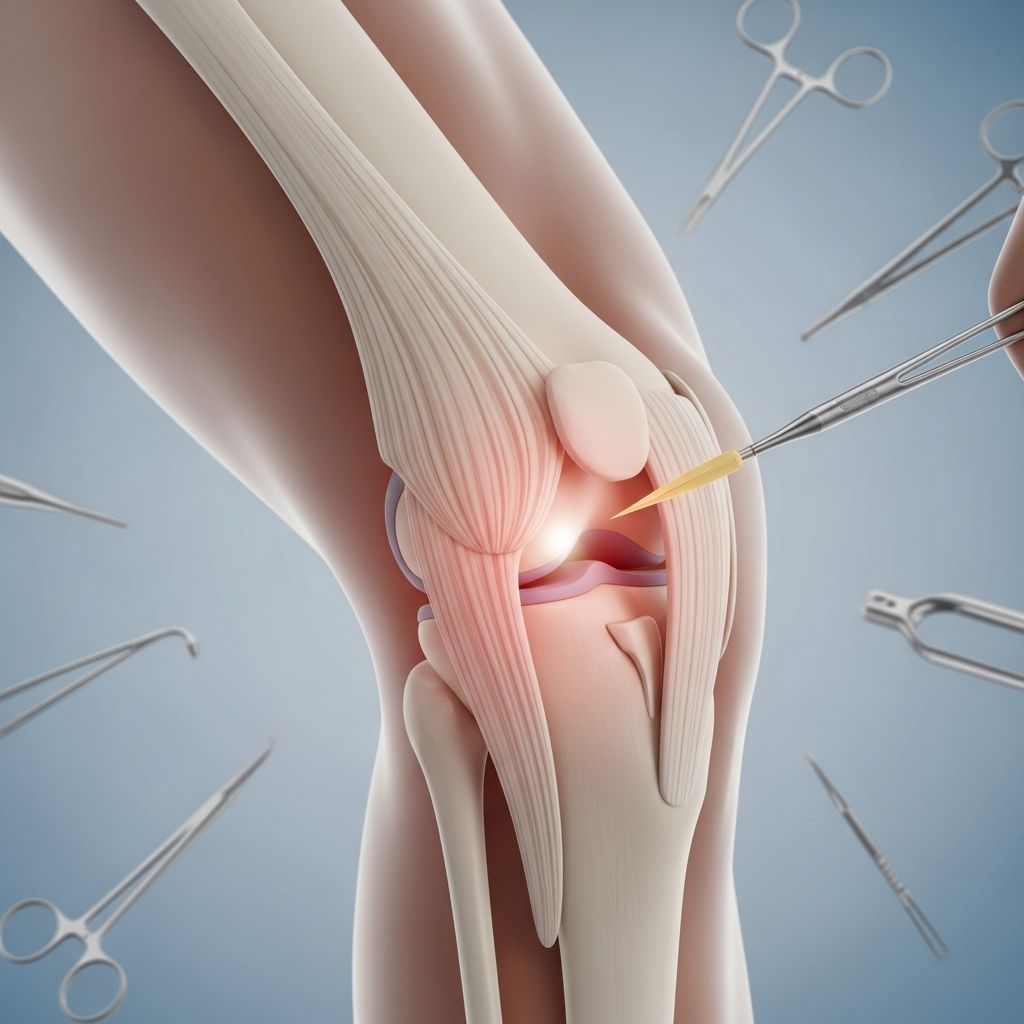
Understanding Knee Ligament Injuries
Knee ligaments are crucial structures that provide stability and support to the knee joint, allowing for proper movement and weight-bearing activities. The knee contains four primary ligaments: the anterior cruciate ligament (ACL), posterior cruciate ligament (PCL), medial collateral ligament (MCL), and lateral collateral ligament (LCL). These ligaments work together to prevent excessive motion and maintain joint alignment during daily activities and athletic pursuits.
Knee ligament injuries are common among athletes and active individuals, often resulting from sudden directional changes, pivoting movements, or direct trauma to the knee. When ligaments are partially or completely torn, they lose their ability to stabilize the joint, leading to pain, swelling, instability, and functional limitations. Understanding the nature of knee ligament injuries and available treatment options is essential for making informed decisions about care and recovery.
Types of Knee Ligament Injuries
Knee ligament injuries vary in severity and location, requiring different treatment approaches. The most commonly injured ligament is the ACL, which is particularly vulnerable during activities involving cutting, pivoting, and landing from jumps. MCL injuries typically occur from direct blows to the outside of the knee, while PCL injuries are less common and usually result from dashboard-type trauma or severe falls.
Ligament injuries are classified by severity:
- Grade I Sprains: Mild injuries with minor ligament fiber damage and minimal loss of function
- Grade II Sprains: Moderate injuries involving partial ligament tearing with noticeable instability
- Grade III Sprains: Severe injuries with complete ligament rupture and significant joint instability
The classification of your injury determines whether conservative treatment or surgical intervention is necessary for optimal recovery and functional restoration.
Diagnosis of Knee Ligament Injuries
Accurate diagnosis is critical for developing an appropriate treatment plan. Medical professionals use several diagnostic methods to identify knee ligament injuries and assess their severity.
Clinical Examination
Physical examination includes specific tests designed to evaluate ligament integrity. The Lachman test assesses ACL function by checking for excessive anterior tibial translation. The anterior drawer test and pivot shift test provide additional information about ACL stability. McMurray’s test and Valgus stress tests help identify other ligament injuries.
Imaging Studies
Magnetic resonance imaging (MRI) is the gold standard for diagnosing knee ligament injuries, providing detailed images of soft tissue structures. X-rays may be used to rule out fractures that could accompany ligament injuries. Ultrasound can also be useful for visualizing ligament damage and guiding treatment decisions.
Conservative Treatment Options
Many knee ligament injuries, particularly Grade I and some Grade II sprains, can be effectively managed through conservative (non-surgical) treatment. This approach focuses on reducing pain, controlling swelling, and restoring function through structured rehabilitation.
Rest, Ice, Compression, and Elevation (RICE)
Immediate care following a knee ligament injury involves the RICE protocol. Rest reduces stress on the injured ligament and allows healing to begin. Ice application decreases inflammation and pain. Compression through elastic bandages or sleeves minimizes swelling. Elevation reduces fluid accumulation in the injured area.
Related Stories



Bracing and Support
Protective bracing provides external stability while the ligament heals. Prophylactic braces prevent injuries in athletes with previous ligament damage. Functional braces support knees during healing and early rehabilitation. Unloader braces reduce stress on specific compartments of the knee.
Physical Therapy
Structured physical therapy is essential for conservative treatment success. Therapists design programs to restore range of motion, strengthen supporting muscles, and improve proprioception. Progressive exercises begin with gentle movements and gradually increase in intensity as healing progresses. Most patients see improvement within 6 to 12 weeks with consistent therapy participation.
Surgical Treatment Options
When conservative treatment fails to restore adequate function or in cases of complete ligament ruptures, surgical intervention becomes necessary. The primary surgical approach for knee ligament injuries is ligament reconstruction using graft tissue.
Graft Selection
Surgeons can use different graft sources for ligament reconstruction:
- Autografts: Tissue harvested from the patient’s own body, typically from the patellar tendon, hamstring, or quadriceps tendon
- Allografts: Tissue obtained from cadavers, eliminating the need for a second surgical site
- Synthetic Grafts: Artificial materials used in specific situations, though autografts and allografts remain preferred options
Arthroscopic Reconstruction
Most knee ligament reconstruction surgeries are performed arthroscopically, using minimally invasive techniques. Small incisions allow surgeons to visualize the knee joint and perform reconstruction with precision. Arthroscopic approaches reduce tissue trauma, result in less postoperative pain, and facilitate faster recovery compared to open surgical techniques.
Surgical Technique Considerations
Successful ligament reconstruction requires precise graft placement and tensioning. The graft must be positioned correctly within the knee joint to restore normal biomechanics. Improper placement can result in persistent instability or restricted motion. Securing the graft to the femur and tibia is accomplished using various fixation methods, including interference screws, endobuttons, or suture anchors. Each fixation method offers different advantages regarding initial strength and healing characteristics.
Preoperative Preparation
Preparing for knee ligament surgery improves surgical outcomes and accelerates recovery. Preoperative physical therapy aims to restore full range of motion, reduce swelling, and strengthen the knee muscles. Patients with full knee extension and good quadriceps function at the time of surgery experience better postoperative results compared to those who begin surgery with motion limitations.
Medical clearance from your primary care physician ensures you are fit for surgery. Discussing your specific sports and activity goals with your surgeon helps tailor the surgical technique and rehabilitation approach to your needs. Understanding postoperative expectations and rehabilitation requirements helps patients commit to the recovery process.
Postoperative Recovery Timeline
Recovery following knee ligament surgery progresses through distinct phases, each with specific goals and rehabilitation milestones.
Immediate Postoperative Phase (Days 1-10)
Immediately after surgery, the focus is on pain management and swelling control. Physical therapy typically begins 3 days after surgery, when the surgical dressing is removed and replaced with a smaller protective dressing. Your therapist will perform an initial evaluation assessing strength, range of motion, walking ability, and overall functional mobility. Patients often feel apprehensive initially but leave their first session with confidence in their recovery plan. Cold compression devices provide significant benefit during this phase, and most patients wear these devices during all waking hours except bathroom breaks.
Early Rehabilitation Phase (Weeks 2-6)
During early rehabilitation, therapy focuses on gentle range of motion exercises and basic strengthening activities. Manual therapy techniques including joint mobilization and soft tissue mobilization help restore motion. Pain management through modalities such as ultrasound, ice, and electrical stimulation facilitates more comfortable rehabilitation. A home exercise program becomes integral to recovery success, with patients performing prescribed exercises multiple times daily to complement clinic-based therapy.
Intermediate Rehabilitation Phase (Weeks 7-12)
As healing progresses, exercises become more challenging and sport-specific. The therapist assesses overall strength, muscle balance, alignment, and biomechanics to ensure the individualized program addresses all rehabilitation needs. Proprioceptive training enhances the knee’s ability to sense position and movement in space. Weight-bearing exercises gradually increase to prepare the knee for functional activities.
Advanced Rehabilitation Phase (Months 4-6)
The final rehabilitation phase includes tailored sport-specific activity programs designed to return athletes to their particular sports. Training incorporates the specific movements and demands of the athlete’s sport. Instruction in ACL prevention programs targets exercises and proper biomechanics to help prevent recurrence of injury.
Rehabilitation Strategies and Techniques
Effective rehabilitation following knee ligament surgery requires comprehensive approaches addressing multiple aspects of knee function.
Range of Motion Exercises
Restoring full range of motion is critical for optimal outcomes. Heel prop exercises and flexion exercises performed multiple times daily help prevent stiffness and maintain mobility. The goal is achieving full extension equal to the non-operated knee and full flexion to allow normal activities like climbing stairs or riding a bicycle.
Strengthening Protocols
Specific strengthening protocols, coordinated with your surgeon, protect the healing ligament while building strength in supporting muscles. Quadriceps and hamstring strengthening receives particular emphasis, as these muscles provide dynamic stability to the knee. Progression is carefully controlled to avoid overwhelming the healing graft.
Manual Therapy Techniques
Physical therapists employ manual therapy techniques such as joint mobilization, soft tissue mobilization, and proprioceptive neuromuscular facilitation (PNF) techniques to enhance recovery. These hands-on approaches complement therapeutic exercise and improve overall rehabilitation outcomes.
Proprioceptive and Balance Training
Proprioceptive training enhances the knee’s ability to sense position and automatically respond to movements. Balance exercises improve stability and reduce re-injury risk. Progressive balance challenges prepare athletes for the demands of their sport.
Return to Sports and Activities
Timeline for returning to sports varies based on the specific ligament injured, graft type used, surgical technique, rehabilitation quality, and individual healing characteristics. Most athletes can return to competitive sports between 6 and 9 months after surgery. However, achieving this timeline requires commitment to rehabilitation and meeting specific functional criteria.
Functional testing before sports return ensures the knee is adequately prepared for athletic demands. Strength testing confirms quadriceps and hamstring strength equal to the non-operated leg. Hop tests and agility drills demonstrate functional capability. Sport-specific movements performed without pain or instability indicate readiness for competition.
Factors Affecting Recovery
Multiple factors influence the rate and quality of recovery following knee ligament surgery. Earlier initiation of physical therapy improves outcomes compared to delayed rehabilitation. Patients beginning therapy 3 days post-operatively experience better results and less difficulty restoring motion and strength compared to those who delay treatment. Consistent adherence to home exercise programs significantly impacts recovery speed and final outcomes.
Age, overall health status, and pre-injury fitness level affect recovery timelines. Younger athletes typically recover more quickly than older patients. Individuals with good overall health and fitness prior to injury generally experience better outcomes. The quality of surgical technique and appropriate graft selection and placement directly influence functional results.
Complications and Prevention
While most patients recover well after knee ligament surgery, complications can occur. Stiffness and loss of motion represent the most common complication, often preventable through early and aggressive range of motion rehabilitation. Graft failure occurs in a small percentage of cases, sometimes requiring revision surgery. Infection, blood clots, and nerve injury are rare but serious complications.
Re-injury prevention is essential following ligament reconstruction. ACL prevention programs incorporating neuromuscular training, proper landing mechanics, and appropriate strengthening reduce re-injury rates. Sport-specific training that emphasizes controlled movements and deceleration techniques helps protect the reconstructed ligament.
Frequently Asked Questions
Q: How long does knee ligament surgery take?
A: Most arthroscopic knee ligament reconstruction procedures take between 60 to 90 minutes depending on the complexity of the injury and the surgeon’s technique.
Q: Will I need crutches after knee ligament surgery?
A: Yes, most patients use crutches for approximately 2 to 3 weeks post-operatively to protect the healing ligament while early rehabilitation begins.
Q: When can I resume driving after knee ligament surgery?
A: Most patients can resume driving approximately 2 to 3 weeks after surgery once pain and swelling decrease and initial range of motion returns, though this depends on individual healing progress.
Q: Can I do regular strength training while recovering from knee ligament surgery?
A: Strength training progresses gradually under supervision. Your physical therapist designs a specific program coordinated with your surgeon to safely rebuild knee strength without overwhelming the healing ligament.
Q: What percentage of patients return to their sport after knee ligament surgery?
A: Most patients successfully return to their pre-injury sport following appropriate surgical reconstruction and comprehensive rehabilitation, with return-to-sport rates generally exceeding 85-90%.
References
- Johns Hopkins All Children’s Hospital Sports Medicine Division — Johns Hopkins Medicine. 2013. https://www.hopkinsmedicine.org
- The History and Evolution of ACLR: Surgery and Rehabilitation — Johns Hopkins Departments of Orthopaedic Surgery and Physical Medicine & Rehabilitation. https://www.hopkinsmedicine.org
- KneeHab: Advanced Recovery Monitoring System — Johns Hopkins Biomedical Engineering. https://www.bme.jhu.edu
- Medial Patellofemoral Ligament Reconstruction for Recurrent Patellar Instability — Johns Hopkins University School of Medicine. https://pure.johnshopkins.edu
- Anterior Cruciate Ligament (ACL) Injuries and Reconstruction — American Academy of Orthopaedic Surgeons. https://www.aaos.org
Similar Articles








Read full bio of Sneha Tete