Knee X-Ray: Anatomy, Procedure & What to Expect
Complete guide to knee X-rays: understand the procedure, preparation, and what results mean.
Understanding Knee X-Rays
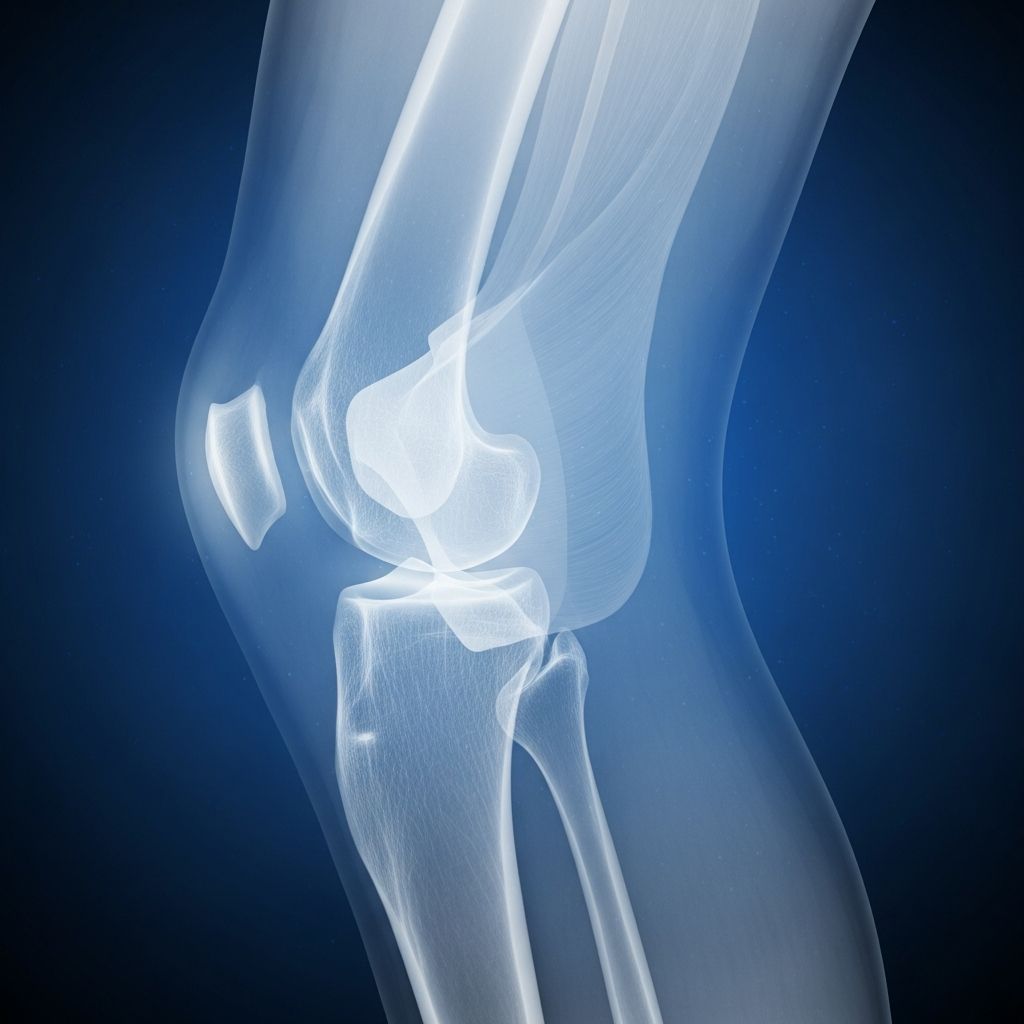
A knee X-ray is a diagnostic imaging test that produces black-and-white images of the structures inside and around your knee joint. This non-invasive procedure allows healthcare providers to visualize the bones, soft tissues, and joint spaces within your knee, making it one of the most common and cost-effective diagnostic tools in orthopedic medicine. The images captured during a knee X-ray show detailed views of your kneecap (patella), part of your thigh bone (femur), part of your shin bone (tibia), and sometimes part of your calf bone (fibula).
Knee X-rays are fundamental in identifying various knee conditions, from acute injuries to chronic degenerative diseases. Healthcare providers rely on these images to develop accurate diagnoses and create appropriate treatment plans tailored to each patient’s specific condition.
What Does a Knee X-Ray Show?
Knee X-rays provide crucial information about the structural integrity and alignment of your knee joint. Understanding what these images reveal helps patients and healthcare providers make informed decisions about treatment options. Here are the key findings that radiologists look for:
- Bone Integrity: X-rays can detect fractures, breaks, bone diseases, and signs of osteoarthritis or other degenerative conditions affecting the bone structure.
- Joint Space: The X-ray evaluates the space between the bones in your knee joint, which can indicate arthritis or other degenerative changes. Narrowing of this space often suggests cartilage loss.
- Alignment: Radiologists assess how your femur, tibia, and patella are aligned relative to each other, checking for abnormal positioning or misalignment.
- Patellar Tracking: The X-ray shows the patella’s position relative to the femur and tibia, helping identify patellar tracking disorders or dislocations.
- Bone Spurs and Density Changes: These findings often indicate degenerative joint disease or arthritis.
- Foreign Objects: The imaging can reveal any foreign bodies or abnormal calcifications within the knee joint.
What a Normal Knee X-Ray Looks Like
A healthy knee X-ray displays several characteristic features that indicate normal joint function and structure. Understanding normal findings helps patients recognize when their results might indicate a problem. In a normal knee X-ray, you will see bones that are intact with no fractures or breaks, clear and visible joints between the bones, and cartilage that shows no signs of damage or thinning. The kneecap will be properly aligned and not tilted to either side, and there will be no signs of arthritis such as bone spurs, changes in bone density, or narrowing of joint spaces.
When Might You Need a Knee X-Ray?
Your healthcare provider may recommend a knee X-ray for various reasons, depending on your symptoms and medical history. Understanding when this diagnostic test is appropriate helps patients and providers determine the best course of action for knee-related concerns.
- Symptom Evaluation: If you experience unexplained knee pain, swelling, or restricted movement, an X-ray can help identify underlying causes.
- Post-Injury Assessment: After a knee injury or trauma, X-rays help rule out fractures, dislocations, or other acute damage to the knee structures.
- Suspected Degenerative Conditions: If arthritis or other degenerative joint disorders are suspected, X-rays provide visual confirmation and help assess disease severity.
- Surgical Planning: Before knee surgery, X-rays provide preoperative imaging to help surgeons understand the knee’s anatomy and plan the procedure accordingly.
- Occupational Monitoring: In professions involving repeated knee stress or impact, periodic X-rays monitor for developing joint problems.
- Treatment Verification: X-rays help your clinician check that previous treatments have been successful and monitor healing progress.
Related Stories



The Three Views of a Knee X-Ray
A comprehensive knee X-ray examination typically includes at least three different imaging views. Each view provides a different angle and perspective of the knee joint, allowing radiologists to conduct a complete assessment of all knee structures. Sometimes healthcare providers order X-rays of the opposite knee for comparison purposes or to check for signs of arthritis in both knees.
Anteroposterior (AP) View
The anteroposterior view is taken from the front to the back of the knee while you are standing or sitting. This view helps clinicians check for possible dislocations, fractures or breaks, foreign objects in the area, and signs of arthritis. The AP view provides an excellent visualization of the overall knee joint alignment and is typically the primary view used in initial knee assessments.
Lateral View
The lateral view is taken from the side of the knee and can be particularly helpful if your clinician suspects arthritis or a bone abnormality. A lateral knee X-ray provides a different angle from the AP view and clearly shows the spaces within the knee joint. This view is especially useful for identifying fractures of the femur, tibia, or fibula that might not be visible on the AP view.
Sunrise View (Skyline or Merchant View)
The sunrise view, also called the skyline or Merchant view, provides a clear view of the kneecap and is taken with your knee bent at a 45-degree angle during the X-ray. This specialized view helps clinicians identify whether the kneecap is dislocated or whether a condition such as patellofemoral joint disease is affecting its alignment. This view is particularly valuable for assessing patellar tracking and identifying cartilage damage beneath the kneecap.
The Knee X-Ray Procedure
Understanding what to expect during your knee X-ray can help reduce anxiety and ensure you receive the best possible images. The procedure is quick, painless, and involves minimal preparation.
Preparation for Your Knee X-Ray
Before your knee X-ray appointment, there are several important preparation steps to follow. You should wear comfortable, loose-fitting clothing that allows easy access to your knee area. If your clothing has metal zippers, buttons, or snaps, you may need to change into a hospital gown. Remove all metal jewelry, including rings, bracelets, and necklaces, as metal can interfere with X-ray images. If you have any metal implants or devices in your body, inform your technologist before the procedure, as this may affect the imaging.
During the Procedure
Your technologist will place an X-ray film holder or digital recording plate behind or under the X-ray machine. They will have you stand or sit in front of the X-ray machine or lie down on an X-ray table, depending on which view is being taken. You will need to keep very still during the procedure, as any movement may cause the X-ray images to appear blurry. The technologist may ask you to hold your breath while they take the images to minimize any motion. The entire process typically takes only a few minutes.
After the Procedure
After your knee X-ray, your radiologic technologist will ensure that none of the images came out blurry. If any images need retakes, they will perform them while you are still at the facility. You can typically resume your normal activities immediately after the procedure, as there are no side effects or recovery time needed.
Results and Interpretation
Once your X-ray images have been captured, a radiologist—a doctor with special training in analyzing and interpreting X-rays—will carefully examine the images. This process is thorough and detailed, as radiologists look for multiple findings and abnormalities. After the radiologist completes their analysis, they will prepare a detailed report that is sent to your healthcare provider. Your healthcare provider will review the results and discuss them with you, explaining what the findings mean and recommending appropriate treatment options based on the results.
Limitations of Knee X-Rays
While knee X-rays are valuable diagnostic tools, they have certain limitations that healthcare providers must consider. X-rays do not clearly and accurately show soft tissues such as ligaments, tendons, and meniscus. To diagnose a tear in your ligaments, tendons, or meniscus, your healthcare provider will typically order a computed tomography (CT) scan or magnetic resonance imaging (MRI) scan. However, many orthopedic surgeons will request X-rays first to make sure they are making the correct diagnosis before ordering more advanced and expensive imaging studies.
When Additional Imaging May Be Needed
In some cases, your healthcare provider might want to order an MRI or CT scan to take a closer look at specific knee structures. If they suspect you have an inflammatory type of arthritis, they might order blood tests to help make the diagnosis. Plain radiography remains a quick and cost-effective initial approach to evaluating knee pain, but more advanced imaging may be necessary to fully evaluate soft tissue injuries or complex fractures.
Why Choose Knee X-Rays as a Diagnostic Tool
Knee X-rays remain one of the most popular diagnostic tools in orthopedic medicine for several compelling reasons. They are quick, non-invasive, painless, and cost-effective compared to more advanced imaging techniques. In the emergency department, plain radiography is often the first step to assess for fractures, as it provides immediate results that guide further clinical decision-making. The radiation exposure from a knee X-ray is minimal and generally considered safe for most patients.
Frequently Asked Questions About Knee X-Rays
Q: Is a knee X-ray painful?
A: No, a knee X-ray is completely painless. The procedure involves no needles, injections, or contact with your knee. You simply position your leg and hold still while the X-ray is taken.
Q: How long does a knee X-ray take?
A: The actual imaging process typically takes only a few minutes. From check-in to completion, you can usually complete the entire appointment within 15-30 minutes.
Q: Is radiation exposure from a knee X-ray dangerous?
A: The radiation exposure from a knee X-ray is minimal and considered safe. The benefits of obtaining accurate diagnostic images typically outweigh the small radiation risk.
Q: Can I get a knee X-ray if I’m pregnant?
A: Inform your healthcare provider if you are pregnant or think you might be pregnant. Your provider will determine if the X-ray is necessary and will use protective measures to minimize fetal exposure if the imaging is needed.
Q: When will I get my knee X-ray results?
A: A radiologist typically reviews your images within 24-48 hours and sends a report to your healthcare provider. Your provider will then discuss the results with you during a follow-up appointment or phone call.
Q: Can I wear metal jewelry during my knee X-ray?
A: No, all metal jewelry should be removed before the procedure as metal can interfere with the X-ray images and create artifacts that obscure important details.
Q: What if my knee X-ray shows a fracture?
A: If a fracture is detected, your healthcare provider will discuss treatment options with you. Treatment may range from immobilization and rest to surgery, depending on the type and severity of the fracture.
Conclusion
Knee X-rays are essential diagnostic tools that help healthcare providers accurately diagnose knee conditions and develop effective treatment plans. Whether you have acute knee pain from an injury or chronic symptoms related to arthritis, a knee X-ray provides valuable information that guides clinical decision-making. If you have pain, swelling, or tenderness in or around your knee, your healthcare provider may recommend a knee X-ray. These quick and painless procedures will help your provider diagnose you properly, and the sooner you receive an accurate diagnosis, the sooner you can begin treatment and start your journey toward recovery and improved knee health.
References
- How to Interpret Knee X-rays: 3 Essential Methods — X-ray Interpreter. 2024. https://xrayinterpreter.com/use-case/how-to-interpret-knee-xrays
- Body Parts Knee X-Ray — Scan.com. 2024. https://uk.scan.com/body-parts/x-ray/knee
- The Painful Knee: Choosing the Right Imaging Test — Cleveland Clinic Journal of Medicine, 2008. https://www.ccjm.org/content/ccjom/75/5/377.full.pdf
- Arthritis in Knee: Signs, Symptoms, Causes & Treatment — Cleveland Clinic. 2024. https://my.clevelandclinic.org/health/diseases/21978-arthritis-of-the-knee
- Knee X-Ray: Anatomy, Procedure & What to Expect — Cleveland Clinic. 2024. https://my.clevelandclinic.org/health/diagnostics/23501-knee-x-ray
Similar Articles








Read full bio of Sneha Tete