Kneecap Fractures: Causes, Symptoms, and Treatment
Comprehensive guide to understanding kneecap fractures, diagnosis, and recovery options.
Understanding Kneecap Fractures
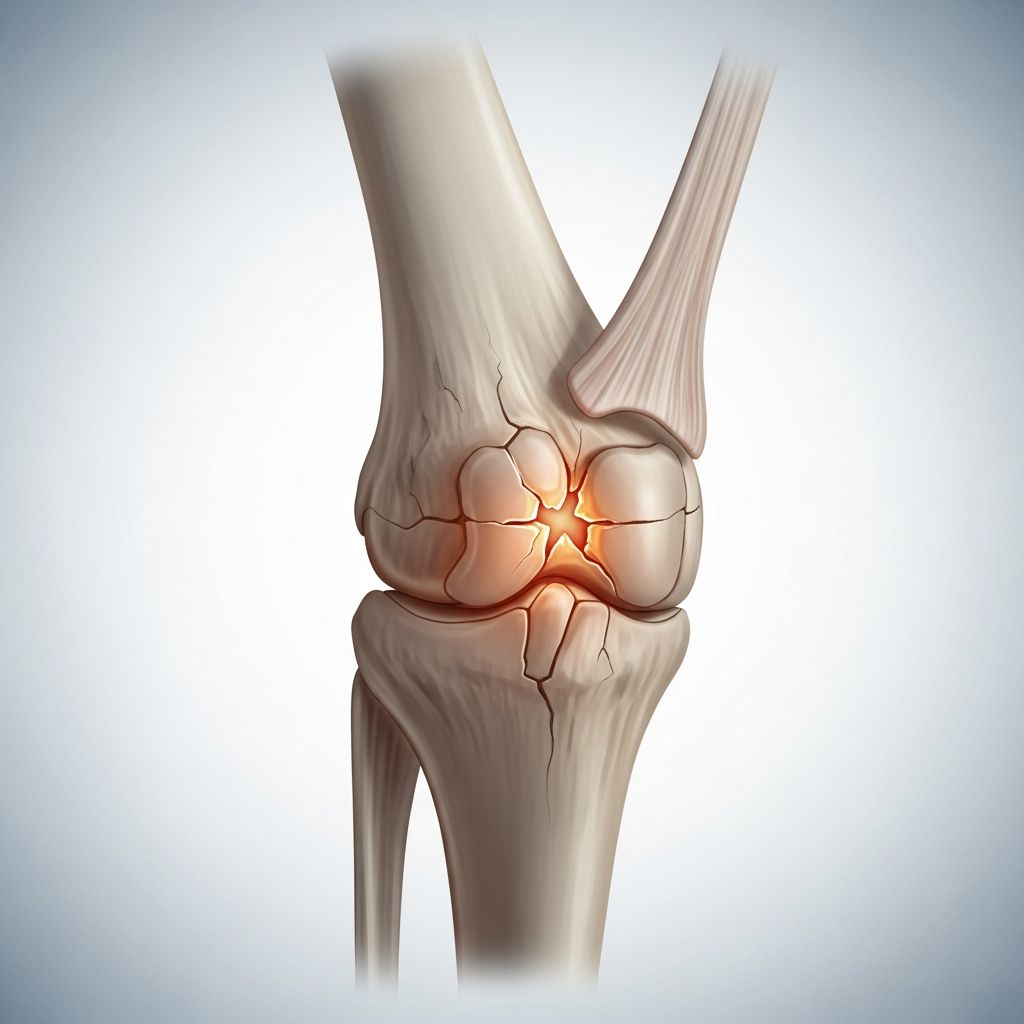
A kneecap fracture, medically known as a patella fracture, is a break in the patella bone that sits at the front of your knee joint. This bone plays a crucial role in your knee’s function, covering and protecting the knee joint while helping your thigh muscles extend and straighten your leg. When the kneecap breaks, it can significantly impact your ability to walk, stand, and perform daily activities. Understanding the causes, symptoms, and treatment options is essential for proper recovery and long-term knee health.
Causes of Kneecap Fractures
Kneecap fractures typically result from traumatic injuries to the front of the knee. The most common cause is a direct blow to the kneecap, such as from a fall, motor vehicle accident, or sports-related injury. The force of impact determines the severity of the fracture, potentially creating anything from a hairline crack to a break into multiple small pieces.
Beyond direct trauma, kneecap fractures can occur indirectly through a sudden, forceful contraction of the quadriceps muscle. This powerful muscle contraction can pull the patella apart without any direct impact to the knee. Additionally, the way you fall or the angle of impact influences whether the fracture will be simple (affecting one area) or complex (involving multiple fracture lines).
Common Symptoms and Signs
If you have sustained a kneecap fracture, you will likely experience several distinctive symptoms: The most common symptom is significant pain in the front of the knee, often described as acute and severe immediately following the injury. Swelling develops rapidly as your body’s natural inflammatory response kicks in, sometimes within minutes of the injury.
Additional symptoms include:
- Bruising around the fracture site, which may appear within hours
- Inability to straighten your knee or perform a straight leg raise
- Difficulty walking or weight-bearing on the affected leg
- A visible deformity or irregularity in the kneecap area
- Reduced mobility and flexibility in the knee joint
In some cases, hemarthrosis may develop, a condition where blood from the broken bone accumulates inside the joint space, causing additional painful swelling. This requires medical evaluation to determine if drainage is necessary.
Diagnosis and Examination
Proper diagnosis is critical for determining the appropriate treatment approach. Your healthcare provider will begin by reviewing your symptoms and discussing how the injury occurred. During the physical examination, your doctor will:
- Carefully examine your knee to assess the fracture location and severity
- Feel the edges of the fracture, which are often palpable through the skin, especially if displaced
- Check for hemarthrosis and potentially drain excess blood if necessary
- Evaluate your ability to move your knee and straighten your leg
- Assess for any open wounds or skin damage
Imaging studies are essential for accurate diagnosis. X-rays provide clear visualization of the fracture fragments and help determine if the bones are aligned or displaced. In some cases, your doctor may order a CT scan to get a more detailed view of complex fractures and better understand the exact nature of the break.
Related Stories



Types of Kneecap Fractures
Kneecap fractures are classified based on their pattern and severity. Understanding the fracture type helps guide treatment decisions:
| Fracture Type | Description | Treatment Approach |
|---|---|---|
| Non-displaced fracture | The fractured pieces remain in their original position with minimal separation | Conservative treatment with cast or splint |
| Displaced fracture | The fractured pieces move apart or become misaligned | Typically requires surgical intervention |
| Transverse fracture | A break running horizontally across the kneecap | Fixed with wires, pins, and tension band configuration |
| Comminuted fracture | The kneecap breaks into multiple small fragments | Small fragments may be removed; remaining pieces reconstructed |
| Open (compound) fracture | The skin is broken over the fracture site, exposing the bone | Immediate surgery required to prevent infection |
Nonsurgical Treatment Options
For simple kneecap fractures where the bone pieces remain in alignment and your knee can be straightened, nonsurgical treatment is often appropriate and effective.
Immobilization: Your doctor may recommend wearing a protective cast, splint, or knee brace that restricts movement while the bone heals. This immobilization period typically lasts several weeks, allowing new bone formation to strengthen the fracture site.
Pain Management: Most fractures cause moderate pain for several days to a couple of weeks. Many patients find relief through over-the-counter pain medications, ice application, leg elevation, and rest. For severe pain, prescription-strength medications may be necessary for the first few days following the injury.
Activity Modifications: You will need to limit weight-bearing on the affected leg during the early healing phase. Your doctor will provide specific guidelines about when you can gradually resume weight-bearing activities.
Physical Therapy: Even with nonsurgical treatment, physical therapy plays an important role in maintaining muscle strength and preventing stiffness. Your therapist will provide gentle exercises within your movement restrictions.
Surgical Treatment Options
Surgery becomes necessary when the fracture pieces are displaced, when the distance between fragments is too great for proper healing, or in open fractures where infection risk is high. The specific surgical approach depends on your fracture type and severity.
Common surgical techniques include:
- Tension band wiring with figure-of-eight configuration, commonly used for transverse fractures
- Plate and screw fixation to stabilize displaced fragments
- Suture fixation for certain fracture patterns
- Removal of small comminuted fragments that cannot be reconstructed
- Combination approaches using multiple stabilization methods
The primary goal of surgery is to realign the fracture fragments and restore the kneecap to its normal anatomical position, allowing the extensor mechanism to function properly. Immediate surgery is particularly critical in open fractures to minimize infection risk.
Recovery and Rehabilitation
Recovery from a kneecap fracture is a gradual process that varies based on fracture severity and treatment method. Most people begin feeling significantly better within six weeks and can return to normal activities within three to six months. However, some individuals experience longer recovery timelines.
Rehabilitation Phase: Whether you received surgical or nonsurgical treatment, rehabilitation is vital for optimal outcomes. Your physical therapist will develop a personalized program focusing on:
- Gradually improving your knee’s range of motion
- Strengthening your quadriceps and surrounding leg muscles
- Reducing joint stiffness through gentle mobilization
- Restoring your ability to walk normally and bear weight
- Improving balance and proprioception
Pain Management During Recovery: Some patients experience ongoing pain during the recovery period. Wearing a knee brace or support can provide comfort and confidence during movement. Your doctor may also recommend anti-inflammatory medications to manage persistent swelling.
Potential Complications and Long-Term Effects
While most patients recover well from kneecap fractures, several potential complications should be understood:
Cartilage Damage: The patella is covered with cartilage that provides cushioning for the knee joint. Fracture trauma can damage this cartilage, potentially leading to post-traumatic arthritis in the months or years following injury. This may cause long-term pain, stiffness, and reduced mobility.
Chronic Pain: Some patients develop chronic pain in the front of the knee after fracture recovery. While the exact cause isn’t completely understood, it’s likely related to post-traumatic arthritis, residual stiffness, and muscle weakness. Wearing a knee support may help manage this discomfort.
Muscle Weakness: Prolonged immobilization during healing can lead to permanent weakness in the quadriceps muscle. Some loss of motion in knee extension and flexion is also common, though this is usually not severely disabling.
Hardware Issues: If your fracture was surgically repaired with wires, plates, or screws, these materials may occasionally become loose or cause irritation, requiring removal in a subsequent procedure.
Joint Stiffness: Your knee may become stiffer than before the injury, limiting your ability to bend or straighten it completely. Additional treatment or therapy may be necessary to regain motion.
Frequently Asked Questions
Q: How long does a kneecap fracture take to heal?
A: Most kneecap fractures begin healing within six weeks, and complete recovery typically takes three to six months. However, individual healing times vary based on fracture severity, age, overall health, and adherence to rehabilitation protocols.
Q: Can a kneecap fracture heal without surgery?
A: Yes, simple, non-displaced fractures where the bone pieces remain aligned can often heal with conservative treatment using a cast or splint. However, most kneecap fractures require surgery to ensure proper alignment and function.
Q: What is hemarthrosis and is it serious?
A: Hemarthrosis is blood accumulation inside the knee joint from broken bone fragments. While common after fractures, it can be managed by your doctor, who may drain excess fluid to relieve pain and swelling.
Q: Will I have permanent pain after a kneecap fracture?
A: While many patients recover fully with minimal long-term issues, some experience chronic pain related to post-traumatic arthritis or muscle weakness. Proper rehabilitation and ongoing care can help minimize these effects.
Q: Can I return to sports after a kneecap fracture?
A: Most people can return to their normal activities, including sports, within three to six months with proper rehabilitation. However, the specific timeline depends on fracture severity and individual recovery progress.
Q: What should I do immediately after breaking my kneecap?
A: Seek immediate medical attention. Apply ice and elevate your leg to reduce swelling. Avoid weight-bearing on the affected leg. Your doctor will order X-rays and determine whether surgical or nonsurgical treatment is appropriate.
References
- Patellar (Kneecap) Fractures — American Academy of Orthopaedic Surgeons (AAOS). 2024. https://orthoinfo.aaos.org/en/diseases–conditions/patellar-kneecap-fractures/
- Patella Fracture: Types, Symptoms, Treatment & Surgery — Cleveland Clinic. 2024. https://my.clevelandclinic.org/health/diseases/22081-patella-fracture
- Patellar (Kneecap) Fracture — Boston Medical Center. 2024. https://www.bmc.org/patient-care/conditions-we-treat/db/patellar-kneecap-fracture
- Patella Fracture (Broken Kneecap) — Orthopaedic Trauma Association (OTA). 2024. https://ota.org/for-patients/find-info-body-part/4186
- Nonsurgical Treatment of Patella Fractures — NYU Langone Health. 2024. https://nyulangone.org/conditions/patella-fractures/treatments/nonsurgical-treatment-of-patella-fractures
Similar Articles








Read full bio of medha deb