Knuckle Pads: Causes, Symptoms, and Treatment
Understanding knuckle pads: A comprehensive guide to this benign skin condition affecting fingers and toes.
What Are Knuckle Pads?
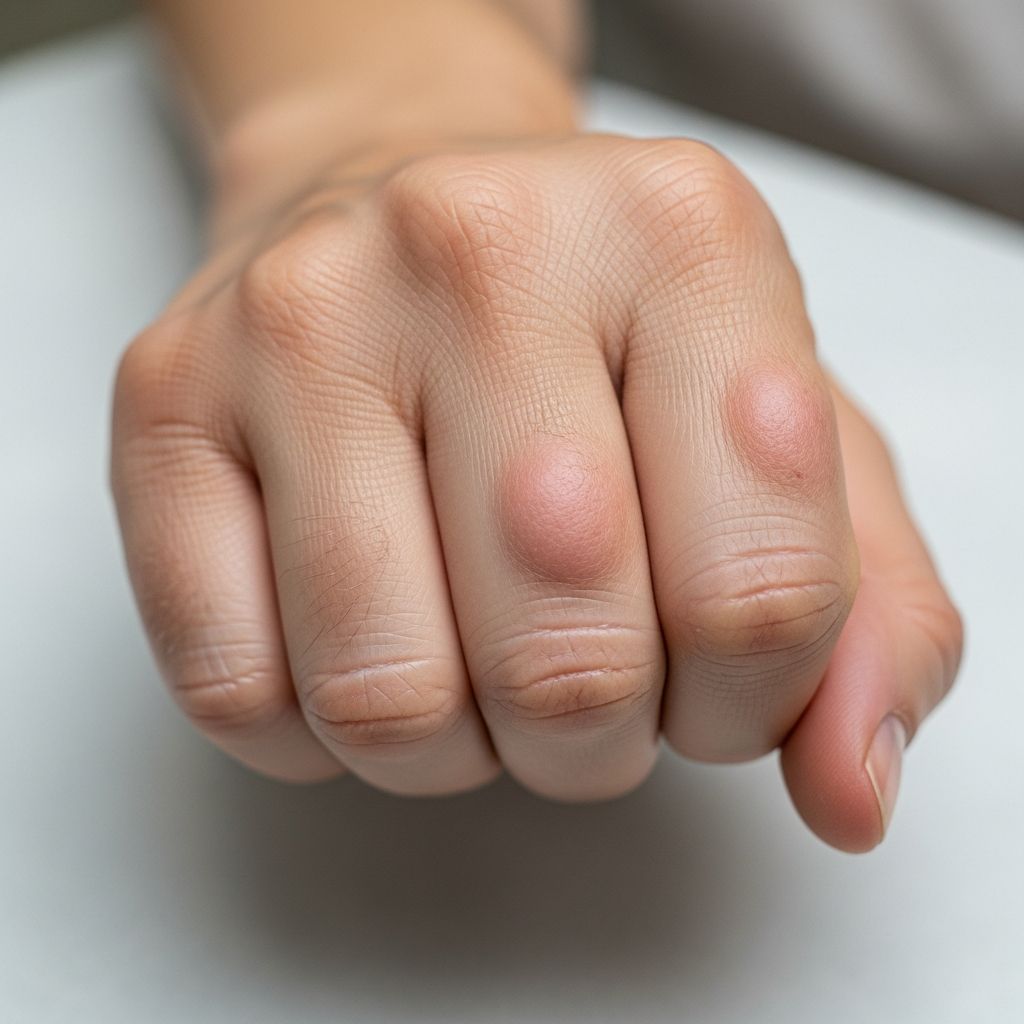
A knuckle pad is a well-defined thickening that develops over a finger joint, presenting as a benign skin condition affecting millions of individuals worldwide. These pads are also commonly referred to as Garrod pads, Garrod nodes, or holoderma, names derived from historical dermatological literature and their distinctive appearance. Knuckle pads are classified as a form of fibromatosis, a group of conditions characterized by noncancerous tumors under the skin.
Knuckle pads belong to the same family of fibromatosis conditions as Dupuytren contracture (palmar fibromatosis), pachydermodactyly, Ledderhose syndrome (plantar fibromatosis), and Peyronie disease (penile fibromatosis). These conditions share similar pathological characteristics but manifest in different anatomical locations. Understanding knuckle pads requires recognizing their unique features and distinguishing them from other similar skin conditions.
Origins and Classification
The condition was first described by Garrod in 1893, and has since been referred to by various names including athlete’s nodules, subcutaneous fibroma, keratosis supracapitularis, discrete keratoderma, and tylositas articuli. This multiple nomenclature reflects the historical development of dermatological understanding and the condition’s varied presentations across different patient populations.
Knuckle pads can develop through different pathways. They may develop as part of an inherited syndrome, run in families together with other forms of fibromatosis, or occur as sporadic cases with no family history. This distinction between inherited and acquired forms is crucial for understanding prognosis and management approaches.
Inherited Versus Acquired Forms
Primary knuckle pads are inherited or idiopathic in nature, arising without a clear precipitating factor. While most inherited cases are idiopathic, some may be associated with genetic syndromes and fibromatosis disorders. These inherited forms tend to be permanent and may grow in size over time.
Secondary knuckle pads, also called pseudo-knuckle pads, develop as a result of repeated trauma or friction. These may appear in younger individuals and are associated with specific behavioral or occupational triggers. Unlike primary knuckle pads, pseudo-knuckle pads are hyperkeratotic and may gradually disappear when the precipitating factors are removed.
Pseudo-knuckle pads are typically seen in two clinical settings:
- Occupational or sports-related activities such as boxing, surfing, or other repetitive hand-use professions
- Associated with psychiatric or behavioral disorders including obsessive-compulsive disorder, finger chewing or sucking, and bulimia nervosa
Location and Distribution
A knuckle pad is more often located over a proximal interphalangeal (PIP) joint, commonly called the second joint, than over a metacarpophalangeal (MCP) joint (the true knuckle or first joint) or the distal interphalangeal (DIP) joint (third joint). The pads may be observed on just one joint or may affect many joints simultaneously.
While the hands are the most commonly affected area, other joints can be involved in the disease process. The feet, knees, and other areas may develop similar lesions, reflecting the systemic nature of the fibromatosis condition. The dorsal surface of the hands represents the most frequent location for knuckle pad development.
Related Stories



Clinical Presentation and Symptoms
Knuckle pads present as well-defined, smooth, firm thickenings over the affected joints. These lesions can appear flat or more prominent and dome-shaped, presenting as mobile nodules or plaque-like lesions. The skin overlying the pads is typically indurated and may be flesh-colored or hyperpigmented.
Most knuckle pads are asymptomatic and do not cause any clinical symptoms. However, in some cases, the pads may be tender or painful, particularly if they become inflamed or subjected to pressure. When knuckle pads become large, they can potentially make it more difficult for individuals to use their hands effectively, and they may cause discomfort through rubbing on clothing or footwear.
Beyond physical symptoms, knuckle pads can cause significant emotional and psychological stress. Many patients report dissatisfaction with the appearance of their hands or feet, which can impact quality of life and self-confidence.
Differential Diagnosis
Several other conditions may cause confusion when diagnosing knuckle pads, necessitating careful clinical evaluation. Conditions that may be mistaken for knuckle pads include:
- Granuloma annulare, a benign skin condition with different histological features
- Pachydermodactyly, another form of digital fibromatosis with similar appearance
- Rheumatoid nodules, which develop in association with rheumatoid arthritis
- Synovitis resulting in swollen joints, which differs in underlying pathology
- Warts, which are caused by human papillomavirus (HPV) and can appear similar to knuckle pads
- Corns and calluses, which are thickened rough areas of skin caused by rubbing and irritation
Unlike knuckle pads, corns and calluses are composed of thickened, rough areas of skin on the surface, whereas knuckle pads are dense tissue forming under the skin. The distinction between these conditions is important because calluses may resolve with removal of the irritating stimulus, while true knuckle pads are typically permanent.
Diagnostic Methods
Knuckle pads are usually diagnosed clinically through physical examination and patient history. A healthcare provider experienced in dermatology can typically identify knuckle pads based on their characteristic appearance and location over the finger joints.
Ultrasound imaging can be a useful diagnostic tool, particularly for distinguishing knuckle pads from synovitis and other conditions affecting the joints. This non-invasive imaging modality provides clear visualization of the tissue layers and can help confirm the diagnosis when clinical findings are uncertain.
Skin biopsy may be performed when diagnosis is uncertain or when genetic syndromes are suspected. Histological examination typically reveals several characteristic findings:
- Hyperkeratosis and acanthosis of the epidermis (thickening of the outer skin layers)
- Thickening of the dermis (deeper skin layer)
- Individual collagen fiber changes
- When associated with keratin 9 gene mutation, suprabasal epidermolysis is also observed
Genetic Syndromes Associated with Knuckle Pads
Although specific syndrome names were not detailed in primary sources, knuckle pads can develop as a feature of various inherited genetic syndromes. Some knuckle pads may run in families together with other forms of fibromatosis. Individuals with a family history of knuckle pads or related fibromatosis conditions should be aware of potential inheritance patterns.
Additionally, knuckle pads have been described in association with metabolic syndrome and type 2 diabetes in some cases, though these associations may represent coincidental findings rather than causative relationships.
Treatment Options
In general, treatment is not required for knuckle pads, particularly when they are asymptomatic and not causing functional or cosmetic concerns. A conservative approach is recommended as the first-line management strategy.
Lifestyle modifications form the foundation of knuckle pad management:
- Avoidance of repetitive behavior if possible may improve the situation, particularly in cases of secondary knuckle pads
- Wearing protective gloves during activities that may cause friction or trauma
- Considering a change of professional or vocational activities if the occupation contributes to lesion development
- Avoiding behaviors such as finger chewing or sucking, particularly in individuals with obsessive-compulsive disorder
Topical treatments may provide symptomatic relief in specific situations. Moisturizers and emollients may be useful if the knuckle pads are hyperkeratotic, helping to reduce discomfort and improve skin texture. Keratolytic agents containing high-dose salicylic acid and urea may help soften the thickened tissue.
Medical interventions for symptomatic or cosmetically concerning knuckle pads may include:
- Intralesional corticosteroid injections to reduce inflammation
- Intralesional fluorouracil injections, which may help reduce tissue proliferation
- Photodynamic therapy or other advanced dermatological procedures
Surgical treatment has been used for knuckle pads, but this approach carries significant risks and complications. Surgery can be complicated by the development of keloid scars, particularly in individuals prone to abnormal scar formation. For this reason, surgical intervention is generally reserved for cases where conservative measures have failed and the knuckle pads significantly impair function or cause substantial psychological distress.
Psychodermatological support is indicated in cases of behavioral and emotional disorders contributing to pseudo-knuckle pad development. Early recognition of underlying psychiatric conditions and appropriate psychological intervention can help prevent progression of lesions and address the root cause of the problem.
Home Care and Skin Management
While there are no proven home treatments that can eliminate knuckle pads, keeping the skin on your hands and feet well-moisturized may help reduce discomfort and improve overall skin health.
For hand care, apply moisturizing cream or petroleum jelly after washing and gently pat skin dry rather than rubbing. For feet, apply heavy moisturizing cream or petroleum jelly after showering or bathing, and cover feet with cotton socks to help retain moisture. Pay special attention to heels, bottoms of feet, and the knuckle pads themselves. However, avoid applying emollients between the toes, as this increases the risk of developing foot fungus.
When to Contact a Healthcare Provider
Knuckle pads are not a medical emergency; however, contacting a healthcare provider is recommended if you notice:
- Sudden changes in the appearance or size of knuckle pads
- New pain or tenderness in the affected areas
- Signs of infection such as redness, warmth, or drainage
- Functional impairment affecting your ability to use your hands or feet
- Significant emotional distress related to the appearance of the lesions
Prognosis and Long-Term Outlook
Knuckle pads are benign, noncancerous lesions that do not cause serious health problems. They do not transform into malignant conditions and do not pose a risk to overall health. However, primary knuckle pads are typically permanent and may grow in size over time.
Secondary or pseudo-knuckle pads may gradually disappear when the precipitating factors are removed, such as when an individual stops repetitive trauma or when underlying behavioral disorders are addressed through appropriate treatment.
Frequently Asked Questions
Q: Are knuckle pads cancerous?
A: No, knuckle pads are benign (noncancerous) growths that do not pose any health risk or potential for malignant transformation.
Q: Can knuckle pads be prevented?
A: Primary inherited knuckle pads cannot be prevented, but secondary pseudo-knuckle pads may be prevented by avoiding repetitive trauma, wearing protective gloves during high-risk activities, and addressing underlying behavioral disorders.
Q: Are knuckle pads contagious?
A: No, knuckle pads are not contagious. Unlike warts caused by human papillomavirus, knuckle pads are not caused by infectious agents and cannot be transmitted to other individuals.
Q: Do knuckle pads require treatment?
A: Treatment is not required unless the knuckle pads are causing pain, functional impairment, or significant emotional distress. Many people with asymptomatic knuckle pads choose to leave them untreated.
Q: Can knuckle pads return after treatment?
A: Primary knuckle pads may return or recur after treatment, particularly with surgical intervention, as the underlying fibromatosis condition is not cured. Pseudo-knuckle pads may improve or resolve if the precipitating factors are eliminated.
References
- Knuckle Pads — DermNet. 2024. https://dermnetnz.org/topics/knuckle-pads
- Knuckle Pads: Symptoms, Causes & Treatment — Cleveland Clinic. 2024. https://my.clevelandclinic.org/health/diseases/22500-knuckle-pads
- Pseudo-Knuckle Pads: A Bridge to Psychodermatology — Auctores Online. 2023. https://www.auctoresonline.org/article/pseudo–knuckle-pads-a-bridge-to-psychodermatology
- Knuckle Lesions in Inherited and Acquired Disorders — National Center for Biotechnology Information. 2021. https://pmc.ncbi.nlm.nih.gov/articles/PMC8653727/
Similar Articles








Read full bio of Sneha Tete