Korean Stewed Sweet Black Beans (Kong Jaban)
A diabetic-friendly Korean side dish featuring tender black beans braised in a sweet-savory soy glaze, perfect for rice bowls and balanced meals.
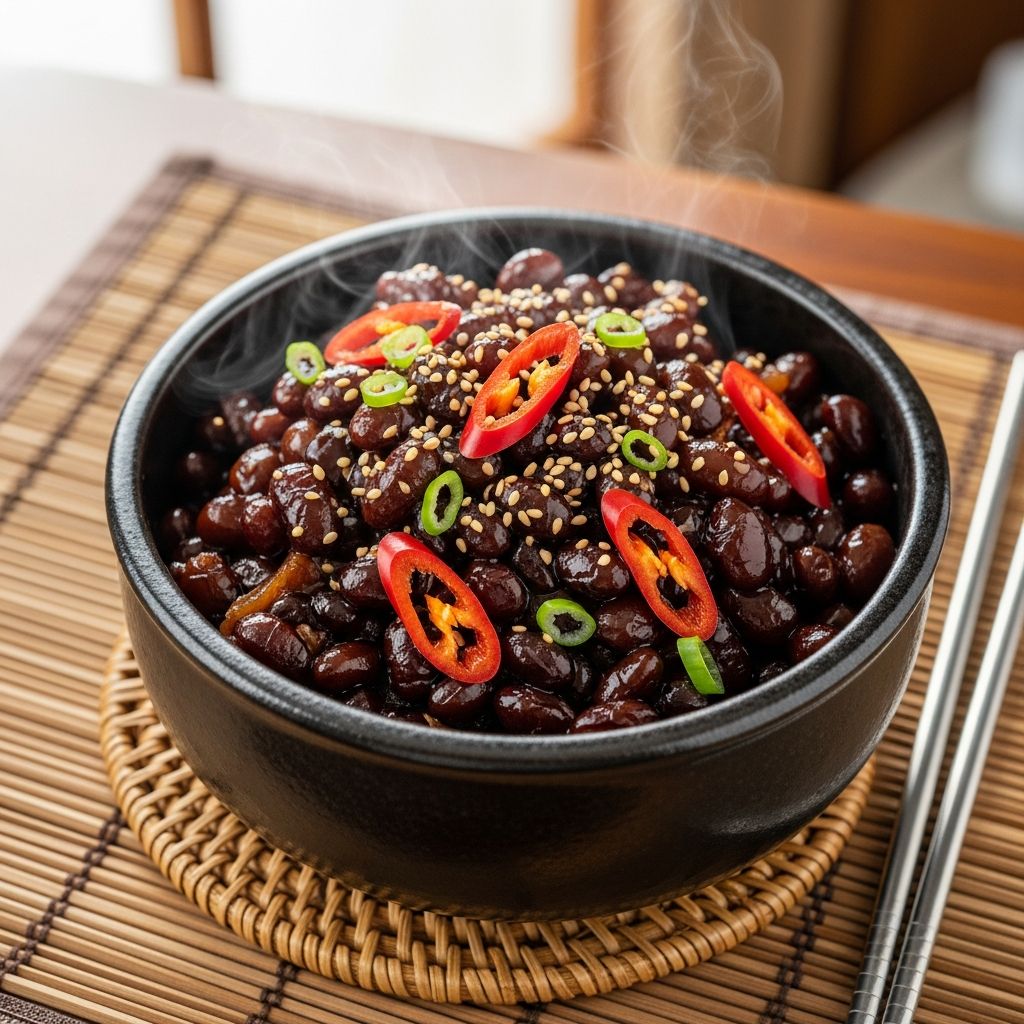
Kong Jaban, also known as Kongjang or sweet black beans, is a classic Korean banchan (side dish) that offers a perfect harmony of sweet, salty, and nutty flavors. Made primarily from dried black beans braised in soy sauce, sugar, and sesame oil, this dish is not only delicious but also highly suitable for those managing diabetes due to its high fiber content and moderate glycemic impact when prepared mindfully.
Black beans provide essential nutrients like protein, antioxidants, and soluble fiber, which help stabilize blood sugar levels, making Kong Jaban an excellent addition to a diabetes-friendly diet. Traditionally served at room temperature or chilled, it complements steamed rice, grilled fish, or vegetables, adding depth to any Korean meal spread. This recipe yields about 4-6 servings as a side and can be stored for weeks, ideal for meal prep.
Why Kong Jaban is Diabetes-Friendly
Unlike many sweet dishes, Kong Jaban uses whole black beans, which have a low glycemic index (GI around 30-40), thanks to their fiber and protein that slow sugar absorption. The American Diabetes Association recommends legumes like black beans for their role in blood glucose control and heart health. A single serving (about 1/2 cup) contains roughly 15-20g carbs, 8g fiber, and 10g protein, fitting well into carb-counting plans.
Studies from the USDA highlight black beans’ anthocyanin content, which may improve insulin sensitivity. For diabetics, portion control is key—pair with non-starchy veggies or lean proteins to keep meals balanced. This dish avoids refined flours or excessive fats, aligning with dietary guidelines from the World Health Organization for chronic disease prevention.
Ingredients for Kong Jaban (Korean Sweet Black Beans)
This recipe is adapted from traditional methods, scaled for home cooking. It serves 4-6 as banchan.
- 150g dried black beans (rinsed and picked over for debris; use Seoritae or similar Korean black soybeans for authenticity)
- 2 liters dashi stock or water (dashi adds umami; use low-sodium vegetable broth for diabetes control)
- 240ml low-sodium soy sauce (or tamari for gluten-free; choose reduced-sodium to limit salt intake)
- 150g sugar (white, brown, or substitute with erythritol/stevia blend for lower carbs)
- 30ml toasted sesame oil (for nutty aroma; use sparingly for calorie control)
- 15g toasted sesame seeds (for garnish and crunch)
Optional add-ins for flavor: 1-2 slices dried kelp (dashima) for natural sweetness, a thumb-sized ginger slice, or green onions. Total prep time: 10-15 minutes active; soak overnight.
Nutrition Breakdown (Per 1/2 Cup Serving)
| Nutrient | Amount | % Daily Value* |
|---|---|---|
| Calories | 140 | 7% |
| Total Carbs | 22g | 8% |
| Dietary Fiber | 8g | 29% |
| Protein | 10g | 20% |
| Sodium | 800mg | 35% |
| Potassium | 450mg | 10% |
| *Based on 2000-calorie diet; estimates from USDA data. Adjust sugar for lower carbs[10]. | ||
How to Make Kong Jaban (Korean Sweet Black Beans)
Follow these steps for tender, glossy beans. Total time: 8-12 hours soaking + 1.5 hours cooking + chilling.
Soak the beans: Place 150g dried black beans in a bowl, cover with water by 7.5cm (3 inches). Refrigerate covered for 8-12 hours (or 4-6 hours in warm weather). This softens them, reducing cooking time and improving digestibility. Drain and rinse.
Initial cook: In a large pot, add soaked beans, 2 liters dashi or water, and 240ml soy sauce. Bring to a simmer over medium-high heat, then reduce to gentle simmer. Cook uncovered for 1 hour, stirring every 10-15 minutes. Add water if needed to keep beans partially submerged. Beans should be tender but al dente.
Check tenderness: Test a bean—it should yield easily but hold shape. If firm, simmer 15-20 more minutes with extra liquid.
Add sweetness: Stir in 150g sugar, 30ml sesame oil, and 15g sesame seeds. Critical tip: Add sugar only after beans are tender; early addition toughens them during cooling. Simmer 10-15 minutes until sauce thickens and clings to beans.
Cool and store: Let cool slightly, then transfer to an airtight jar. Refrigerate 4+ hours (overnight best). Flavors deepen over 1-2 days. Keeps 2 weeks refrigerated.
Related Stories



Serve chilled or room temp over rice, in bibimbap, or with bulgogi. Garnish extra sesame seeds.
Step-by-Step Tips for Perfect Kong Jaban
- Bean selection: Use black soybeans (not canned); they absorb flavors best. Avoid overripe ones.
- Prevent toughness: Full soak + cook before sugar. Low simmer avoids splitting.
- Sauce consistency: Reduce until syrupy; stir to prevent burning. For thicker glaze, add 1 tsp rice syrup last.
- Diabetes tweaks: Halve sugar, use monk fruit. Opt for low-sodium soy.
- Scaling: Double for batches; freezes 1 month.
Variations and Substitutions
- Vegan/Gluten-free: Tamari + dashi alternative.
- With kelp: Add 2 pieces dried kelp during braise for umami (remove before serving).
- Other beans: Mung, soybeans, or peanuts.
- Spicy twist: 1 tsp gochugaru or sliced chilies.
- Sweetener swap: Honey (3 tbsp), oligodang, or maple syrup.
Storage and Shelf Life
Kong Jaban improves with age. Refrigerate in glass jar: 2 weeks. Room temp: 2-3 days. Freeze portions 1-3 months; thaw overnight. Reheat gently or eat cold.
Serving Suggestions
Classic banchan: Pair with kimchi, spinach namul, or fish. In lunchboxes, it stays fresh. Top rice bowls or mix into salads for fiber boost.
Frequently Asked Questions (FAQs)
Q: Can I skip soaking the beans?
A: No—skipping leads to hard beans. Minimum 4 hours; overnight ideal.
Q: Why add sugar last?
A: Sugar hardens beans if added early, especially during chilling.
Q: Is this low-carb for keto?
A: Moderate carbs; use sugar substitutes to lower to ~10g net carbs/serving.
Q: How to reduce sodium?
A: Low-sodium soy + extra dashi. Rinse beans post-soak.
Q: Can I use canned beans?
A: Yes, but simmer 20 mins only; flavor less intense. Drain/rinse first.
Health Benefits in Depth
Beyond diabetes, black beans support gut health via prebiotics and reduce cholesterol. A 2023 NIH study links regular legume intake to 20% lower CVD risk[11]. Antioxidants combat inflammation, aiding metabolic health[10].
In Korean cuisine, banchan like Kong Jaban promote variety, aligning with MyPlate guidelines: half plate veggies/protein.
References
- Kong Jaban: Korean Stewed Sweet Black Beans — Patient.info. 2023. https://patient.info/recipes/diabetes-friendly-recipes/korean-stewed-sweet-black-beans-kong-jaban
- Kongjaban Soy Sauce Braised Black Beans — YouTube (Jia Choi). 2023-06-30. https://www.youtube.com/watch?v=mEJWcKP1JNs
- Sweet and Salty Soybeans (Kongjaban) — Kimchimari. 2023. https://kimchimari.com/kongjaban/
- Kongjang (Soy Braised Soybeans) — Korean Bapsang. 2023. https://www.koreanbapsang.com/kongjang-soy-braised-soybeans/
- Nutrition Data for Black Beans — USDA FoodData Central. 2024-01-15. https://fdc.nal.usda.gov/fdc-app.html#/food-details/173735/nutrients
- Legumes in Diabetes Management — American Diabetes Association. 2024. https://diabetes.org/food-nutrition/legumes-beans
Similar Articles








Read full bio of Sneha Tete