Kwanzaa: A First Fruits Harvest Celebration
Celebrate African heritage with Kwanzaa’s seven principles, symbols, and communal feasts featuring nutritious traditional foods.
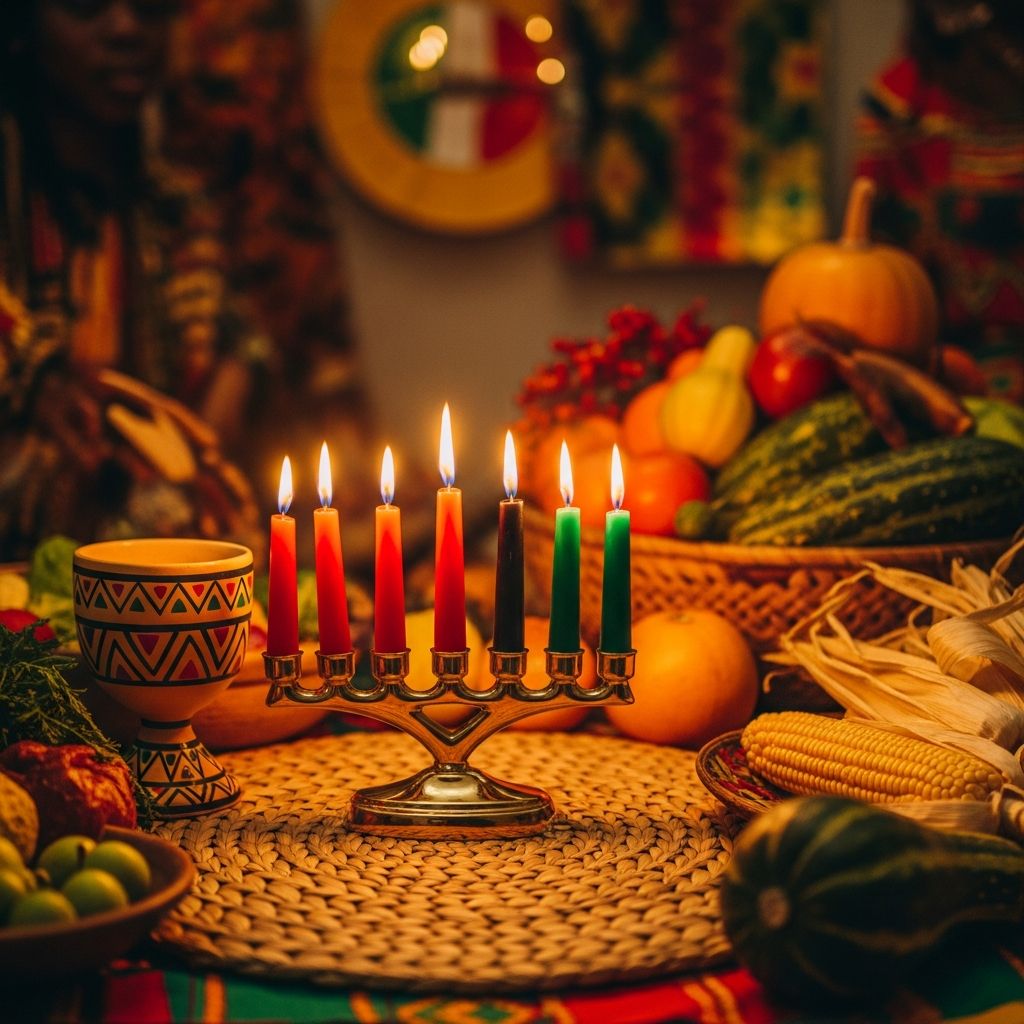
Kwanzaa is a vibrant African American and Pan-African holiday observed annually from December 26 to January 1, honoring family, community, culture, and heritage through harvest festival traditions.
Created in 1966 by Dr. Maulana Karenga amid the Black Power movement and post-Watts riots, Kwanzaa draws from diverse African first fruits celebrations like those in West, East, and Southern Africa, where communities give thanks for bountiful harvests. The name derives from the Swahili phrase matunda ya kwanza, meaning ‘first fruits,’ with an extra ‘a’ added to represent seven children at its inception.
Non-religious by design, Kwanzaa emphasizes the Nguzo Saba—seven principles fostering self-determination and communal strength. Families display symbols, light candles daily, and culminate in the Karamu feast, incorporating nutritious foods symbolic of abundance and unity.
Nguzo Saba: The Seven Principles of Kwanzaa
The core of Kwanzaa lies in the Nguzo Saba, seven Swahili principles developed in 1965 to embody African heritage values of nationalism, Pan-Africanism, and communalism. Each day focuses on one principle, prompting reflection, discussion, and action within families and communities.
- Day 1: Umoja (Unity) – To strive for and maintain unity in the family, community, nation, and race.
- Day 2: Kujichagulia (Self-Determination) – To define ourselves, name ourselves, create for ourselves, and speak for ourselves.
- Day 3: Ujima (Collective Work and Responsibility) – To build and maintain our community together and make our brothers’ and sisters’ problems our problems.
- Day 4: Ujamaa (Cooperative Economics) – To build and maintain our own stores, shops, and other businesses and to profit from them together.
- Day 5: Nia (Purpose) – To make our collective vocation the building and developing of our community in order to restore our people to their traditional greatness.
- Day 6: Kuumba (Creativity) – To do always as much as we can, in the way we can, in order to leave our community more beautiful and beneficial than we inherited it.
- Day 7: Imani (Faith) – To believe with all our heart in our people, our parents, our teachers, our leaders, and the righteousness and victory of our struggle.
These principles guide daily rituals, including greeting Habari gani? (‘What’s the news?’) and responding with the day’s principle.
Symbols of Kwanzaa
Kwanzaa features seven key symbols placed on a mkeka (straw mat) representing the foundation of tradition. These harvest-inspired items reinforce the holiday’s themes of abundance, unity, and remembrance.
| Symbol | Swahili Name | Meaning |
|---|---|---|
| Mat | Mkeka | Foundation and history on which everything rests. |
| Candleholder | Kinara | Family, ancestors, and African heritage; holds seven candles. |
| Corn | Muhindi | Children and the future; one ear per child in the family. |
| Fruits/Vegetables/Nuts | Mazao | Harvest fruits of collective labor. |
| Communal Cup | Kikombe cha Umoja | Unity; used for libations honoring ancestors. |
| Gifts | Zawadi | Fruits of labor, given to children emphasizing education and heritage. |
The kinara holds three red candles (struggle/people), three green (land/hope), and a central black mishumaa saba candle for unity, lit progressively from left to right.
The Kwanzaa Karamu
The Karamu (Feast of Faith) on December 31 or January 1 caps Kwanzaa with a communal meal echoing African harvest feasts. Developed in 1971 Chicago by Pan-African groups, it features dishes symbolizing the mazao while promoting nutritious, plant-based eating.
Traditional foods include collard greens, black-eyed peas, sweet potatoes, okra, corn, yams, and plantains—nutrient-dense options rich in fiber, vitamins, and antioxidants. Recipes emphasize whole foods: prepare black-eyed peas with smoked turkey for protein; roast sweet potatoes with cinnamon; steam collards with garlic for heart-healthy benefits.
Related Stories



The feast follows rituals: drumming, libations, pledge recitals, candle-lighting, performances, and discussions. Attendees in African attire share stories, reinforcing ujamaa and kuumba.
Healthy Kwanzaa Recipes
Aligning with Registered Dietitian Nutritionist (RDN) guidance, Kwanzaa foods can be health-optimized. Focus on portion control, reduced sodium, and added whole grains.
Black-Eyed Peas (Symbolizing Hope and Prosperity)
Rich in folate and fiber, these support heart health. Serves 8.
- 1 lb dried black-eyed peas, soaked overnight
- 1 smoked turkey leg (or vegetable broth for vegan)
- 1 onion, diced; 2 garlic cloves, minced
- 1 bell pepper, chopped; 2 tsp thyme
- Low-sodium broth, bay leaf; pepper to taste
Simmer ingredients 1-2 hours until tender. Nutrition: 200 calories/serving, 12g protein, 30g carbs, 8g fiber.
Collard Greens (For Financial Strength)
High in vitamins K, A, C; low-calorie. Serves 6.
- 2 bunches collards, chopped
- 1 onion, sliced; 2 garlic cloves
- 1 Tbsp olive oil; vinegar/hot sauce
- Vegetable broth; smoked paprika
Sauté aromatics, add greens and broth; simmer 45 minutes. Nutrition: 100 calories/serving, 5g fiber, iron-rich.
Sweet Potato Casserole (Creativity in Dessert)
- 4 large sweet potatoes, baked
- 1/4 cup maple syrup; 2 eggs
- 1 tsp cinnamon/nutmeg; pecans topping
Mash potatoes with ingredients; top with nuts, bake 30 min at 350°F. Provides beta-carotene for immunity.
These dishes balance tradition and wellness, using seasonal produce for sustainability.
Tips for Celebrating Kwanzaa
- Set Up the Kwanzaa Altar: Place symbols on mkeka near a window for ancestors’ view.
- Daily Rituals: Light mishumaa saba, discuss principles, pour libations.
- Family Involvement: Children present zawadi like books on Black history.
- Community Events: Join drumming, dance, storytelling like St. Pete Youth Farm gatherings.
- Inclusive Observance: Open to all backgrounds, blending with Christmas/New Year.
- Health Focus: Choose lean proteins, limit sugars; hydrate with unity cup infusions.
Frequently Asked Questions (FAQs)
What is Kwanzaa?
Kwanzaa is a week-long African American holiday from Dec. 26-Jan. 1 celebrating culture via seven principles and harvest symbols.
Who created Kwanzaa?
Dr. Maulana Karenga founded it in 1966 post-Watts riots to foster Black pride and self-determination.
What are the seven symbols of Kwanzaa?
Mkeka (mat), kinara (candleholder), muhindi (corn), mazao (fruits/veggies), kikombe cha umoja (cup), zawadi (gifts).
What foods are eaten during Kwanzaa?
Traditional Karamu features black-eyed peas, collards, yams, corn—nutritious staples symbolizing harvest bounty.
Can non-African Americans celebrate Kwanzaa?
Yes, it’s inclusive; events welcome all to honor unity and community values.
Evolving Traditions and Global Reach
From humble 1966 beginnings, Kwanzaa now engages 500,000-2 million annually, with events at Kennedy Center and worldwide. Modern celebrations integrate virtual gatherings, sustainable sourcing, and youth leadership, ensuring relevance. Nutritionists adapt recipes for diabetes-friendly versions, using quinoa or cauliflower substitutes while preserving cultural essence.
Kwanzaa reinforces resilience, urging collective progress amid challenges. As Karenga notes, it restores ‘traditional greatness’ through purposeful action.
References
- The History of Kwanzaa: A Celebration of Culture and Community — Crows Nest St. Pete. 2026-01-01. https://crowsneststpete.com/2026/01/01/the-history-of-kwanzaa-a-celebration-of-culture-and-community/
- Kwanzaa: History and How to Celebrate — CSUN Newsroom, California State University. 2023-12-19. https://newsroom.csun.edu/2023/12/19/kwanzaa-history-and-how-to-celebrate/
- Kwanzaa — University of Massachusetts President’s Office (.edu). Accessed 2026. https://www.umassp.edu/deia/events-and-news/diversity-calendar/kwanzaa
- Kwanzaa — Britannica. Accessed 2026. https://www.britannica.com/topic/Kwanzaa
- Kwanzaa | History, Traditions, Dates, Symbols, & Facts — Britannica. Accessed 2026. https://www.britannica.com/topic/Kwanzaa
- Kwanzaa: Celebrating Community — Alameda County Library. Accessed 2026. https://aclibrary.org/blogs/post/kwanzaa-celebrating-community/
- Kwanzaa — National Museum of African American History and Culture (nmaahc.si.edu). Accessed 2026. https://nmaahc.si.edu/explore/moments/kwanzaa
Similar Articles








Read full bio of Sneha Tete