Kyphosis: Causes, Symptoms, and Treatment Options
Understand kyphosis: excessive spine curvature causing hunched back, pain, and breathing difficulties.
Understanding Kyphosis
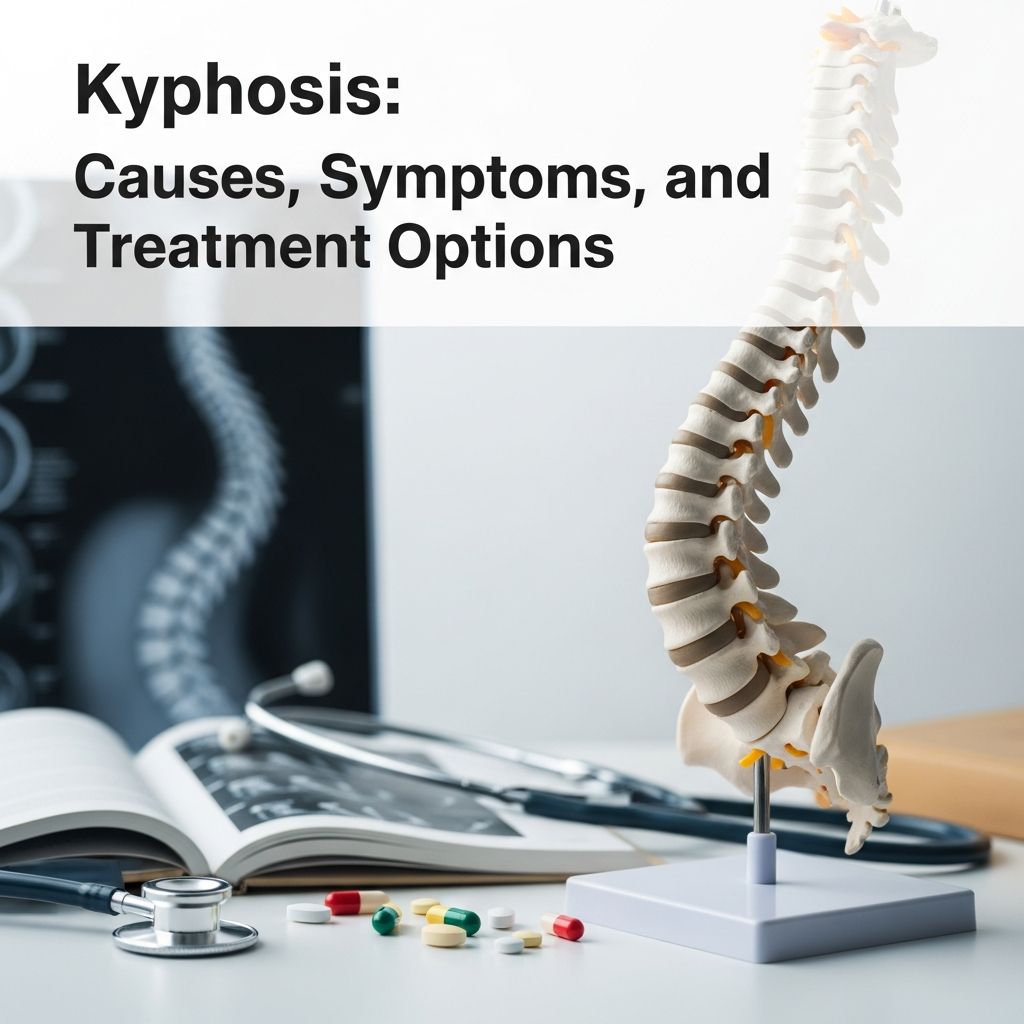
Kyphosis is a condition characterized by an excessive forward curvature of the spine, resulting in a rounded or hunched back appearance. While some forward curvature of the spine is normal and necessary for proper posture and balance, kyphosis occurs when this curvature becomes exaggerated. The condition primarily affects the thoracic spine (upper back region) and can range from mild to severe, with varying impacts on daily functioning and quality of life.
The term “kyphosis” is derived from the excessive front-to-back curve of the spine when viewed from the side, or along the sagittal plane. When the forward curvature becomes particularly pronounced, it may create a distinctive hump on the back, which is why kyphosis is sometimes referred to as “roundback” or “hunchback.” Unlike scoliosis, which involves side-to-side spinal curvature, kyphosis is specifically a forward bending condition that can significantly affect posture, mobility, and organ function.
Types of Kyphosis
Understanding the different types of kyphosis is essential for appropriate diagnosis and treatment planning. Each type has distinct characteristics, causes, and progression patterns:
Postural Kyphosis
Postural kyphosis is the most common type and typically develops due to poor posture habits over time. This form often appears in individuals who spend prolonged periods hunched over desks, computers, or mobile devices. The good news is that postural kyphosis is often reversible through conscious posture correction and targeted exercises to strengthen the back muscles.
Scheuermann’s Kyphosis
Also known as Scheuermann’s disease or juvenile kyphosis, this condition typically develops during childhood and adolescence, particularly during growth spurts. It involves structural damage to the vertebral bodies in the thoracic region, where the vertebrae become wedge-shaped rather than maintaining their normal rectangular appearance. This wedging of the spinal bones causes the spinal column to curve forward progressively. Scheuermann’s kyphosis can be painful, especially when standing or sitting for extended periods, and the underlying cause remains largely unknown.
Congenital Kyphosis
Congenital kyphosis is present at birth, occurring when the spine does not develop appropriately during fetal development in the uterus. This type is relatively uncommon but can be severely disabling and rapidly progressive. Congenital kyphosis exists in two primary forms: failure of formation (Type 1) and failure of segmentation (Type 2). The condition can become more severe as the child ages and may be associated with neurological complications that require careful monitoring and intervention.
Degenerative Kyphosis
Degenerative kyphosis typically develops in older adults and is often related to osteoporosis and vertebral fractures. As intervertebral discs degenerate with age, they lose height and water content, contributing to increased spinal curvature. Compression fractures in weakened vertebral bones can also precipitate or worsen kyphosis, particularly in individuals with compromised bone density.
Causes and Risk Factors
Kyphosis develops through various mechanisms, and understanding the underlying causes is crucial for prevention and management:
Age-Related Factors
Weakness in the vertebral bones is a primary cause, particularly in older individuals. As people age, bone density naturally decreases, making vertebrae more susceptible to compression and fracture. This age-related bone loss can alter the spine’s natural curvature and lead to progressive kyphosis.
Related Stories



Osteoporosis
Osteoporosis significantly increases the risk of developing kyphosis by weakening bone structure and making vertebrae prone to compression fractures. Prevention and early treatment of osteoporosis can prevent many cases of kyphosis in older adults.
Malignancy and Cancer Treatment
Both cancer cells and cancer treatments can weaken vertebral bones, making them susceptible to deformation and fractures that lead to kyphosis. Tumors affecting the spine or nearby structures can also directly cause spinal curvature abnormalities.
Other Contributing Factors
Additional causes include neurological conditions such as polio, spina bifida, and cerebral palsy. Metabolic disorders, inflammatory conditions, and genetic predisposition may also contribute to kyphosis development. Genetics can play a role in some cases of congenital and juvenile kyphosis.
Symptoms and Clinical Presentation
The symptoms of kyphosis vary depending on severity, type, and individual factors. Understanding these manifestations is important for early recognition and intervention:
Common Symptoms
The most frequently reported symptoms include:
- Hunched or rounded upper back appearance
- Forward head posture
- Rounded shoulders
- Tenderness and stiffness in the spine
- Pain in the middle or lower back (most common symptom)
- Fatigue and reduced energy levels
- Tight hamstrings
Severe Kyphosis Symptoms
In more advanced cases, patients may experience:
- Balance problems and increased fall risk
- Difficulty breathing or shortness of breath
- Chest pain
- Numbness or weakness in the legs
- Bladder or bowel incontinence
- Extreme fatigue and reduced exercise tolerance
- Difficulty looking upward or gazing up
- Discomfort when lying down
Complications of Untreated Kyphosis
Without appropriate management, kyphosis can lead to significant complications affecting physical health, emotional well-being, and quality of life:
Physical Function Limitations
Kyphosis is associated with weakened back muscles and difficulty performing routine daily activities such as getting out of chairs, walking, and driving. The spinal curvature can make it challenging to gaze upward, and some individuals experience pain when lying down, further restricting normal activities.
Respiratory Complications
Abnormal spine curvature can compress the lungs, causing breathing difficulties and potentially decreasing lung capacity. Severe kyphosis may restrict chest expansion, leading to reduced oxygen intake and exercise intolerance.
Digestive Issues
The pressure exerted by the deformed spine on digestive organs can cause symptoms such as acid reflux, heartburn, and difficulty swallowing. These complications can affect nutritional intake and overall health.
Chronic Pain and Neurological Symptoms
Advanced kyphosis can lead to chronic back pain requiring long-term management. In severe cases, cord compression may occur, resulting in numbness, tingling, weakness, and potentially bowel and bladder dysfunction.
Psychological and Social Impact
The visible deformity associated with kyphosis can significantly impact body image, particularly in adolescents and young adults. This may lead to self-consciousness, reduced confidence, and social withdrawal, affecting emotional well-being and quality of life.
Diagnosis and Evaluation
Proper diagnosis is essential for determining the appropriate treatment approach. Healthcare providers typically employ several diagnostic methods:
Physical Examination
A thorough physical examination includes assessment of spinal curvature, posture, range of motion, and neurological function. Providers evaluate for tenderness, muscle strength, reflexes, and any signs of neurological compromise. The Cobb angle measurement, determined through imaging, is used to quantify the degree of spinal curvature.
Imaging Studies
X-rays are typically the first imaging study performed to visualize spinal curvature and measure the Cobb angle. Kyphosis is generally defined as a curvature exceeding 40 degrees. If neurological symptoms are present, magnetic resonance imaging (MRI) should be ordered to rule out spinal cord compression and assess soft tissue structures.
Treatment Options
Treatment approaches depend on numerous factors including age, severity of curvature, type of kyphosis, medical history, and presence of breathing difficulties:
Conservative Management
For mild to moderate kyphosis without neurological involvement, conservative treatment is typically the first-line approach:
- Physical therapy and targeted exercises to strengthen back muscles
- Posture correction and ergonomic modifications
- Pain management through medications and heat therapy
- Bracing in select cases, particularly for juvenile kyphosis
- Activity modification and lifestyle adjustments
Surgical Intervention
Surgery may be considered in specific circumstances:
- Severe curvature exceeding 70-80 degrees
- Chronic pain unresponsive to conservative treatments
- Respiratory or digestive complications from cord/organ compression
- Rapid progression of deformity threatening complications
- Neurological symptoms or cord compression
- Congenital kyphosis with severe disability risk
Prevention Strategies
Several preventive measures can reduce the risk of developing kyphosis or slow its progression:
Osteoporosis Prevention
Maintaining adequate calcium and vitamin D intake, engaging in weight-bearing exercise, and avoiding smoking and excessive alcohol consumption help preserve bone density. For at-risk individuals, bone density screening and appropriate medical treatment can prevent vertebral fractures.
Posture Awareness
Maintaining proper posture during work and daily activities helps prevent postural kyphosis. Regular breaks from prolonged sitting and ergonomic workspace setup are beneficial.
Regular Exercise
Strengthening exercises for the back and core muscles, combined with flexibility training, support spinal health and proper alignment.
Prognosis and Outlook
The prognosis for kyphosis varies depending on type, severity, and underlying cause. Normal variants typically produce no functional limitations. Mild to moderate cases may improve with physical therapy or remain stable with conservative management. Severe cases may require surgical intervention but can often achieve significant functional improvement with appropriate treatment. The condition may be self-limiting, improved with therapy, or surgically corrected with spine surgery.
Frequently Asked Questions
Q: Is kyphosis the same as scoliosis?
A: No, kyphosis and scoliosis are distinct spinal conditions. Kyphosis involves abnormal forward curvature (front to back), while scoliosis involves side-to-side curvature. Although they can occur together, one does not cause the other.
Q: Can kyphosis be reversed?
A: Postural kyphosis can often be improved or reversed through exercise, posture correction, and physical therapy. Structural kyphosis from Scheuermann’s disease or degenerative changes may be managed but not fully reversed without surgery.
Q: Is early bracing for Scheuermann disease effective?
A: Yes, early diagnosis and bracing for Scheuermann disease can reduce the need for surgery later. Bracing is most effective when implemented during the growth years before skeletal maturity.
Q: When should I seek medical evaluation for suspected kyphosis?
A: Consult a healthcare provider if you notice progressive rounding of your back, develop persistent back pain, experience breathing difficulties, or have concerns about your spinal posture and alignment.
Q: Can kyphosis affect my breathing?
A: Yes, severe kyphosis can compress the lungs and restrict chest expansion, potentially causing breathing difficulties, reduced lung capacity, and exercise intolerance.
References
- Kyphosis – StatPearls — National Center for Biotechnology Information (NCBI), U.S. National Library of Medicine. 2024. https://www.ncbi.nlm.nih.gov/books/NBK558945/
- Kyphosis: Symptoms and causes — Mayo Clinic. 2024-09-28. https://www.mayoclinic.org/diseases-conditions/kyphosis/symptoms-causes/syc-20374205
- Kyphosis: What It Is, Causes, Symptoms, Types & Treatment — Cleveland Clinic. 2024. https://my.clevelandclinic.org/health/diseases/17671-kyphosis
- Kyphosis — Penn Medicine, University of Pennsylvania. 2024. https://www.pennmedicine.org/conditions/kyphosis
- What is kyphosis: symptoms, causes, and treatment — Columna. 2024. https://columna.com/en/symptoms-and-treatment-of-kyphosis/
Similar Articles








Read full bio of Sneha Tete