L-Carnitine Benefits: 9 Science-Backed Health Uses
Discover the science-backed benefits of L-carnitine for heart health, exercise performance, weight loss, brain function, and more.
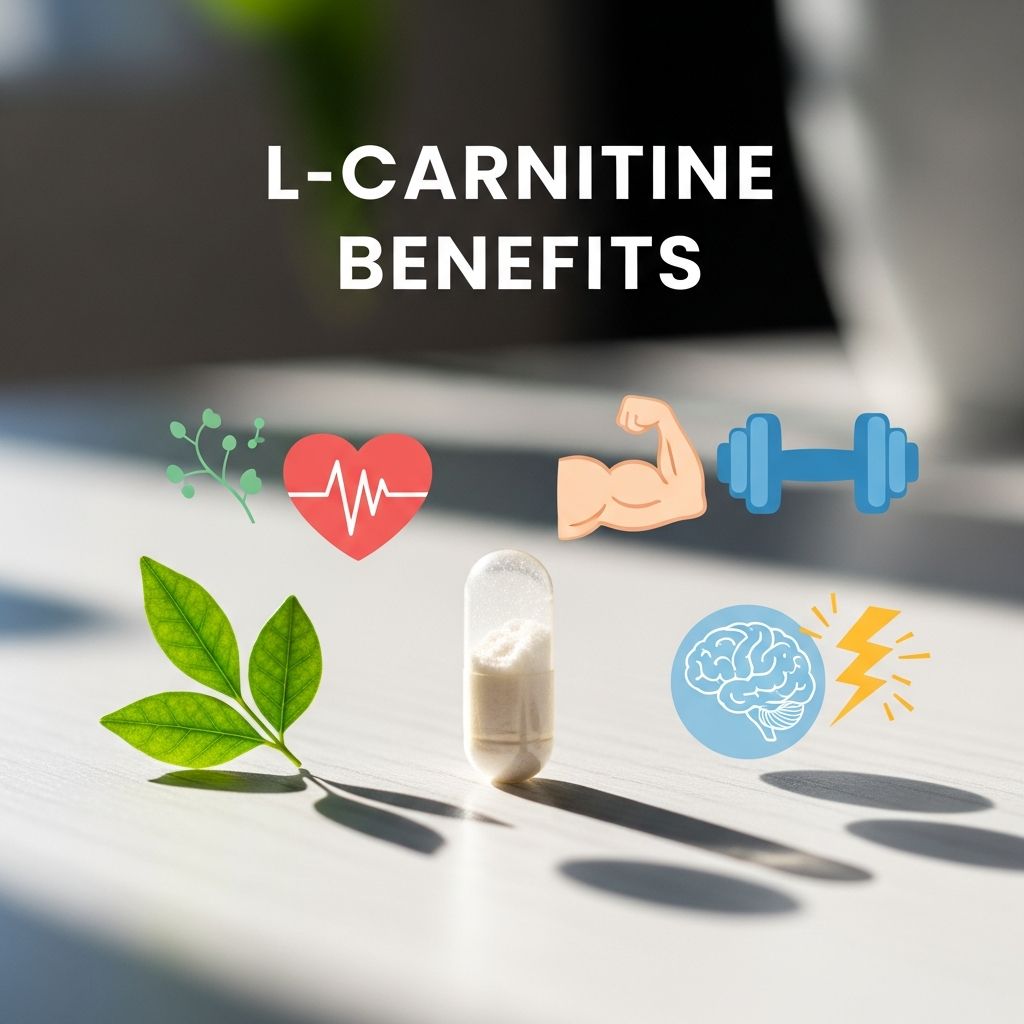
L-Carnitine is a naturally occurring amino acid derivative essential for transporting fatty acids into mitochondria, the cell’s energy powerhouses, to produce ATP. This process supports energy metabolism across the body, from muscles to the heart and brain. While the body synthesizes L-carnitine primarily in the liver and kidneys, dietary sources like red meat, dairy, and supplements provide additional amounts, especially for vegetarians or those with deficiencies. Research highlights its potential in heart health, exercise recovery, weight management, diabetes control, brain function, and male fertility. However, benefits vary by form (L-carnitine, acetyl-L-carnitine), dosage, and individual health status. Typical supplemental doses range from 500–2,000 mg daily, but consulting a healthcare provider is crucial to avoid side effects like nausea or fishy odor.
What Is L-Carnitine?
L-Carnitine, often abbreviated as LC, consists of two mirror-image forms: L-carnitine (biologically active) and D-carnitine (inactive and potentially harmful in excess). It plays a pivotal role in fatty acid oxidation, converting long-chain fatty acids into energy during periods of high demand, such as exercise or fasting. The body produces about 75% of its carnitine needs from lysine and methionine, with the rest from diet. Deficiency is rare but can occur in vegans, older adults, or those with genetic disorders like primary carnitine deficiency. Supplements are available as L-carnitine tartrate (for exercise), acetyl-L-carnitine (ALCAR for brain health), and propionyl-L-carnitine (for circulation). A 2024 review emphasizes its role in reducing oxidative stress and supporting energy production, particularly in the heart.
9 Science-Backed Benefits of L-Carnitine
May Improve Heart Health
L-Carnitine shows promising effects on cardiovascular health by enhancing energy production in heart muscle cells and reducing oxidative damage. A meta-analysis of over 3,600 patients post-myocardial infarction found 2–6 g/day L-carnitine reduced all-cause mortality by 27%, ventricular arrhythmias by 65%, and angina symptoms by 40%. It also supports left ventricular remodeling after heart attacks and lowers lipoprotein(a), a risk factor for atherosclerosis. For heart failure, a 2017 analysis reported improved heart function and symptom relief. In peripheral artery disease, it increases walking distance in claudication patients. A 2019 review noted reductions in diastolic blood pressure, total/LDL cholesterol, and increases in HDL in at-risk individuals. However, benefits for heart health remain somewhat controversial, with calls for more large-scale trials.
Supports Blood Sugar Control in Type 2 Diabetes
For individuals with type 2 diabetes, L-carnitine supplementation may enhance insulin sensitivity and lower blood sugar markers. A 2023 review found 2–3 g/day for 12–52 weeks reduced fasting plasma glucose, HbA1c, insulin resistance, total cholesterol, and LDL without affecting triglycerides. It influences insulin receptors, gene expression for sugar metabolism, and beta-cell function in the pancreas. Doses of 2–4 g/day showed benefits in overweight or obese diabetics. Importantly, L-carnitine is not a substitute for standard diabetes treatments; professional medical advice is essential.
Boosts Exercise Performance and Recovery
Athletes and active individuals may benefit from L-carnitine’s ability to increase muscle carnitine levels, improving fat oxidation, VO2max, and recovery. Studies with 2–4 g/day plus carbohydrates for 12+ weeks raised muscle total carnitine by 10–20%, enhancing exercise metabolism, performance, and energy expenditure. It reduced lactate, heart rate, muscle soreness, pyruvate, and markers like creatine kinase post-exercise. In recreational adults, 2 g/day for up to 3 months improved VO2max and recovery in 17 studies involving 237 participants. Resistance training combined with 9 weeks of supplementation boosted antioxidant capacity and glutathione peroxidase while lowering malondialdehyde. Results are mixed for maximal performance, but recovery benefits are consistent.
Promotes Weight Loss
L-Carnitine aids weight management by facilitating fat burning for energy, particularly when paired with exercise. In overweight individuals, it supports lipid metabolism and may reduce body fat. While direct weight loss studies vary, its role in metabolic syndrome and obesity shows benefits alongside interventions like statins. A systematic review noted increased energy expenditure without body composition changes in some protocols, but prolonged use (24 weeks) increased muscle mass in centenarians. Doses of 2 g/day show potential in reducing fat mass over 6 months in older adults.
Enhances Brain Function
Acetyl-L-carnitine (ALCAR) crosses the blood-brain barrier, supporting neurotransmitter activity and neuroprotection. A 2018 study with 1,500 mg/day for 28 weeks improved brain function in dementia patients. It may prevent age-related mental decline and enhance learning markers. General L-carnitine maintains brain function and reduces disorder risks via energy support. In centenarians, 24 weeks of supplementation improved cognitive function alongside physical tolerance.
Related Stories



Improves Male Fertility
L-Carnitine concentrates in sperm and supports motility and quality. Supplementation improves sperm parameters in infertile men by aiding energy production in sperm mitochondria. Clinical evidence supports its use in idiopathic infertility, often combined with other antioxidants.
Other Potential Benefits
- Reduces Muscle Soreness: 2–3 g/day for 3 weeks attenuates post-exercise pain, muscle damage markers (myoglobin, CK), and oxidative stress.
- Anti-Inflammatory and Antioxidant Effects: Boosts total antioxidant capacity and attenuates exercise-induced damage.
- Sarcopenia Support: Increases fat-free mass and reduces fat in centenarians over 6 months; mixed in younger elderly.
L-Carnitine Side Effects
L-Carnitine is generally safe at 2–3 g/day for up to a year, with mild side effects like nausea, vomiting, abdominal cramps, diarrhea, or fishy body odor. Long-term high doses in meat-heavy diets may elevate TMAO via gut bacteria, potentially promoting atherosclerosis, though evidence is theoretical. Rare risks include seizures in predisposed individuals. Pregnant/breastfeeding people and those with kidney issues should avoid without medical supervision.
L-Carnitine Dosage
Recommended doses: 500–2,000 mg/day, split doses. Exercise: 2 g L-carnitine tartrate. Brain: 1–3 g ALCAR. Heart: 2–6 g. Diabetes: 2–3 g. Take with carbs for better uptake. No established upper limit, but exceed 3 g cautiously.
| Condition | Form/Dose | Duration |
|---|---|---|
| Exercise Recovery | 2 g L-carnitine + CHO | 12+ weeks |
| Heart Health | 2–6 g L-carnitine | 6–12 months |
| Diabetes | 2–3 g/day | 12–52 weeks |
| Brain Function | 1.5 g ALCAR | 28 weeks |
What Happens If You Have Too Little L-Carnitine?
Deficiency causes fatigue, muscle weakness, heart issues, low carnitine in blood/urine. Primary (genetic) is rare; secondary from diet (veganism), malabsorption, dialysis, or meds. Symptoms: encephalopathy, cardiomyopathy, hypoglycemia. Infants need monitoring; adults supplement if deficient.
Food Sources of L-Carnitine
- Beef: 81 mg/3 oz
- Chicken breast: 3–5 mg/3 oz
- Milk: 8 mg/cup
- Fish: 5 mg/3 oz
- Veggies low (<0.1 mg)
Vegans: 10–20 mg/day from body synthesis; supplements advised.
Frequently Asked Questions (FAQs)
Who should take L-carnitine supplements?
Athletes, heart patients, diabetics, vegans, older adults with deficiencies. Consult a doctor.
Is L-carnitine safe for long-term use?
Yes, up to 1 year at 2–3 g/day; monitor TMAO if high-meat diet.
Does L-carnitine help with weight loss?
Supports fat metabolism; effective with diet/exercise.
What’s the best form of L-carnitine?
Tartrate for exercise, ALCAR for brain, propionyl for heart.
Can L-carnitine lower blood pressure?
Yes, especially diastolic in overweight individuals.
References
- L-Carnitine: Benefits, side effects, and dosage — Medical News Today. 2024. https://www.medicalnewstoday.com/articles/l-carnitine
- Potential Benefits of L-Carnitine as Dietary Supplement — American Academy of Family Physicians (AAFP). 2017-12-01. https://www.aafp.org/pubs/afp/issues/2017/1201/ol1.html
- L-Carnitine: Benefits, Side Effects, Sources, and Dosage — Healthline. Recent (post-2019 reviews). https://www.healthline.com/nutrition/l-carnitine
- Carnitine – Health Professional Fact Sheet — Office of Dietary Supplements, NIH (.gov). Updated post-2019. https://ods.od.nih.gov/factsheets/Carnitine-HealthProfessional/
- The bright and the dark sides of L-carnitine supplementation — National Library of Medicine, NIH (PMC). 2020. https://pmc.ncbi.nlm.nih.gov/articles/PMC7507632/
Similar Articles








Read full bio of medha deb