Lactic Acid: Benefits, Risks, And Myths Explained
Discover the vital role of lactic acid in energy production, exercise performance, and health risks like lactic acidosis.
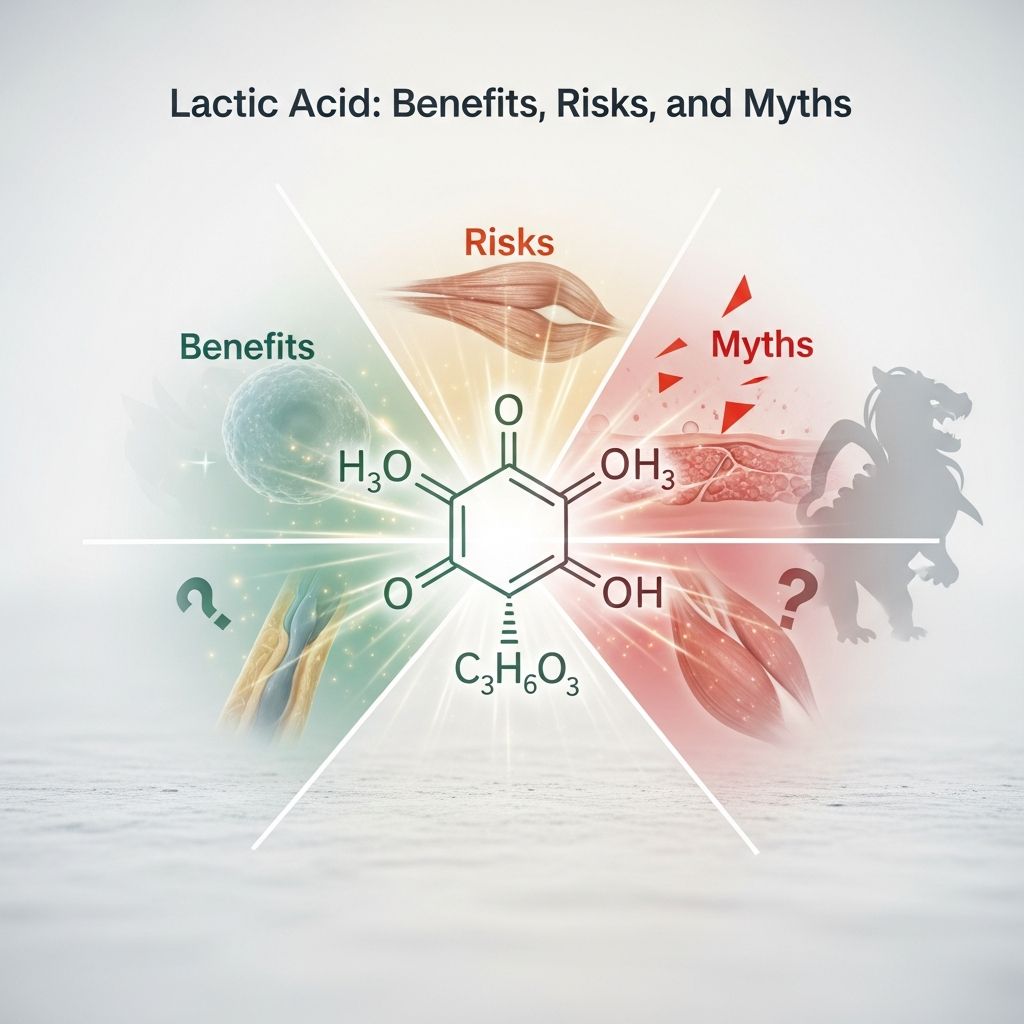
Lactic acid, often misunderstood as merely a cause of muscle fatigue, plays crucial roles in energy metabolism, cell signaling, and exercise performance. Produced during anaerobic glycolysis, it supports bodily functions but can lead to serious conditions like lactic acidosis when levels become excessive.
What Is Lactic Acid?
Lactic acid is a byproduct of glucose metabolism in muscle cells and red blood cells, formed when the body breaks down carbohydrates for energy under low-oxygen conditions. Technically, it dissociates into lactate and hydrogen ions in the blood due to physiological pH levels, but the terms are often used interchangeably.
In healthy individuals, the body produces 15-20 mmol/kg/day of lactic acid via glycolysis, where pyruvate is converted to lactate when oxygen is insufficient. This process, known as anaerobic metabolism, allows continued energy production during high-intensity efforts. Lactate is then cleared by the liver (via the Cori cycle) and kidneys, converting back to glucose or oxidized for energy.
- Glycolysis pathway: Glucose → Pyruvate → Lactate (anaerobic).
- Aerobic clearance: Lactate shuttled to liver/kidneys for reconversion to glucose.
- Normal levels: Serum lactate <2 mmol/L; hyperlactatemia >2 mmol/L without acidosis.
Role of Lactic Acid in the Body
Contrary to myths, lactic acid is not waste; it fuels cell respiration, glucose production, and signaling. During exercise, it provides energy to muscles and the heart, acting as a buffer against fatigue.
- Energy source: Lactate is oxidized in the heart, brain, and slow-twitch muscles for ATP production.
- Signaling molecule: Regulates metabolism, inflammation, and adaptation to stress.
- Glucose production: Via Cori cycle, supports sustained energy during recovery.
Research shows lactate enhances performance by shuttling between muscle fiber types, delaying true fatigue.
Lactic Acid and Exercise: Busting the Myths
The belief that lactic acid causes muscle soreness (DOMS) is a myth; soreness stems from microtears and inflammation 24-72 hours post-exercise. Lactic acid rises during intense activity but clears within 30-60 minutes.
Lactate threshold: The exercise intensity where lactate production exceeds clearance, marked by rising blood levels. Training raises this threshold, improving endurance.
- Myth: Lactic acid buildup causes burning sensation (actually H+ ions lowering pH).
- Fact: Beneficial for performance; elite athletes produce and clear it efficiently.
| Exercise Intensity | Lactate Level | Physiological Effect |
|---|---|---|
| Low (aerobic) | <2 mmol/L | Fat oxidation dominant |
| Moderate | 2-4 mmol/L | Increased lactate use |
| High (anaerobic) | >4 mmol/L | Threshold crossed; fatigue risk |
What Is Lactic Acidosis?
Lactic acidosis is defined as serum lactate >4 mmol/L with pH <7.35 and bicarbonate <20 mmol/L, indicating metabolic acidosis from excess lactate production or impaired clearance. It signals tissue hypoperfusion or mitochondrial dysfunction and raises mortality risk in critical illness.
Hyperlactatemia (lactate >2 mmol/L without acidosis) can precede it, especially in sepsis or shock.
Types of Lactic Acidosis
Classified into Type A (hypoxic) and Type B (non-hypoxic).
- Type A (70% of cases): Due to hypoperfusion/hypoxia.
- Shock (septic, cardiogenic, hypovolemic).
- Sepsis, severe anemia, carbon monoxide poisoning.
- Excessive exercise, trauma, convulsions.
- Type B: No overt hypoxia.
- Medications (metformin, salicylates, antiretrovirals).
- Liver/kidney failure, malignancy, thiamine deficiency.
- D-lactic acidosis (short bowel syndrome; bacterial fermentation).
Related Stories



Causes and Risk Factors
Common triggers include critical illnesses impairing oxygen delivery or lactate metabolism.
- Clinical conditions: Heart failure, sepsis, liver disease, kidney failure, hypoxia.
- Medications: Metformin (in renal impairment), beta-agonists (albuterol), HIV drugs.
- Other: Diabetic ketoacidosis, alcohol abuse, intense exercise in untrained individuals.
Impaired clearance (e.g., cirrhosis) combined with overproduction (e.g., seizures) heightens risk.
Symptoms of Lactic Acidosis
Symptoms reflect acidosis and underlying cause: nausea, vomiting, rapid breathing (Kussmaul), abdominal pain, weakness, confusion, organ failure.
- Early: Fatigue, muscle pain, tachypnea.
- Severe: Hypotension, coma, multi-organ dysfunction.
Mortality correlates with lactate levels >10 mmol/L and pH <7.2.
Diagnosis
Arterial blood gas (ABG) confirms elevated lactate (>4 mmol/L), low pH/bicarbonate. Rule out confounders like ketoacidosis via anion gap.
- Tests: Lactate level, ABG, electrolytes, renal/hepatic function.
- Imaging: For shock etiology (echo, CT).
Treatment and Management
Treat underlying cause; supportive care improves outcomes.
- Immediate: Oxygen, fluids, vasopressors for shock; bicarbonate if pH <7.1 (controversial).
- Specific: Antibiotics for sepsis, hemodialysis for metformin toxicity/renal failure.
- Exercise-induced: Rest, hydration; resolves spontaneously in healthy people.
Monitor lactate serially; clearance >10%/hour predicts survival.
Prevention
- Avoid nephrotoxic drugs in renal impairment.
- Train gradually to raise lactate threshold.
- Monitor high-risk patients (e.g., metformin in elderly).
Frequently Asked Questions (FAQs)
Does lactic acid cause muscle soreness?
No, lactic acid clears quickly; soreness (DOMS) is from structural damage.
Can exercise cause lactic acidosis?
Rarely in healthy individuals; possible in extreme endurance events with dehydration.
How do you lower lactic acid after workout?
Active recovery, hydration, carbs; liver clears it naturally.
Is lactic acidosis fatal?
Potentially, especially if >4 mmol/L in sepsis; early treatment key.
What foods reduce lactic acid?
No direct foods; bicarbonate-rich (baking soda) may buffer during exercise, but consult doctor.
References
- Lactic Acidosis – StatPearls — NCBI Bookshelf / NIH. 2023-07-17. https://www.ncbi.nlm.nih.gov/books/NBK470202/
- Lactic acid: Role in the body and impact on exercise — Medical News Today. 2023-08-15. https://www.medicalnewstoday.com/articles/326521
- Lactic acid test — MedlinePlus / NIH. 2024-01-10. https://medlineplus.gov/ency/article/003507.htm
- How to Get Rid of Lactic Acid — Healthline. 2023-11-20. https://www.healthline.com/health/how-to-get-rid-of-lactic-acid
- Lactic Acid Build Up: What It Means and How to Get Rid of It — Ortho Sports Med. 2023-05-12. https://orthosportsmed.com/lactic-acid-build-up-what-it-means-and-how-to-get-rid-of-it/
Similar Articles








Read full bio of medha deb