Lambert-Eaton Myasthenic Syndrome: Causes, Symptoms & Treatment
Complete guide to understanding Lambert-Eaton Myasthenic Syndrome symptoms, diagnosis, and treatment options.
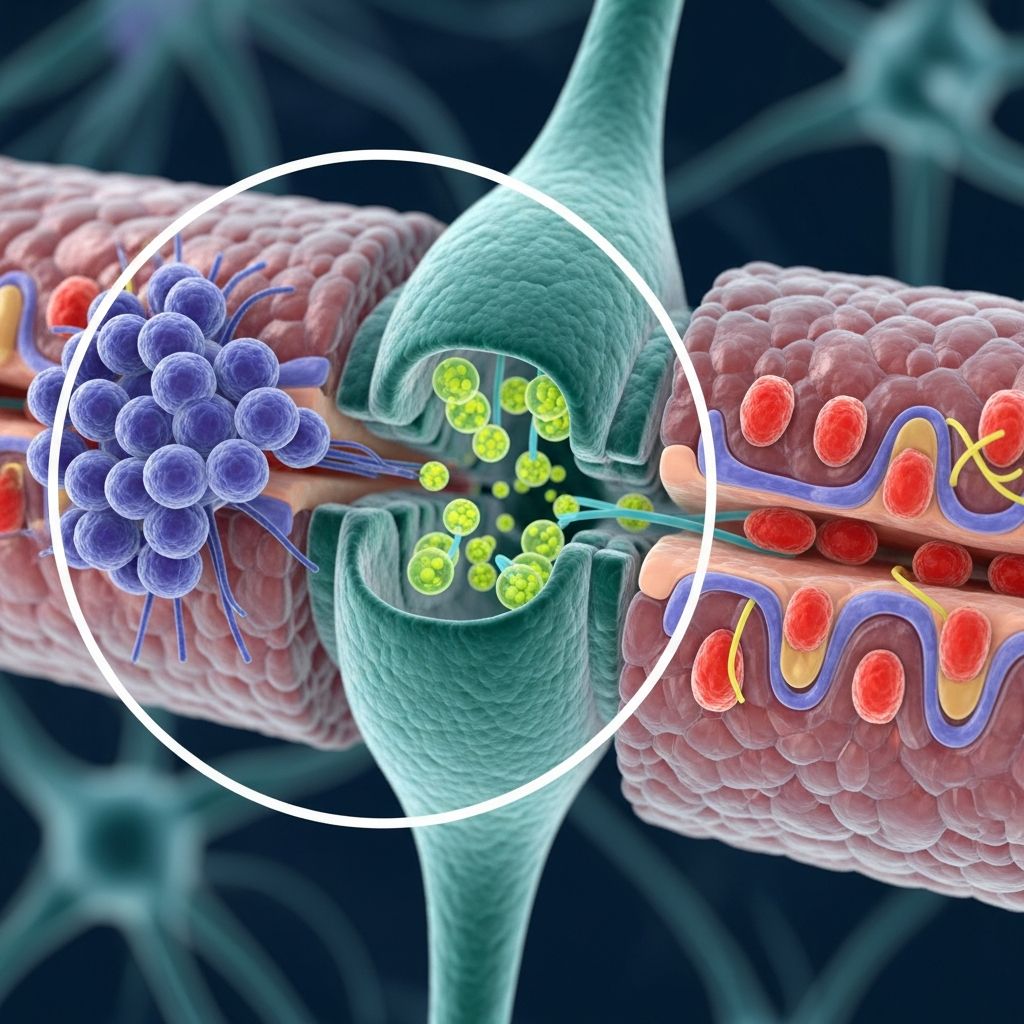
Understanding Lambert-Eaton Myasthenic Syndrome
Lambert-Eaton Myasthenic Syndrome (LEMS), also known as Eaton-Lambert syndrome, is a rare autoimmune disorder that affects the communication between nerve cells and muscles. This condition disrupts the neuromuscular junction, which is the critical connection point where motor nerves transmit signals to muscle fibers. When functioning normally, this junction allows electrical impulses to trigger muscle contractions. However, in LEMS, the body’s immune system mistakenly attacks calcium channels at nerve endings, interfering with the release of acetylcholine, a chemical messenger essential for muscle contraction.
The disease is named after Edward Lambert and Lee Eaton, neurologists at the Mayo Clinic who first documented this myasthenic syndrome in the 1950s and 1960s. Today, LEMS remains an exceptionally rare condition, affecting approximately 400 people in the United States. Despite its rarity, understanding this disorder is crucial for patients, healthcare providers, and families seeking effective management strategies.
What Causes Lambert-Eaton Myasthenic Syndrome
LEMS is fundamentally an autoimmune disorder in which the body’s natural defense system malfunctions. Instead of protecting against harmful pathogens and foreign substances, the immune system produces antibodies that specifically target calcium channels on nerve endings. These calcium channels are vital for the neuromuscular transmission process because they control the opening and closing of molecular gates that regulate calcium influx into nerve terminals.
When calcium enters the nerve ending, it triggers the release of acetylcholine into the neuromuscular junction. However, when antibodies attack and damage these calcium channels, fewer channels remain functional, resulting in significantly reduced acetylcholine release. This decreased chemical signaling means that muscles receive weaker signals to contract, leading to the characteristic weakness associated with LEMS.
LEMS presents in two distinct forms: cancer-associated LEMS and non-cancer associated LEMS. Cancer-associated LEMS, particularly linked to small-cell lung cancer (SCLC), accounts for approximately 60% of LEMS cases. In this form, tumors express calcium channel proteins that trigger an immune response. Unfortunately, the antibodies produced to target cancer cells cross-react with identical calcium channels on nerve endings, inadvertently attacking the neuromuscular junction. Non-cancer associated LEMS typically presents at a younger age (average age 35) and may have a genetic component linked to predisposition for autoimmunity.
Recognizing Symptoms of LEMS
LEMS presents with a distinctive constellation of symptoms that differ significantly from other neuromuscular disorders. The condition typically begins with progressive muscle weakness that starts in the proximal muscles of the legs and upper arms before potentially spreading to other muscle groups.
Primary Muscle Weakness Symptoms
Early manifestations often include difficulty rising from a seated position, climbing stairs, walking on inclined surfaces, or engaging in strenuous physical activities. As the condition progresses, weakness may extend to shoulder muscles, hand and foot muscles, and muscles controlling speech and swallowing. In some cases, eye muscles may become affected, though eye weakness in LEMS is typically mild and rarely occurs as an isolated symptom. The progressive nature of LEMS means symptoms usually develop gradually over weeks to several months, though this timeline accelerates significantly when the condition is associated with underlying cancer.
Autonomic Dysfunction Symptoms
Related Stories



A distinguishing feature of LEMS is the presence of autonomic symptoms affecting the nervous system’s regulation of involuntary functions. These autonomic manifestations include dry mouth, dry eyes, reduced or absent sweating, constipation, and in some male patients, erectile dysfunction. These symptoms occur because the same antibodies attacking calcium channels at the neuromuscular junction also affect autonomic nerve endings, distinguishing LEMS from other similar conditions.
Additional Clinical Features
During physical examination, clinicians typically observe reduced or absent tendon reflexes, a hallmark diagnostic feature of LEMS. Many LEMS patients experience significant weight loss, fatigue, and general malaise. The combination of proximal muscle weakness, reduced tendon reflexes, and autonomic dysfunction creates a clinical “triad” that helps differentiate LEMS from other neuromuscular disorders.
How LEMS Differs from Other Neuromuscular Disorders
LEMS is frequently confused with Myasthenia Gravis (MG) because both are autoimmune neuromuscular disorders. However, critical differences distinguish these conditions. In MG, antibodies attack acetylcholine receptors or proteins associated with the postsynaptic junction, whereas LEMS antibodies target presynaptic calcium channels. This fundamental difference produces distinct clinical presentations.
In MG, eye muscle weakness is often the initial symptom and may be the only manifestation for extended periods. Conversely, in LEMS, eye weakness is rarely the presenting symptom and occurs as part of generalized weakness. Additionally, severe respiratory muscle weakness, which can be life-threatening in MG, is uncommon in LEMS. Perhaps most significantly, MG patients lack the autonomic dysfunction symptoms that characterize LEMS, making the presence of dry mouth, dry eyes, constipation, and decreased sweating helpful diagnostic clues.
Diagnosis of Lambert-Eaton Myasthenic Syndrome
Accurate diagnosis of LEMS requires a comprehensive approach combining clinical evaluation, electrophysiological testing, and serological studies. The diagnostic process begins with a thorough clinical history and physical examination, noting the characteristic pattern of proximal leg weakness, autonomic symptoms, and reduced reflexes.
Electrophysiological Testing
Repetitive nerve stimulation (RNS) is a key diagnostic tool that produces characteristic findings in LEMS. Unlike MG, which shows decremental responses to RNS, LEMS typically demonstrates an incremental response—muscle action potentials increase in amplitude with repeated nerve stimulation. This distinctive pattern results from the mobilization of additional acetylcholine reserves with repeated activation. Single-fiber electromyography (EMG) may also be performed to assess individual muscle fiber function and demonstrate abnormal neuromuscular transmission.
Antibody Testing
Serological testing detects antibodies against voltage-gated calcium channels (VGCCs), particularly P/Q-type calcium channels. Approximately 85% of LEMS patients test positive for these anti-VGCC antibodies, providing strong diagnostic confirmation. In seronegative cases, diagnosis relies more heavily on clinical and electrophysiological findings.
Imaging and Additional Testing
Given the strong association between LEMS and small-cell lung cancer, comprehensive imaging of the chest is essential, particularly in newly diagnosed patients. High-resolution computed tomography (CT) or positron emission tomography (PET) imaging helps identify occult malignancies that may not be immediately apparent. Approximately 60% of LEMS patients have underlying SCLC, making cancer screening a critical component of the diagnostic workup.
Treatment Options for LEMS
Management of LEMS requires a multifaceted approach tailored to individual patient circumstances, disease severity, and underlying causes. Treatment strategies focus on improving neuromuscular transmission and, when applicable, addressing associated malignancies.
Symptomatic Pharmacological Treatment
Pyridostigmine, an acetylcholinesterase inhibitor, is frequently used as a first-line symptomatic treatment. This medication prolongs acetylcholine availability in the synaptic cleft by preventing its enzymatic breakdown, thereby enhancing neuromuscular transmission. However, pyridostigmine provides only modest symptomatic improvement in many LEMS patients.
3,4-diaminopyridine (3,4-DAP) represents a more effective treatment option that directly enhances acetylcholine release from nerve terminals. By blocking potassium channels on nerve endings, 3,4-DAP prolongs the nerve action potential duration, allowing increased calcium influx and greater acetylcholine release. Clinical trials have demonstrated significant functional improvement with 3,4-DAP, making it an important therapeutic option for symptomatic LEMS management.
Immunosuppressive Therapy
Immunosuppressive agents target the underlying autoimmune mechanism driving LEMS. Corticosteroids, azathioprine, mycophenolate mofetil, and rituximab have been used with varying degrees of success to reduce antibody production and suppress the aberrant immune response. These agents may be particularly beneficial in non-cancer associated LEMS and in cancer-associated LEMS patients following cancer treatment.
Intravenous Immunoglobulin and Plasmapheresis
In acute exacerbations or severe symptomatic presentations, intravenous immunoglobulin (IVIG) or plasmapheresis may be employed to rapidly reduce circulating pathogenic antibodies. These interventions provide relatively rapid clinical improvement, though effects are typically temporary, making them suitable for acute symptom management or as bridge therapy pending longer-term immunosuppressive effects.
Cancer-Related Treatment Considerations
For cancer-associated LEMS, treatment of the underlying malignancy is paramount. Chemotherapy, radiation therapy, or surgical resection of tumors frequently results in improvement or resolution of neuromuscular symptoms as tumor burden decreases and the antigenic stimulus for autoimmune attack is removed. Coordination between oncology and neurology specialists ensures comprehensive, integrated care.
Living with Lambert-Eaton Myasthenic Syndrome
Managing LEMS requires ongoing collaboration between patients and their healthcare team. Regular monitoring of symptoms, medication efficacy, and disease progression is essential. Physical therapy and occupational therapy can help maintain muscle strength and optimize functional abilities. Energy conservation techniques and activity modification strategies help patients manage fatigue and maintain quality of life.
Patients with cancer-associated LEMS require integrated care addressing both malignancy and neuromuscular manifestations. Long-term surveillance for cancer recurrence and assessment for treatment-related complications remain important considerations. Support from patient advocacy organizations and support groups can provide valuable resources and emotional support.
Frequently Asked Questions About LEMS
Q: Is Lambert-Eaton Myasthenic Syndrome hereditary?
A: While non-cancer associated LEMS may have a genetic component predisposing to autoimmunity, LEMS is not directly inherited in a classical Mendelian pattern. However, individuals with family histories of autoimmune diseases may have increased susceptibility.
Q: Can LEMS be cured?
A: Currently, there is no cure for LEMS, but symptoms can be effectively managed or significantly improved with appropriate treatment combinations. Cancer-associated LEMS may improve substantially with successful cancer treatment.
Q: How is LEMS different from myasthenia gravis?
A: LEMS and MG are distinct autoimmune disorders targeting different components of the neuromuscular junction. LEMS involves presynaptic calcium channels, while MG involves postsynaptic acetylcholine receptors. Clinical presentations, diagnostic findings, and treatment responses differ significantly between these conditions.
Q: What is the prognosis for someone diagnosed with LEMS?
A: With appropriate treatment, most LEMS patients experience significant symptom improvement or stabilization. Prognosis depends on disease type, severity, underlying malignancies, and individual treatment responses. Cancer-associated LEMS may show dramatic improvement with successful cancer treatment.
Q: Are there lifestyle modifications that help manage LEMS symptoms?
A: Yes, energy conservation techniques, regular but moderate exercise, physical therapy, and activity pacing help optimize function and reduce fatigue. Adequate nutrition, sleep, and stress management also support overall symptom control.
Current Research and Future Directions
Ongoing research continues to advance understanding of LEMS pathophysiology and therapeutic options. Investigation of novel immunotherapies, improved diagnostic biomarkers, and better characterization of genetic factors in non-cancer associated LEMS promises to enhance future treatment strategies. Clinical trials exploring new pharmacological agents and immunomodulatory approaches offer hope for improved outcomes and quality of life for LEMS patients.
References
- The Role of Mutations on HLA Genes in Lambert-Eaton Myasthenic Syndrome — Gavin Publishers. 2024. https://www.gavinpublishers.com/article/view/the-role-of-mutations-on-hla-genes-in-lambert-eaton-myasthenic-syndrome
- Lambert-Eaton Myasthenic Syndrome (LEMS) — Muscular Dystrophy Association (MDA). 2024. https://www.mda.org/disease/lambert-eaton-myasthenic-syndrome
- Lambert-Eaton Myasthenic Syndrome (LEMS): Symptoms & Causes — Cleveland Clinic. 2024. https://my.clevelandclinic.org/health/diseases/23202-lambert-eaton-myasthenic-syndrome-lems
- Lambert-Eaton Syndrome and Small-Cell Lung Cancer — WebMD. 2024. https://www.webmd.com/lung-cancer/lung-cancer-lambert-eaton-syndrome
- Eaton-Lambert Syndrome — National Institutes of Health, Genetic and Rare Diseases Information Center (GARD). 2024. https://rarediseases.info.nih.gov
- Autonomic Dysfunction in Lambert-Eaton Myasthenic Syndrome — Johns Hopkins University. 2024. https://pure.johnshopkins.edu/en/publications/autonomic-dysfunction-in-lambert-eaton-myasthenic-syndrome
Similar Articles








Read full bio of medha deb