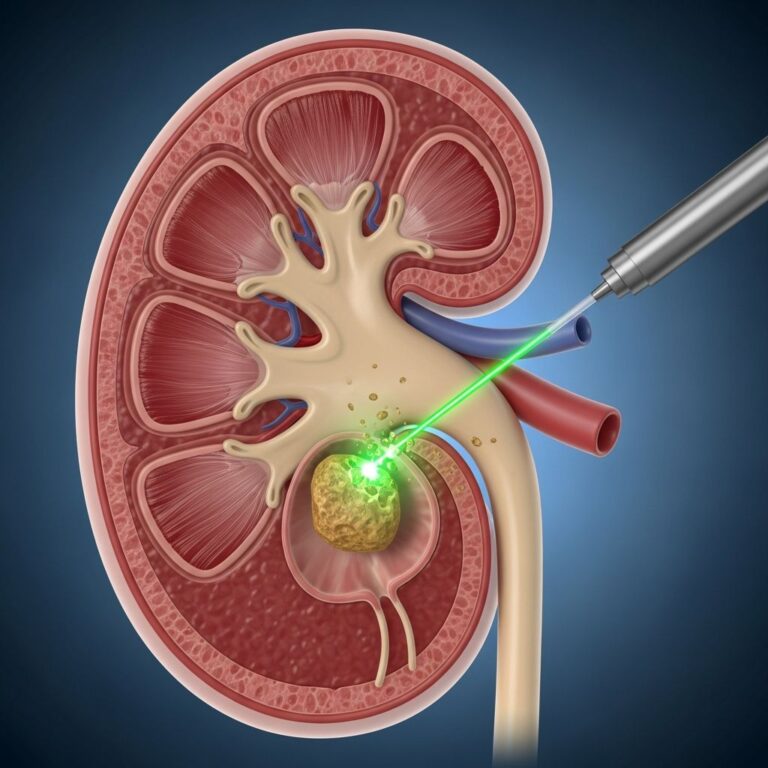
Laparoscopic Pyeloplasty: Minimally Invasive Treatment
Understanding laparoscopic pyeloplasty: A minimally invasive surgical solution for ureteropelvic junction obstruction.
What is Laparoscopic Pyeloplasty?
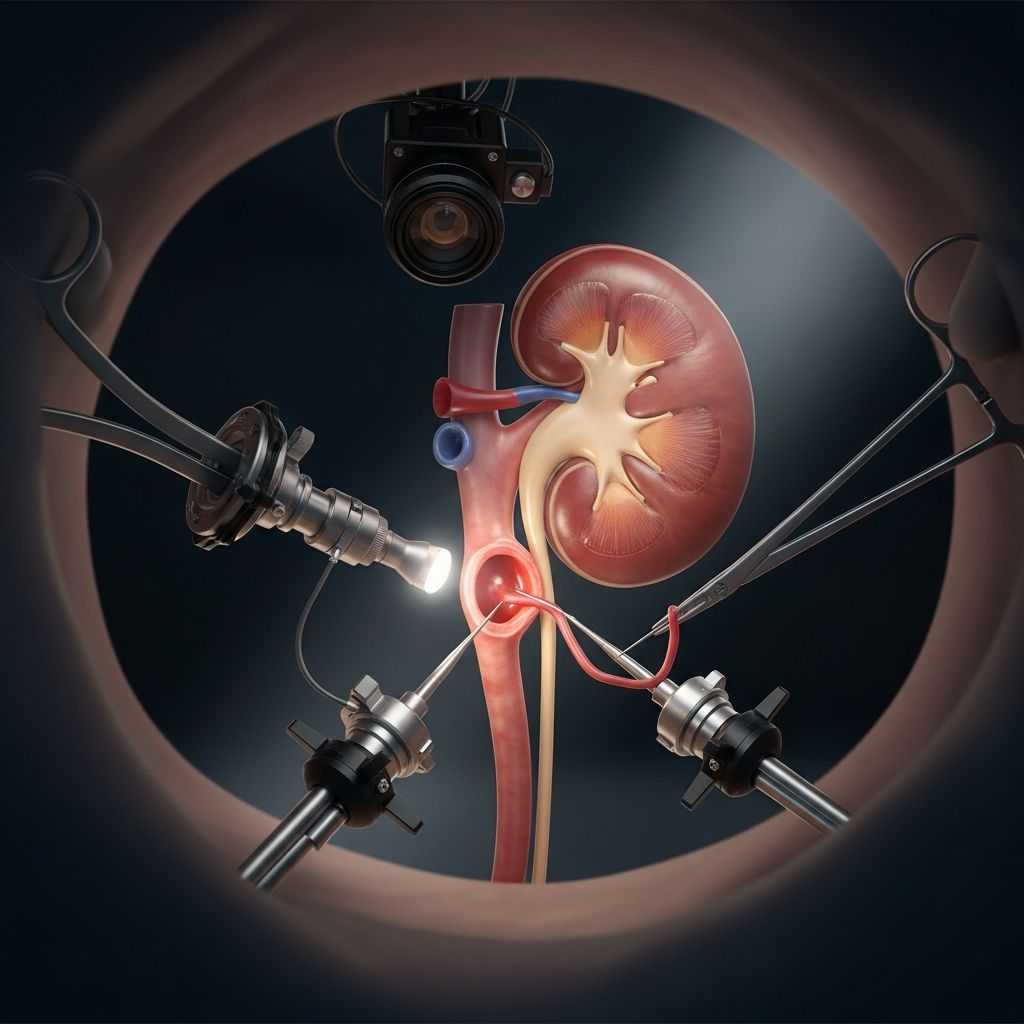
Laparoscopic pyeloplasty is a minimally invasive surgical procedure designed to correct a blockage or narrowing at the ureteropelvic junction (UPJ), which is the area where the kidney connects to the ureter. This condition, known as ureteropelvic junction obstruction, can impede the normal flow of urine from the kidney to the bladder, potentially leading to pain, infection, or kidney damage if left untreated. Unlike traditional open surgery, which requires a large incision through the flank or abdomen, laparoscopic pyeloplasty utilizes specialized instruments and a camera to repair the obstruction through several small “keyhole” incisions, typically measuring 5-10 millimeters in length.
The procedure has become increasingly popular among urologists and patients alike due to its effectiveness in addressing UPJ obstruction while minimizing surgical trauma, reducing postoperative pain, and facilitating faster patient recovery compared to open surgical approaches. The laparoscopic technique allows surgeons to maintain the precise surgical principles of open pyeloplasty while offering the distinct advantages of minimally invasive surgery.
Why You May Need Laparoscopic Pyeloplasty
Ureteropelvic junction obstruction is the primary indication for laparoscopic pyeloplasty. This blockage can develop for various reasons, including anatomical abnormalities present from birth, scar tissue formation, or crossing blood vessels that compress the junction. Patients with UPJ obstruction may experience:
– Chronic flank or back pain- Recurrent urinary tract infections- Nausea or vomiting- Kidney stones- Elevated blood pressure related to kidney dysfunction- Declining kidney function detected through imaging or laboratory tests
A healthcare provider may recommend laparoscopic pyeloplasty when conservative management has failed or when imaging studies confirm significant obstruction with potential compromise to kidney function. The decision to pursue surgical intervention depends on factors such as symptom severity, the degree of obstruction, kidney function assessment, and overall patient health status.
Preparing for Your Procedure
Preoperative preparation is critical to ensure a successful outcome and minimize complications during laparoscopic pyeloplasty. Your surgical team will conduct a comprehensive evaluation to optimize your condition before the procedure.
Preoperative Evaluations and Testing
Before undergoing laparoscopic pyeloplasty, your urologist will perform several diagnostic tests to confirm the diagnosis and assess kidney function. These evaluations typically include imaging studies such as ultrasound, CT scans, or magnetic resonance imaging (MRI) to visualize the obstruction and identify any crossing blood vessels. Additionally, your surgeon may perform retrograde pyelography, a special imaging technique that uses contrast dye injected through the ureter to clearly visualize the obstruction site.
Laboratory tests will assess your kidney function through serum creatinine levels and glomerular filtration rate (GFR) calculations. A urinalysis will be performed to detect any signs of infection, and any existing urinary tract infection must be treated with antibiotics before surgery proceeds. Blood tests will evaluate your overall health status, coagulation profile, and blood type in preparation for potential transfusion needs.
Stent Placement and Medication
A double-J (DJ) ureteral stent may be inserted before surgery through a cystoscopic procedure. This small tube helps drain urine from the kidney and maintains the ureter’s patency prior to the surgical repair. Your surgeon will discuss whether preoperative stent placement is appropriate for your specific situation.
Related Stories



Perioperative antibiotic prophylaxis will be administered to prevent surgical site infections. You should inform your healthcare team about all medications you take, as some may need to be adjusted or discontinued before surgery. Blood-thinning medications typically require special management in the perioperative period.
Fasting and Day-of-Surgery Instructions
You will receive specific instructions regarding fasting before surgery, typically requiring you to avoid solid foods for 6-8 hours and clear liquids for 2-4 hours before your procedure. A transurethral catheter will be inserted after you receive anesthesia to monitor urine output during and after the procedure. Some surgical protocols may include placement of a gastric feeding tube to keep your stomach empty during surgery.
Understanding the Surgical Procedure
Patient Positioning and Setup
For laparoscopic pyeloplasty, you will be positioned in a lateral position at approximately 45 degrees with mild lumbar hyperextension to provide optimal access to the kidney and ureter. Your surgeon and anesthesia team will secure you safely to the operating table using a vacuum mattress that maintains your position even if the table requires repositioning during the procedure.
Creating Surgical Access
The surgeon creates a pneumoperitoneum (insufflation of carbon dioxide gas into the abdominal cavity) to provide adequate visualization and working space. This is typically accomplished through a mini-laparotomy near the umbilicus using a Veress needle or direct visualization technique. A 10-millimeter camera trocar (port) is inserted next to the umbilicus, allowing the surgeon to visualize the surgical field on a high-definition monitor.
Additional trocars are strategically placed to facilitate instrument manipulation and tissue retraction:
– A second 10-millimeter trocar placed slightly below the navel lateral to the ipsilateral rectus muscle- A 5-millimeter trocar positioned between the xiphoid process and umbilicus in the midline- Additional 5-millimeter trocars as needed for retraction of surrounding organs such as the liver, colon, or spleen
Surgical Approach to the Kidney
Once adequate visualization is achieved, the surgeon performs a laterocolic incision to mobilize the colon medially, creating access to the retroperitoneal space where the kidney and ureter are located. The correct anatomical plane is typically identified just below the kidney, between the colonic mesentery and the retroperitoneum. After sufficient colon mobilization, the ureter is identified at the lower pole of the kidney.
The surgeon carefully dissects along the ureter, proceeding cephalad (toward the head) until the renal pelvis is fully visualized. During this dissection, special attention is paid to identifying any crossing blood vessels to the lower pole of the kidney, as these may be contributing to the obstruction. The anterior and posterior aspects of the renal pelvis and lower pole of the kidney are completely dissected to provide adequate exposure for the repair.
The Pyeloplasty Repair Technique
Dismembered pyeloplasty is the surgical technique of choice, particularly when crossing blood vessels are identified as the cause of obstruction. During this technique, the surgeon places traction sutures at specific points on the renal pelvis. These sutures are brought outside transcutaneously through small trocar incision closure systems and secured with clamps, providing excellent exposure of the surgical field.
The obstructed ureteropelvic junction segment is excised, and any redundant renal pelvis tissue is removed (reduction pyeloplasty) if necessary. The ureter is then spatulated along the lateral wall for a distance of 2-3 centimeters, creating a wide opening. The ureter is repositioned relative to any crossing blood vessels, with the anastomosis (surgical connection) created ventral to these vessels to prevent recurrent obstruction.
The ureter and renal pelvis are then reconnected using absorbable sutures that will dissolve over time, creating a wide, tension-free anastomosis that allows for adequate urine drainage. The entire procedure typically requires 3-4 hours to complete.
Advanced Surgical Approaches
Robot-Assisted Laparoscopic Pyeloplasty
Robot-assisted laparoscopic pyeloplasty represents an advanced variation of the standard laparoscopic technique, utilizing the da Vinci Surgical System or similar robotic platforms. This approach uses 4-5 small incisions (less than 1 centimeter) instead of larger incisions, similar to standard laparoscopy but with enhanced surgical capabilities.
The robotic system provides several distinct advantages:
–
Three-dimensional, high-definition imaging
that provides superior visualization compared to standard laparoscopy-Articulated instruments
with multiple degrees of freedom, allowing for more precise and complex movements-Filtered hand tremor
, which eliminates natural hand movements that could compromise surgical precision-Ergonomic working position
for the surgeon, reducing fatigue during lengthy procedures-Stereoscopic lens
providing enhanced depth perception and anatomical detailDuring robot-assisted pyeloplasty, if kidney stones have developed secondary to the UPJ obstruction, a flexible telescope can be inserted into the kidney to perform basket extraction of stones prior to completing the ureter-to-renal pelvis reconnection. The ureter and renal pelvis ends are spatulated and reconnected using sutures to create a wide anastomosis, and a drain is placed at the end of surgery, typically removed within 24-48 hours.
Retroperitoneoscopic Pyeloplasty
Retroperitoneoscopic pyeloplasty, which approaches the kidney through the retroperitoneal space rather than entering the peritoneal cavity, represents an alternative technique that is technically more challenging but offers distinct advantages. This approach reduces postoperative pain and may shorten hospital stay compared to the transperitoneal approach, though it requires specialized expertise and equipment.
Single-Port Laparoscopy
Single-port laparoscopic pyeloplasty represents the frontier of minimally invasive technology, where the entire procedure is performed through a single trocar with multiple channels and specialized angulated instruments. This technique further reduces the number of incisions and associated trauma, though it requires significant laparoscopic expertise and specialized instrumentation.
Recovery and Postoperative Care
Immediate Postoperative Period
After your laparoscopic pyeloplasty is completed, you will be sent to the recovery room with several devices in place to facilitate healing and monitor your status:
– A Foley catheter for bladder drainage- An internal ureteral stent that remains in place to support the healing anastomosis- A drain exiting through the flank to allow any urine leaking from the repair site to escape externally rather than accumulating in the abdomen
You will be monitored closely during the immediate postoperative period as you recover from anesthesia. Pain management will be provided through intravenous medications, with a transition to oral pain medication as tolerated. Most patients are able to eat and drink normally within a few hours after the procedure.
Hospital Stay and Early Discharge
Laparoscopic pyeloplasty typically requires only a brief hospital stay, usually 1-2 days compared to 2-3 days for open pyeloplasty. The minimally invasive nature of the procedure results in significantly less tissue trauma and postoperative pain, allowing for faster mobilization and earlier discharge. The flank drain is generally removed within 24-48 hours if output remains minimal.
Stent Removal and Long-term Follow-up
The indwelling ureteral stent typically remains in place for approximately four weeks to allow the surgical anastomosis to heal and establish a mature scar. During this time, you should follow your surgeon’s restrictions regarding physical activity and exercise. The stent is removed in an office-based procedure without requiring general anesthesia, typically performed through cystoscopy.
Follow-up imaging studies, such as ultrasound or CT scans, will be performed several weeks to months after surgery to confirm successful repair and assess for any residual obstruction or complications. Regular follow-up appointments allow your surgeon to monitor your recovery progress and address any concerns.
Success Rates and Effectiveness
Laparoscopic pyeloplasty has demonstrated excellent success rates comparable to open surgical approaches. Open pyeloplasty achieves favorable outcomes in 90-100% of cases, and laparoscopic pyeloplasty results are equally successful. The success of the procedure is typically defined as symptom resolution, improved kidney function, and absence of recurrent obstruction on follow-up imaging.
Factors contributing to successful outcomes include proper patient selection, accurate identification of the obstruction etiology, precise surgical technique, and adherence to the established principles of pyeloplasty, including precise mucosal approximation, excision of redundant renal pelvis tissue, and appropriate transposition of the ureteropelvic junction for lower pole crossing vessels.
Potential Risks and Complications
While laparoscopic pyeloplasty is generally a safe procedure, all surgical interventions carry potential risks. Possible complications include:
– Bleeding or hematoma formation- Urinary tract infection- Urine leakage from the anastomotic site- Recurrent ureteropelvic junction obstruction- Stricture formation at the surgical site- Injury to surrounding structures including the colon, bowel, vascular structures, nerves, and muscles- Injury to adjacent organs such as the spleen, liver, pancreas, or gallbladder- If lung cavity injury occurs, a chest tube may be required to evacuate air, blood, and fluid and allow proper lung expansion
Your surgeon will discuss these risks in detail and explain how they are minimized through careful surgical technique and appropriate patient selection.
Frequently Asked Questions
Q: How long does laparoscopic pyeloplasty surgery take?
A: The procedure typically requires 3-4 hours to complete, though this can vary depending on the complexity of the obstruction, presence of crossing blood vessels, and surgeon experience.
Q: What is the difference between laparoscopic and robotic-assisted pyeloplasty?
A: Robotic-assisted pyeloplasty offers enhanced three-dimensional imaging, articulated instruments with multiple degrees of freedom, filtered hand tremor elimination, and an ergonomic working position for the surgeon. Both approaches yield excellent results, but robotic assistance may be particularly beneficial for complex cases or surgeons developing laparoscopic expertise.
Q: How long does it take to return to normal activities after laparoscopic pyeloplasty?
A: Most patients can return to light activities within 1-2 weeks and resume full activities within 4-6 weeks, though individual recovery timelines vary based on overall health and the specific nature of activities.
Q: When is the ureteral stent removed after pyeloplasty?
A: The indwelling ureteral stent typically remains in place for approximately four weeks to allow proper healing of the anastomosis before removal in an office-based cystoscopic procedure.
Q: What is the success rate for laparoscopic pyeloplasty?
A: Laparoscopic pyeloplasty achieves success rates comparable to open surgery, with 90-100% of patients experiencing symptom resolution and successful restoration of normal urine flow.
Q: What causes ureteropelvic junction obstruction?
A: UPJ obstruction can result from anatomical abnormalities present from birth, crossing blood vessels, scar tissue formation, or less commonly, tumors or other pathology compressing the junction.
Q: Is laparoscopic pyeloplasty suitable for patients with kidney stones related to their obstruction?
A: Yes, during robotic-assisted laparoscopic pyeloplasty, kidney stones secondary to UPJ obstruction can be removed using a flexible telescope and basket extraction prior to completing the anastomosis.
References
- Laparoscopic Pyeloplasty: Surgical Steps and Complications — Urology-Textbook.com. Updated 2024. https://www.urology-textbook.com/laparoscopic-pyeloplasty.html
- Laparoscopic Pyeloplasty: Clinical Keywords — Yale Medicine. Accessed December 2025. https://www.yalemedicine.org/clinical-keywords/laparoscopic-pyeloplasty
- Laparoscopic Pyeloplasty — GW Medical Faculty Associates. 2021. https://gwdocs.org/sites/g/files/zaskib551/files/2021-09/Laparoscopic-Pyeloplasty.pdf
- Laparoscopic Robotic Pyeloplasty — UF Health. Updated 2025. https://ufhealth.org/conditions-and-treatments/laparoscopic-robotic-pyeloplasty
- Robotic Pyeloplasty: Patient Guide — UF Urology, University of Florida. Updated 2025. https://urology.ufl.edu/patient-care/robotic-laparoscopic-urologic-surgery/procedures/robotic-pyeloplasty/
- Robot-Assisted Laparoscopic Pyeloplasty: A Review of Minimally Invasive Techniques — National Center for Biotechnology Information (NCBI). 2014. https://pmc.ncbi.nlm.nih.gov/articles/PMC4247458/
Similar Articles








Read full bio of Sneha Tete