Laparoscopy: Minimally Invasive Abdominal Surgery
Understanding laparoscopy: A minimally invasive surgical procedure for diagnosis and treatment of abdominal conditions.
What Is Laparoscopy?
Laparoscopy is a minimally invasive surgical procedure that allows surgeons to examine and treat conditions affecting the abdominal and pelvic organs through small incisions. Unlike traditional open surgery, which requires a large cut to access internal organs, laparoscopy uses specialized instruments and advanced visualization technology to perform diagnostics and surgical interventions with minimal tissue trauma. This approach has revolutionized modern surgery by reducing patient recovery times, decreasing post-operative pain, and minimizing scarring while maintaining the ability to diagnose and treat serious abdominal conditions.
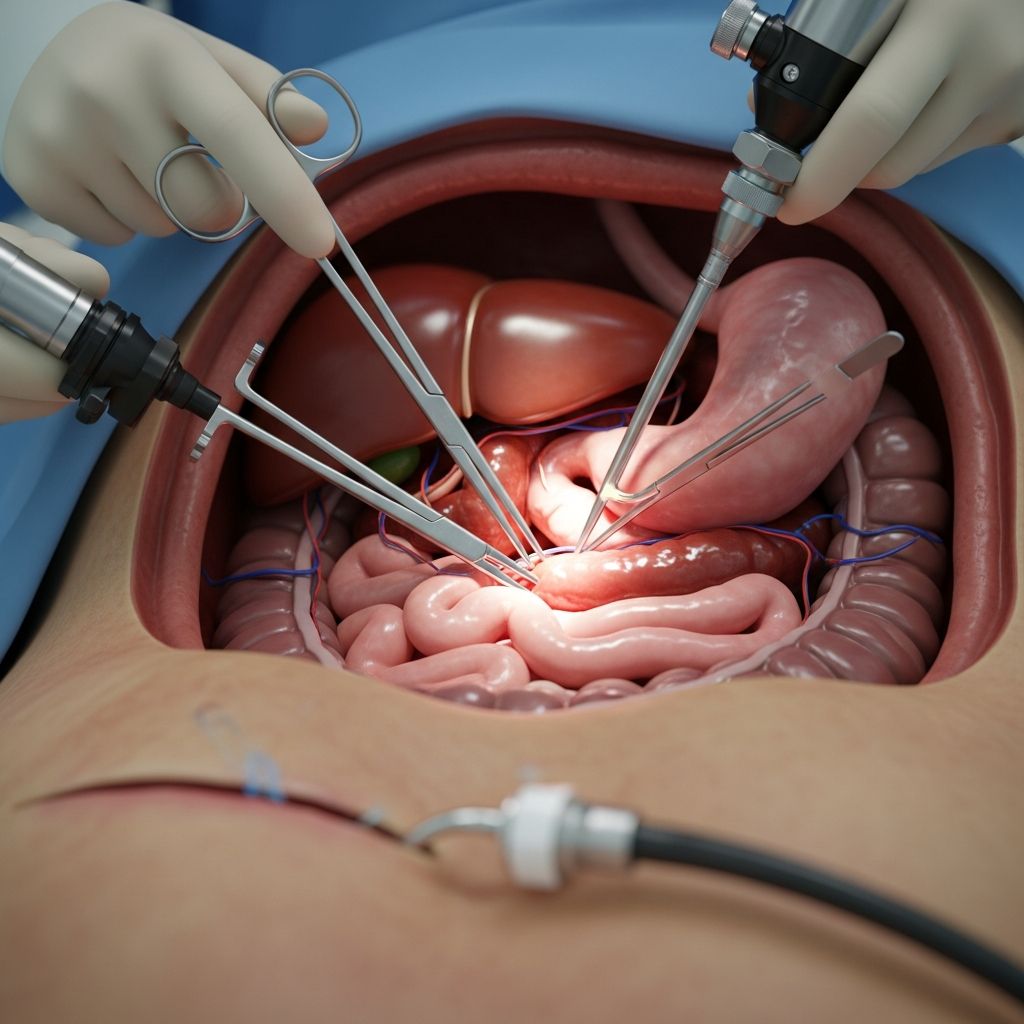
The procedure utilizes a specialized instrument called a laparoscope, which is a thin, telescope-like rod equipped with a high-definition video camera at its tip. This camera transmits real-time images to a monitor in the operating room, allowing the surgeon to visualize the internal organs with precision and clarity. The laparoscope is inserted through a small incision, typically measuring half an inch or less, usually near the belly button or under the rib cage. Surgeons may create up to three additional small incisions to insert other surgical instruments, enabling them to examine all organs in the abdominal cavity and identify any abnormalities or pathology.
How Laparoscopy Works
The laparoscopic procedure follows a systematic approach designed to maximize visibility and surgical access while minimizing patient trauma. Understanding the step-by-step process helps patients know what to expect during their procedure.
The Surgical Process
When you arrive in the operating room, you will be positioned on the operating table in a slightly tilted position with your head lower than your feet. This positioning helps optimize the surgeon’s view of your abdominal organs. Your anesthesiologist will administer general anesthesia through an intravenous line, which relaxes your muscles and ensures you remain comfortable and pain-free throughout the entire procedure.
Once anesthesia has taken effect, your surgeon makes a small incision near your belly button or beneath your rib cage. Through this incision, a thin tube is inserted to inflate your abdomen with carbon dioxide gas. This gas insufflation is a critical step that creates space between your organs, making them easier to visualize on the monitor and providing the surgeon with adequate room to work safely. The gas is harmless and is gradually reabsorbed by your body after the procedure concludes.
After the insufflation process, your surgeon inserts the laparoscope through the primary incision. The attached camera projects live images onto the operating room monitor, allowing your surgeon to inspect your organs in detail. If your procedure requires tissue sampling or surgical intervention, your surgeon may insert additional surgical instruments through nearby incisions. These instruments allow for biopsies, removal of tissue, repair of organs, or treatment of identified pathology.
Upon completion of the diagnostic examination or surgical intervention, your surgeon carefully removes all instruments and allows the carbon dioxide gas to escape from your abdominal cavity. The small incisions are then closed with sutures, surgical tape, or a combination of both. Most incisions are so small that they heal remarkably well and leave minimal scarring.
Types of Laparoscopic Procedures
Laparoscopy has become the standard approach for numerous abdominal surgical procedures. Many traditional surgeries that once required large open incisions are now routinely performed laparoscopically, offering patients significant benefits in terms of recovery and outcomes.
Common laparoscopic procedures include gallbladder removal (cholecystectomy), which is one of the most frequently performed laparoscopic surgeries. Hernia repair, particularly ventral and umbilical hernias, can be effectively treated using laparoscopic techniques with mesh reinforcement. Gynecological procedures such as treatment of endometriosis, removal of fibroids, and pelvic mass evaluation are frequently performed laparoscopically. Abdominal wall reconstruction and certain weight loss surgeries also benefit from the minimally invasive laparoscopic approach.
Related Stories



It is important to understand that while laparoscopy is minimally invasive in terms of incision size, many laparoscopic procedures are still classified as major surgeries in terms of their complexity and the recovery process required. Your surgeon is the best resource for determining whether your specific procedure qualifies as major or minor surgery and what recovery timeline you should expect.
Preparing for Your Laparoscopy
Proper preparation is essential for ensuring a safe and successful laparoscopic procedure. Your healthcare team will provide specific preoperative instructions tailored to your individual situation and the type of procedure you are undergoing.
Pre-Operative Guidelines
Before your scheduled laparoscopy, you should follow these important preparation guidelines:
Fasting Requirements: You will typically be instructed to refrain from eating and drinking for a specified period before your surgery, usually 6 to 8 hours. This requirement ensures your stomach is empty, reducing the risk of complications during anesthesia administration.
Medication Management: During your preoperative visit, inform your healthcare team about all medications you currently take, including over-the-counter drugs, supplements, and herbal remedies. Some medications may need to be adjusted or discontinued before surgery. You should provide the exact date and time you last took each medication.
Medical Evaluation: You will undergo a comprehensive health assessment including vital signs measurement, laboratory work as appropriate for your age and medical history, and possibly electrocardiography. For all menstruating individuals and those who have had their last menstrual period within the past year, a pregnancy test will be required.
Personal Preparations: Remove all jewelry, piercings, dentures, glasses, and undergarments before the procedure. Leave valuables and unnecessary items at home. Arrange for reliable transportation home after your procedure, as you will not be able to drive due to the residual effects of anesthesia.
Surgical Site Marking: A member of your surgical team may mark your surgical site with an indelible marker as part of safety protocols to verify the correct location and procedure.
What to Expect During Laparoscopy
Understanding the timeline and what occurs at different stages of your procedure can help reduce anxiety and prepare you mentally for your upcoming surgery.
Procedure Duration
A diagnostic laparoscopy, which is performed solely for examination and tissue sampling purposes, typically takes between 30 minutes to one hour to complete. Laparoscopic surgery that involves therapeutic intervention and tissue removal or repair takes longer, generally ranging from one to three hours depending on the complexity of your condition and the extent of surgical intervention required.
In some cases, your surgeon may encounter complications or discover that the laparoscopic approach cannot safely complete your procedure due to unexpected findings or anatomical challenges. Should this occur, your surgeon may convert to a traditional open surgery with a larger incision to ensure your safety and optimal surgical outcomes. This conversion does not represent a failure but rather represents your surgeon’s commitment to completing your procedure safely.
Recovery After Laparoscopy
One of the significant advantages of laparoscopic surgery is the typically shorter and less complicated recovery compared to traditional open surgery. However, understanding what to expect in the days and weeks following your procedure helps ensure optimal healing.
Immediate Post-Operative Period
Following your procedure, you will be moved to the recovery room where nursing staff will monitor your vital signs and pain levels. Most patients are able to return home within a few hours of their laparoscopic procedure, though the exact timeline depends on the specific procedures performed and your individual response to anesthesia.
Before discharge, you will receive comprehensive instructions regarding what to expect over the following days at home. You may experience mild abdominal discomfort, bloating from residual carbon dioxide gas, and fatigue. These symptoms typically resolve within a few days. Some patients experience referred shoulder pain caused by the remaining carbon dioxide gas irritating the diaphragm; this is a normal occurrence and usually subsides within 24 to 48 hours.
Pain management is typically straightforward with over-the-counter analgesics or prescription pain medication as directed by your surgeon. Most patients can resume light activities within one to two weeks and return to normal activities within two to four weeks, though strenuous exercise and heavy lifting should be avoided for a longer period as directed by your surgeon.
Why Your Healthcare Provider Might Recommend Laparoscopy
Healthcare providers recommend laparoscopy when other diagnostic tests have failed to identify the cause of your symptoms or when therapeutic intervention is needed for a known condition.
Diagnostic Purposes: When imaging studies such as ultrasound, CT scans, or MRI cannot definitively identify the cause of abdominal or pelvic pain, unexplained bleeding, or other concerning symptoms, laparoscopy provides direct visualization of the organs and tissue. This diagnostic capability makes laparoscopy invaluable when other tests are inconclusive.
Tissue Sampling: Laparoscopy allows your surgeon to collect tissue samples (biopsies) directly from suspicious areas or abnormal-appearing tissues. These samples are then sent to the laboratory for pathological analysis, enabling definitive diagnosis of conditions such as cancer, inflammatory diseases, or infections.
Therapeutic Intervention: Beyond diagnosis, laparoscopy enables surgeons to treat various conditions including removal of gallbladders, repair of hernias, treatment of endometriosis, removal of ovarian cysts, and management of various abdominal pathology without requiring large incisions.
Advantages of Laparoscopic Surgery
Laparoscopic surgery offers numerous advantages over traditional open surgery:
Minimal Incisions: Small incisions of half an inch or less result in less tissue trauma and faster healing compared to open surgery incisions that may be several inches long.
Reduced Pain and Discomfort: Smaller incisions result in less post-operative pain, reducing the need for strong pain medications and potentially preventing complications associated with prolonged opioid use.
Faster Recovery: Most patients return to normal activities significantly faster after laparoscopic surgery compared to open surgery, reducing lost work time and improving quality of life.
Minimal Scarring: The small incisions required for laparoscopy heal with minimal visible scarring, which many patients find aesthetically preferable to large surgical scars.
Lower Infection Risk: Smaller incisions and less tissue disruption reduce the risk of surgical site infections and other complications.
Reduced Hospital Stay: Most laparoscopic procedures are performed on an outpatient basis or require only brief hospitalization, reducing healthcare costs and allowing patients to recover at home.
Limitations and Considerations
While laparoscopy offers significant advantages, it does have limitations. The procedure requires specialized training and equipment, making it unavailable at all surgical facilities. Certain complex cases or emergency situations may not be suitable for laparoscopic approach. The procedure takes longer than open surgery, and conversion to open surgery may be necessary if complications arise or if the surgeon cannot safely complete the procedure laparoscopically. However, for the vast majority of appropriate candidates, the benefits of laparoscopy far outweigh these considerations.
Frequently Asked Questions (FAQs)
Q: Is laparoscopy painful?
A: No, laparoscopy is not painful during the procedure because you are under general anesthesia. You may experience mild discomfort or soreness at the incision sites in the days following the procedure, which is typically manageable with over-the-counter pain medication. Some patients experience referred shoulder pain from residual carbon dioxide gas, which resolves within 24 to 48 hours.
Q: How long will I be in the hospital?
A: Most diagnostic laparoscopy procedures are performed on an outpatient basis, allowing you to go home within a few hours of the procedure. Laparoscopic surgery may require a brief overnight stay depending on the complexity of the procedure, though many patients can go home the same day. Your surgeon will provide specific information based on your individual procedure.
Q: When can I return to normal activities?
A: Most patients can resume light activities within one to two weeks and return to normal daily activities within two to four weeks. Strenuous exercise and heavy lifting should be avoided for a longer period as directed by your surgeon, typically four to six weeks depending on the procedure performed.
Q: What are the risks of laparoscopy?
A: While laparoscopy is generally safe, all surgeries carry some risk. Potential complications are rare but can include bleeding, infection, organ perforation, or adverse reaction to anesthesia. Your surgeon will discuss specific risks related to your procedure during the preoperative consultation.
Q: Will I have visible scars from laparoscopy?
A: Laparoscopic incisions are very small and typically heal with minimal scarring. Most scars fade considerably over time and become barely visible within a few months to a year, especially when compared to the large scars resulting from traditional open surgery.
Q: Can laparoscopy be converted to open surgery?
A: Yes, if your surgeon determines during the procedure that it is not safe or feasible to complete the procedure laparoscopically, they may convert to open surgery. This decision prioritizes your safety and ensures optimal surgical outcomes. Your surgeon will discuss this possibility before your procedure.
References
- Laparoscopy — Cleveland Clinic. 2024. https://my.clevelandclinic.org/health/procedures/4819-laparoscopy
- Laparoscopy: MedlinePlus Medical Test — National Library of Medicine. 2024. https://medlineplus.gov/lab-tests/laparoscopy/
- Minimally Invasive Surgery: What It Is, Types, Benefits & Risks — Cleveland Clinic. 2024. https://my.clevelandclinic.org/health/procedures/minimally-invasive-surgery
- Laparotomy: What It Is, Uses, Surgery, Recovery & Scarring — Cleveland Clinic. 2024. https://my.clevelandclinic.org/health/treatments/24767-laparotomy
- Cholecystectomy (Gallbladder Removal): Surgery & Recovery — Cleveland Clinic. 2024. https://my.clevelandclinic.org/health/procedures/21614-gallbladder-removal
- Preparing for Surgery — Cleveland Clinic. 2024. https://my.clevelandclinic.org/patients/information/prepare-for-surgery
Similar Articles








Read full bio of Sneha Tete