Laryngeal Cancer: Causes, Symptoms, and Treatment Options
Understanding laryngeal cancer: comprehensive guide to symptoms, diagnosis, and evidence-based treatment approaches.
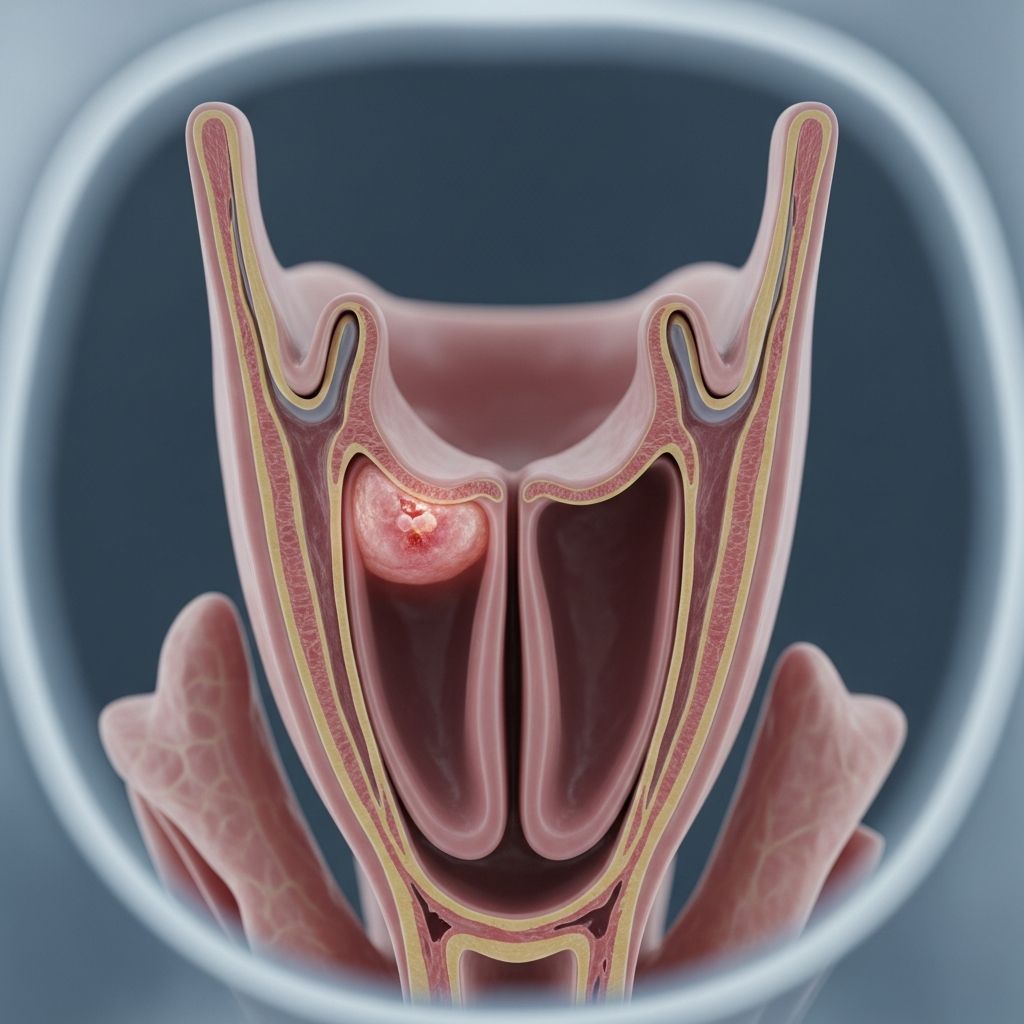
Understanding Laryngeal Cancer
Laryngeal cancer, also known as throat cancer, develops in the larynx (voice box), a tubular structure in the neck that plays a crucial role in breathing and voice production. This malignancy occurs when abnormal cells form in the tissues of the larynx and grow uncontrollably. Understanding the nature of this disease, its risk factors, and available treatment options is essential for patients and their families navigating this diagnosis.
The larynx is located in the front of the neck and contains vocal cords that vibrate to produce sound. When cancer develops in this area, it can affect a person’s ability to speak and breathe. Early detection and prompt treatment significantly improve outcomes and quality of life for individuals diagnosed with laryngeal cancer.
Risk Factors for Laryngeal Cancer
Several factors can increase the likelihood of developing laryngeal cancer. Understanding these risk factors is important for both prevention and early detection.
Tobacco and Alcohol Use
Cigarette smoking and tobacco use remain among the most significant risk factors for laryngeal cancer. Smokers have substantially higher risk compared to non-smokers, and the risk increases with duration and intensity of smoking. Alcohol consumption, particularly heavy drinking, also elevates the risk significantly. The combination of tobacco and alcohol use creates a synergistic effect, substantially increasing cancer risk beyond the individual contributions of each substance.
Human Papillomavirus (HPV) Infection
Infection with human papillomavirus, particularly high-risk strains, has emerged as an important risk factor for laryngeal cancer. HPV-related laryngeal cancers represent a distinct subset of the disease and may have different treatment implications and prognosis compared to tobacco-related laryngeal cancers.
Age and Gender
Laryngeal cancer predominantly affects older adults, with the average age at diagnosis being in the 60s. Men are diagnosed more frequently than women, though this gender gap has been narrowing in recent decades.
Occupational and Environmental Exposures
Prolonged exposure to certain substances, including asbestos, wood dust, and certain chemical agents, may increase the risk of developing laryngeal cancer. Workers in specific industries should be aware of these occupational hazards and take appropriate protective measures.
Symptoms and Warning Signs
Recognizing the early symptoms of laryngeal cancer is crucial for timely diagnosis and treatment. Many symptoms can be associated with less serious conditions, but persistent symptoms warrant medical evaluation.
Voice Changes
Persistent hoarseness or changes in voice quality represent one of the most common early warning signs of laryngeal cancer. Unlike temporary hoarseness from a cold or vocal strain, cancer-related hoarseness typically persists for more than two weeks and may progressively worsen.
Throat Discomfort
Patients may experience persistent throat pain, difficulty swallowing, or a sensation of a lump in the throat. These symptoms can range from mild discomfort to more severe pain that interferes with eating and drinking.
Related Stories



Neck Lumps
Swollen lymph nodes in the neck may present as noticeable lumps or masses. These enlarged nodes can be detected by physical examination and may indicate cancer spread to regional lymph nodes.
Breathing Difficulties
In more advanced cases, patients may experience shortness of breath, stridor (noisy breathing), or other breathing difficulties due to tumor obstruction of the airway.
Persistent Cough
A persistent cough lasting more than a few weeks, sometimes accompanied by blood, warrants medical attention and evaluation for possible laryngeal cancer.
Diagnosis of Laryngeal Cancer
Accurate diagnosis is fundamental to determining appropriate treatment strategies and predicting outcomes. Multiple diagnostic methods and imaging techniques are employed to confirm laryngeal cancer and assess disease extent.
Medical History and Physical Examination
The diagnostic process begins with a thorough medical history and physical examination. The physician assesses symptom duration, smoking and alcohol history, occupational exposures, and performs a comprehensive head and neck examination.
Laryngoscopy
Laryngoscopy is a key diagnostic procedure that allows direct visualization of the larynx. This procedure involves inserting a thin, flexible tube equipped with a camera (flexible laryngoscope) or using a rigid laryngoscope to examine the vocal cords and surrounding tissues in detail.
Biopsy
When abnormal tissue is identified during laryngoscopy, a tissue sample (biopsy) is obtained for microscopic examination. Histopathological analysis of the biopsy confirms the cancer diagnosis and provides information about the specific cell type and grade of the tumor.
Imaging Studies
Various imaging modalities help determine tumor size, extent of local spread, and involvement of surrounding structures:
- Computed Tomography (CT) Scan: Provides detailed cross-sectional images of the larynx and neck structures
- Magnetic Resonance Imaging (MRI): Offers excellent soft tissue resolution, particularly useful for assessing muscle and bone involvement
- Positron Emission Tomography (PET) Scan: Helps identify metastatic disease and assess metabolic activity of tumors
Staging
Cancer staging determines the extent of disease and guides treatment planning. The TNM staging system (Tumor, Node, Metastasis) classifies laryngeal cancer from Stage I (localized disease) to Stage IV (advanced disease with distant metastases).
Treatment Options for Laryngeal Cancer
Treatment approaches for laryngeal cancer depend on multiple factors including cancer stage, tumor location, histological type, patient age, overall health status, and functional preservation goals. Treatment typically involves one or more of the following modalities.
Radiation Therapy
Radiation therapy uses high-energy beams to target and destroy cancer cells. For early-stage laryngeal cancer, external beam radiation therapy alone may be curative while preserving normal laryngeal function. Modern techniques such as intensity-modulated radiation therapy (IMRT) allow precise dose delivery while minimizing damage to surrounding healthy tissues.
Chemotherapy
Systemic chemotherapy is typically reserved for advanced-stage disease or as adjuvant therapy following surgery or radiation. Chemotherapy drugs circulate throughout the body to eliminate cancer cells that may have spread beyond the primary tumor site. The combination of chemotherapy with radiation therapy can enhance treatment effectiveness in advanced cases.
Surgery
Surgical options for laryngeal cancer range from minimally invasive endoscopic procedures to more extensive open surgical approaches, depending on tumor size and location. Laryngeal-preserving surgeries aim to remove cancer while maintaining voice and swallowing function whenever possible. In advanced cases, total laryngectomy (complete removal of the larynx) may be necessary, requiring alternative methods for speech and communication.
Targeted Therapy
Emerging targeted therapy options that exploit specific molecular characteristics of cancer cells are increasingly being investigated. These therapies may be considered for specific patient populations or as part of clinical trial protocols.
Side Effects and Management
Cancer treatment can produce various side effects that affect quality of life. Understanding potential side effects and having strategies to manage them is important for treatment success and patient well-being.
Radiation Therapy Side Effects
Common side effects include fatigue, skin changes, sore throat, dry mouth, and difficulty swallowing. Long-term effects may include voice changes and swallowing difficulties that require speech and swallowing rehabilitation.
Chemotherapy Side Effects
Side effects may include nausea, vomiting, hair loss, mouth sores, loss of appetite, and reduced blood cell counts. These effects are typically temporary and manageable with appropriate supportive care.
Surgical Recovery
Depending on the surgical procedure performed, recovery may involve temporary difficulty with speech, swallowing, or breathing. Speech-language pathology and swallowing rehabilitation are essential components of post-operative care.
Prognosis and Survival
Prognosis for laryngeal cancer depends on cancer stage at diagnosis, tumor characteristics, treatment received, and individual patient factors. Early-stage laryngeal cancers have significantly better survival rates compared to advanced-stage disease. Five-year survival rates for all stages of laryngeal cancer are approximately 60-70%, with higher rates for early-stage disease and lower rates for advanced-stage cancer.
The combination of appropriate treatment, regular follow-up monitoring, and lifestyle modifications including smoking cessation provides the best opportunity for long-term survival and quality of life.
Follow-Up Care and Surveillance
Regular follow-up appointments are essential following laryngeal cancer treatment. These visits typically include physical examination, laryngoscopy, and imaging studies as appropriate. Surveillance helps detect recurrent disease early and assesses for late treatment complications. Long-term follow-up is necessary as recurrence can occur years after initial treatment completion.
Prevention Strategies
While not all cases of laryngeal cancer can be prevented, several strategies can significantly reduce risk:
- Avoid tobacco: Quit smoking and avoid secondhand smoke exposure
- Limit alcohol: Consume alcoholic beverages in moderation or eliminate consumption
- HPV vaccination: HPV vaccination may reduce risk of HPV-related laryngeal cancer
- Occupational protection: Use appropriate protective equipment in occupations with chemical or dust exposure
- Healthy lifestyle: Maintain a balanced diet rich in fruits and vegetables and engage in regular physical activity
Frequently Asked Questions
Q: What is the difference between laryngeal cancer and other throat cancers?
A: Laryngeal cancer specifically affects the larynx or voice box. Other throat cancers include pharyngeal cancer (affecting the pharynx or throat), oropharyngeal cancer (affecting the middle part of the throat), and nasopharyngeal cancer (affecting the upper throat). The specific location affects symptoms, treatment options, and outcomes.
Q: Can laryngeal cancer be cured?
A: Yes, laryngeal cancer can be cured, particularly when diagnosed at early stages. Treatment success depends on cancer stage, histological type, patient factors, and treatment adherence. Early-stage cancers have cure rates exceeding 80-90% with appropriate treatment.
Q: Will I lose my voice if I have laryngeal cancer?
A: Voice preservation depends on cancer stage and location. Many early-stage laryngeal cancers can be treated with radiation therapy or minimally invasive surgery while preserving voice function. Advanced cases may require laryngectomy, necessitating alternative speech methods such as esophageal speech or electrolarynx devices.
Q: How long does treatment typically last?
A: Treatment duration varies based on the approach used. Radiation therapy typically spans 5-7 weeks with daily treatments. Surgery may require a single procedure with recovery period. Chemotherapy may involve multiple cycles over several months. Your treatment team will provide specific timelines based on your individual diagnosis.
Q: What lifestyle changes should I make after laryngeal cancer treatment?
A: Critical lifestyle modifications include complete smoking cessation and alcohol avoidance or significant reduction. Maintain good nutrition, attend all follow-up appointments, participate in recommended rehabilitation therapies, manage stress, and maintain regular physical activity as tolerated. These changes support recovery and reduce recurrence risk.
Q: Is laryngeal cancer hereditary?
A: Laryngeal cancer is not typically hereditary, though genetic factors may influence individual cancer susceptibility. Environmental factors, particularly tobacco and alcohol exposure, play the primary role. However, individuals with a family history of head and neck cancers should discuss their risk with healthcare providers.
References
- NCCN Guidelines® Insights: Head and Neck Cancers, Version 1.2022 — National Comprehensive Cancer Network, Journal of the National Comprehensive Cancer Network. 2022-03. https://pubmed.ncbi.nlm.nih.gov/35276673/
- Head and Neck Cancers, Version 2.2025 — National Comprehensive Cancer Network, Johns Hopkins University. 2025-02. https://pure.johnshopkins.edu/en/publications/head-and-neck-cancers-version-22025/
- Head and Neck Cancer: A Survivor’s Guide to Managing Treatment — Johns Hopkins Medicine. 2020-07. https://www.youtube.com/watch?v=qWYqirykEzM
Similar Articles








Read full bio of medha deb