Laryngeal Cancer: Types, Symptoms, Treatment & Prognosis
Complete guide to laryngeal cancer: understanding symptoms, diagnosis, treatment options, and recovery.
Understanding Laryngeal Cancer
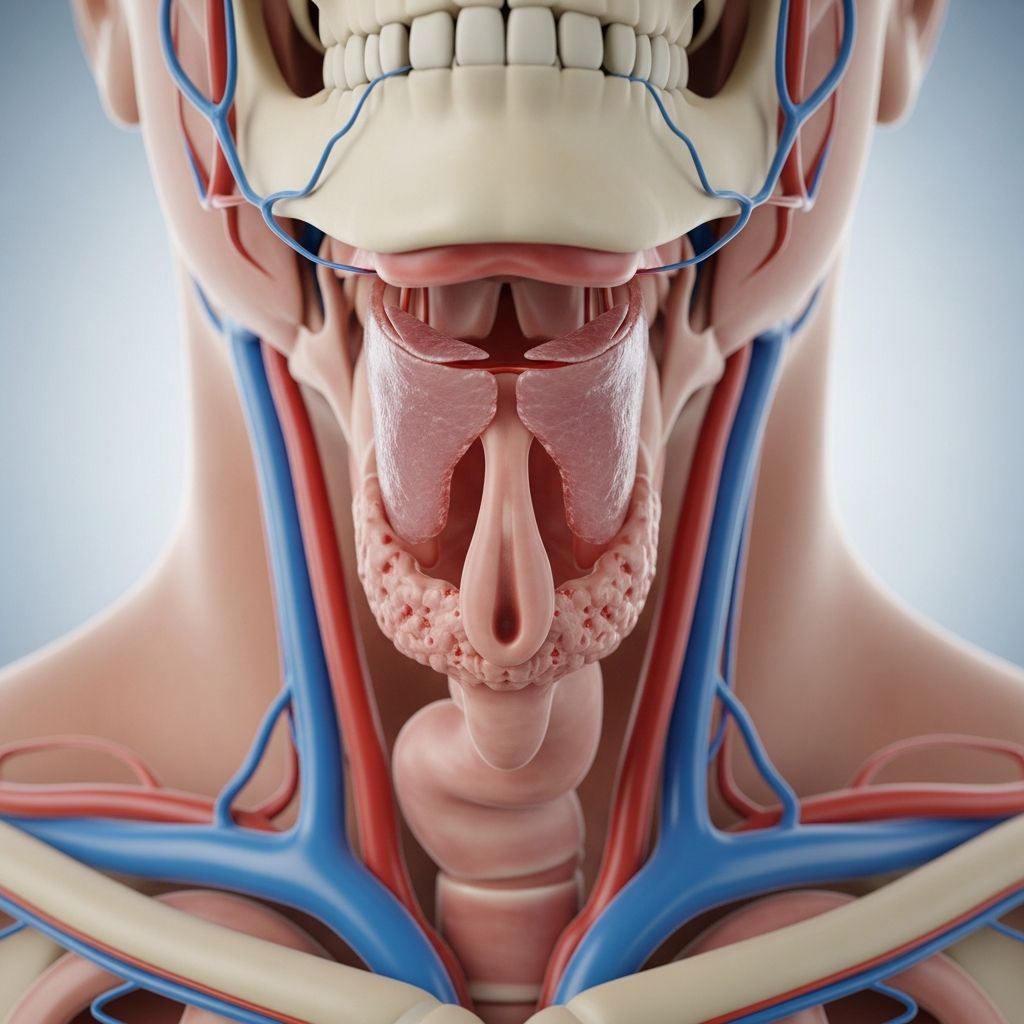
Laryngeal cancer, also known as voice box cancer, is a malignant tumor that develops in the larynx—the part of your throat responsible for voice production, breathing, and swallowing. The larynx is located in the anterior neck and is composed of cartilage, muscle, and mucous membrane tissues. When cancerous cells develop on the mucosal surfaces lining the larynx, this condition is primarily classified as squamous cell carcinoma (SCC), which accounts for over 90% of laryngeal cancer cases. Understanding this disease is crucial for early detection and optimal treatment outcomes.
Types of Laryngeal Cancer
Laryngeal cancers are categorized based on their anatomical location within the voice box, which significantly impacts prognosis and treatment planning:
- Glottic Cancer: Located on the true vocal folds (true vocal cords), glottic cancer represents approximately two-thirds of all laryngeal cancers. These cancers tend to produce symptoms earlier in their development, such as hoarseness, which often leads to earlier detection and generally more favorable outcomes.
- Supraglottic Cancer: This type occurs above the true vocal folds in the false vocal cords and aryepiglottic folds. Supraglottic cancers may not produce voice changes as early as glottic cancers but can affect swallowing function.
- Subglottic Cancer: Located below the true vocal folds, subglottic cancers are the least common type and may have a higher risk of spreading to lymph nodes.
Risk Factors and Causes
Several factors can significantly increase your risk of developing laryngeal cancer. The two main risk factors are tobacco use and excessive alcohol consumption. Smokers are substantially more likely to develop laryngeal cancer compared to nonsmokers, with the risk increasing with both the duration and intensity of smoking. Alcohol use, particularly heavy drinking, is another major risk factor, and the combination of smoking and alcohol use exponentially increases risk.
Additional risk factors include:
- Chronic gastroesophageal reflux disease (GERD)
- Human papillomavirus (HPV) infection
- Exposure to certain occupational carcinogens
- Previous radiation therapy to the head and neck region
- Age (more common in individuals over 55)
- Male gender (males are diagnosed more frequently than females)
Symptoms and Warning Signs
Early detection of laryngeal cancer significantly improves treatment outcomes. Being aware of warning signs is essential for timely medical evaluation. Common symptoms include:
- Persistent hoarseness lasting more than two weeks
- A lump or mass in the neck
- Persistent sore throat or throat pain
- Difficulty swallowing (dysphagia)
- Ear pain, particularly on one side
- A sensation of a lump in the throat
- Chronic cough without apparent cause
- Coughing up blood (hemoptysis)
- Shortness of breath or noisy breathing (stridor)
- Unexplained weight loss
It is important to note that these symptoms can also be associated with less serious conditions such as common colds or laryngitis. However, if symptoms persist beyond two weeks, professional medical evaluation is warranted.
Diagnosis and Staging
An accurate diagnosis is fundamental to developing an effective treatment plan. Your healthcare provider will employ several diagnostic approaches:
Physical Examination and History: Your doctor will examine your throat and neck, feeling for lumps or abnormalities and assessing lymph node enlargement. A detailed history of symptoms and risk factors will be obtained.
Laryngoscopy: This procedure involves using a thin, illuminated tube called a laryngoscope to visualize the larynx directly. During laryngoscopy, your physician can inspect the vocal cords and surrounding tissues for abnormalities.
Related Stories



Biopsy: If suspicious tissue is identified, a tissue sample will be collected for pathological examination. This biopsy confirms whether cancer is present and determines the specific cell type.
Imaging Studies: Computed tomography (CT) scans, magnetic resonance imaging (MRI), or positron emission tomography (PET) scans may be performed to assess the extent of the cancer, determine if lymph nodes are involved, and identify any metastatic disease.
Staging: Once diagnosed, your cancer will be staged using the TNM classification system, which considers tumor size (T), lymph node involvement (N), and distant metastasis (M). Staging ranges from Stage 0 (carcinoma in situ) to Stage IV (advanced disease with distant spread), and this stage guides treatment recommendations.
Treatment Options
Laryngeal cancer treatment is highly individualized, depending on multiple factors including cancer stage, tumor location, your overall health status, and your functional goals. The three primary treatment modalities are surgery, radiation therapy, and chemotherapy, often used in combination.
Surgical Treatment
Surgery aims to remove the cancer while preserving laryngeal function when possible. Surgical options include:
- Endoscopic Laser Microsurgery: For early-stage cancers, minimally invasive laser techniques can remove small tumors while preserving normal laryngeal tissues. This approach preserves voice quality and swallowing function.
- Partial Laryngectomy: This procedure removes only the portion of the larynx containing cancer, preserving voice production capability. Various partial laryngectomy techniques exist, including vertical partial laryngectomy and supraglottic laryngectomy.
- Total Laryngectomy: Reserved for advanced cancers, total laryngectomy involves complete removal of the larynx. This procedure permanently severs the connection between the windpipe and esophagus, requiring creation of a permanent opening (stoma) at the base of the neck for breathing. While this significantly impacts speech and breathing, voice restoration methods are available.
- Neck Dissection: When cancer has spread to lymph nodes, neck dissection removes regional lymph nodes to eliminate metastatic disease.
Radiation Therapy
Radiation therapy utilizes high-energy beams to destroy cancer cells. It may be used as primary treatment for early-stage cancers, as adjuvant therapy following surgery, or combined with chemotherapy for advanced disease. Modern radiation techniques include intensity-modulated radiation therapy (IMRT), which focuses radiation precisely on the tumor while minimizing exposure to healthy tissues, reducing side effects and improving quality of life.
Chemotherapy
Chemotherapy involves systemic administration of anti-cancer medications. For laryngeal cancer, chemotherapy is typically reserved for advanced-stage disease and is often combined with radiation therapy. This combination approach, known as chemoradiation, can provide improved cancer control but requires careful management of potential side effects.
Voice Preservation and Rehabilitation
One of the primary goals in laryngeal cancer treatment is preservation of voice quality and function. For patients undergoing total laryngectomy, several voice restoration options are available:
Tracheoesophageal Puncture (TEP) with Voice Prosthesis: During or after laryngectomy, a surgeon creates a small puncture between the trachea and esophagus. A one-way valve (voice prosthesis) is placed in this puncture, allowing air from the lungs to pass into the esophagus during speech. This air is then articulated by the oral structures, producing intelligible speech. This method produces the most natural-sounding voice among post-laryngectomy options.
Esophageal Speech: This technique involves training patients to inject or inhale air into the esophagus, then release it in controlled bursts to produce sound. While this method requires significant practice and produces less natural speech than TEP, it requires no surgical intervention or external devices.
Electrolarynx (External Laryngeal Device): An electrolarynx is a handheld electronic device that produces sound vibrations. Users place the device against the neck, and the vibrations are transmitted through tissues and articulated by the mouth to produce speech. While less natural-sounding than other methods, this approach is immediately available and requires no additional surgery or extensive training.
Speech-language pathologists play a crucial role in helping patients adjust to voice changes and maximizing communication abilities through rehabilitation and training.
Prognosis and Survival Outcomes
Prognosis for laryngeal cancer varies significantly based on stage at diagnosis, histological grade, and response to treatment. Early-stage laryngeal cancers have substantially better survival outcomes, with five-year survival rates often exceeding 85-95%. Advanced-stage cancers have lower five-year survival rates, typically ranging from 40-60%. However, individual outcomes vary considerably based on tumor biology and treatment response.
Surgical treatment of advanced-stage supraglottic squamous cell carcinoma is associated with superior overall survival compared to nonsurgical approaches in selected patients. The specific treatment approach selected by your oncology team is based on optimizing your individual survival and functional outcomes.
Side Effects and Management
Both surgical and nonsurgical treatments can produce side effects requiring management. Surgery may result in temporary difficulty swallowing, throat discomfort, and neck stiffness. Radiation therapy can cause acute side effects including sore throat, difficulty swallowing, dry mouth, and skin irritation. Late effects may include chronic dry mouth, tissue fibrosis, and laryngeal dysfunction.
Supportive care measures, including speech therapy, swallowing therapy, nutritional support, and symptom management, are essential components of comprehensive laryngeal cancer care. Reconstructive surgery may be necessary in selected cases to restore function and appearance.
Quality of Life Considerations
Laryngeal cancer and its treatment can significantly impact quality of life. The multidisciplinary care team at specialized cancer centers works to minimize functional impairments while maximizing cancer control. Speech and swallowing therapists help patients regain lost function, and nutritional support ensures patients maintain adequate nutrition during and after treatment. Psychological support is also important for patients adapting to changes in voice, appearance, and function.
Follow-up Care and Monitoring
After completing laryngeal cancer treatment, regular follow-up care is essential. Your oncology team will monitor for cancer recurrence through clinical examinations and imaging studies as appropriate. Early detection of recurrent disease improves treatment outcomes. Follow-up intervals are individualized based on your specific situation and cancer stage.
Frequently Asked Questions
Q: What is the difference between laryngeal cancer and throat cancer?
A: Laryngeal cancer specifically affects the larynx (voice box), while throat cancer is a broader term encompassing cancers of different throat regions. Oropharyngeal cancer affects the middle part of the throat, and hypopharyngeal cancer affects the lower throat region.
Q: Can laryngeal cancer be cured?
A: Yes, laryngeal cancer can be cured, particularly when detected early. Early-stage cancers have significantly better cure rates, often exceeding 90%. Even advanced cancers may be treatable with multimodal therapy, though cure rates are lower.
Q: Will I lose my voice if I have laryngeal cancer?
A: Voice changes depend on treatment type and cancer extent. Early-stage cancers treated with laser surgery or radiation often preserve normal voice. Total laryngectomy results in permanent voice loss, but voice restoration methods including tracheoesophageal puncture with voice prosthesis allow meaningful speech restoration.
Q: How long is recovery after laryngeal cancer surgery?
A: Recovery time varies depending on the surgical procedure performed. Minor endoscopic procedures may have recovery periods of several days to weeks. Major procedures like total laryngectomy require several weeks of hospitalization and months of rehabilitation, though most patients can resume normal activities within 2-3 months.
Q: What should I do if I notice hoarseness lasting more than two weeks?
A: Persistent hoarseness warrants professional medical evaluation. Schedule an appointment with your primary care physician or an otolaryngologist (ear, nose, and throat specialist) to determine the underlying cause. While hoarseness is usually caused by benign conditions, early evaluation of potential laryngeal cancer is important.
Q: Can I continue smoking and drinking after laryngeal cancer treatment?
A: No, continued tobacco and alcohol use significantly increases risk of recurrent cancer and secondary malignancies. Quitting smoking and avoiding alcohol are strongly recommended as part of your treatment plan and long-term health maintenance.
References
- Hoarseness: When to observe and when to refer — Cleveland Journal of Medicine. 2013. https://www.ccjm.org/content/90/8/475
- Laryngology and Head & Neck Surgery Services — Cleveland Clinic. 2025. https://my.clevelandclinic.org/departments/head-neck/depts/laryngology
- Head and Neck Cancer Program — Cleveland Clinic Abu Dhabi Cancer Institute. 2025. https://www.clevelandclinicabudhabi.ae/en/cancercenter/cancer-programs/head-and-neck-cancer-program
- Throat Cancer: Symptoms, Causes & Treatment — Cleveland Clinic Health Library. 2025. https://my.clevelandclinic.org/health/diseases/23136-throat-cancer
- Oncologic and Functional Outcomes of Surgical and Nonsurgical Treatment Modalities in Laryngeal Cancer — PubMed Central. https://pubmed.ncbi.nlm.nih.gov/25950990/
- Getting Your Voice Back After Laryngeal Cancer Surgery — Cleveland Clinic Health Essentials. 2025. https://health.clevelandclinic.org/3-options-to-help-regain-your-voice-after-throat-cancer-surgery
- Throat Cancer Treatment Services — Cleveland Clinic. 2025. https://my.clevelandclinic.org/services/throat-cancer-treatment
Similar Articles








Read full bio of medha deb