Laryngomalacia: Causes, Symptoms, Diagnosis & Treatment
Understanding laryngomalacia: symptoms, diagnosis, and treatment options for infants with noisy breathing.
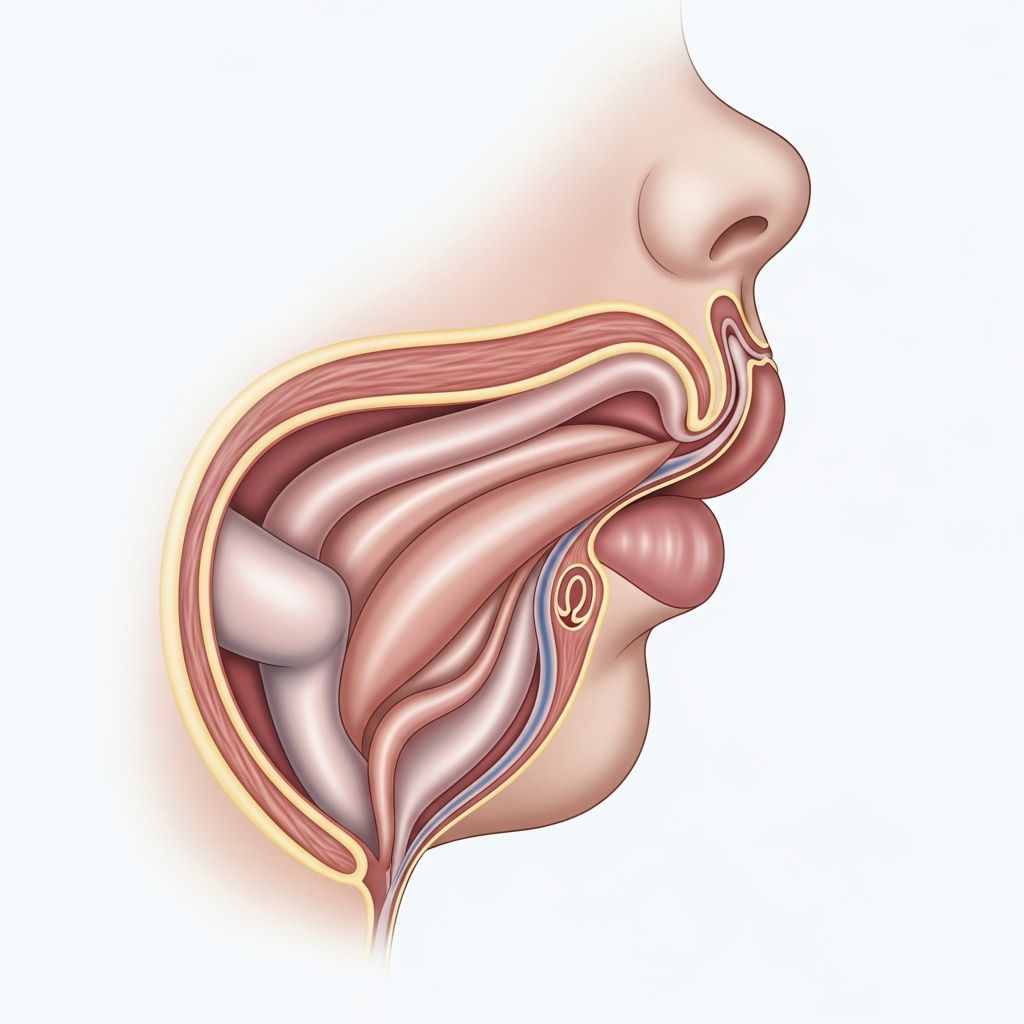
What Is Laryngomalacia?
Laryngomalacia is a congenital condition in which the tissues above the vocal cords (the supraglottic larynx) are soft and floppy. This causes the tissues to collapse into the airway during breathing, especially when the infant inhales. As a result, babies with laryngomalacia often make a high-pitched, noisy sound called stridor, which is most noticeable when they are crying, feeding, or lying on their back.
Laryngomalacia is the most common cause of stridor in newborns, affecting up to 75% of infants with congenital stridor. The condition is usually diagnosed within the first few weeks of life and is more common in boys than girls.
Causes of Laryngomalacia
The exact cause of laryngomalacia is not fully understood, but it is believed to be related to delayed maturation of the laryngeal structures. The soft tissues above the vocal cords do not stiffen as they should during fetal development, leading to collapse during breathing.
- Delayed maturation of laryngeal cartilage
- Abnormal positioning of the epiglottis or arytenoids
- Shortened aryepiglottic folds
- Edema or swelling in the posterior glottis
There is no known genetic cause, and laryngomalacia is not typically associated with other congenital syndromes, although it can coexist with other airway abnormalities.
Symptoms of Laryngomalacia
The most common symptom of laryngomalacia is inspiratory stridor, a high-pitched, musical sound heard when the baby breathes in. Other symptoms may include:
- Noisy breathing, especially during feeding or crying
- Difficulty feeding or poor weight gain
- Choking or gagging during feeding
- Reflux symptoms (spitting up, vomiting)
- Apnea (pauses in breathing)
- Cyanosis (turning blue)
- Chest or neck retractions (visible pulling in of the skin around the ribs or neck)
Symptoms are usually mild and improve as the child grows, but in severe cases, they can lead to significant breathing difficulties and require medical intervention.
Diagnosis of Laryngomalacia
Laryngomalacia is typically diagnosed based on the infant’s symptoms and a physical examination. The doctor may use a flexible laryngoscope to visualize the airway and confirm the diagnosis. This procedure is usually performed in the office and does not require sedation.
- History of noisy breathing since birth
- Physical examination revealing inspiratory stridor
- Flexible laryngoscopy showing supraglottic collapse
- Rule out other causes of stridor (e.g., subglottic stenosis, vocal cord paralysis)
In some cases, additional tests may be needed to evaluate for other airway abnormalities or to assess the severity of the condition.
Severity and Spectrum of Laryngomalacia
Laryngomalacia can be classified into three categories based on the severity of symptoms:
| Severity | Symptoms | Management |
|---|---|---|
| Mild | Inspiratory stridor, no feeding or breathing difficulties | Observation, expectant management |
| Moderate | Stridor with feeding-related symptoms, mild apnea | Acid suppression therapy, close monitoring |
| Severe | Life-threatening apnea, cyanosis, poor weight gain, need for oxygen | Surgical intervention (supraglottoplasty) |
Most infants with laryngomalacia have mild-to-moderate symptoms and do not require surgical intervention. However, those with severe symptoms may need surgery to prevent complications such as chronic hypoxia, pulmonary hypertension, or cor pulmonale.
Treatment Options for Laryngomalacia
The treatment of laryngomalacia depends on the severity of symptoms. Mild cases are usually managed with observation and supportive care, while severe cases may require surgical intervention.
Related Stories



Medical Management
- Acid suppression therapy for infants with reflux symptoms
- Close monitoring of feeding and growth
- Positioning the infant upright during feeding and sleeping
- Ensuring adequate hydration and nutrition
Surgical Management
Supraglottoplasty is the mainstay surgical treatment for severe laryngomalacia. This procedure involves removing or reshaping the floppy tissues above the vocal cords to improve airflow. Supraglottoplasty is typically performed under general anesthesia and can be done through the mouth using telescopes and specialized instruments.
- Indications for surgery: life-threatening apnea, cyanosis, poor weight gain, need for oxygen
- Procedure: removal or reshaping of supraglottic tissues
- Recovery: usually rapid, with improvement in symptoms within days to weeks
Tracheotomy is rarely performed and is reserved for cases where supraglottoplasty is not successful or for infants with multiple medical comorbidities.
Prognosis and Long-Term Outlook
The prognosis for laryngomalacia is generally excellent. Most infants with mild-to-moderate symptoms will outgrow the condition by 12 to 18 months of age. Symptoms typically improve as the laryngeal tissues mature and stiffen.
- 70% of infants with mild laryngomalacia have an uneventful course and resolution
- 30% may progress to moderate disease, especially if they have reflux symptoms or low baseline oxygen saturation
- Severe cases may require surgical intervention, but outcomes are generally good with minimal complications
Long-term complications are rare, but chronic hypoxia can lead to pulmonary hypertension or cor pulmonale if left untreated.
When to Seek Medical Attention
Parents should seek medical attention if their infant has any of the following symptoms:
- Severe or worsening stridor
- Apnea (pauses in breathing)
- Cyanosis (turning blue)
- Poor feeding or poor weight gain
- Significant chest or neck retractions
- Need for extra oxygen
Early diagnosis and management are important to prevent complications and ensure the best possible outcome.
Frequently Asked Questions (FAQs)
Q: Is laryngomalacia dangerous?
A: Most cases of laryngomalacia are mild and not dangerous. However, severe cases can lead to life-threatening breathing difficulties and require medical intervention.
Q: Does laryngomalacia go away on its own?
A: Yes, most infants with laryngomalacia outgrow the condition by 12 to 18 months of age as the laryngeal tissues mature.
Q: What is supraglottoplasty?
A: Supraglottoplasty is a surgical procedure to remove or reshape the floppy tissues above the vocal cords in infants with severe laryngomalacia.
Q: Can laryngomalacia cause long-term problems?
A: Long-term complications are rare, but chronic hypoxia can lead to pulmonary hypertension or cor pulmonale if left untreated.
Q: How is laryngomalacia diagnosed?
A: Laryngomalacia is diagnosed based on symptoms and a physical examination, often confirmed with flexible laryngoscopy.
References
- Laryngomalacia: Disease Presentation, Spectrum, and Management — PMC. 2012-03-01. https://pmc.ncbi.nlm.nih.gov/articles/PMC3299329/
- Laryngomalacia: Symptoms, Diagnosis and Treatment — Nationwide Children’s Hospital. 2023-01-01. https://www.nationwidechildrens.org/conditions/laryngomalacia
- Laryngomalacia | Children’s Hospital of Philadelphia — CHOP. 2023-01-01. https://www.chop.edu/conditions-diseases/laryngomalacia
Similar Articles








Read full bio of medha deb