Laryngoscopy: Procedure, Definition & Types
Comprehensive guide to laryngoscopy procedures for examining your voice box and throat.
What is Laryngoscopy?
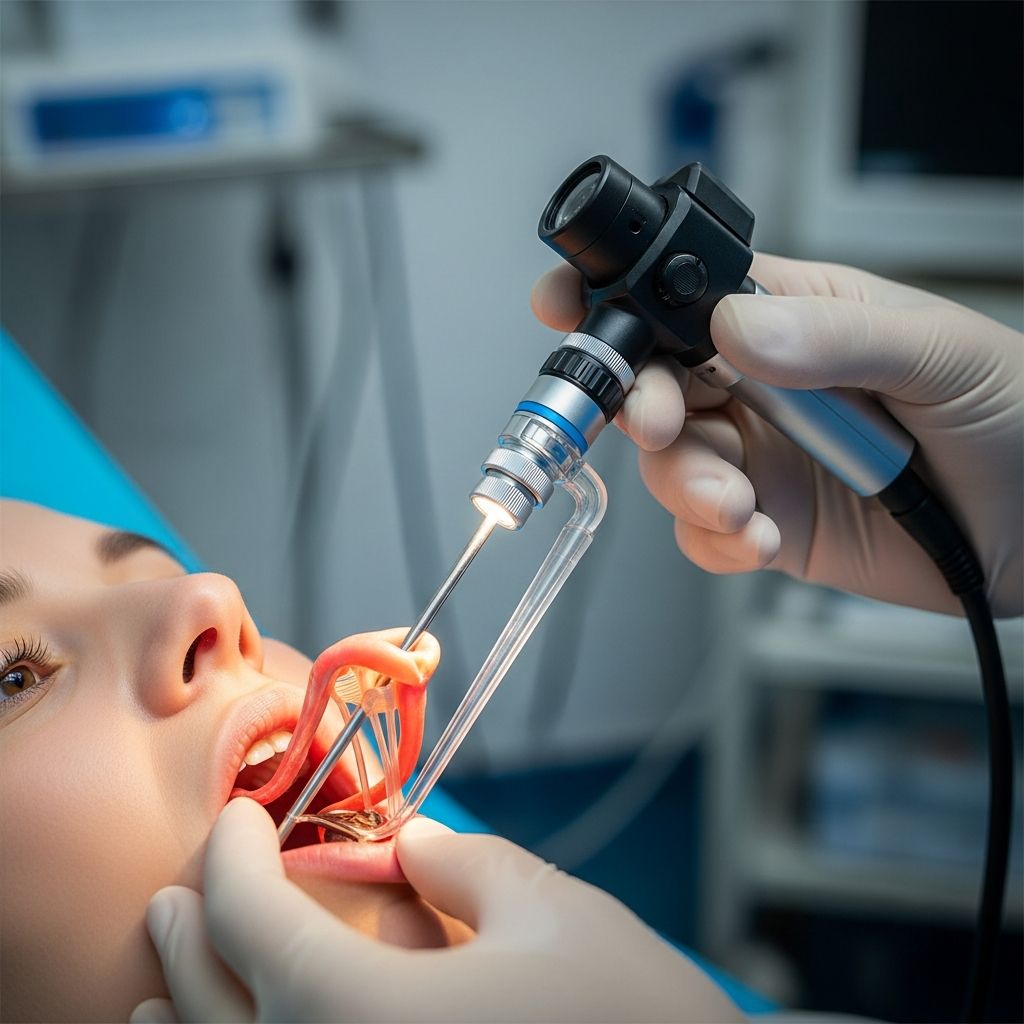
A laryngoscopy is a diagnostic procedure healthcare providers perform to examine your larynx, commonly known as your voice box. During this minimally invasive examination, physicians use a specialized instrument called a laryngoscope—a thin tube equipped with lights, a lens, and video cameras—to obtain a detailed view of your laryngeal structures. This procedure allows healthcare professionals to visualize the vocal cords, surrounding tissues, and other laryngeal structures to identify abnormalities, diagnose conditions, and in some cases, collect tissue samples for further analysis.
Laryngoscopies serve as essential diagnostic and therapeutic tools in otolaryngology, enabling providers to assess voice quality, detect pathological changes, and perform targeted interventions. The procedure can be performed in various settings, from outpatient clinic offices to surgical operating rooms, depending on the complexity of the case and the type of laryngoscopy required.
Who Performs Laryngoscopy Procedures?
Laryngoscopy procedures are typically performed by otolaryngologist-head and neck surgeons, medical professionals who specialize in treating conditions affecting the ear, nose, throat, and head and neck region. These specialists undergo extensive training to master various laryngoscopy techniques and develop expertise in diagnosing and managing voice disorders and laryngeal pathologies. Otolaryngologists may perform laryngoscopies in clinic office settings or in operating room environments, depending on the procedure type and clinical requirements.
Types of Laryngoscopy
Healthcare providers utilize several distinct laryngoscopy techniques, each offering unique advantages and serving different clinical purposes. Understanding these variations helps patients comprehend what to expect during their procedure.
Indirect Laryngoscopy
Indirect laryngoscopy represents one of the most straightforward laryngoscopy methods. During this examination, your physician uses a small mirror and light source, similar to instruments a dentist might employ, to visualize your throat. The mirror, attached to a long handle, is gently positioned against the roof of your mouth. To minimize gagging and discomfort, your doctor may apply a numbing spray to your throat before beginning the examination. Throughout the five to ten-minute procedure, your physician holds your tongue gently with gauze while you may be asked to produce specific sounds to assess vocal cord function and mobility. This non-invasive approach requires minimal preparation and causes minimal discomfort.
Flexible Direct Laryngoscopy
Flexible direct laryngoscopy has become increasingly popular among otolaryngologists due to its effectiveness and patient comfort. During this procedure, a thin, flexible cable with a small telescope at its tip is gently inserted through your nose and carefully advanced into your throat. Before the procedure begins, you receive numbing medication for your nasal passages and a decongestant to widen the nasal airways, facilitating easier instrument passage. Most patients experience minimal discomfort, though you might feel a slight urge to cough—a sensation that typically subsides quickly. While gagging can occur, it remains a common and manageable reaction. The entire examination usually takes less than one minute, making it an efficient diagnostic tool that provides clear visualization of laryngeal structures.
Related Stories



Direct Rigid Laryngoscopy
Direct rigid laryngoscopy represents a more invasive procedure typically performed in an operating room under general anesthesia. Using a rigid laryngoscope, your surgeon carefully depresses your tongue and lifts the epiglottis—the cartilage flap that protects your windpipe during swallowing. This approach provides superior visualization and access for therapeutic interventions. Surgeons may use this technique to remove small growths, collect tissue samples for biopsies, or insert breathing tubes during emergencies or surgical procedures. Since general anesthesia is administered, you remain unconscious throughout the procedure, which typically lasts up to forty-five minutes depending on the interventions required.
Why Your Doctor Might Recommend Laryngoscopy
Healthcare providers recommend laryngoscopy for various diagnostic and therapeutic reasons. Common indications include investigating hoarseness or dysphonia, diagnosing laryngitis, evaluating chronic throat symptoms, and ruling out serious conditions such as laryngeal cancer. The procedure helps physicians identify vocal cord paralysis, vocal cord nodules, polyps, cysts, and other structural abnormalities. Additionally, laryngoscopy allows providers to assess swallowing difficulties, evaluate throat pain, and investigate airway obstruction. In therapeutic contexts, it enables surgeons to remove lesions, collect biopsy samples, and perform corrective procedures.
Preparation for Your Laryngoscopy
Preparation requirements vary significantly depending on whether you undergo a clinic-based flexible laryngoscopy or a surgical direct laryngoscopy procedure.
In-Office Laryngoscopy Preparation
For laryngoscopies performed in clinic office settings, minimal preparation is necessary. You can maintain your regular eating and drinking schedule, take your routine medications as prescribed, and continue your normal daily activities. Simply arrive at your appointment on time, bring your insurance information, and discuss any recent throat symptoms or medications with your healthcare provider.
Surgical Laryngoscopy Preparation
Surgical laryngoscopies require more comprehensive preparation due to general anesthesia administration. Your healthcare provider will provide detailed preoperative instructions, typically including fasting requirements (usually nothing to eat or drink for 6-8 hours before surgery), medication adjustments, and arrangements for post-procedure transportation. You must arrange for someone to drive you home, as the effects of anesthesia impair your ability to drive safely. Inform your provider about all medications, supplements, and any allergies. Wear comfortable, loose-fitting clothing and remove jewelry, contact lenses, and makeup before arriving at the surgical facility.
What Happens During Your Laryngoscopy
The specific procedure details depend on your laryngoscopy type and whether you receive general anesthesia.
During In-Office Flexible Laryngoscopy
You’ll sit upright in an examination chair while remaining conscious and alert throughout the procedure. Your physician applies numbing medication to your nose and a decongestant to reduce nasal congestion. Once your nasal passages are adequately anesthetized, your doctor gently inserts the flexible laryngoscope through your nose, carefully advancing it into your throat. The procedure causes minimal discomfort, though you might experience slight pressure or a sensation of needing to cough. Your provider may ask you to vocalize certain sounds, which helps assess vocal cord movement and function. The entire examination typically completes within one minute.
During Surgical Direct Laryngoscopy
After general anesthesia administration, you’ll be completely unconscious and unable to feel any sensation. Your surgeon uses a specialized rigid laryngoscope inserted through your mouth, carefully positioning it to visualize your larynx directly. The surgeon depresses your tongue and lifts your epiglottis to access the vocal cords and surrounding structures. Using illumination and direct visualization, your surgeon may remove growths, collect tissue samples, perform laser procedures, or complete other therapeutic interventions as clinically indicated. Since you’re under anesthesia, you remain comfortable and pain-free throughout the procedure.
Results and What They Mean
In-office flexible laryngoscopy results are typically available immediately following the examination. Your physician can discuss their findings and observations with you before you leave the clinic. However, if your provider collected tissue samples as part of a biopsy or performed a culture, laboratory analysis requires several days to complete. For surgical laryngoscopies performed in operating rooms, your surgeon will usually discuss initial findings after you’ve fully recovered from anesthesia. If biopsies were collected, pathology results typically become available within a few days. Ask your healthcare provider specifically when you can expect to receive complete test results and any follow-up recommendations.
Possible Complications and Risks
In-office flexible laryngoscopy represents a remarkably safe procedure with complications occurring rarely. The minimally invasive nature, lack of anesthesia, and absence of surgical instrumentation make adverse events uncommon.
Direct laryngoscopy performed in operating room settings is generally safe when conducted by experienced, licensed providers; however, potential complications may include:
- Sore throat or throat irritation lasting several days
- Temporary hoarseness or voice changes
- Bleeding from the procedure site
- Infection of the surgical wound
- Damage to surrounding throat structures
- Reactions to general anesthesia
- Aspiration of food or liquids during recovery
- Temporary difficulty swallowing
Your healthcare provider will discuss specific risks relevant to your individual case and medical history before your procedure. Report any concerning symptoms during recovery to your medical team immediately.
Recovery After Laryngoscopy
Recovery experiences differ substantially between in-office and surgical procedures.
In-Office Flexible Laryngoscopy Recovery
Following in-office flexible laryngoscopy, you can resume your normal activities immediately. There’s typically no recovery period needed, and you can return to work, eat regularly, and continue your daily routine without restrictions. However, you might experience mild throat irritation or a slight sensation of a lump in your throat for a few hours post-procedure.
Surgical Laryngoscopy Recovery
After surgical laryngoscopy with general anesthesia, you’ll wake in a recovery area where medical staff monitor your vital signs and overall condition. Once you’re fully conscious and stable, you can typically go home if someone is available to drive you. You may experience a sore throat for several days, but you can usually resume a normal diet that same day or the following day. Most patients return to normal activities within a few days. However, your surgeon may recommend complete vocal rest for several days followed by reduced voice use for two to six weeks, depending on the extent of procedures performed. During complete vocal rest, you avoid making any sounds with your voice, including talking, whispering, singing, or shouting.
Laryngoscopy Versus Endoscopy: What’s the Difference?
Both endoscopy and laryngoscopy represent important diagnostic tools healthcare providers use to visualize internal body structures. Both procedures employ thin tubes equipped with lights, lenses, and video cameras to provide clear visualization. The fundamental difference lies in their specific purpose: laryngoscopes are specifically designed and optimized for viewing the larynx and vocal cords, while endoscopes represent more general instruments used to examine various internal structures throughout the body, including the esophagus, stomach, and intestines. Laryngoscopy is therefore a more specialized procedure tailored specifically for laryngeal examination.
Frequently Asked Questions
Q: Is laryngoscopy painful?
A: In-office flexible laryngoscopy is minimally uncomfortable. While you may experience slight pressure or a sensation of needing to cough, numbing medication and decongestants minimize discomfort. Surgical laryngoscopy under general anesthesia is painless since you’re unconscious throughout the procedure. Post-procedure sore throat typically resolves within days.
Q: How long does a laryngoscopy procedure take?
A: In-office flexible laryngoscopy usually takes less than one minute. Indirect laryngoscopy typically lasts five to ten minutes. Surgical direct rigid laryngoscopy may take up to forty-five minutes, depending on whether therapeutic interventions are performed simultaneously.
Q: Will I need someone to drive me home?
A: For in-office flexible laryngoscopy, you can drive yourself home immediately after the procedure. For surgical laryngoscopy under general anesthesia, you must arrange transportation with someone else, as anesthesia effects prevent safe driving for several hours.
Q: When will I receive my results?
A: Results from in-office flexible laryngoscopy are typically available immediately. If biopsies were collected, laboratory analysis requires several days. Ask your healthcare provider for a specific timeline based on your situation.
Q: What conditions can laryngoscopy diagnose?
A: Laryngoscopy can diagnose hoarseness, laryngitis, vocal cord paralysis, nodules, polyps, cysts, laryngeal cancer, swallowing disorders, and various other laryngeal pathologies. It helps evaluate chronic throat symptoms and airway obstruction.
Q: Are there any restrictions after laryngoscopy?
A: After in-office flexible laryngoscopy, you can resume normal activities immediately. Following surgical laryngoscopy, your surgeon may recommend vocal rest and activity restrictions for several days to weeks, depending on procedures performed.
References
- Laryngoscopy: Procedure, Definition & Types — Cleveland Clinic. 2024. https://my.clevelandclinic.org/health/diagnostics/22803-laryngoscopy
- Laryngoscopy: Purpose, Procedure, Types, And Complications — WebMD. 2024. https://www.webmd.com/oral-health/what-is-laryngoscopy
- Microlaryngoscopy: Procedure Details and Recovery — Cleveland Clinic. 2024. https://my.clevelandclinic.org/health/diagnostics/24071-microlaryngoscopy
- Hoarseness: When to Observe and When to Refer — Cleveland Clinic Journal of Medicine. 2021. https://www.ccjm.org/content/90/8/475
- Videostroboscopy: Definition, Procedure & Uses — Cleveland Clinic. 2024. https://my.clevelandclinic.org/health/diagnostics/22869-videostroboscopy
- Vocal Cord Nodules: Causes, Symptoms & Treatment — Cleveland Clinic. 2024. https://my.clevelandclinic.org/health/diseases/15424-vocal-cord-lesions-nodules-polyps-and-cysts
Similar Articles








Read full bio of medha deb