The Larynx: Structure, Function & Health
Understand your larynx: anatomy, function, and how to maintain voice box health.
Understanding the Larynx: Your Voice Box Explained
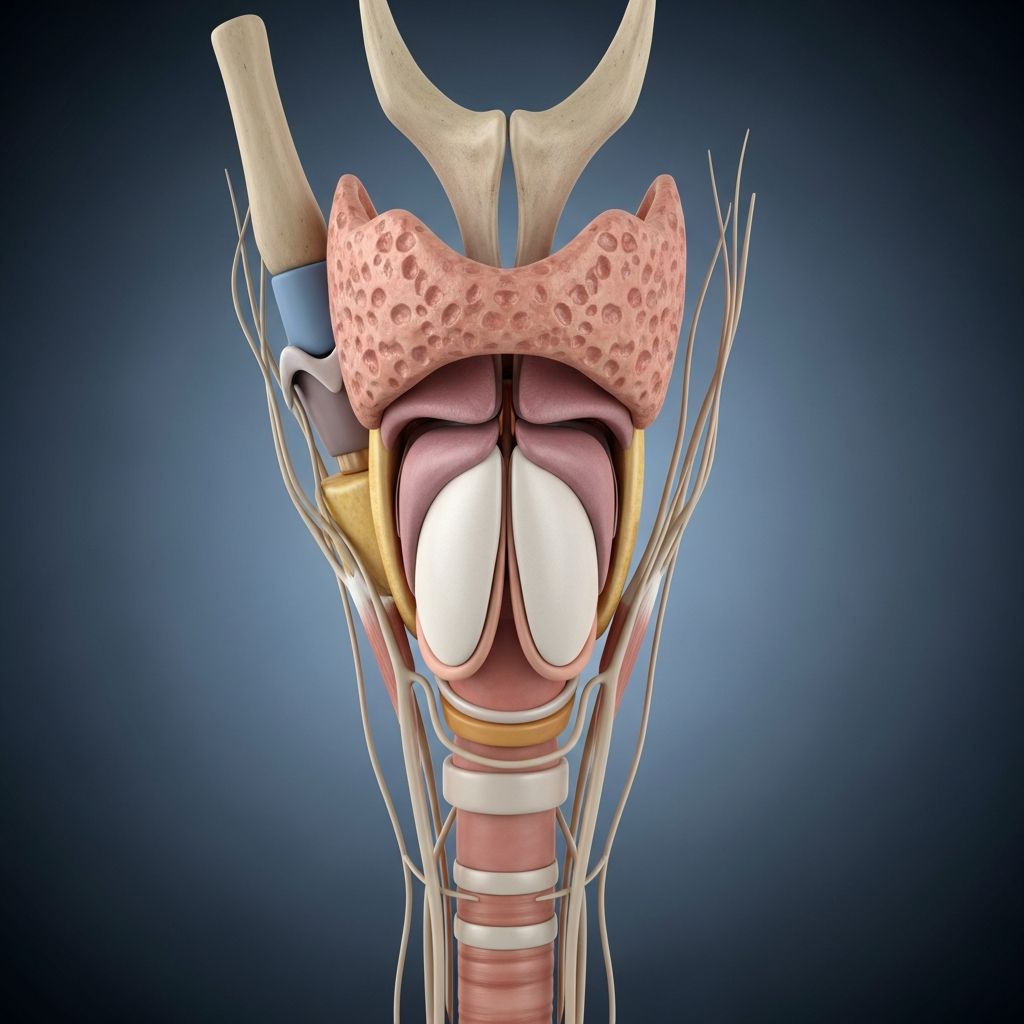
The larynx, commonly known as the voice box, is a remarkable organ located in your throat that plays multiple critical roles in your body’s daily functions. Positioned just below the pharynx and above the trachea (windpipe), the larynx is a complex structure composed of cartilages, muscles, and tissues that work together in perfect coordination to enable breathing, protect your airway, and produce sound. Understanding how this vital organ functions and recognizing when something goes wrong is essential for maintaining overall health and preserving your voice.
The larynx is truly a multitasking marvel, performing three essential functions simultaneously: respiration (breathing), airway protection, and phonation (voice production). These complex mechanisms require extraordinary coordination to ensure you can breathe, swallow, and speak without difficulty. When any component of the larynx becomes damaged or diseased, these basic functions can be severely compromised, affecting your quality of life.
Laryngeal Anatomy: The Building Blocks of Your Voice Box
The larynx is built upon a sophisticated framework of cartilages that provide structure and support. The laryngeal skeleton consists of both unpaired and paired cartilages, each serving specific functions in maintaining the integrity and operation of the voice box.
The Unpaired Cartilages
The larynx contains three unpaired cartilages that form its basic structural foundation:
The Thyroid Cartilage is the largest cartilage in the larynx and is the one most people can feel and see. It houses the vocal folds and forms the protective shield around them. The anterior prominence of the thyroid cartilage is commonly known as the “Adam’s apple” and is more prominent in men due to hormonal influences during puberty. The thyroid cartilage connects to the cricoid cartilage below it through the cricothyroid ligament and membrane.
The Cricoid Cartilage forms the inferior wall of the larynx and is shaped like a ring of hyaline cartilage. It sits atop the trachea and serves as the attachment point for the vocal cords. The cricoid cartilage provides the rigid base upon which the arytenoid cartilages move to control vocal cord position and tension.
The Epiglottis is a large, spoon-shaped piece of elastic cartilage that plays a crucial protective role. During swallowing, the epiglottis moves downward to cover the opening of the larynx, acting as a lid that prevents food and liquids from entering your respiratory system. This reflex action is so automatic that most people never think about it, yet it’s essential for preventing aspiration and maintaining safe swallowing.
The Paired Cartilages
Three pairs of cartilages work together to control the position and function of the vocal cords:
The Arytenoid Cartilages are triangular pieces of mostly hyaline cartilage located at the posterosuperior border of the cricoid cartilage. These are the most functionally important of the paired cartilages because they directly influence the position and tension of the vocal cords. The arytenoids can move forward and backward, rotating to open and close the vocal cords with remarkable precision.
The Corniculate Cartilages are horn-shaped pieces of elastic cartilage located at the apex of each arytenoid cartilage. These small but important structures help form the boundaries of the laryngeal inlet and contribute to the proper positioning of surrounding tissues.
Related Stories



The Cuneiform Cartilages are club-shaped pieces of elastic cartilage positioned anterior to the corniculate cartilages. These cartilages help form the aryepiglottic folds and play a role in narrowing the laryngeal inlet during swallowing.
The Vocal Folds: Where Sound Begins
The vocal folds, also called vocal cords, are among the most sophisticated anatomical structures in the human body. These delicate tissues are responsible for the generation of voice and require precise coordination to function properly.
Vocal Fold Structure and Layers
The true vocal folds consist of three specialized anatomic layers that cover the thyroarytenoid muscle, also called the vocalis muscle. Each layer contributes uniquely to voice production:
The Squamous Epithelium is the outermost layer that vibrates during phonation. This thin, protective layer must remain smooth and intact for clear voice production.
The Superficial Lamina Propria is a gelatinous layer beneath the epithelium that has minimal fibrous content. This layer’s unique composition allows the epithelium to vibrate freely over it, which is essential for smooth, clear phonation.
The Intermediate and Deep Lamina Propria together make up the vocal ligament, which provides structural support and helps control the tension of the vocal folds. These layers contain more fibrous tissue that provides elasticity and strength.
The integrity of these layers is absolutely critical for normal voice function. Any disruption caused by tumors, fibrous nodules, cysts, scarring, or muscle atrophy can result in hoarseness and voice problems. Even minor changes in the structure or consistency of these layers can significantly affect voice quality because they directly impact how the epithelial layer vibrates over the gelatinous layer of the superficial lamina propria.
The Intrinsic Laryngeal Muscles: Precision Controllers
Multiple muscles control the movement and tension of the vocal folds, enabling the precise adjustments necessary for breathing, voice production, and airway protection. These intrinsic muscles can be divided into respiratory and phonatory groups.
Respiratory Muscles
The Posterior Cricoarytenoid Muscle is the single laryngeal abductor muscle and is critical for breathing. This is the only muscle capable of separating and opening the vocal cords to allow air passage. If this muscle is incapacitated on both sides, it can cause severe breathing difficulty. All intrinsic laryngeal muscles are innervated by the recurrent laryngeal nerve except the cricothyroid muscle, which receives innervation from the external laryngeal branch of the superior laryngeal nerve.
Phonatory Muscles
The phonatory muscles are divided into adductors and tensors:
Adductor muscles include the lateral cricoarytenoid muscles, thyroarytenoid muscles, and interarytenoid muscles (both transverse and oblique). These muscles pull the vocal folds toward the midline, allowing them to vibrate and produce sound.
Tensor muscles include the cricothyroid muscles and thyroarytenoid muscles, which control the length and tension of the vocal folds. By adjusting tension, these muscles allow you to change your pitch and voice quality.
The Three Primary Functions of the Larynx
The larynx performs three essential functions that must work in perfect coordination to maintain health and quality of life.
Respiration: Breathing and Air Exchange
For respiration, the vocal folds open via action of the posterior cricoarytenoid muscle. During inhalation, the vocal cords abduct (open), allowing air to flow freely through the glottis into the trachea and lungs. During expiration, the laryngeal adductor muscles work to pull the vocal folds partially toward the midline and modulate expiratory airflow. This coordinated movement ensures continuous oxygen supply to your body while maintaining the ability to speak and protect your airway.
Phonation: Voice Production
During phonation, the vocal folds are brought together and held in tension. As air from the lungs passes through the glottis, it causes the vocal folds to vibrate. The frequency of vibration determines pitch—faster vibrations produce higher pitches, while slower vibrations produce lower pitches. The amplitude of vibration affects volume, and the shape of your vocal tract (throat, mouth, and lips) helps determine the quality and timbre of your voice. This process requires exquisite neuromuscular control and precise coordination of multiple muscle groups.
Airway Protection: Safeguarding Your Respiratory System
The larynx protects your respiratory system from foreign materials, particularly during swallowing. When you swallow, the epiglottis moves to cover the laryngeal inlet, and the vocal cords close tightly to form a complete seal. This prevents food, liquids, and saliva from entering the trachea and lungs. If this protective mechanism fails, aspiration can occur, potentially leading to serious complications such as pneumonia.
Common Laryngeal Conditions and Disorders
Various conditions can affect laryngeal function and voice quality. Understanding these common disorders can help you recognize when professional medical evaluation is necessary.
Presbylarynx: Voice Changes with Age
Presbylarynx involves atrophy of the true vocal folds secondary to natural physiologic aging. As you age, the muscles and mucus-producing cells in your larynx gradually atrophy. This causes the true vocal folds to bow and prevents complete glottic closure, leading to glottic insufficiency where air escapes during phonation. Additionally, aging increases the surface viscosity of mucus in the larynx. These combined changes result in a hoarse, breathy, weak, or strained voice that many older adults experience. While this is a natural consequence of aging, voice therapy and other interventions can sometimes help improve voice quality.
Vocal Fold Nodules and Polyps
Vocal nodules are benign growths that typically develop on the vocal folds in pairs, usually in the middle of the fold where there is maximum vibration. They are often caused by voice abuse, such as excessive talking, shouting, or smoking. Vocal polyps are similar growths but typically occur singly and may have a different etiology. Both conditions can cause hoarseness, breathiness, and reduced vocal range.
Laryngitis and Inflammation
Laryngitis is inflammation of the larynx, commonly caused by viral infections, overuse of the voice, or exposure to irritants like smoke. Acute laryngitis typically resolves within a few weeks, but chronic laryngitis may indicate a more serious underlying condition and warrants medical evaluation.
Voice Disorders and Dysphonia
Various conditions can disrupt normal vocal fold vibration and voice production, including scar tissue formation, cysts, benign tumors, and neurological disorders. These conditions require professional evaluation to determine appropriate treatment options.
When to Seek Medical Attention
Certain symptoms warrant professional evaluation by an ear, nose, and throat specialist (otolaryngologist):
– Hoarseness lasting more than two weeks without an obvious cause such as a cold- Persistent voice changes or loss of voice- Pain in the larynx or difficulty swallowing- Chronic cough or throat clearing- Difficulty breathing or shortness of breath- Sensation of a lump in the throat- Voice changes following surgery or trauma to the neck
Protecting Your Laryngeal Health
Maintaining good laryngeal health involves several practical strategies:
Avoid Voice Abuse: Limit shouting, excessive talking, and prolonged loud speaking. Take voice rest breaks during your day to prevent vocal strain.
Stay Hydrated: Drink plenty of water to keep your vocal folds and surrounding tissues moist and healthy.
Avoid Irritants: Limit exposure to smoke, air pollution, and other airborne irritants that can inflame the larynx.
Manage Acid Reflux: Gastric acid can irritate the larynx, so managing heartburn and acid reflux can help protect your voice.
Practice Proper Breathing: Use diaphragmatic breathing rather than shallow chest breathing to support voice production without straining.
Consider Voice Training: Professional voice therapy can teach proper vocal techniques to prevent injury and optimize voice quality.
Frequently Asked Questions
Q: What is the larynx and where is it located?
A: The larynx, or voice box, is a complex organ located in your throat between the pharynx above and the trachea below. It contains the vocal cords and is responsible for breathing, voice production, and airway protection.
Q: How many cartilages make up the larynx?
A: The larynx contains six cartilages total: three unpaired cartilages (thyroid, cricoid, and epiglottis) and three paired cartilages (arytenoid, cuneiform, and corniculate).
Q: What causes hoarseness?
A: Hoarseness can be caused by various conditions including laryngitis, vocal strain, vocal nodules, polyps, aging-related changes, acid reflux, or more serious conditions like tumors. Any hoarseness lasting more than two weeks should be evaluated by a healthcare provider.
Q: How do vocal cords produce sound?
A: Vocal cords produce sound through vibration. When air from your lungs passes through the glottis, it causes the vocal folds to vibrate. The frequency of vibration determines pitch, while the amplitude affects volume.
Q: Can laryngeal damage be repaired?
A: Some laryngeal damage, particularly scar tissue and certain injuries, may be permanent. However, many laryngeal conditions respond well to voice therapy, medical management, or surgical intervention. Early diagnosis and treatment typically offer the best outcomes.
Q: What is the epiglottis and why is it important?
A: The epiglottis is a spoon-shaped cartilage that covers the opening of the larynx during swallowing. It prevents food and liquids from entering your respiratory system, protecting your airway and preventing aspiration.
Q: How can I maintain healthy vocal cords?
A: You can maintain vocal health by avoiding voice abuse, staying hydrated, avoiding irritants like smoke, managing acid reflux, practicing proper breathing techniques, and seeking professional voice training if needed.
References
- Hoarseness: When to Observe and When to Refer — Cleveland Clinic Journal of Medicine. 2023. https://www.ccjm.org/content/90/8/475
- Larynx: Structure and Function — National Institute on Deafness and Other Communication Disorders (NIDCD), National Institutes of Health. 2024. https://www.nidcd.nih.gov/health/larynx-voice-box
- What Is the Epiglottis? Function & Anatomy — Cleveland Clinic. 2024. https://my.clevelandclinic.org/health/body/24278-epiglottis
- What Are Your Vocal Cords? — Cleveland Clinic. 2024. https://my.clevelandclinic.org/health/body/24456-vocal-cords
- Airways: Respiratory Tract, Parts, Anatomy & Function — Cleveland Clinic. 2024. https://my.clevelandclinic.org/health/body/airway
- Glottis: Function, Anatomy & Definition — Cleveland Clinic. 2024. https://my.clevelandclinic.org/health/body/glottis
Similar Articles








Read full bio of medha deb