Laser Eye Surgery Guide: Risks, Recovery, Outcomes
Discover how laser eye surgery transforms vision, from preparation to recovery, with expert insights on procedures and outcomes.
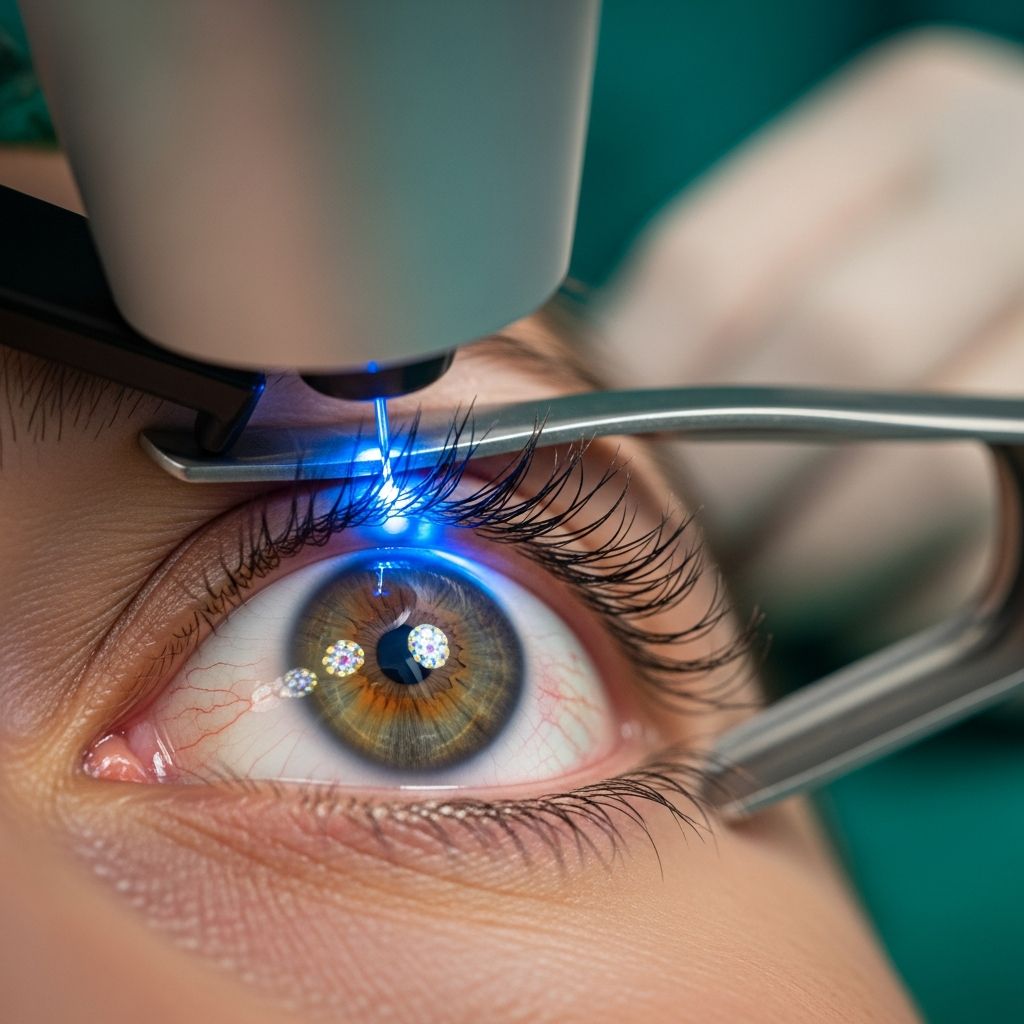
Laser eye surgery offers a transformative solution for individuals seeking freedom from glasses or contact lenses by precisely reshaping the cornea to correct refractive errors.
Understanding Refractive Errors and Vision Correction
The human eye functions like a complex optical system where light enters through the cornea, the clear front surface, and focuses on the retina to form clear images. When this focusing process falters due to irregularities in the cornea’s shape or length of the eyeball, common conditions emerge: myopia (nearsightedness), where distant objects blur; hyperopia (farsightedness), affecting near vision; and astigmatism, causing distorted images from uneven corneal curvature.
Laser procedures address these by altering the cornea’s curvature. For myopia, the center flattens to reduce excessive bending; for hyperopia, the edges steepen to enhance focusing power; astigmatism smooths irregular surfaces for uniform refraction.
Popular Types of Laser Vision Correction
Several techniques exist, each tailored to specific needs and corneal characteristics.
- LASIK (Laser-Assisted In Situ Keratomileusis): The most common method creates a thin corneal flap using a femtosecond laser or microkeratome, lifts it, and applies an excimer laser to vaporize microscopic tissue layers beneath, then repositions the flap.
- PRK (Photorefractive Keratectomy): Removes the outer corneal layer entirely before laser reshaping, ideal for thinner corneas or active lifestyles where flap risks are concerns.
- SMILE (Small Incision Lenticule Extraction): A flapless approach extracts a small lens-shaped tissue piece through a tiny incision, minimizing invasiveness.
- Epi-LASIK: Separates the epithelium with a blunt separator for surface ablation, bridging LASIK and PRK benefits.
Advanced options incorporate wavefront technology, mapping the eye’s optical aberrations for customized treatments beyond standard prescriptions.
Preparing for Your Laser Eye Surgery Journey
Candidacy evaluation begins with comprehensive assessments. Ophthalmologists measure corneal thickness, pupil size, tear film quality, and overall eye health, using tools like corneal topography for detailed surface mapping and wavefront analysis for higher-order aberrations.
Ideal candidates are over 18 (often 21+), with stable prescriptions for at least a year, no severe dry eye, autoimmune diseases, or uncontrolled conditions like diabetes. Pregnant individuals or those on certain medications wait due to hormonal vision fluctuations.
| Criterion | Good Candidate | Potential Concerns |
|---|---|---|
| Age | 21-40 years | Under 18 or over 50 (presbyopia risk) |
| Prescription Stability | Stable 1+ year | Recent changes |
| Corneal Thickness | Adequate | Too thin |
| Eye Health | No keratoconus, dry eye | Active infections, glaucoma |
Pre-surgery instructions include discontinuing contacts (2-4 weeks for soft, longer for hard), avoiding makeup, and arranging post-op transport.
Step-by-Step Breakdown of the LASIK Procedure
The outpatient surgery lasts 10-15 minutes per eye under topical numbing drops, no general anesthesia needed.
- Pre-Op Mapping: Digital scans create a 3D corneal model guiding the laser.
- Flap Creation: Femtosecond laser forms a precise corneal flap (100-120 microns thick).
- Laser Reshaping: Excimer laser pulses (cool ultraviolet light) remove 0.25-micron tissue bits per pulse, guided by the map; nearsighted corneas flatten, farsighted steepen.
- Flap Repositioning: Flap settles naturally, adhering without sutures.
Patients fixate on a light; a brief burning hair-like smell may occur from tissue ablation. Vision blurs immediately post-op but clarifies rapidly.
Related Stories



Immediate Aftercare and Recovery Timeline
Most resume normal activities next day, but protective shields prevent rubbing for a week. Vision stabilizes in days, fully by 3-6 months.
- Day 1: Rest, antibiotic/steroid drops; mild discomfort, light sensitivity.
- Week 1: Avoid swimming, dusty areas; no eye makeup.
- Month 1: Follow-up confirms healing; 20/20 vision common.
- Long-Term: Annual checks; aging may require reading glasses post-40.
Enhancements fix under/over-corrections if needed after 3 months.
Potential Risks, Side Effects, and Complications
While 96% achieve 20/20 or better, risks include:
- Common/Temporary: Dry eyes (treatable drops), halos/night glare (resolves 6 months).
- Rare/Serious: Flap issues (dislocation <1%), infection, ectasia (corneal weakening).
- Under/Over-Correction: May need retreatment (5%).
FDA monitors safety; select experienced surgeons using FDA-approved lasers to minimize risks.
Success Rates and Real Patient Outcomes
Studies show 95%+ satisfaction, with most ditching glasses permanently for myopia up to -12.00D, hyperopia +6.00D, astigmatism 6.00D. Athletes, pilots thrive post-procedure; lifestyle gains outweigh costs for many ($2,000-$3,000/eye).
Cost Factors and Insurance Considerations
Elective, rarely insured; prices vary by technology (wavefront/custom higher). Financing, tax deductions possible for vision necessity.
Frequently Asked Questions (FAQs)
Is laser eye surgery painful?
Pressure felt, not pain; numbing drops ensure comfort.
How long until I drive post-LASIK?
Next day if vision clears.
Does LASIK prevent presbyopia?
No, age-related near-focus loss still occurs.
Can both eyes be done same day?
Yes, sequentially.
What if I’m not a candidate?
Alternatives: PRK, ICLs, or glasses.
Choosing the Right Ophthalmologist
Seek board-certified refractive specialists with high volumes (1,000+ procedures/year), advanced tech, transparent outcomes data. Consult multiple for personalized advice.
References
- How Does LASIK Eye Surgery Work: A Step-by-Step Guide — Restivo Eye. 2023. https://www.restivoeye.com/how-lasik-eye-surgery-works-a-step-by-step-guide
- LASIK eye surgery – Mayo Clinic — Mayo Clinic. 2024-02-01. https://www.mayoclinic.org/tests-procedures/lasik-eye-surgery/about/pac-20384774
- How Does LASIK Work? Eye Surgeons Explain the Procedure — Johnson & Johnson. 2023. https://www.jnj.com/health-and-wellness/eye-surgeons-explain-how-lasik-procedure-works
- LASIK eye surgery – 3D animation — YouTube (Nucleus Medical Media). 2019-05-15. https://www.youtube.com/watch?v=Bb8bnjnEM00
- LASIK — U.S. Food and Drug Administration (FDA). 2025-01-10. https://www.fda.gov/medical-devices/surgery-devices/lasik
- LASIK Eye Surgery — Cleveland Clinic. 2024. https://my.clevelandclinic.org/health/treatments/21805-lasik-eye-surgery
- Everything you need to know about LASIK eye surgery — UCHealth. 2023. https://www.uchealth.org/today/questions-about-lasik-eye-surgery/
Similar Articles








Read full bio of Sneha Tete