Laser Resurfacing: Modern Techniques and Applications
Comprehensive guide to laser resurfacing technologies for skin rejuvenation and aesthetic improvement.
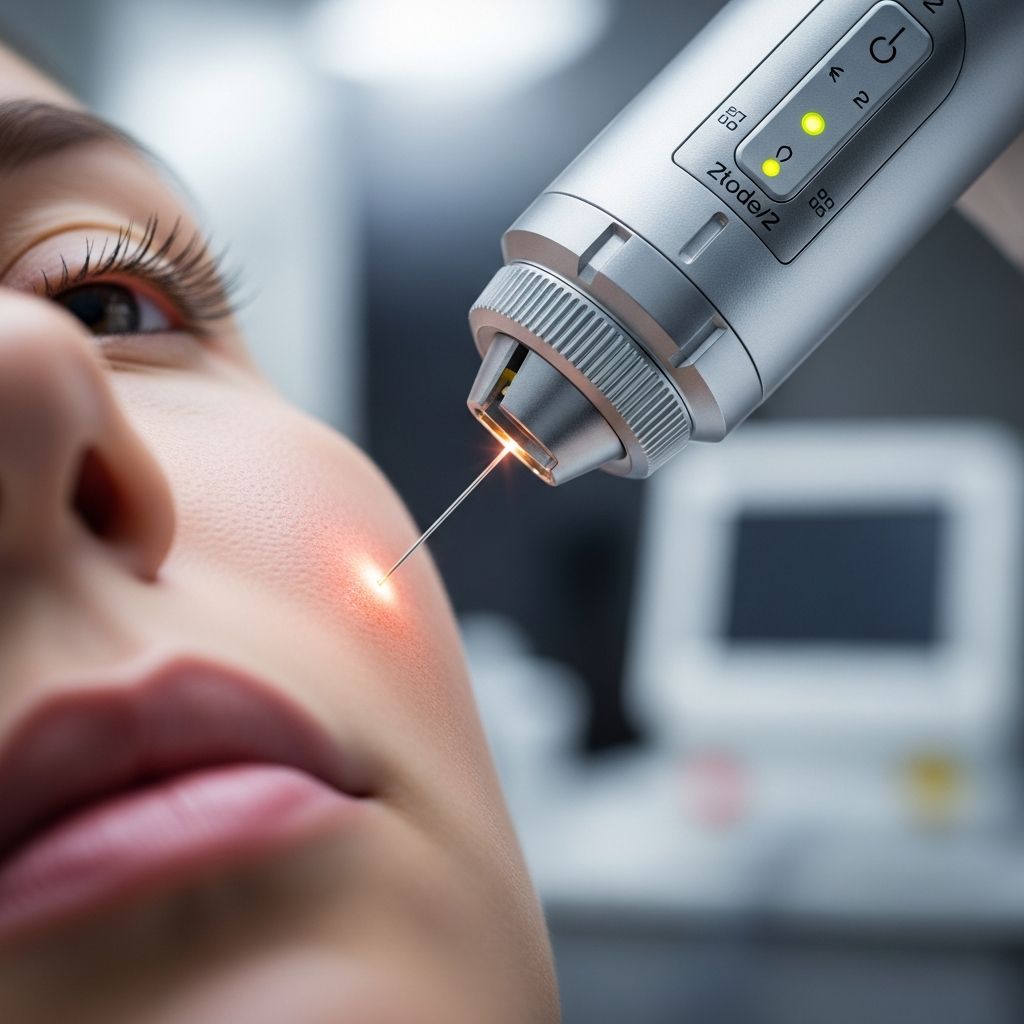
Laser Resurfacing: Overview and Modern Technologies
Laser resurfacing represents one of the most significant advances in cosmetic dermatology, offering patients effective solutions for improving skin appearance and treating various dermatological conditions. Modern laser resurfacing techniques have evolved considerably, providing practitioners with multiple options to address patient concerns while minimizing recovery time and complications. The main laser resurfacing techniques used today include non-ablative laser systems, fractional resurfacing systems, combined systems, and complementary non-laser technologies such as radiofrequency systems and plasma skin regeneration.
Understanding Laser Resurfacing Principles
Laser resurfacing works by emitting high-energy light at specific wavelengths that, when focused on skin tissue, create targeted heat to destroy diseased or damaged cells and stimulate the body’s natural healing response. The effectiveness of laser resurfacing depends on several factors, including the wavelength used, the depth of penetration, whether the procedure is ablative or non-ablative, and whether it employs fractional or continuous treatment patterns.
The primary goal of laser resurfacing is to rejuvenate the skin by resurfacing its upper layers, improving the appearance of various skin conditions, and promoting collagen production for a more youthful appearance.
Types of Laser Resurfacing Systems
Non-Ablative Laser Systems
Non-ablative laser systems target only the dermis while leaving the epidermis intact, preserving the skin’s outer protective layer. This approach significantly reduces recovery time and minimizes complications compared to ablative alternatives. While non-ablative systems do not produce results as dramatic as ablative lasers, their excellent safety profile and rapid post-treatment recovery have made them increasingly popular among patients seeking aesthetic improvements with minimal downtime.
Non-ablative laser systems are divided into three main groups:
- Mid-infrared lasers: These penetrate deeper into the dermis to stimulate collagen production and address deeper wrinkles and skin damage
- Pulsed dye lasers (PDL): These target hemoglobin in blood vessels and are particularly effective for vascular lesions and redness
- Intense pulsed light (IPL) systems: These emit broad-spectrum light to address multiple skin concerns including pigmentation and vascular issues
Specific Non-Ablative Laser Technologies
The 1319-nm pulsed energy laser (Sciton Thermascan) resurfaces the skin to improve wrinkles, acne scarring, skin tone, and texture. This laser thermally targets fibroblasts in the dermal layer, stimulating collagen production. It is effective on all skin types (I to VI) without producing pigmentation changes, making it particularly valuable for treating diverse patient populations. The laser accelerates the productive capacity of fibroblasts by promoting basic fibroblast growth factor (bFGF) and inhibiting transforming growth factor β1 (TGF-β1). It stimulates collagen types I, III, and VII production along with tropoelastin, actively reversing visible signs of skin aging. For acne treatment, the laser shrinks sebaceous glands and minimizes sebum production, preventing future lesions.
The 1410-nm nonablative fractional laser (Solta Fraxel Re:Fine) was specifically designed to resurface skin and reduce superficial wrinkles. This system typically requires three to five treatments to achieve visible results, with minimal downtime of only three to five days. Its safety profile extends across Fitzpatrick skin types I through VI, making it versatile for a broad spectrum of patients.
The 1440-nm pulsed Nd:YAG laser (Cynosure Affirm and Palomar StarLux) improves rhytides through microrejuvenation created by microcolumns of even heating. The StarLux system incorporates an additional cooling mechanism to enhance patient comfort while allowing higher power treatments and increased efficiency. The Affirm laser distinguishes itself through combined apex pulse (CAP) technology, which evenly distributes energy across a 300-micrometers depth, focusing precisely on desired dermal layers. Both systems utilize cooling technology for enhanced patient comfort during treatment.
Related Stories



Fractional Resurfacing Systems
Fractional resurfacing represents a significant advancement in laser technology, creating spatially precise, regular patterns of tissue injury columns across treated regions while retaining the healing function of the epidermis. This fractional component enables these lasers to provide significant skin resurfacing capabilities similar to ablative lasers while maintaining the favorable downtime profile of non-ablative treatments. However, because fractional lasers target only a fraction of the skin at a time, multiple treatments are typically required at two to four week intervals for optimal outcomes.
Ablative Laser Systems
While the provided sources emphasize non-ablative and fractional systems, it is important to note that ablative laser systems, including carbon dioxide (CO2) and Erbium:YAG (Er:YAG) lasers, remain available options. Ablative lasers remove the entire outer layer of skin, producing the most dramatic results for deep wrinkles, severe scarring, and significant sun damage. However, ablative systems require longer recovery periods and carry higher risks of complications. Erbium:YAG laser resurfacing offers faster recovery and fewer side effects compared to CO2 lasers but is less effective for deeper lines and wrinkles.
Conditions Treated with Laser Resurfacing
Laser resurfacing addresses a wide variety of dermatological and aesthetic concerns:
- Facial wrinkles: From mild to severe, laser resurfacing improves fine lines and moderate wrinkles, with better results on dynamic expression lines around the eyes and lips
- Sun-damaged skin: Photoaging effects including rough texture, discoloration, and age spots respond well to resurfacing treatments
- Actinic keratoses: Precancerous lesions caused by sun exposure can be effectively treated
- Actinic cheilitis: Sun-damaged lips benefit from resurfacing procedures
- Facial pigmentation: Solar lentigines (age spots) and other pigmentation irregularities are improved
- Scarring: Hypertrophic scars from acne, trauma, and surgery can be significantly softened and improved
- Rhinophyma: The advanced form of rosacea affecting the nose responds to resurfacing
- Skin tone and texture: Overall skin quality, smoothness, and uniformity are enhanced
Candidate Selection and Patient Considerations
Ideal Candidates
People with mild, moderate, or severe facial wrinkles and sun-damaged skin can all benefit from laser resurfacing. The best candidates for non-ablative laser resurfacing are those concerned about risks of complications and who wish to avoid long recovery times. However, these patients must understand that results may not be as effective as ablative resurfacing.
Patients seeking treatment for specific conditions like acne scarring, age spots, or texture irregularities without commitment to prolonged healing can benefit significantly from non-ablative and fractional approaches.
Special Considerations for Dark-Skinned Patients
Dark-skinned and tanned patients may experience dyspigmentation after treatment with non-ablative laser therapy. A test spot should be performed in these patients prior to full treatment, and they should avoid direct sunlight and consistently use broad-spectrum sunscreens after treatments. Non-ablative and fractional lasers are generally safer for darker skin types due to their limited tissue damage and reduced melanocyte stimulation compared to ablative systems.
Results and Effectiveness
Expected Outcomes
In most cases, laser resurfacing produces moderate to marked reduction in facial lines and wrinkles, improved skin tone and texture, and fresher, healthier-looking skin. Ablative laser resurfacing therapy produces the best results and remains the gold standard against which all other facial rejuvenation systems are compared. Although non-ablative laser therapy results are not as significant as those with ablative therapy, it offers the advantage of low risk and rapid recovery.
Stimulated collagen production from laser treatments may help skin look younger and healthier, though the procedure will not erase pronounced wrinkles completely.
Treatment Duration and Timeline
The number of treatments needed varies by laser type and patient goals. Non-ablative fractional systems typically require multiple sessions spaced two to four weeks apart for optimal results. Recovery time varies from minimal downtime (three to five days for some fractional systems) to longer periods for ablative treatments.
Complementary Procedures and Combination Therapy
While laser resurfacing effectively addresses wrinkles, texture, and pigmentation, it provides only a general ‘lift’ to the face. A facelift is necessary to reverse advanced sagging of facial skin. Wrinkles on the lips and around the eyes usually do not respond to face lifting but respond exceptionally well to laser resurfacing. In some instances, both procedures are necessary to achieve optimal results.
Combined systems and non-laser techniques including radiofrequency systems and plasma skin regeneration offer additional options for comprehensive facial rejuvenation, allowing practitioners to customize treatment plans based on individual patient needs.
Side Effects and Safety Considerations
While laser skin treatments have risks, they can be very effective for many people when performed by qualified practitioners. Common adverse effects include erythema (redness), pain, and hyperpigmentation, with higher rates of adverse events observed in CO2 laser therapies compared to other laser types. Non-ablative systems generally have excellent safety profiles with minimal complications.
Treatment can be painful, and topical anesthetics are helpful for decreasing patient discomfort during procedures. Post-treatment care is essential, including sun protection and appropriate wound care.
Frequently Asked Questions
Q: What is the difference between ablative and non-ablative laser resurfacing?
A: Ablative lasers remove the entire outer layer of skin, producing dramatic results but requiring longer recovery. Non-ablative lasers target only the dermis while preserving the epidermis, offering faster recovery and fewer complications but less dramatic results.
Q: How many treatments do I need?
A: The number of treatments varies depending on the laser type and your specific concerns. Non-ablative fractional systems typically require three to five treatments spaced weeks apart, while some other systems may need additional sessions for optimal results.
Q: Is laser resurfacing safe for dark skin?
A: Non-ablative and fractional lasers are generally safe for darker skin types with proper precautions. A test spot should be performed first, and patients should avoid sun exposure and use sunscreen after treatment to prevent dyspigmentation.
Q: What is downtime like?
A: Downtime varies significantly. Non-ablative fractional systems may have minimal downtime of only three to five days, while other systems may require moderate downtime with correspondingly moderate results. Recovery time depends on the specific laser used and treatment intensity.
Q: Can laser resurfacing completely eliminate wrinkles?
A: Laser resurfacing significantly improves the appearance of wrinkles and can reduce moderate to severe lines, but it will not completely erase pronounced wrinkles. Results depend on wrinkle depth, skin type, and the laser system used.
Q: Do I need additional procedures?
A: Some patients benefit from combination treatments. While laser resurfacing addresses wrinkles and texture beautifully, advanced facial sagging may require a facelift. Your dermatologist can recommend the best approach for your specific concerns.
References
- Current Laser Resurfacing Technologies: A Review that Delves into Cutting-Edge Laser Platforms for Aesthetic Medicine — National Institutes of Health, National Center for Biotechnology Information. 2013. https://pmc.ncbi.nlm.nih.gov/articles/PMC3580982/
- Laser Resurfacing — DermNet New Zealand. Accessed 2024. https://dermnetnz.org/topics/laser-resurfacing
- Erbium YAG Laser Treatment — DermNet New Zealand. Accessed 2024. https://dermnetnz.org/topics/eryag-laser-treatment
- Carbon Dioxide Laser Treatment — DermNet New Zealand. Accessed 2024. https://dermnetnz.org/topics/carbon-dioxide-laser-treatment
- Adverse Effects Associated with Ablative Lasers When Treating Skin — Laser Therapy Journal. 2024. https://www.lasertherapyjournal.com/ltj/article/view/378
- CO2 Laser: Uses, Benefits, Side Effects — Medical News Today. 2024. https://www.medicalnewstoday.com/articles/what-is-co2-laser
Similar Articles








Read full bio of medha deb