Laser Therapies for Diabetic Retinopathy
Explore advanced laser treatments that halt vision loss in diabetic retinopathy stages, from early interventions to severe cases.
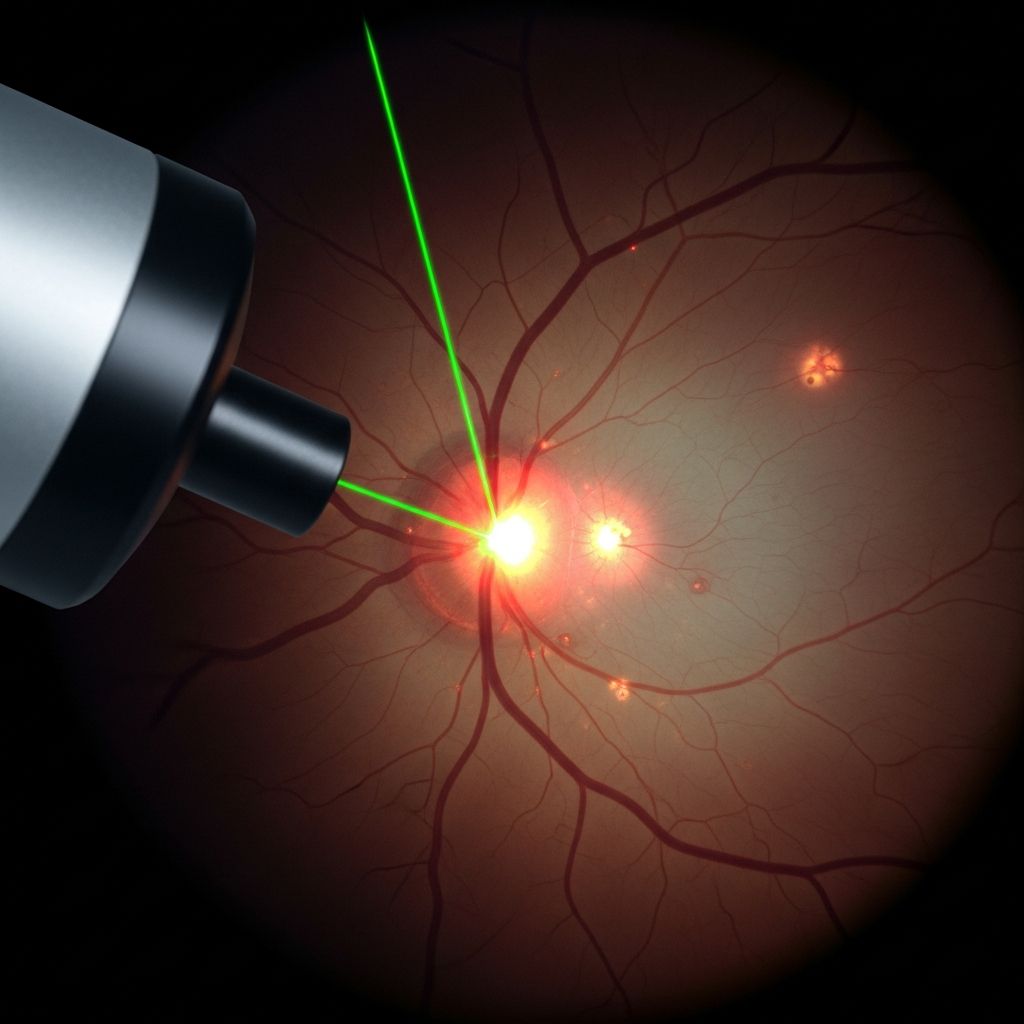
Diabetic retinopathy remains a leading cause of vision impairment among adults with diabetes, progressing through non-proliferative and proliferative stages that demand targeted interventions. Laser therapies, particularly photocoagulation, serve as cornerstone treatments to mitigate retinal damage, reduce neovascularization, and stabilize vision. These procedures leverage controlled light energy to alter retinal tissue dynamics, addressing ischemia and abnormal vessel growth effectively.
Understanding Diabetic Retinopathy Stages
Diabetic retinopathy develops due to prolonged high blood sugar damaging retinal blood vessels. In the
non-proliferative phase
, early signs include microaneurysms, capillary dilation, cotton wool spots, and blot hemorrhages, often leading to non-perfusion areas that foster hypoxia. As it advances toproliferative diabetic retinopathy (PDR)
, new, fragile vessels form on the retina or optic disc, risking vitreous hemorrhage, tractional retinal detachment, and severe visual loss (SVL). Diabetic macular edema (DME) can complicate both stages, swelling the central retina and threatening sharp vision.- Mild Non-Proliferative: Microaneurysms predominate with minimal impact.
- Moderate: Venous beading and intraretinal hemorrhages emerge.
- Severe: Ischemic zones expand, signaling high PDR risk.
Timely laser application in pre-proliferative states significantly lowers SVL incidence by targeting hypoxic periphery.
Core Principles of Laser Photocoagulation
Laser photocoagulation delivers thermal energy via wavelengths like green, yellow, or red light, absorbed by retinal pigments to create controlled burns. This reduces retinal oxygen demand, redirects nutrients to vital areas, and suppresses vasoactive factors such as vascular endothelial growth factor (VEGF) and protein kinase C (PKC). In PDR, direct burns coagulate neovascular tufts and feeding vessels, halting abnormal growth.
The procedure uses slit-lamp delivery or laser indirect ophthalmoscopy (LIO), often in multiple sessions to minimize discomfort and side effects like transient vision blur or peripheral field loss.
Panretinal Photocoagulation (PRP): The Gold Standard for PDR
**PRP**, also known as scatter laser, applies 1,000–2,000 burns across the peripheral retina, sparing the macula. Established by the Diabetic Retinopathy Study (DRS), it prevents SVL in high-risk PDR eyes. Burns stimulate healing responses, lowering ischemia-driven VEGF production.
| Aspect | Details |
|---|---|
| Target | Peripheral retina (hypoxic zones) |
| Burns per Session | 1,000–2,000; split over 2–3 visits |
| Wavelengths | Green (532nm), yellow, red |
| Outcomes | Reduces neovascularization; stabilizes vision |
Argon lasers set the benchmark, outperforming xenon due to fewer complications. Post-1985, PDR and SVL rates declined sharply with widespread adoption.
Laser Strategies for Non-Proliferative Diabetic Retinopathy
In severe non-proliferative cases or DME,
focal/grid laser photocoagulation
targets leaking microaneurysms and edematous areas. The Early Treatment Diabetic Retinopathy Study (ETDRS) confirmed it halves moderate vision loss risk over three years compared to observation.- Focal Laser: Seals specific leaks around the macula.
- Grid Laser: Light burns in a grid pattern for diffuse edema.
Though anti-VEGF injections now dominate DME management, laser remains relevant for persistent cases or when injections are contraindicated.
Subthreshold and Micropulse Innovations
Traditional burns cause visible scarring;
subthreshold micropulse laser
uses short, low-energy pulses (microsecond bursts) to achieve biochemical effects without photoreceptor damage. This tissue-sparing approach suits early non-proliferative disease or DME, reducing inflammation and VEGF without coagulation.Related Stories



Navilas® systems enhance precision via pre-planning and patterns, speeding treatment while ensuring even distribution.
Mechanisms Driving Laser Efficacy
Laser energy coagulates ischemic tissue, decreasing metabolic demand and VEGF release from hypoxic areas. Improved posterior circulation relieves anterior segment neovascularization. Direct ablation closes abnormal vessels, while indirect scatter preserves central vision.
Studies show PRP stabilizes PDR progression, though it neither cures nor reverses prior damage—prevention is key.
Patient Preparation and Procedure Details
Pre-treatment includes pupillary dilation and topical anesthesia. Patients sit at a slit lamp; sessions last 10–30 minutes. Post-procedure, mild discomfort or floaters may occur, resolving quickly. Multiple sittings enhance tolerance.
- Avoid driving immediately after.
- Monitor for rare complications: choroidal effusion, macular edema.
Clinical Outcomes and Evidence
ETDRS data affirm PRP’s role in PDR, reducing SVL by over 50%. For DME, laser cuts vision loss risk significantly short-term. Modern devices like pattern-scanning lasers (e.g., Norlase ECHO) boost efficiency with MEMS technology for portable, precise delivery.
Combining laser with intravitreal steroids curbs inflammation, allowing lower energies.
Advancements Shaping Future Treatments
Pattern scanning and navigated lasers minimize treatment time and enhance accuracy. Subvisible endpoints preserve retinal function better, ideal for younger patients. Ongoing trials explore hybrid laser-anti-VEGF protocols for optimized results.
Risks, Limitations, and Alternatives
While effective, lasers risk nyctalopia (night blindness), peripheral constriction, and rare choroidal neovascularization. They control but do not cure; blood sugar control remains foundational. Anti-VEGF agents like ranibizumab excel for DME, often supplanting laser.
| Treatment | Strengths | Limitations |
|---|---|---|
| Laser Photocoagulation | Cost-effective, durable effect | Field loss, no reversal |
| Anti-VEGF Injections | Improves vision in DME | Frequent dosing, cost |
| Micropulse Laser | Tissue-sparing | Less long-term data |
FAQs
What is the main goal of PRP in PDR?
PRP halts abnormal vessel growth by reducing retinal oxygen demand and VEGF, preventing hemorrhage and detachment.
Does laser treatment restore lost vision?
No, it prevents further loss but does not reverse existing damage.
How many sessions for laser therapy?
Typically 1–3, based on disease extent and tolerance.
Is subthreshold laser better than traditional?
It minimizes scarring, suiting early or DME cases with comparable efficacy.
Who needs laser for diabetic retinopathy?
High-risk PDR or severe non-proliferative with DME/maculopathy.
Prevention and Long-Term Management
Glycemic control (HbA1c <7%), blood pressure management, and regular screening avert progression. Annual dilated exams detect early changes amenable to laser.
Laser therapies have transformed diabetic retinopathy outcomes, with declining PDR rates reflecting their impact. Continued innovation promises even safer, more effective options.
References
- Laser Treatment Modalities for Diabetic Retinopathy — PMC/NCBI. 2022-10-25. https://pmc.ncbi.nlm.nih.gov/articles/PMC9637280/
- Panretinal Photocoagulation (PRP) Laser: What Is It — Norlase. 2023. https://norlase.com/panretinal-photocoagulation-laser-prp/
- Treatment of Diabetic Retinopathy — New Jersey Vision. 2024. https://newjerseyvision.com/diabetic-retinopathy-treatment-nj/
- Retinal Diseases – Patients — OD-OS. 2023. https://www.od-os.com/patients/retinal-diseases/
- Diabetic Retinopathy Treatment — Riverside Eye Center. 2023. https://www.riverside-eye-center-maine.com/diabetic-retinopathy-treatment-norway/
Similar Articles








Read full bio of medha deb