Laser Therapy In Skin Of Colour: 5 Essential Safety Tips
Exploring safe and effective laser treatments for darker skin types, addressing unique challenges like hyperpigmentation and scarring risks.
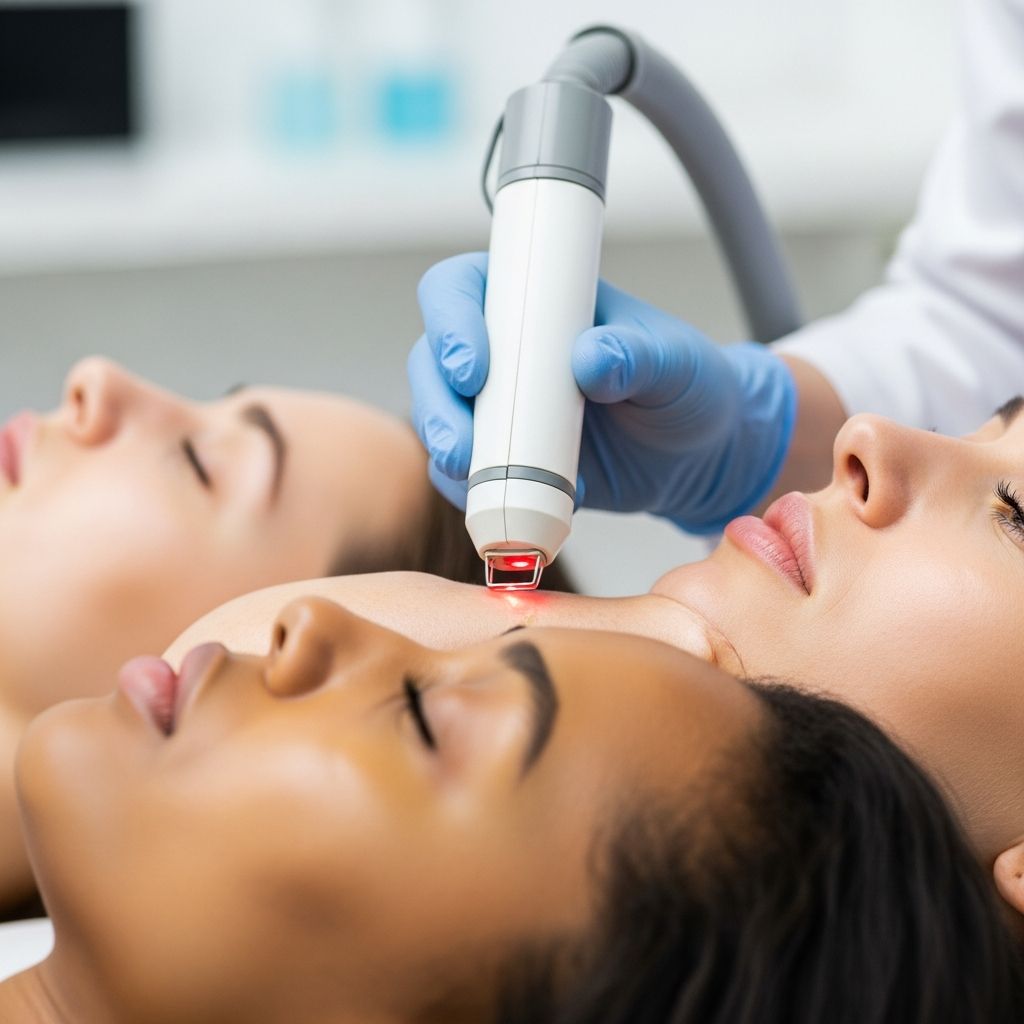
Introduction
Skin of colour, often referring to non-white skin types particularly Fitzpatrick phototypes V and VI, presents unique considerations for laser therapy due to its distinct structural and functional properties. These skin types are characterized by higher epidermal melanin content, larger and more widely distributed melanosomes, heightened melanocyte responsiveness, and overactive fibroblasts, which influence laser interactions and healing responses.
While melanin provides natural protection against ultraviolet radiation (UVR), reducing photoageing compared to lighter skin, it also competes as a chromophore during laser treatments, absorbing energy intended for target tissues and elevating risks of thermal injury. This article explores the indications, outcomes, laser selections, and precautions for safe laser use in skin of colour, drawing from clinical evidence to guide practitioners and patients.
Skin in Different Populations
Skin of colour exhibits several key differences from lighter skin types that impact laser therapy:
- Increased melanin: Higher epidermal melanin absorbs laser energy, protecting deeper tissues from UV but risking burns or dyspigmentation during treatment.
- Melanosome distribution: Larger melanosomes are more dispersed, enhancing photoprotection but complicating selective targeting.
- Melanocyte hyperactivity: Leads to frequent postinflammatory hyperpigmentation (PIH) or hypopigmentation after injury, unlike rarer occurrences in white skin.
- Fibroblast activity: Genetic predisposition to hypertrophic scars and keloids post-trauma, necessitating cautious energy delivery.
These traits mean skin of colour is more resilient to chronic sun damage but vulnerable to acute inflammatory responses. Studies confirm lower photoageing signs but higher PIH prevalence after lasers or abrasions.
Indications
Laser therapy indications mirror those in all skin types, but aesthetic concerns like hyperpigmentation drive demand in skin of colour:
- Hyperpigmentation: Melasma, solar lentigines, and uneven tone; common due to melanin reactivity.
- Hair removal: Targets coarse terminal hairs causing pseudofolliculitis barbae, folliculitis barbae, keloidalis nuchae, or decalvans—prevalent in skin of colour.
- Scarring: Acne, hypertrophic, or keloid scars; non-ablative options preferred.
- Vascular lesions: Port-wine stains, telangiectasias; pulsed dye lasers effective with caution.
- Tattoos: Particularly dark inks; challenging due to epidermal shielding.
- Pigmented lesions: Nevus of Ota/Ito, freckles; Q-switched lasers for dermal pigment.
Women of colour frequently seek pigmentation correction, while men address hair-related folliculitis.
Laser Selection and Outcomes
Choosing lasers with longer wavelengths minimizes epidermal melanin absorption, crucial for safety in Fitzpatrick V-VI.
Hair Removal
The long-pulsed Nd:YAG laser (1064 nm) is safest, penetrating deeper to target follicles while sparing melanin-rich epidermis. Clinical data show low complication rates, with transient erythema resolving quickly.
- Avoid shorter wavelengths like alexandrite (755 nm), linked to blistering in types V-VI.
- Diode lasers (800-810 nm) are generally safe, with minor blistering or pigment shifts in <5% cases.
Outcomes: 50-80% hair reduction after 4-6 sessions; cooling devices enhance tolerability.
Pigmented Lesions
Quality-switched (QS) Nd:YAG or ruby lasers target dermal melanin effectively. For superficial lesions, shorter pulses confine energy to melanosomes.
Related Stories



- Superficial pigment: 532 nm QS Nd:YAG or KTP.
- Deep pigment: 1064 nm Nd:YAG for nevus of Ota.
Caution: Risk of permanent hypopigmentation; recurrence possible.
Acne and Other Scars
Non-ablative fractional lasers (e.g., 1550 nm erbium glass or Nd:YAG) improve texture with less PIH than ablative CO2/Er:YAG, avoided in V-VI due to high hyperpigmentation risk.
Outcomes: 40-70% scar improvement; multiple sessions needed.
Tattoo Removal
QS Nd:YAG excels for black/blue inks in skin of colour, shattering particles for macrophage clearance. Ethiopian study: 50% cleared with mild PIH in half, resolving in 2-4 months.
Challenges: Epidermal melanin shields dermal ink; 4-10 sessions for multicolour tattoos, greens/yellows hardest.
Vascular Lesions
Pulsed dye lasers (585-595 nm) treat port-wine stains effectively; longer pulses and cooling mitigate risks.
Precautions and Techniques
To optimize safety:
- Cooling: Contact sapphire or cryogen sprays protect epidermis from bulk heating.
- Test spots: Small areas treated first to assess PIH risk.
- Pre/post-care: Topical hydroquinone, sunscreens; avoid sun exposure.
- Lower fluences: Start conservative, titrate up based on response.
- Expectations: Inform of PIH (common, transient), keloid risk; multiple treatments required.
Epidermal monitoring prevents burns; experienced providers essential. Modern advancements make lasers safer than historically perceived.
Outcomes
Success varies by indication and compliance:
| Indication | Preferred Laser | Success Rate | Common Side Effects |
|---|---|---|---|
| Hair Removal | Nd:YAG 1064 nm | 50-80% reduction | Transient erythema, rare PIH |
| Pigmented Lesions | QS Nd:YAG | 50-90% clearance | PIH, hypopigmentation |
| Scars | Non-ablative fractional | 40-70% improvement | Mild PIH, edema |
| Tattoos | QS Nd:YAG | Variable, 4-10 sessions | PIH (2-4 months) |
PIH resolves in weeks-months with topicals; keloids rarer with precautions.
Frequently Asked Questions (FAQs)
Q: Is laser hair removal safe for dark skin?
A: Yes, long-pulsed Nd:YAG is the gold standard, with low risks when cooling is used and fluences adjusted.
Q: Can lasers treat melasma in skin of colour?
A: Low-fluence QS Nd:YAG shows promise, combined with topicals; avoid aggressive ablation.
Q: What if I get hyperpigmentation after laser?
A: Common but treatable with hydroquinone, retinoids, and sun protection; resolves in 1-6 months.
Q: Are ablative lasers okay for Fitzpatrick VI?
A: Generally avoided due to high PIH risk; prefer non-ablative alternatives.
Q: How many sessions for tattoo removal?
A: 4-10, depending on ink color/depth; darker skins may need more due to melanin interference.
References
- Laser therapy in skin of colour — DermNet NZ. 2023. https://dermnetnz.org/topics/laser-therapy-in-skin-of-colour
- Lasers in dermatology — DermNet NZ. 2023. https://dermnetnz.org/topics/lasers-in-dermatology
- Ask a Derm – Can I Get Laser Treatments if I have darker skin? — Dermatica. 2024. https://www.dermatica.co.uk/skinlab/ask-a-derm-can-i-get-laser-treatments-if-i-have-darker-skin/
- Nd:YAG laser treatment — DermNet NZ. 2023. https://dermnetnz.org/topics/ndyag-laser-treatment
- Laser resurfacing — DermNet NZ. 2023. https://dermnetnz.org/topics/laser-resurfacing
- Laser therapy — University of Nottingham. 2023. https://www.nottingham.ac.uk/research/groups/cebd/resources/skin-of-colour/laser-therapy.aspx
Similar Articles








Read full bio of medha deb