Lasers and Lights for Acne Treatment: A Complete Guide
Explore laser and light therapy options for treating active acne and acne scarring effectively.
Lasers, Lights and Acne: Modern Treatment Options
Laser and light therapy are used to treat mild active acne and acne scarring, providing valuable options for patients whose acne persists despite medical therapy, who experience side effects to medications, or who struggle with treatment adherence. These therapies have become increasingly popular as non-invasive or minimally invasive alternatives that complement traditional acne management approaches.
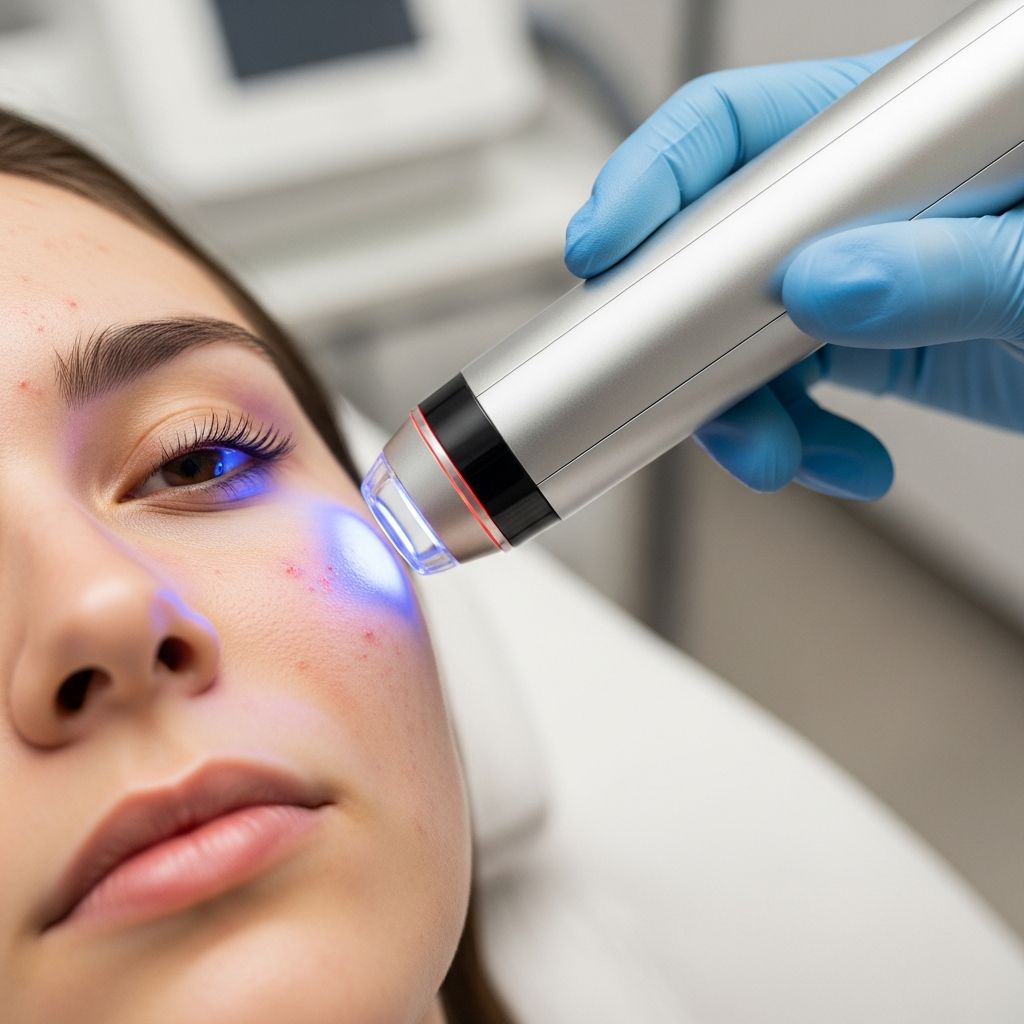
Low-level light therapy is notably safe, with patients experiencing minimal discomfort during treatment. The typical approach involves exposing acne-affected skin to either continuous or intense pulsed light (IPL) on multiple occasions, frequently in conjunction with topical or oral acne medications for enhanced results.
Understanding Light Therapy for Acne
Light therapy utilizes specific wavelengths of light to target the biological mechanisms underlying acne formation. Different wavelengths penetrate the skin to varying depths and interact with different skin components, making wavelength selection crucial for treatment effectiveness.
Blue Light Therapy
Blue light therapy uses wavelengths between 415–545 nm and penetrates approximately 0.3 mm into the skin. This therapy is FDA-approved for treating moderate acne vulgaris and acne that has not responded to other treatments. Blue light is readily absorbed by porphyrins released by Propionobacterium acnes (P. acnes) bacteria, causing a phototoxic effect that kills the bacteria responsible for acne.
The treatment procedure is straightforward: patients sit in front of a blue light lamp for approximately 15 minutes. Generally, 2 sessions per week over a 4-week period is sufficient. Several small studies demonstrate that blue light therapy improves acne vulgaris by reducing inflammation and the number of pustules and papules. However, some individuals with nodulocystic acne lesions experienced worsening with blue light treatment.
Red Light Therapy
Red light therapy operates at wavelengths of 600–650 nm and activates porphyrins with less intensity than blue light. However, it penetrates the skin 1–2 mm deeper than blue light, reaching deeper layers where inflammatory processes occur. Low-level light therapy using red LED treatments reduces inflammatory mediator expression from macrophages and causes a reduction in neutrophils, interleukins, and matrix metalloproteinase in acne animal models.
Red light therapy may also inhibit keratinization and reduce skin barrier damage. It reduces the activity of acne vulgaris by accelerating wound healing and reducing the inflammatory response, making it particularly valuable for inflammatory acne types.
Blue–Red Light Combination Therapy
Blue–red light therapy combines low-level light therapy in both blue (415 nm) and red (650 nm) wavelengths. Multiple studies have shown it is well tolerated and effective, producing a reduction in both inflammatory and non-inflammatory acne lesions, and is superior to blue light alone.
The mechanism is thought to be synergistic, applying the antibacterial and anti-inflammatory actions of both wavelengths of light acting at different depths within the skin. Blue–red light is safe in pregnancy, making it an option for pregnant patients with acne. Some patients may experience a deterioration of their acne with blue–red light therapy, and its side effects can include dryness, itch, a rash, and headaches.
Related Stories



A recent clinical trial compared a blue–red light therapy mask with and without topical salicylic acid against topical benzoyl peroxide for mild to moderate acne vulgaris. The trial found a 24.4% improvement in inflammatory lesions and 19.5% improvement in non-inflammatory lesions in patients using the light mask, concluding this to be a safe and effective therapy for mild to moderate acne.
Intense Pulsed Light (IPL) Therapy
Intense pulsed light (IPL) devices emit a spectrum of wavelengths between 400 and 1200 nm. This broad spectrum allows multiple chromophores to be activated with one light exposure, enabling treatment versatility. Pulse duration, wavelengths, and pulse intervals can all be adjusted with cut-off filters to enable tailoring of treatments to a patient’s specific skin type and condition.
IPL has shown promise in reducing inflammatory and non-inflammatory acne lesion counts and reducing the size and sebum production of sebaceous glands. However, to date, there is conflicting evidence regarding its overall effectiveness in treating acne. Research indicates that IPL in combination with a photosensitizer is superior to IPL alone. Additionally, photopneumatic therapy, which combines IPL with gentle vacuum technology, is FDA-approved to treat blackheads, whiteheads, and some pimples, though it cannot treat acne nodules or cysts.
Photodynamic Therapy (PDT)
Photodynamic therapy (PDT) represents an advanced approach combining light energy with photosensitizing agents. PDL (pulsed dye laser) is often used in conjunction with topical photosensitizers and can improve the severity and number of inflammatory lesions in acne. However, the side effects of PDL have somewhat limited its usefulness, restricting its widespread adoption.
PDT therapy shows great promise in helping treat severe acne. Some patients who had acne cysts have been clear for years after receiving PDT from a dermatologist. When used with appropriate photosensitizing agents such as topical aminolevulinic acid (ALA) hydrochloride solution, pre-treatment appears to offer additional reduction of lesions and pustules, though this can cause a crusting reaction for a few days.
In one significant study, patients treated with photodynamic therapy had 50% fewer spots at the end of the 4-week treatment period, with a 72% reduction achieved 12 weeks after the last treatment. This demonstrates that results often improve weeks after the last treatment session.
Infrared and Laser Therapy
Infrared lasers represent a distinct category of acne treatment, operating on different principles than visible light therapies. These systems can penetrate deeply into the dermis to target water within sebaceous glands, causing thermal coagulation of the sebaceous glands, arresting sebum production, and thereby reducing acne.
1450-nm Diode Laser
The 1450-nm diode laser has been studied for acne treatment with promising results. This infrared technology targets sebaceous glands effectively through selective photothermolysis.
1540-nm Erbium Glass Laser
The 1540-nm erbium glass laser improves inflammatory acne through non-selective heating of the sebaceous glands. Small studies have shown a 68–82% reduction in acne lesions, with the effects sustained at 24 months’ follow-up. This particular laser has very few reported side effects, making it an attractive option for patients concerned about adverse reactions.
Nd:YAG Laser (1064-nm)
The neodymium-doped yttrium aluminium garnet (Nd:YAG) is a crystal used most commonly in a 1064-nm laser that can penetrate deeper layers within the dermis, causing diffuse dermal heating while limiting epidermal damage. Although its mechanism is not entirely defined, it probably treats acne by reducing inflammation and sebum production.
This laser has been more extensively studied in the treatment of acne scarring; however, there is emerging evidence for its use in the treatment of active acne. The ability to preserve epidermal integrity while achieving deep dermal effects makes it valuable for patients with sensitive skin types.
KTP Laser
The KTP (potassium-titanyl-phosphate) laser operates through selective photothermolysis to target Cutibacterium acnes and cause thermal damage to sebaceous glands. Limited data support its use in active acne; however, several small studies have shown a transient reduction in acne lesion count (21–36%). The side effects of KTP laser treatment include transient crusting, oedema, and erythema.
Efficacy and Clinical Outcomes
It is important to understand realistic expectations for laser and light therapy outcomes. Most people see clearing, but it’s not 100% — studies show that lasers and other light treatments can reduce acne, but rarely can these treatments alone clear acne. To give patients the best results, dermatologists may recommend using another acne treatment, such as medicine applied to the skin.
It takes time to see results. In studies, researchers continually find that patients see the best results weeks after the last treatment. The timeline for improvement varies depending on the type of treatment used and the severity of the acne being treated.
No single laser or light treatment can treat all acne types — pimples, blackheads, whiteheads, acne cysts, and acne nodules require different approaches. This is why dermatologists select specific technologies based on the patient’s particular acne presentation.
Safety Profile and Side Effects
Laser and light therapies are generally safe when administered by qualified dermatologists. Low-level light therapy is safe, and patients experience minimal discomfort. However, different technologies carry distinct side effect profiles:
- Blue–red light: dryness, itch, rash, and headaches
- PDL: various side effects that have limited its widespread use
- KTP laser: transient crusting, oedema, and erythema
- 1540-nm erbium glass: very few reported side effects
Former light therapies used UV light (usually UVB), which can be damaging to skin. UV light is no longer used to treat acne, and blue light devices currently available do not contain ultraviolet light.
Treatment Considerations and Patient Selection
Laser and light therapy provide useful options for specific patient populations. These treatments are particularly beneficial for patients with acne that persists despite medical therapy, those who experience side effects to medications, or those with difficulty adhering to medical treatments.
Patients considering these treatments should discuss their specific situation with a dermatologist, who can determine candidacy and recommend the most appropriate technology. A dermatologist can assess skin type, acne severity, and any underlying skin conditions to select the optimal treatment approach.
Although light therapy delivery systems can be purchased for home use, a dermatologist should oversee their use to ensure safety and efficacy.
The Future of Laser and Light Therapy for Acne
The future looks bright for treating acne with lasers and lights. These treatments show great promise in treating acne, with some patients with severe acne cysts seeing clearing for years when laser therapy was added to their treatment plan. More studies are needed to determine what will work best for most people, but the evidence continues to accumulate supporting their use.
As technology advances and more clinical data emerges, laser and light therapies will likely play an increasingly important role in comprehensive acne management strategies.
Frequently Asked Questions
Q: Can laser and light therapy alone clear acne completely?
A: Rarely can laser and light treatments alone clear acne completely. Most people see clearing, but these therapies are most effective when combined with other acne treatments such as topical or oral medications. Dermatologists often recommend using another acne treatment alongside laser or light therapy for best results.
Q: How long does it take to see results from laser and light therapy?
A: Results typically appear weeks after the last treatment session. For example, patients treated with photodynamic therapy showed 50% improvement at the end of a 4-week treatment period and 72% improvement 12 weeks after the last treatment.
Q: Is blue light therapy safe?
A: Yes, blue light therapy is safe and approved by the FDA for moderate acne vulgaris. It does not contain ultraviolet (UV) light, which was used in older treatments and can damage skin. The procedure is non-invasive with minimal discomfort.
Q: Can laser and light therapy treat acne scars?
A: Yes, laser therapy can be used to treat acne scarring. The 1064-nm Nd:YAG laser and other infrared lasers have been extensively studied for acne scar treatment and show promising results.
Q: Is blue–red light therapy safe during pregnancy?
A: Yes, blue–red light therapy is safe in pregnancy, making it a good option for pregnant patients with active acne who need treatment.
Q: How frequently are laser and light treatments administered?
A: Treatment frequency varies by technology. For blue light therapy, typically 2 sessions per week over a 4-week period is required. Other treatments may have different schedules based on the specific laser or light system used.
Q: What is the difference between blue light and red light therapy?
A: Blue light (415–545 nm) penetrates approximately 0.3 mm into the skin and has antibacterial effects against acne-causing bacteria. Red light (600–650 nm) penetrates 1–2 mm deeper and has stronger anti-inflammatory effects. Blue–red light combination therapy is often superior to either wavelength alone.
Q: What are the side effects of laser and light therapy for acne?
A: Side effects vary by treatment type but can include dryness, itch, rash, headaches, transient crusting, oedema, and erythema. The 1540-nm erbium glass laser has very few reported side effects. Most side effects are temporary and mild.
References
- Lasers, lights and acne — DermNet NZ. 2019. https://dermnetnz.org/topics/lasers-lights-and-acne
- Lasers and lights: How well do they treat acne? — American Academy of Dermatology. https://www.aad.org/public/diseases/acne-and-rosacea/lasers-and-lights-how-well-do-they-treat-acne
- Blue light acne treatment — DermNet NZ. 2007. https://dermnetnz.org/topics/blue-light-acne-treatment
Similar Articles








Read full bio of medha deb