LASIK Eye Surgery: 3 Conditions It Corrects And What To Expect
Discover how LASIK can transform your vision, from candidacy to recovery and beyond.
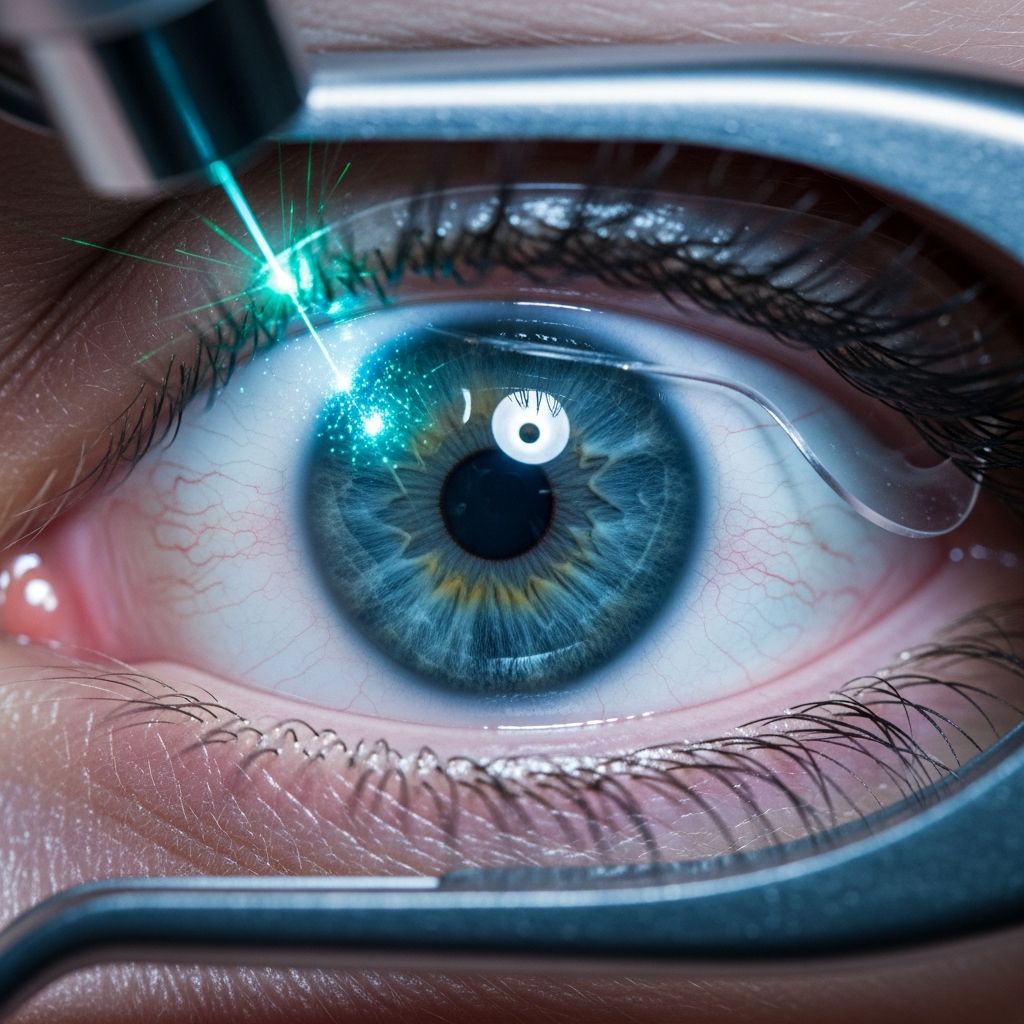
LASIK, or Laser-Assisted In Situ Keratomileusis, represents a revolutionary approach to correcting common vision impairments by precisely reshaping the cornea using advanced laser technology. This outpatient procedure has helped millions reduce or eliminate their dependence on glasses or contact lenses, offering a quick path to improved visual acuity.
Understanding Vision Problems LASIK Addresses
The cornea, the clear dome at the front of the eye, plays a critical role in focusing light onto the retina. When its shape is irregular, light rays do not converge properly, leading to refractive errors. LASIK targets three primary conditions:
- Myopia (Nearsightedness): The cornea is too steep, causing distant objects to appear blurry as light focuses in front of the retina.
- Hyperopia (Farsightedness): A flatter cornea results in light focusing behind the retina, blurring near vision.
- Astigmatism: An irregularly shaped cornea distorts light, creating blurred or stretched images at all distances.
By altering the corneal curvature, LASIK restores proper light refraction, enabling sharp focus on the retina for enhanced everyday vision.
Who Makes an Ideal LASIK Candidate?
Not everyone qualifies for LASIK. Ophthalmologists evaluate several factors during comprehensive pre-operative assessments to ensure safety and success. Key candidacy criteria include:
| Factor | Ideal Range | Why It Matters |
|---|---|---|
| Age | 21-40 years | Prescription must be stable for at least one year; eyes continue changing in younger patients. |
| Prescription Strength | Myopia up to -12D, Hyperopia up to +6D, Astigmatism up to 6D | Advanced lasers handle higher corrections accurately. |
| Corneal Thickness | At least 500 microns | Ensures sufficient tissue remains post-reshaping to maintain eye strength. |
| Overall Eye Health | No active diseases | Conditions like glaucoma, keratoconus, or severe dry eye disqualify candidates. |
Pre-surgical exams involve detailed corneal mapping via wavefront analysis, which generates a 3D topographic map of the eye’s optical system for personalized treatment planning. Pupillary measurements, tear film evaluation, and retinal scans confirm suitability.
The LASIK Procedure: Step-by-Step Breakdown
LASIK typically takes 10-15 minutes per eye and is performed under topical anesthesia with patients fully awake. Here’s what happens:
- Preparation: Numbing drops are applied, and a sedative may be given for relaxation. A speculum holds eyelids open.
- Flap Creation: A femtosecond laser or microkeratome creates a thin, hinged corneal flap (about 100-150 microns thick).
- Laser Reshaping: The flap is lifted, exposing the stroma. An excimer laser, guided by pre-op maps, ablates microscopic tissue layers (less than 0.25 microns per pulse) to reshape the cornea. Patients fixate on a light target.
- Flap Repositioning: The flap is smoothed back into place, adhering naturally without sutures. Protective shields are applied post-op.
Modern variants like wavefront-guided or topography-integrated LASIK, such as those using iDesign technology, enhance precision by addressing higher-order aberrations for superior night vision and contrast.
Variations of LASIK Technology
Beyond traditional LASIK, innovations offer tailored options:
- All-Laser LASIK: Uses femtosecond lasers for flap creation, reducing blade-related risks and enabling thinner flaps.
- SMILE (Small Incision Lenticule Extraction): Flapless procedure extracts a lenticule through a tiny incision, ideal for myopia.
- Wavefront-Optimized LASIK: Preserves natural corneal asphericity to minimize glare and halos.
These advancements achieve 20/20 vision or better in over 95% of cases, per clinical data.
Immediate Post-Operative Experience and Recovery
Most patients notice improved vision within hours, though full stabilization takes 3-6 months. Initial sensations include mild discomfort, tearing, or light sensitivity, resolving quickly.
Related Stories



- Day 1: Rest with eyes closed; avoid rubbing. Use prescribed antibiotic/steroid drops.
- Week 1: Follow-up exam; resume non-contact activities. No swimming or makeup.
- Long-Term: Annual check-ups monitor corneal health.
Recovery is swift: 90% return to work within 1-2 days. Temporary side effects like dry eyes (managed with drops) affect 20-40% but usually subside in months.
Potential Risks and Complications
While LASIK boasts a 99% satisfaction rate, risks exist:
- Flap Issues: Rare displacement or wrinkles (under 1%).
- Visual Disturbances: Halos, glare, or double vision in low light (typically temporary).
- Under/Over-Correction: May require enhancement surgery (2-5% of cases).
- Dry Eye Syndrome: Can persist; pre-existing cases worsen outcomes.
Serious complications like infection or ectasia occur in less than 0.1% with proper screening. Choosing FDA-approved technology and experienced surgeons minimizes risks.
Benefits That Outweigh the Costs
LASIK offers life-changing advantages:
- Freedom from Aids: 96% achieve 20/40 or better uncorrected vision.
- Quick Procedure: Minimal downtime versus glasses fogging or contact hassles.
- Long-Lasting Results: Stable for decades, though age-related presbyopia may require reading glasses later.
- Cost-Effective: One-time investment vs. lifelong lens expenses.
Candidacy Myths Debunked
Common misconceptions deter eligible patients:
- Myth: LASIK hurts. Fact: Numbing drops ensure comfort; pressure sensations are brief.
- Myth: Only for young people. Fact: Healthy adults up to 50+ qualify if prescriptions are stable.
- Myth: Permanent dry eyes. Fact: Most resolve; treatments available.
Preparing Financially and Logistically
Costs range $2,000-$3,000 per eye, often not covered by insurance. Financing, HSAs, or tax deductions help. Select surgeons with high-volume experience and cutting-edge equipment.
Frequently Asked Questions (FAQs)
Is LASIK permanent?
Corneal changes are lasting, but age or hormones can affect vision later.
Can I drive after LASIK?
Usually the next day, after clearance.
What if I’m not fully corrected?
Enhancements are possible after 3 months.
Does LASIK work for presbyopia?
Monovision LASIK treats one eye for distance, one for near.
How do I choose a surgeon?
Verify board certification, review outcomes data, and tour facilities.
Alternatives to Traditional LASIK
If ineligible, consider PRK (surface ablation, no flap), ICLs (implantable lenses), or RLE (lens replacement for older patients).
LASIK continues evolving, promising even sharper outcomes with AI-guided lasers and femtosecond precision. Consult an ophthalmologist to determine if it’s your route to unaided clarity.
References
- LASIK eye surgery – Mayo Clinic — Mayo Clinic. 2023-10-12. https://www.mayoclinic.org/tests-procedures/lasik-eye-surgery/about/pac-20384774
- How Does LASIK Work? Eye Surgeons Explain the Procedure — Johnson & Johnson Vision. 2024-02-15. https://www.jnj.com/health-and-wellness/eye-surgeons-explain-how-lasik-procedure-works
- The Basics of LASIK Eye Surgery — Federal Trade Commission. 2023-05-20. https://consumer.ftc.gov/articles/0062-basics-lasik-eye-surgery
- LASIK Eye Surgery: Your Ultimate Guide to Clear Vision — McFarland Eye Care. 2023-08-08. https://www.mcfarlandeye.com/doctors-desk-blog/2023/08/08/lasik-eye-surgery-your-ultimate-guide-to-clear-vision/
- LASIK eye surgery: MedlinePlus Medical Encyclopedia — MedlinePlus (U.S. National Library of Medicine). 2024-01-10. https://medlineplus.gov/ency/article/007018.htm
- LASIK eye surgery – 3D animation — Nucleus Medical Media (YouTube). 2019-07-22. https://www.youtube.com/watch?v=Bb8bnjnEM00
- Understanding the 3 Different Types of LASIK — Laser Eye Center of Silicon Valley. 2023-11-05. https://www.2020eyesite.com/understanding-the-3-different-types-of-lasik-at-laser-eye-center-of-silicon-valley-all-laser-lasik-smile-lasik-and-epi-lasik/
- LASIK Eye Surgery — Cleveland Clinic. 2024-03-18. https://my.clevelandclinic.org/health/treatments/21805-lasik-eye-surgery
Similar Articles








Read full bio of medha deb