Lateral Epicondylitis: Tennis Elbow Causes & Treatment
Comprehensive guide to understanding tennis elbow, its causes, symptoms, and effective treatment options.
Understanding Lateral Epicondylitis (Tennis Elbow)
Lateral epicondylitis, commonly known as tennis elbow, is a painful condition of the elbow caused by overuse of the forearm muscles and tendons. Despite its name, this condition is not limited to tennis players. In fact, only about 5% of people with tennis elbow relate their injury to playing tennis. The condition develops when repetitive motions and stress on the elbow tendons lead to microscopic tears and inflammation, causing discomfort on the outer part of the elbow. This condition affects people from various occupational and recreational backgrounds, including carpenters, plumbers, painters, butchers, and anyone engaged in repetitive gripping or wrist extension activities.
The medical term “lateral epicondylitis” refers to inflammation of the tendons on the lateral (outer) side of the elbow. Understanding this condition is essential for proper management and recovery, as it can significantly impact daily activities and quality of life if left untreated.
Anatomy of the Elbow and Tennis Elbow
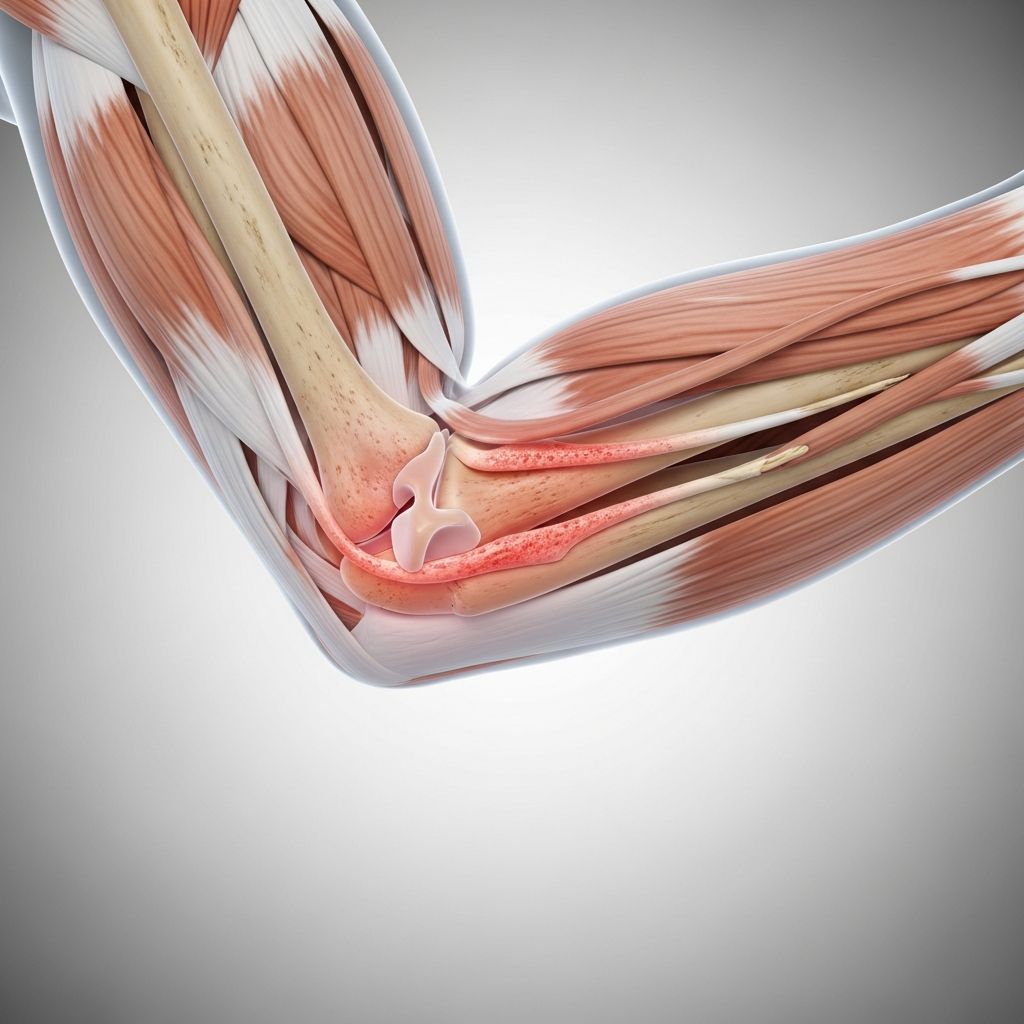
The elbow joint is a complex structure held together by muscles, ligaments, and tendons. Tennis elbow specifically involves the muscles and tendons of the forearm responsible for extending the wrist and fingers. The primary tendon affected in lateral epicondylitis is called the extensor carpi radialis brevis (ECRB), which attaches the ECRB forearm muscle to the lateral epicondyle—a bony prominence on the outside of the elbow. The ECRB muscle plays a crucial role in stabilizing the wrist when the elbow is straight, a motion commonly performed during tennis groundstrokes and other repetitive activities.
When the ECRB muscle becomes weakened from overuse, microscopic tears develop in the ECRB tendon at its attachment point to the lateral epicondyle. These tears lead to localized inflammation and pain directly over the outer part of the elbow. Understanding this anatomical involvement helps explain why certain movements and activities worsen the condition.
Causes of Tennis Elbow
Overuse and Repetitive Strain
The primary cause of tennis elbow is overuse of the forearm muscles and tendons through repetitive motions. Tennis elbow results from eccentric overload of the common extensor tendon at the origin of the ECRB tendon. Any activity involving repeated gripping, forceful wrist extension, radial deviation, and forearm supination can contribute to the development of this condition. The accumulated stress from these repetitive movements causes structural changes in the tendon, including increased fibroplastic activity and granulation tissue formation, leading to a degenerative condition known as angiofibroplastic tendinosis.
Common Activities and Occupations
While tennis players are susceptible to tennis elbow through repetitive backhand strokes, many other activities can trigger the condition. Common causes include:
- Computer work and keyboard use
- Painting and decorating
- Carpentry and woodworking
- Plumbing and mechanical work
- Butchering and food preparation
- Forceful forearm pronation and supination (twisting motions)
- Repetitive vibration exposure
- Heavy lifting with improper technique
- Playing racquet sports such as squash and badminton
Vascular Considerations
An important factor in tennis elbow development is hypovascularity—reduced blood supply to the tendinous region. Because the lateral epicondyle region contains areas with relatively poor blood circulation, the tendinous unit cannot respond adequately to repetitive forces transmitted through the muscle, resulting in declining functional tolerance. This limited blood supply impairs the tendon’s ability to heal efficiently, contributing to the chronic nature of the condition.
Related Stories



Symptoms and Clinical Presentation
Common Symptoms
The symptoms of tennis elbow develop gradually over time. In most cases, the pain begins mildly and slowly worsens over weeks and months, often with no specific injury marking the onset. The most common signs and symptoms include:
- Pain or burning sensation on the outer part of the elbow
- Weak grip strength
- Pain that may radiate upward along the upper arm or downward along the forearm
- Pain during night hours in some cases
- Difficulty performing gripping activities
Activities That Worsen Symptoms
Tennis elbow pain typically intensifies with forearm activities and repetitive motions. Patients often experience increased discomfort when:
- Holding a tennis racquet or other sports equipment
- Turning a wrench or screwdriver
- Shaking hands
- Lifting or bending the arm
- Gripping small objects such as pens
- Opening jars or doorknobs
- Extending the wrist backward
Affected Arm and Pain Pattern
The dominant arm is most frequently affected by tennis elbow; however, both arms can be involved, particularly in people whose occupations require bilateral repetitive movements. The pain is usually located anterior and distal from the lateral epicondyle, though in rare cases, it may radiate to the third and fourth fingers. Additionally, patients often experience deficient flexibility and strength in the wrist extensor and posterior shoulder muscles.
Risk Factors
Certain factors increase the likelihood of developing tennis elbow. Age plays a significant role, as the condition is most common in people aged 30 to 50 years. Occupational demands involving repetitive wrist and arm motions substantially increase risk, as do certain sports activities. Poor ergonomics, inadequate equipment, or improper technique can predispose individuals to the condition. Additionally, individuals with previous elbow injuries or those engaging in activities requiring high force and repetition are at heightened risk for developing lateral epicondylitis.
Diagnosis
Clinical Evaluation
A healthcare provider diagnoses tennis elbow through physical examination and patient history. The physician will perform palpation on the extensor muscles’ origin on the lateral epicondyle to reproduce pain and assess the condition. The diagnosis typically involves evaluating grip strength, elbow range of motion, and pain response to specific movements and activities.
Imaging and Tests
While clinical evaluation is usually sufficient for diagnosis, imaging studies may be recommended in some cases. X-rays can rule out other conditions such as arthritis or bone abnormalities. Ultrasound or MRI imaging may be used to visualize the tendon and confirm the diagnosis by showing signs of tendon degeneration or inflammation. These imaging studies help exclude nerve compression or other structural abnormalities that might require different treatment approaches.
Treatment Options
Conservative Treatment Approaches
Most cases of tennis elbow respond well to conservative management strategies. The initial treatment approach focuses on reducing inflammation, relieving pain, and allowing the tendon to heal. Conservative treatment typically includes:
- Rest and activity modification to avoid aggravating movements
- Ice application to reduce inflammation and pain
- Non-steroidal anti-inflammatory drugs (NSAIDs) for pain relief
- Bracing or strapping to reduce stress on the affected tendon
- Physical therapy and stretching exercises
- Gradual return to activities with proper technique
Physical Therapy and Rehabilitation
Physical therapy plays a crucial role in tennis elbow recovery. Therapists design individualized exercise programs that focus on strengthening the forearm extensors, improving flexibility, and restoring proper biomechanics. Eccentric strengthening exercises, where the muscle lengthens under tension, have shown particular effectiveness in treating lateral epicondylitis. Progressive rehabilitation helps patients gradually return to their normal activities while minimizing symptom recurrence.
Advanced Treatment Modalities
For cases that do not respond to conservative treatment after several weeks, additional interventions may be considered. Corticosteroid injections can provide temporary relief by reducing inflammation around the tendon. Platelet-rich plasma (PRP) therapy and other regenerative medicine approaches are increasingly used to promote tendon healing. Extracorporeal shock wave therapy (ESWT) is another option that uses acoustic waves to stimulate healing. In rare cases where conservative treatments fail after 6 to 12 months, surgical intervention may be considered to remove damaged tissue and promote healing.
Prevention Strategies
Preventing tennis elbow involves maintaining proper ergonomics and technique during activities. Key prevention strategies include:
- Using proper equipment and tools designed for your activities
- Maintaining correct posture and arm positioning during work or leisure activities
- Taking regular breaks from repetitive motions
- Performing warm-up stretches before activities
- Strengthening forearm muscles through regular exercise
- Using appropriate gripping techniques and avoiding excessive force
- Considering ergonomic modifications to your workspace
- Gradually increasing activity intensity rather than sudden increases
Prognosis and Recovery
The prognosis for tennis elbow is generally favorable. Tennis elbow usually improves with conservative treatment, and approximately nine out of ten people achieve full recovery within one year. Most cases resolve without requiring surgical intervention. However, recovery timelines vary depending on the severity of the condition, compliance with treatment protocols, and the individual’s ability to modify aggravating activities. Early intervention and adherence to treatment recommendations significantly improve outcomes and reduce the risk of chronic complications.
When to Seek Medical Attention
Individuals should consult a healthcare provider if they experience persistent elbow pain that does not improve with rest and self-care measures, severe pain that interferes with daily activities, pain accompanied by significant weakness or swelling, or symptoms that last longer than two weeks. A healthcare provider can properly diagnose the condition, rule out other potential causes, and recommend an appropriate treatment plan tailored to the individual’s needs.
Frequently Asked Questions
Q: Can tennis elbow occur in non-athletes?
A: Yes, tennis elbow affects many non-athletes. Only about 5% of tennis elbow cases relate to playing tennis. The condition commonly affects people in occupations requiring repetitive gripping or wrist extension, such as carpenters, plumbers, painters, and computer users.
Q: How long does tennis elbow take to heal?
A: Most people experience significant improvement within 6 to 12 weeks with appropriate conservative treatment. Approximately nine out of ten people achieve full recovery within one year. However, individual recovery times vary based on severity and compliance with treatment recommendations.
Q: Is surgery necessary for tennis elbow?
A: Surgery is rarely necessary for tennis elbow. Most cases respond well to conservative treatment including rest, physical therapy, and anti-inflammatory measures. Surgery is typically considered only when conservative treatments fail after 6 to 12 months of treatment.
Q: Can tennis elbow affect both arms?
A: While the dominant arm is most commonly affected, tennis elbow can develop in both arms, particularly in individuals whose occupations require bilateral repetitive movements or those engaged in certain sports that stress both arms equally.
Q: What is the difference between tennis elbow and golfer’s elbow?
A: Tennis elbow (lateral epicondylitis) affects the outer side of the elbow and involves the extensor tendons. Golfer’s elbow (medial epicondylitis) affects the inner side of the elbow and involves the flexor tendons. The treatment approaches are similar, but the anatomical locations and affected tendons differ.
References
- Tennis Elbow (Lateral Epicondylitis) — American Academy of Orthopaedic Surgeons (AAOS). 2024. https://orthoinfo.aaos.org/en/diseases–conditions/tennis-elbow-lateral-epicondylitis/
- Lateral Epicondylitis — Physiopedia. 2024. https://www.physio-pedia.com/Lateral_Epicondylitis
- Tennis Elbow (Lateral Epicondylitis): Treatment & Symptoms — Cleveland Clinic. 2024. https://my.clevelandclinic.org/health/diseases/7049-tennis-elbow-lateral-epicondylitis
- Lateral Epicondylitis (Tennis Elbow) — National Center for Biotechnology Information (NCBI). 2024. https://www.ncbi.nlm.nih.gov/books/NBK431092/
- What is Tennis Elbow? Causes, Symptoms, and Treatment — Cedars-Sinai. 2024. https://www.cedars-sinai.org/newsroom/the-healthy-what-is-tennis-elbow-causes-symptoms-and-treatment/
- Tennis elbow – symptoms, causes and treatment — Healthdirect. 2024. https://www.healthdirect.gov.au/tennis-elbow
- Lateral Epicondylitis — Merck Manuals. 2024. https://www.merckmanuals.com/home/injuries-and-poisoning/sports-injuries/lateral-epicondylitis
Similar Articles








Read full bio of Sneha Tete