Lattice Degeneration: Understanding Retinal Thinning
Comprehensive guide to peripheral retinal thinning and management strategies
The retina serves as the eye’s critical light-sensing tissue, converting visual information into electrical signals that travel to the brain. When portions of this delicate structure weaken and thin over time, a condition called lattice degeneration develops. This progressive eye condition affects approximately 1 in 10 people globally, making it one of the more common retinal abnormalities encountered in eye care practice. Despite its prevalence, many individuals remain unaware they have lattice degeneration because the condition typically produces no noticeable symptoms in its uncomplicated form.
Defining Lattice Degeneration and Its Characteristics
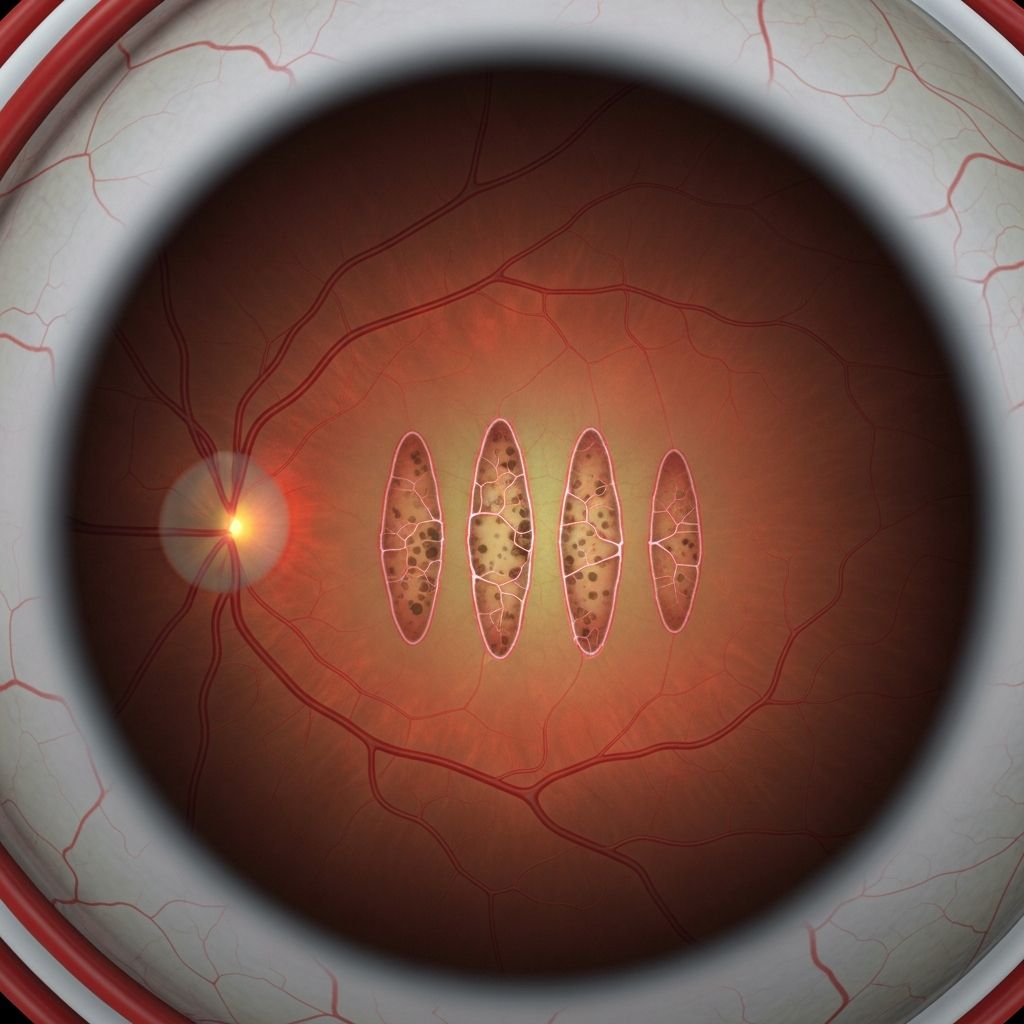
Lattice degeneration refers to a gradual thinning and weakening of the peripheral retina—the outer edges of the light-sensitive tissue lining the back of the eye. The affected areas develop a distinctive lattice-like pattern that gives the condition its name, visible only through specialized retinal imaging during comprehensive eye examinations. These weakened patches represent regions where the retinal tissue has undergone atrophy, creating structural vulnerability in areas normally responsible for maintaining the retina’s integrity and strength.
The condition can affect one eye or both eyes simultaneously, and it develops without any obvious relationship to daily activities or lifestyle factors. Medical researchers have not identified a specific single cause for lattice degeneration, though evidence suggests that genetic predisposition and structural variations in eye development play significant roles in its formation. Understanding this condition’s nature is essential because while the degeneration itself remains asymptomatic, the structural weakening it creates establishes the foundation for potentially serious complications.
How Lattice Degeneration Develops and Progresses
The development of lattice degeneration appears linked to inherent structural characteristics of the eye rather than external trauma or disease processes. Individuals with certain genetic syndromes—including Stickler syndrome, Ehlers-Danlos syndrome, and Marfan syndrome—experience higher prevalence rates because these conditions affect connective tissue throughout the body, including the retina. The structural elongation of the eyeball that accompanies myopia (nearsightedness) also contributes significantly to lattice degeneration risk, as the altered eye dimensions create biomechanical stress on peripheral retinal tissue.
The progressive nature of lattice degeneration means that the thinning process continues gradually over time. As retinal tissue becomes increasingly attenuated, its mechanical resilience diminishes, making it more susceptible to trauma and separation. This progressive weakening explains why individuals with lattice degeneration require periodic professional monitoring rather than one-time diagnosis and discharge. The condition essentially establishes a predisposition toward more serious retinal events that may occur months or years after the initial detection.
Recognizing Risk Factors for Lattice Degeneration
Several clearly identified factors increase the likelihood of developing lattice degeneration:
- Myopia (nearsightedness): Individuals with myopia demonstrate significantly elevated lattice degeneration rates compared to those with normal or farsighted vision. The elongated eyeball configuration characteristic of myopia creates ongoing mechanical stress on the peripheral retina.
- Genetic syndromes: People diagnosed with Stickler syndrome, Ehlers-Danlos syndrome, or Marfan syndrome face substantially increased risk due to the systemic effects these conditions exert on connective tissue structure and integrity.
- Family history: A documented family history of lattice degeneration or related retinal conditions suggests inherited predisposition toward the condition.
- Age and systemic factors: While lattice degeneration can occur at any age, certain populations—including those over 60, individuals with Type 2 diabetes, and those with previous eye injuries—warrant more frequent screening.
Related Stories



Identifying these risk factors enables eye care professionals to establish appropriate monitoring schedules and helps patients understand why regular dilated eye examinations remain important throughout their lives.
Symptoms and Silent Progression of Lattice Degeneration
One of the most significant characteristics of uncomplicated lattice degeneration involves the complete absence of symptoms in the majority of cases. Most individuals with lattice degeneration experience no vision changes, no visual disturbances, and no warning signs indicating the condition’s presence. This asymptomatic nature explains why many people remain unaware of their condition unless detected during routine eye examinations or comprehensive dilated fundus evaluations.
The lack of symptoms does not indicate the condition’s insignificance, however. Rather, it reflects the fact that the thinning process itself—while creating structural vulnerability—does not immediately impair vision or function. Patients often describe discovering they have lattice degeneration only when an eye care professional identifies the characteristic pattern during imaging studies or specialized retinal examination.
Warning Signs of Serious Complications
Although lattice degeneration itself produces no symptoms, complications arising from the weakened retinal tissue create distinctive warning signs requiring immediate professional attention. These warning indicators include:
- Sudden onset of floaters: New or suddenly increased small dark spots, squiggles, or cobweb-like shapes drifting through the visual field may indicate retinal tears or bleeding.
- Flashing lights in peripheral vision: Flickers or streaks of light, particularly noticeable in the side portions of vision, often occur when the vitreous gel pulls on weakened retinal areas.
- Blurred or distorted vision: Sudden changes in visual clarity, whether affecting one or both eyes, warrant immediate evaluation.
- Shadow or curtain effect: A dark area or shadow progressing across the visual field from the periphery toward the center represents a hallmark sign of retinal detachment—a medical emergency requiring emergency room evaluation.
These symptoms differ fundamentally from the asymptomatic nature of uncomplicated lattice degeneration. Any patient experiencing these warning signs should contact an ophthalmologist or retinal specialist immediately, or visit an emergency facility if immediate appointment availability is impossible.
Potential Complications and Vision-Threatening Outcomes
While most individuals with lattice degeneration never experience serious complications, the condition significantly increases the risk of several vision-threatening events. The weakened retinal tissue becomes increasingly vulnerable to:
Retinal tears and holes: The thinned tissue may develop partial-thickness tears or full-thickness holes, representing breaches in the retina’s structural integrity. These breaks allow vitreous fluid to seep beneath the retina, initiating the detachment process.
Retinal detachment: This serious condition occurs when the retina separates from the underlying supportive tissue, disrupting blood supply and photoreceptor function. Retinal detachment represents a true medical emergency because rapid surgical intervention within days of onset offers the best prognosis for vision preservation. Delayed treatment significantly increases the risk of permanent vision loss or blindness in affected regions.
The prognosis for individuals with lattice degeneration remains generally favorable, however. Research indicates that most patients never develop these complications, never require significant surgical intervention, and experience no meaningful vision loss throughout their lives. Lattice degeneration often represents simply a natural component of the aging process rather than an inevitable pathway toward serious disease.
Diagnosis and Detection Methods
Lattice degeneration cannot be detected by patients themselves because it produces no symptoms and causes no perceptible changes in vision. Professional diagnosis requires specialized examination techniques performed by qualified eye care professionals. The gold standard diagnostic approach involves dilated fundus examination, where eye drops temporarily widen the pupil, allowing direct visualization of the peripheral retina’s appearance.
During dilated examination, the characteristic lattice-like pattern of retinal thinning becomes visible, often accompanied by pigment changes surrounding blood vessels. Patients with risk factors—particularly those with myopia, family history of lattice degeneration, or genetic syndromes—should undergo regular dilated eye examinations as part of comprehensive eye care, even in the absence of visual symptoms.
Treatment Approaches and Management Strategies
Most patients with uncomplicated lattice degeneration require no active treatment. Regular monitoring through periodic eye examinations allows detection of any developing complications before they progress to vision-threatening stages. This conservative approach aligns with the condition’s generally benign natural history in the majority of cases.
When lattice degeneration has caused sufficient retinal tissue weakening, certain preventive procedures may be recommended to strengthen the retina and reduce tear or detachment risk:
- Laser photocoagulation: This procedure uses focused laser energy to create controlled scars around weakened areas, potentially stabilizing the tissue and reducing tear risk.
- Cryotherapy: This freezing technique creates tissue-strengthening scarring and may be employed when laser therapy is not suitable.
If retinal tears develop despite preventive measures, surgical intervention becomes necessary. Surgical approaches vary depending on the tear’s severity and whether retinal detachment has already occurred, ranging from pneumatic retinopexy (gas bubble injection) to scleral buckle procedures or vitrectomy surgery. These interventions aim to reattach the retina and restore its connection to underlying supportive tissue.
Living with Lattice Degeneration: Practical Guidance
Individuals diagnosed with lattice degeneration should adopt several practical strategies to maintain eye health and enable rapid response to complications:
- Maintain regular appointments with eye care professionals, following recommended examination frequency based on individual risk factors and disease severity.
- Learn and monitor for warning symptoms, particularly sudden changes in floaters, flashing lights, vision blur, or shadow effects.
- Contact eye care professionals immediately if warning symptoms develop, rather than waiting for scheduled appointments.
- Inform all eye care providers about lattice degeneration diagnosis, ensuring comprehensive attention during future examinations.
- Consider protective measures during activities with head trauma risk, as physical injury to weakened areas might precipitate complications.
While lattice degeneration requires professional oversight, the condition need not significantly impact daily life for the majority of affected individuals. The key to maintaining vision involves early detection through regular eye care and rapid response to warning signs indicating complications.
Frequently Asked Questions About Lattice Degeneration
Does lattice degeneration always cause vision loss?
No. Most people with lattice degeneration experience no vision loss throughout their lives. The condition itself is asymptomatic and typically harmless, though it does increase the risk of complications that could affect vision if left untreated.
Can lattice degeneration be prevented?
Because the underlying causes involve genetic factors and eye structure rather than preventable lifestyle factors, lattice degeneration cannot be prevented. However, complications can be detected early and managed appropriately through regular eye care.
Is lattice degeneration inherited?
While research indicates genetic factors contribute to lattice degeneration development, the condition is not directly inherited in the classical sense. Family members may share genetic predisposition, particularly if genetic syndromes run in the family.
How often should lattice degeneration be monitored?
Monitoring frequency depends on individual risk factors and disease severity. Patients with significant risk factors should undergo comprehensive dilated eye examinations at least annually, while those with minimal risk may require less frequent assessment. Eye care professionals provide individualized recommendations based on examination findings.
What should I do if I experience flashing lights or new floaters?
Contact your ophthalmologist immediately or visit an emergency facility if appointments are unavailable. These symptoms may indicate retinal tears or detachment requiring urgent treatment.
References
- What Is Lattice Degeneration? — Berks Eye. Accessed February 23, 2026. https://www.berkseye.com/lattice-degeneration/
- 5 Facts About Lattice Degeneration — Retina Consultants of America. Accessed February 23, 2026. https://www.retinaconsultantsofamerica.com/blog/5-facts-about-lattice-degeneration
- What is Lattice Degeneration? Does it Cause Vision Loss? — Retina Group Florida. Accessed February 23, 2026. https://www.retinagroupflorida.com/blog/what-is-lattice-degeneration-does-it-cause-vision-loss
- What is Lattice Degeneration? — American Eye Associates. Accessed February 23, 2026. https://www.americaneyeassociates.com/retina-care/lattice-degeneration/
- What Is Lattice Degeneration—and Should You Be Concerned? — KC Retina. Accessed February 23, 2026. https://www.kcretina.com/blog/what-is-lattice-degeneration-and-should-you-be-concerned
- Lattice Degeneration: Symptoms, Causes & Treatment — Cleveland Clinic. Accessed February 23, 2026. https://my.clevelandclinic.org/health/diseases/lattice-degeneration
Similar Articles








Read full bio of Sneha Tete