Lax Beetle Dermatosis: Causes, Symptoms, Treatment
Understanding lax beetle dermatosis: A comprehensive guide to this unique contact dermatitis condition.
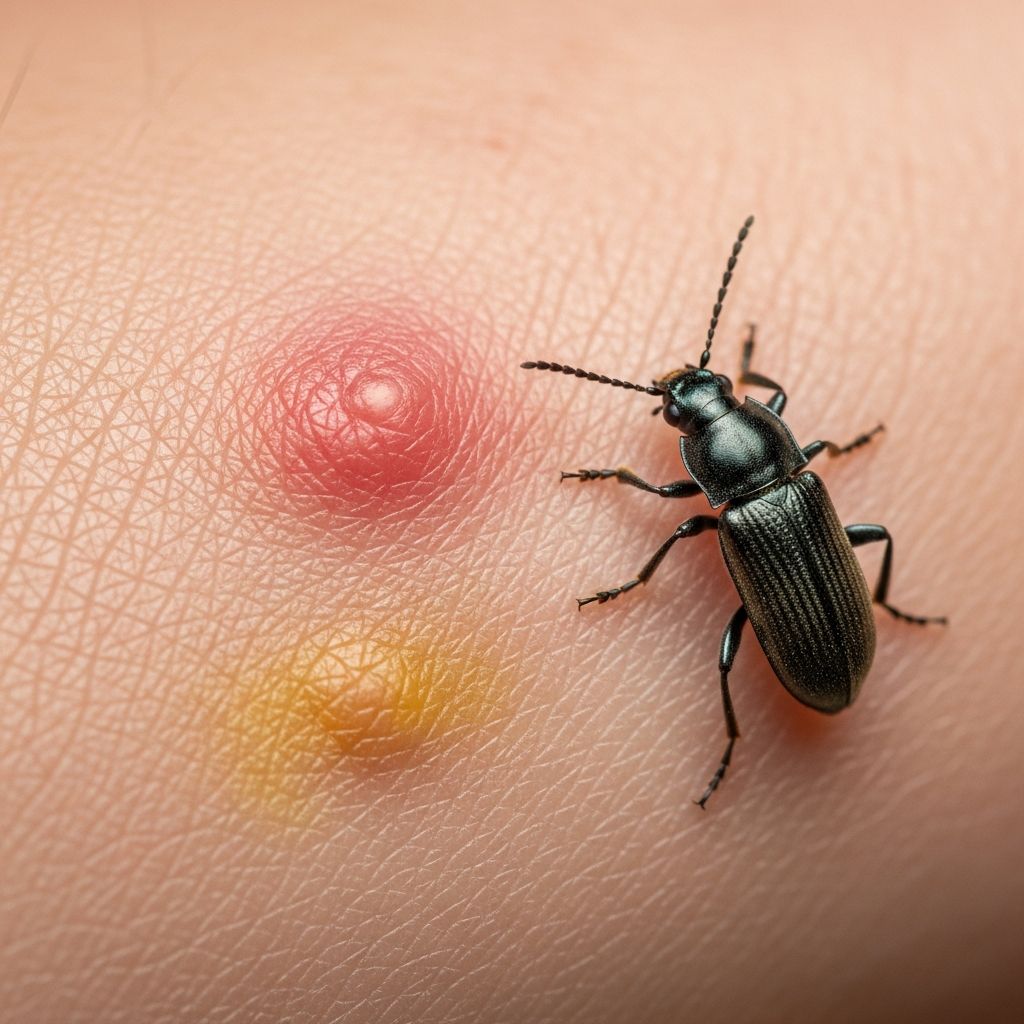
Lax Beetle Dermatosis: A Comprehensive Guide
Lax beetle dermatosis is a distinctive skin condition characterized by the development of superficial blisters following contact with lax beetles. This condition, also known as blister beetle dermatosis, occurs when a person comes into contact with specific beetle species that produce a potent blistering agent. The condition is relatively benign and self-limiting, typically resolving within days without complications. Understanding this condition is essential for individuals living in or visiting regions where lax beetles are prevalent, particularly in New Zealand and other parts of the world.
Introduction to Lax Beetles
Lax beetles belong to the family Oedemeridae and are common insects found worldwide. These beetles are relatively small, measuring 6 620 mm in length, with soft-bodied and slender physiques. The distinctive appearance of lax beetles includes a light brown body color with darker brown or black stripes or spots distributed across the plate-like structure on their backs. Their unique coloration serves as a warning to potential predators of their defensive capabilities.
Lax beetles are also referred to as false blister beetles because male beetles produce cantharidin, the same blistering compound found in true blister beetles of the family Meloidae. The term “Kantharis,” derived from Greek, means “blister fly,” highlighting the historical recognition of this substance’s effects. Other common names for these beetles include striped lax beetle, spotted lax beetle, and pollen-feeding beetle, reflecting their varied appearance and feeding habits.
Geographic Distribution and Habitat
In New Zealand, most lax beetle species are native, though several adventive species 6meaning they were likely introduced by human activity 6are also present. These beetles can be found throughout the North and South Islands of New Zealand, as well as on Stewart Island and the Chatham Islands. However, their geographic range extends far beyond New Zealand, making lax beetle dermatosis a potential concern in many regions worldwide.
Lax beetles inhabit specific environments depending on their life stage. Both beetles and young grubs are commonly found on driftwood or rotting wood just above the high-tide mark in coastal areas, and on vegetation in inland regions. Adult beetles typically reside under the bark of dead tree trunks and on tree branches. These insects feed on pollen and nectar from flowers and surrounding vegetation. Notably, during summer nights, adult beetles are attracted to bright artificial white lights, which can increase human-beetle contact in illuminated outdoor areas.
Who Can Develop Lax Beetle Dermatosis
Anyone can develop lax beetle dermatosis if they come into contact with a lax beetle under the right circumstances. The condition is not limited by age, gender, or skin type. Individuals engaged in gardening, outdoor activities, camping, or work in natural environments face higher exposure risks. The blisters, sometimes colloquially referred to as “morning blisters,” typically appear hours after contact with the beetle, though the exact timing can vary depending on individual factors and the intensity of contact.
Causes and Mechanism of Blistering
The development of lax beetle dermatosis involves a straightforward but potent mechanism. When a lax beetle is crushed, pressed, or accidentally brushed against human skin, the beetle releases a fluid from its leg joints called haemolymph. This fluid contains cantharidin or cantharid, a defensive substance produced specifically to deter predators from consuming beetle eggs. When this irritating chemical comes into contact with human skin, it triggers an inflammatory response that manifests as blister formation.
The blistering process is initiated by the direct irritant properties of cantharidin, which damages the skin’s epithelial layer. Interestingly, the male beetle transfers this blistering fluid to the female beetle during mating, ensuring that females also possess this defensive capability. It is important to note that lax beetles do not bite or sting; the blistering is purely a result of chemical irritation from the released fluid.
Related Stories



Clinical Features and Presentation
Lax beetle dermatosis is characterized by the development of superficial blisters on areas of the skin that came into contact with the beetle. The clinical presentation typically includes:
- Localized vesicles (small fluid-filled blisters) appearing at the site of contact
- Erythema (redness) surrounding the blisters
- Mild to moderate discomfort or itching at the affected site
- Blisters appearing hours after initial contact, hence the term “morning blisters”
- Superficial nature of blisters, affecting only the upper layers of skin
The blisters typically remain intactDuring the healing process and may drain fluid before drying and crusting over. The affected area may develop a temporary darkening of the skin (post-inflammatory hyperpigmentation) during the healing phase, though this resolves over time.
Diagnosis of Lax Beetle Dermatosis
Lax beetle dermatosis is primarily diagnosed through clinical assessment and patient history. A healthcare provider will examine the characteristic pattern and appearance of the blisters and inquire about potential contact with lax beetles or time spent in environments where these beetles are common. The distinctive clinical presentation, combined with a credible history of beetle contact, is typically sufficient for diagnosis.
The diagnosis can often be confirmed by identifying the responsible beetle species, either through visual observation of a beetle brought by the patient or through recognition of the characteristic linear or clustered blister patterns. In some cases, patch testing or other diagnostic procedures may be unnecessary given the clear clinical picture and history.
Differential Diagnoses
Several other blistering conditions may need to be considered when evaluating a patient with suspected lax beetle dermatosis:
- Paederus dermatitis (rove beetle rash) 6 another beetle-induced blistering condition with similar presentation
- Herpes simplex infections 6 viral blisters with different temporal progression
- Contact dermatitis from other irritants 6 typically lacks the characteristic blister pattern
- Friction blisters 6 result from mechanical trauma rather than chemical irritation
- Thermal burns 6 have different clinical characteristics and history
The distinctive history of beetle contact and the characteristic appearance of the blisters help differentiate lax beetle dermatosis from these other conditions.
Treatment Approaches
Treatment for lax beetle dermatosis is primarily supportive and focuses on managing symptoms while the condition resolves naturally. When blistering occurs, the recommended management steps include:
- Gentle cleansing of the affected area with mild soap and water to remove any remaining beetle debris or toxins
- Application of cool, wet compresses to reduce inflammation and provide symptomatic relief
- Use of topical corticosteroids to reduce inflammation and itching
- Avoiding rupturing or intentionally opening the blisters to prevent secondary infection
- Keeping the area clean and protected from additional irritation
- Taking oral pain relievers if discomfort is significant, though this is rarely necessary
There are no specific antitoxins or specialized treatments required for lax beetle dermatosis, as the condition is self-limiting and resolves without intervention. The key is to prevent secondary bacterial infection and manage discomfort during the healing process.
Complications and Prognosis
Lax beetle dermatosis has an excellent prognosis with minimal risk of complications. The blisters typically heal completely within 4 67 days without ulceration, infection, or scarring. The superficial nature of the blistering means that the underlying basal layer of the skin remains intact, preventing permanent damage or scar formation.
There are no inherent complications from lax beetle dermatosis itself. However, secondary complications could theoretically develop if the patient scratches the blisters excessively, introducing bacteria and causing infection. This risk is minimized through patient education about avoiding manipulation of the blistered areas.
Prevention Strategies
The most effective approach to lax beetle dermatosis is prevention through avoiding contact with lax beetles. Practical prevention measures include:
- Avoiding handling or crushing beetles encountered in the garden or outdoors
- Wearing protective clothing such as long sleeves and gloves when working in areas where lax beetles are known to be present
- Being particularly cautious during summer months when beetle activity is highest
- Reducing outdoor activities near bright artificial lights at night, as these attract beetles
- Carefully inspecting vegetation and flowers before brushing against them with exposed skin
- Educating family members, especially children, about the dangers of handling beetles
- Maintaining awareness of surroundings while gardening or working outdoors in endemic areas
For individuals living in regions with significant lax beetle populations, understanding beetle behavior and habitat preferences can significantly reduce exposure risk.
Relationship to Other Beetle-Induced Conditions
While lax beetles are distinct from other beetle species that cause dermatological conditions, they share similarities with other insects that produce blistering reactions. Paederus dermatitis, caused by rove beetles, presents with similar blistering but has distinct features including a more pronounced linear pattern and longer healing time. True blister beetles of the family Meloidae, from which lax beetles derived their defensive capability, are not found in New Zealand but are present in other parts of the world.
The chemical compound cantharidin, produced by male lax beetles, has historical medical applications and continues to be investigated for therapeutic uses in treating certain viral skin conditions, though this is beyond the scope of managing accidental beetle contact.
Frequently Asked Questions
Q: How quickly do blisters appear after contact with a lax beetle?
A: Blisters typically appear hours after contact with a lax beetle, which is why they are sometimes called “morning blisters” when contact occurs during outdoor evening activities.
Q: Can lax beetle dermatosis leave permanent scars?
A: No, lax beetle dermatosis does not cause scarring. The blistering affects only the superficial layers of skin, and the basal layer remains intact, allowing for complete healing without scar formation.
Q: Is lax beetle dermatosis contagious?
A: No, lax beetle dermatosis is not contagious. It results from direct contact with the beetle’s chemical irritant and cannot be transmitted from person to person.
Q: How long does it take for lax beetle blisters to heal completely?
A: Lax beetle blisters typically heal within 4 67 days. However, temporary darkening of the skin may persist slightly longer in some cases.
Q: What should I do if I crush a lax beetle on my skin?
A: Immediately wash the affected area gently with mild soap and water, apply a cool compress, and consider using a topical corticosteroid to reduce inflammation.
Q: Are lax beetles found only in New Zealand?
A: No, lax beetles belonging to the family Oedemeridae are found worldwide, though specific species vary by geographic location.
Q: Can children develop lax beetle dermatosis?
A: Yes, anyone, including children, can develop lax beetle dermatosis if they come into contact with lax beetles. Education about avoiding beetle contact is important for child safety.
References
- Lax beetle dermatosis 6 DermNet New Zealand. 2020-01. https://dermnetnz.org/topics/lax-beetle-dermatosis
- Blister beetle dermatosis in New Zealand 6 PubMed/National Center for Biotechnology Information. 1985. https://pubmed.ncbi.nlm.nih.gov/3330591/
- Cantharidin: Uses and Precautions 6 DermNet New Zealand. 2003. https://dermnetnz.org/topics/cantharidin
- Paederus dermatitis 6 DermNet New Zealand. https://dermnetnz.org/topics/paederus-dermatitis
Similar Articles








Read full bio of Sneha Tete