LDH Test: What It Is, Why It’s Done & Understanding Results
Complete guide to LDH tests: purposes, procedures, normal ranges, and what elevated levels mean.
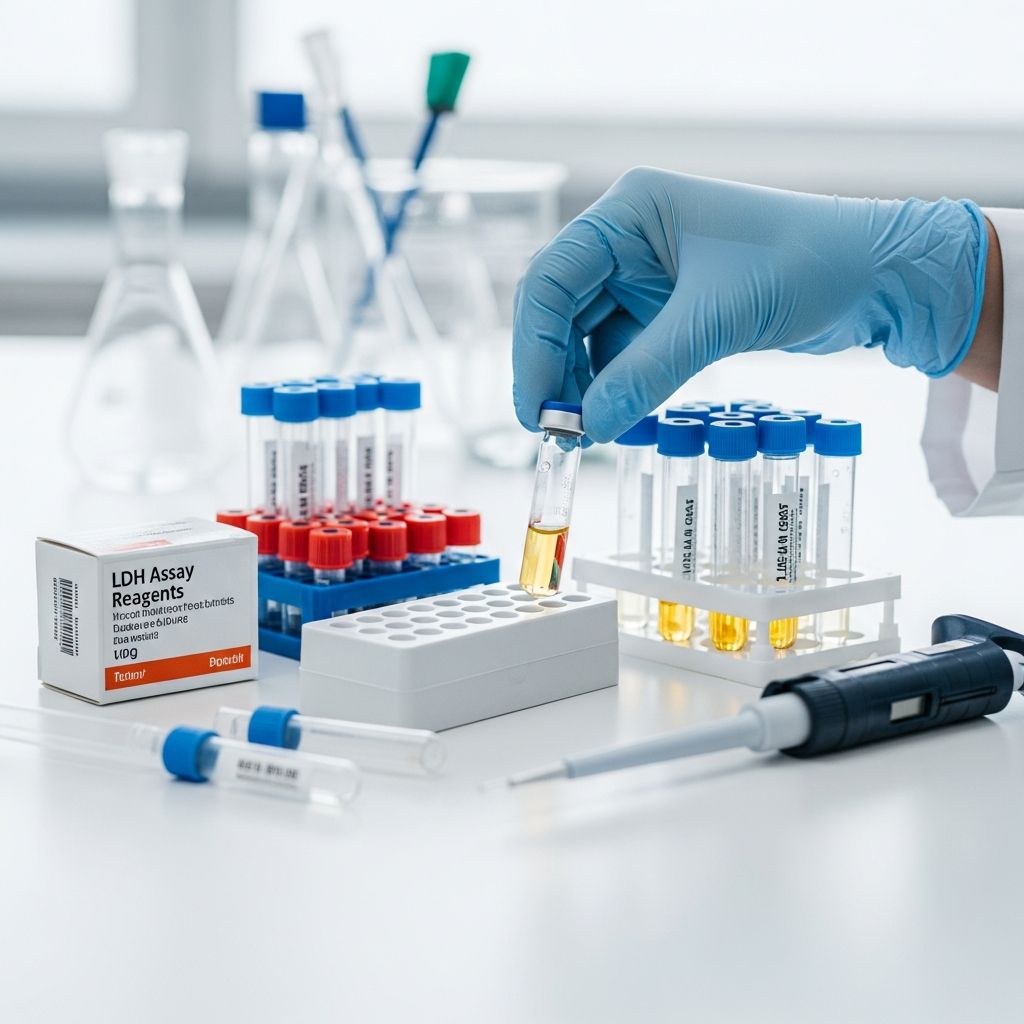
Understanding the LDH Test: A Complete Guide
The LDH (lactate dehydrogenase) test measures the amount of LDH enzyme in your blood or other body fluids to check for tissue damage. While it’s normal to have some LDH in your blood, when tissues in your body experience damage or injury, they release excess LDH into your bloodstream. Healthcare providers order LDH tests to help diagnose and monitor several different conditions affecting various organs and systems throughout your body.
The LDH enzyme is found in almost all your body’s cells and plays a crucial role in converting pyruvate to lactate. When cells are damaged or destroyed through disease, injury, or other conditions, this enzyme is released into your bloodstream, where it can be measured and analyzed by laboratory professionals.
What Is Lactate Dehydrogenase (LDH)?
Lactate dehydrogenase is a ubiquitous intracellular enzyme that catalyzes the interconversion of pyruvate and lactate. This enzyme exists as a tetramer composed of heart (H) and muscle (M) subunits, which allows for five possible isoenzyme forms—LDH-1 (H4), LDH-2 (H3M1), LDH-3 (H2M2), LDH-4 (H1M3), and LDH-5 (M4). These different forms are distributed unevenly throughout your body’s tissues, allowing healthcare providers to gain insight into which specific tissues may have been damaged based on which isoenzymes are elevated in the blood.
The presence of multiple isoenzyme forms means that elevated LDH levels can point to damage in specific organs or tissues. For example, certain isoenzymes are predominantly found in the heart, liver, lungs, muscles, and blood cells. By measuring the specific pattern of isoenzymes, doctors can sometimes determine the location and nature of tissue damage or disease.
Why Do Healthcare Providers Order LDH Tests?
Healthcare providers may order an LDH blood test for several important reasons. The test can help diagnose and monitor various conditions while providing valuable information about your overall health status and the progression of certain diseases.
Primary Reasons for LDH Testing
Your doctor might suggest an LDH test for the following reasons:
- To find out if you have tissue damage in your heart, liver, kidney, muscles, brain, blood cells, or lungs
- To monitor conditions like anemia, organ disease, or infections that might cause tissue damage
- To learn how severe certain types of cancer might be
- To see if certain cancer treatments, such as chemotherapy, are working effectively
Specific Medical Conditions
The LDH test helps diagnose and monitor diseases affecting multiple organ systems:
- Blood disorders, including anemia
- Liver disease
- Lung conditions
- Kidney disease
- Heart problems, including heart attack
- Pancreatic disease
- Brain and spinal cord infections, such as encephalitis and bacterial meningitis
- Severe infections
- Various types of cancer, including multiple myeloma, lymphoma, leukemia, testicular cancer, and melanoma
Related Stories



Additionally, LDH tests are used to monitor conditions that may worsen over time, such as muscular dystrophy and HIV. In cases of hepatitis, liver cells become inflamed and damaged, leading to increased LDH levels in the blood, though the test alone cannot specify exactly where the damage originates.
How to Prepare for Your LDH Test
One of the advantages of an LDH test is its simplicity. No special preparation is necessary for this straightforward blood test. You do not need to fast before the procedure, and there are no dietary restrictions or medications you need to avoid beforehand.
However, it’s important to inform your healthcare provider about all medications, supplements, herbs, vitamins, and anything else you’re currently taking. This information helps ensure accurate results and allows your doctor to identify any potential interactions or factors that might affect your LDH levels.
What to Expect During the LDH Blood Test
The LDH blood test procedure is quick and relatively simple. You can expect the following during your appointment:
- A healthcare professional will insert a needle into a vein in your arm to collect a blood sample
- The blood will be collected in a test tube
- The entire procedure typically takes less than five minutes
- You may experience mild discomfort or slight bruising at the injection site
Testing Other Body Fluids
While blood samples are most common, healthcare providers sometimes need to measure LDH in other body fluids. These may include fluids in your:
- Cerebrospinal fluid (spinal fluid)
- Pleural fluid (around the lungs)
- Peritoneal fluid (around abdominal organs)
- Pericardial fluid (around the heart)
If you’re having one of these specialized tests, your healthcare provider will provide detailed information about the procedure and what to expect.
Understanding LDH Test Results
In most cases, you should have your LDH test results within one to two days, though results may take longer in some circumstances. If you’ve had an LDH test at the hospital or emergency room, your healthcare provider will likely receive the results within hours, allowing for rapid diagnosis and treatment planning.
Normal LDH Ranges
Laboratories may have different reference ranges for normal LDH levels, as testing methods and equipment can vary. When you receive your blood test results, the report will indicate that specific lab’s normal blood LDH range.
In general, the normal ranges for an LDH blood test include:
- Men or assigned male at birth: 134-225 units per liter (U/L)
- Women or assigned female at birth: 135-214 U/L
- Adults (general): 140-280 U/L
- Children and teens: typically higher than adult ranges
What Elevated LDH Levels Mean
If your LDH blood or fluid levels are elevated, it may indicate that certain tissues in your body have been damaged by a chronic (long-term) or acute (short-term) disease or injury. Conditions that may cause high LDH levels include:
- Anemia
- Kidney disease
- Liver disease, including hepatitis and cirrhosis
- Pancreatitis
- A blood clot in the lung (pulmonary embolism)
- Muscular dystrophy
- Recent heart attack (though troponin tests have largely replaced LDH isoenzyme tests for this purpose)
- Various types of cancer
A higher-than-normal LDH level may also indicate that cancer treatment isn’t working as expected. High LDH concentrations in effusion fluid (fluid collected from body cavities) suggest the presence of cancer.
What Low LDH Levels Mean
Having a lower-than-normal LDH test result is uncommon. Lower-than-normal LDH levels may indicate a very rare genetic condition called lactate dehydrogenase A deficiency (glycogen storage disease XI) or lactate dehydrogenase B deficiency. If your results show lower-than-normal LDH, your healthcare provider will likely order additional testing to determine the cause.
Important Limitations of LDH Testing
Although an LDH test can show if you have tissue damage or disease, it cannot reveal exactly where the damage is located in your body. This is why doctors typically order additional tests when LDH levels are abnormal. Other tests like a complete blood count (CBC) or comprehensive metabolic panel (CMP) may be the next step in diagnosis.
LDH can also be falsely elevated if your red blood cells break during the sample collection process, potentially leading to inaccurate results. If this occurs, your healthcare provider may request a repeat test.
LDH Isoenzymes Testing
If the cause of elevated LDH cannot be determined by routine testing, the isoenzymes can be separated by electrophoresis, with LDH-1 (all H subunits) migrating fastest, followed in order by LDH-2 through LDH-5. This specialized analysis helps pinpoint which tissues are affected because the five isoenzymes have characteristic relative abundances in different tissues. By determining the specific pattern of isoenzyme elevation, healthcare providers can often identify the organ or tissue system that has been damaged.
The LDH isoenzyme test may be used with other tests to help diagnose and monitor many types of acute (sudden) and chronic (long-lasting) conditions. Recent studies and advanced diagnostic techniques allow doctors to better pinpoint where damage may have occurred, though this remains imperfect, and additional testing is often necessary.
LDH Testing in Cancer Diagnosis and Monitoring
In oncology, LDH serves as a significant serum marker for cell damage or high cell turnover associated with various malignancies. Elevated LDH levels can indicate certain cancers, including melanoma, lymphoma, and testicular cancer. The five isoenzyme forms of LDH allow for detailed analysis that can assist in diagnosing specific tumors and assessing disease stage and prognosis.
LDH tests are also used to monitor the progress of chemotherapy treatment, providing valuable information about whether cancer treatment is working effectively. If LDH levels remain elevated or increase after treatment has begun, it may indicate that the treatment approach needs to be adjusted.
LDH and Liver Function
Your liver is an important organ that helps filter toxins from your blood. If it’s not working properly, your doctor will want to know through various liver function tests. LDH is one enzyme found in liver tissue, though it is not liver-specific. If you’re showing signs of early liver damage like abdominal pain, fatigue, nausea, or loss of appetite, your doctor may order blood tests including LDH as part of a comprehensive liver assessment.
In cases of hepatitis, liver cells become inflamed and damaged, leading to increased LDH levels in the blood. However, the LDH test does not necessarily specify that the damage is coming from the liver specifically, as LDH is present in many tissues. For this reason, other tests are reviewed along with LDH to properly interpret the results and identify liver-specific disease.
How the Laboratory Analyzes LDH
After a blood sample is collected, the serum is isolated by centrifugation, and the activity of the enzyme is measured. The enzyme activity can be assessed in either the forward direction (oxidation of lactate and NAD+ to pyruvate, NADH, and H+) or the reverse direction. In the forward reaction, the rate of appearance of NADH can be followed spectrophotometrically because it strongly absorbs ultraviolet (UV) light at 340 nM, while NAD+ does not.
The enzyme activity is calculated by comparing the rate of NADH appearance in the patient sample to rates obtained from standard preparations. This precise measurement allows laboratory professionals to determine exact LDH levels in your blood or body fluid.
Interpreting Your LDH Test Report
Blood test reports, including LDH blood test reports, usually provide the following information:
- Your LDH level measured in units per liter (U/L)
- The reference range (normal values) for that specific laboratory
- Whether your result is within normal range, elevated, or low
- Any notes or comments from the laboratory
Your healthcare provider will review these results in the context of your medical history, symptoms, and any other tests that have been ordered. If your results show elevated LDH levels, your healthcare provider may need to order more tests to make a definitive diagnosis.
Next Steps After Abnormal LDH Results
Your doctor will treat high LDH based on the underlying cause they identify through additional testing. They will likely order more testing to confirm your diagnosis. Other tests that may follow include:
- Complete blood count (CBC)
- Comprehensive metabolic panel (CMP)
- Liver function tests
- Heart-specific enzymes like troponin
- Imaging studies if cancer is suspected
- Tissue biopsies in some cases
Frequently Asked Questions About LDH Tests
Q: Do I need to fast before an LDH test?
A: No, fasting is not required for an LDH test. You can eat and drink normally before your appointment.
Q: How quickly will I get my LDH test results?
A: In most cases, you should receive your LDH test results within one to two days. If you had the test at a hospital or emergency room, results are typically available within hours.
Q: What does a high LDH level mean?
A: A high LDH level can indicate tissue damage from various conditions including liver disease, kidney disease, heart attack, anemia, infections, or cancer. Your doctor will order additional tests to determine the specific cause.
Q: Can LDH testing pinpoint exactly where damage is in my body?
A: No, an LDH test can show if you have tissue damage or disease, but it cannot reveal exactly where the damage is located. Additional testing is usually needed for precise diagnosis.
Q: Are there medications that can affect my LDH levels?
A: Yes, various medications and supplements can affect LDH levels. Always inform your healthcare provider about all medications, supplements, and vitamins you’re taking before your test.
Q: What does low LDH mean?
A: Low LDH levels are uncommon and may indicate a rare genetic condition. If your results are lower than normal, your doctor will order additional testing to determine the cause.
References
- Lactate Dehydrogenase (LDH) Test — EBSCO Health Research Starters. 2024. https://www.ebsco.com/research-starters/health-and-medicine/lactate-dehydrogenase-ldh-test
- Lactate Dehydrogenase (LDH) Test — MedlinePlus, U.S. National Library of Medicine. 2024. https://medlineplus.gov/lab-tests/lactate-dehydrogenase-ldh-test/
- LDH (Lactate Dehydrogenase) Test: What It Is & Results — Cleveland Clinic. 2024. https://my.clevelandclinic.org/health/diagnostics/22736-lactate-dehydrogenase-ldh-test
- What Is a Lactate Dehydrogenase (LDH) Test? — WebMD. 2024. https://www.webmd.com/fatty-liver-disease/lactic-acid-dehydrogenase-test
- Lactate Dehydrogenase (LDH) Isoenzymes Test — MedlinePlus, U.S. National Library of Medicine. 2024. https://medlineplus.gov/lab-tests/lactate-dehydrogenase-ldh-isoenzymes-test/
- Liver Function Tests: Types, Purpose & Results Interpretation — Cleveland Clinic. 2024. https://my.clevelandclinic.org/health/diagnostics/17662-liver-function-tests
Similar Articles








Read full bio of medha deb