Leaky Gut: Myths, Triggers, And Evidence-Based Support
Unraveling the science behind intestinal permeability and its real health implications.
The concept of
leaky gut
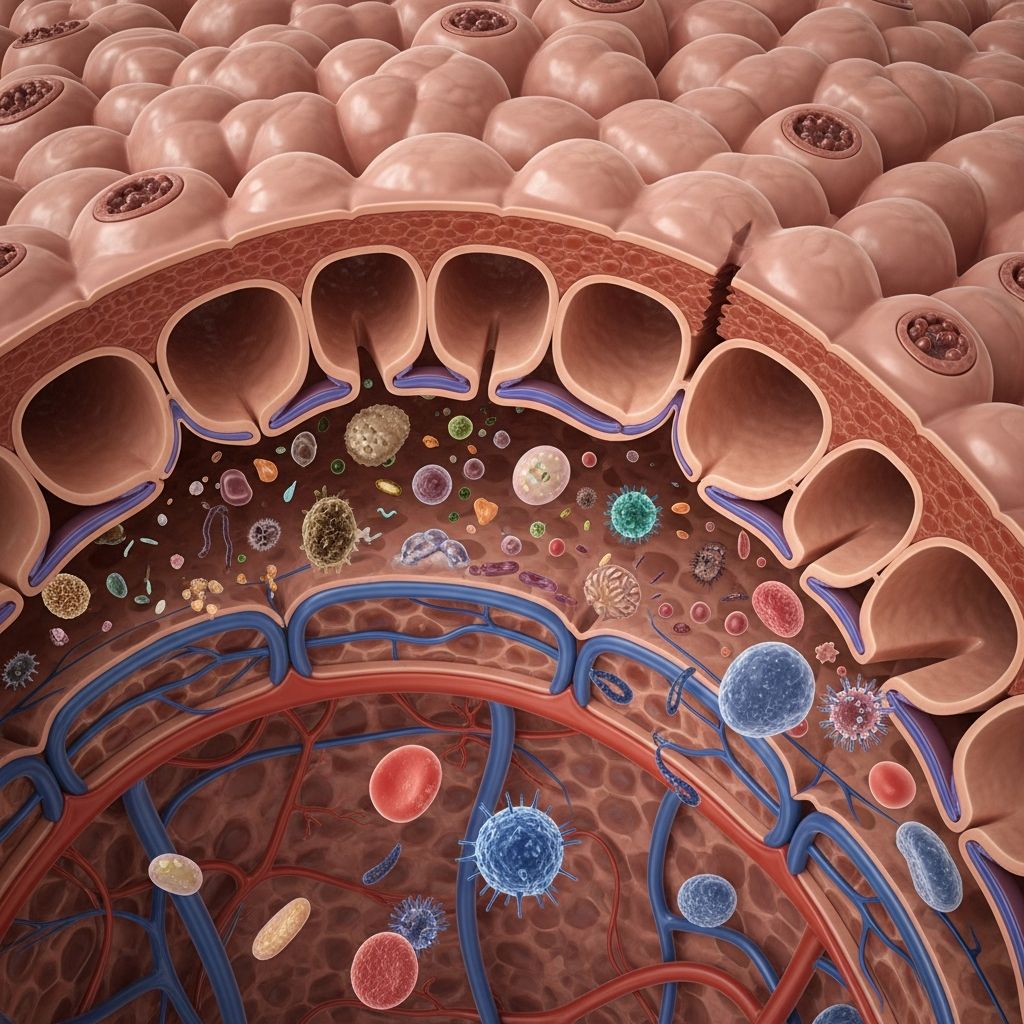
, or increased intestinal permeability, has gained significant attention in health discussions. It refers to a state where the intestinal lining allows more substances than usual to pass into the bloodstream, potentially triggering inflammation. While not a formally recognized medical diagnosis, understanding its mechanisms is crucial for gut health awareness.Understanding Intestinal Permeability
The intestines feature a sophisticated barrier system designed to selectively absorb nutrients while blocking harmful agents. This barrier includes multiple layers: a protective mucus coating, epithelial cells forming tight junctions, and underlying immune defenses. Tight junctions, made of proteins like claudins and occludins, regulate paracellular transport—allowing ions and water to pass between cells—while transcellular pathways handle larger molecules via endocytosis.
When this barrier function is compromised, larger particles such as bacterial components or undigested food may enter circulation, prompting immune responses. This phenomenon, termed increased intestinal permeability, is observed in various conditions but is often misrepresented as a standalone syndrome.
Scientific Basis vs. Popular Myths
**Leaky gut syndrome** is frequently portrayed in wellness circles as a root cause of diverse ailments, from fatigue to autoimmune disorders. However, medical consensus views it as hypothetical, lacking validated diagnostic tests or direct causal links to widespread diseases.
- Myth 1: Stress or gluten alone causes leaky gut. Reality: While stress can temporarily affect permeability in studies, causation is unproven due to confounding factors. Gluten impacts only those with celiac disease or sensitivities.
- Myth 2: It’s simply holes in the gut lining. Reality: The barrier is multilayered; permeability involves complex pathway disruptions, not mere breaches.
- Myth 3: It explains all chronic illnesses. Reality: Observed in GI diseases like Crohn’s, it’s typically a symptom, not a precursor.
Animal studies with genetically induced permeability show no inevitable disease progression, reinforcing that leakiness follows rather than precedes pathology.
Known Triggers of Barrier Dysfunction
Several factors can erode intestinal integrity over time. Chronic assaults from diseases, medications, or habits overwhelm the lining’s repair mechanisms.
| Factor | Impact | Source |
|---|---|---|
| Poor diet (high sugar, low fiber) | Promotes inflammation, weakens tight junctions | |
| Excess alcohol | Directly damages cells, alters junctions | |
| Smoking & toxins | Increases permeability via oxidative stress | |
| Chronic stress | May elevate permeability short-term | |
| GI infections or IBD | Symptom of underlying damage |
These elements contribute cumulatively, particularly in susceptible individuals. For instance, in liver disease, gut-derived bacteria products exacerbate issues via the portal vein.
Health Implications and Associated Conditions
Increased permeability correlates with gastrointestinal disorders like celiac disease, Crohn’s, and SIBO, where inflammation stems primarily from the disease itself, with permeability amplifying effects. In healthy people, everyday factors like diet might cause transient changes without symptoms.
Related Stories



Beyond the gut, circulating bacterial endotoxins (e.g., lipopolysaccharides) can fuel systemic inflammation, observed in some metabolic and liver conditions. Yet, no evidence supports it as a primary driver of non-GI diseases like autism or migraines.
Symptoms attributed to leaky gut—bloating, fatigue, skin issues—often overlap with irritable bowel syndrome or food intolerances, complicating attribution.
Diagnostic Challenges
No reliable test confirms leaky gut syndrome. Common claims involve stool or blood markers, but these lack validation. Research uses lactulose-mannitol ratios in urine to measure permeability, but this is experimental, not clinical.
Physicians assess permeability in context, such as during IBD management, but standalone diagnosis remains elusive. Increased permeability can even aid nutrient absorption or immunity in some scenarios.
Evidence-Based Strategies for Gut Barrier Support
While curing a non-existent syndrome isn’t feasible, bolstering intestinal health is advisable.
- Dietary Adjustments: Emphasize fiber-rich foods (vegetables, whole grains) to nurture beneficial bacteria; limit processed sugars and alcohol.
- Lifestyle Habits: Regular exercise reduces inflammation; manage stress through mindfulness, though direct permeability benefits need more study.
- Avoid Irritants: Moderate NSAIDs and antibiotics, which disrupt microbiota.
- Probiotics/Prebiotics: Emerging data suggest they may strengthen junctions, but results vary.
In chronic conditions, treatments target root causes—e.g., gluten-free diets for celiac—rather than permeability per se.
Research Frontiers
Ongoing studies explore genetic predispositions and microbiota roles in permeability. Recent reviews emphasize multifactorial etiology over simplistic triggers. Future diagnostics might quantify barrier function accurately, refining our understanding.
Frequently Asked Questions
Is leaky gut real?
Increased intestinal permeability is real and measurable in certain diseases, but ‘leaky gut syndrome’ as a distinct condition causing myriad illnesses is not supported by evidence.
Can diet fix leaky gut?
A nutrient-dense diet supports barrier function, but it doesn’t ‘repair’ a syndrome that isn’t medically defined. Focus on overall gut health.
Who is at risk?
Those with IBD, celiac, heavy alcohol use, or poor diets face higher permeability risks.
Should I test for it?
Consult a doctor; unvalidated tests abound online and may mislead.
Does stress cause it?
Stress may contribute temporarily, but it’s not a proven sole cause amid other factors.
References
- Poor diet one suspected cause of leaky gut syndrome — UCLA Health. 2023. https://www.uclahealth.org/news/article/poor-diet-one-suspected-cause-of-leaky-gut-syndrome
- Leaky Gut Syndrome: Myths and Management — PMC – NIH. 2024. https://pmc.ncbi.nlm.nih.gov/articles/PMC11345991/
- Leaky Gut Syndrome: Symptoms, Diet, Tests & Treatment — Cleveland Clinic. 2023. https://my.clevelandclinic.org/health/diseases/22724-leaky-gut-syndrome
- You Probably Don’t Have a Leaky Gut — McGill University OSS. 2022. https://www.mcgill.ca/oss/article/medical-critical-thinking/you-probably-dont-have-leaky-gut
- Debunking the Myth of ‘Leaky Gut Syndrome’ — Gastrointestinal Society (badgut.org). 2023. https://badgut.org/information-centre/a-z-digestive-topics/leaky-gut-syndrome/
- Leaky gut syndrome — Wikipedia (references primary sources). 2026. https://en.wikipedia.org/wiki/Leaky_gut_syndrome
Similar Articles








Read full bio of medha deb