Learn to Cook at Home: 8 Essential Tips for Beginners
Master basic cooking skills with practical tips for small kitchens, limited budgets, and minimal equipment.
Learn to Cook at Home: Eight Essential Tips for Developing Basic Cooking Skills
Cooking at home offers numerous benefits that extend far beyond the kitchen. People who prepare more home-cooked meals tend to consume significantly more fruits, vegetables, and dietary fiber while reducing their intake of saturated fat and salt. Beyond the health advantages, homemade cooking is inherently budget-friendly and eliminates the environmental burden of takeout containers. Whether you have a small kitchen, limited utensils and appliances, or a tight budget, developing basic cooking skills is entirely achievable. Here are eight practical tips to help you get started on your culinary journey.
1. Get a Cookbook
In an era dominated by digital devices and online recipes, investing in a physical cookbook might seem outdated, but it offers distinct advantages for learning to cook. While excellent recipes are readily available online, using your smartphone or tablet in the kitchen can be problematic. Food-covered fingers and electronic devices simply don’t mix, and constantly tapping or scrolling to keep your screen from going dark becomes tedious during meal preparation.
Cookbooks provide several practical benefits that digital recipes cannot match. Most cookbooks include detailed photos of both the cooking process and the finished product, helping you visualize what you’re working toward. Unlike digital devices, cookbooks don’t require charging or connectivity, and they remain accessible whether your hands are wet or covered in flour.
When selecting a cookbook, prioritize those written by registered dietitian nutritionists. These books typically contain healthful and delicious recipes with easy preparation techniques that respect both nutrition science and practical home cooking. Make cookbooks even more useful by reading each recipe multiple times before beginning and writing notes in the margins of books you own. For example, noting which ingredients must be chopped before starting cooking helps you prepare efficiently and avoid mid-recipe scrambling.
2. Master Simple Cooking Methods for Legumes and Grains
Legumes and whole grains form the foundation of healthy, budget-friendly cooking. These versatile ingredients are packed with nutrients, affordable, and incredibly forgiving for beginners. Learning to cook them properly is one of the most valuable skills you can develop in the kitchen.
The basic method for cooking lentils, beans, and grains is straightforward and adaptable:
- Add 1 cup of lentils, whole grains, or soaked, drained, and rinsed dried beans to a pot
- Cover with 2 to 3 cups of water and add ¼ teaspoon salt
- Bring the mixture to a boil, then cover and reduce heat to a simmer
- Cook lentils for 20 to 40 minutes (split lentils cook in only 5 to 10 minutes); brown rice requires 40 to 45 minutes; beans need 1 to 2 hours or until tender
This single technique opens the door to countless meals. Once you master basic cooking times for different legumes and grains, you can confidently incorporate them into salads, soups, grain bowls, and side dishes. The beauty of this method is its flexibility—you can adjust seasonings, add vegetables, or incorporate herbs to create diverse meals from the same basic technique.
3. Roast Vegetables and Meat
Roasting is an excellent cooking technique that produces flavorful results with minimal effort and active involvement. Vegetables develop natural sweetness and caramelized exteriors through roasting, while meat becomes tender and deeply flavored. This method is also energy-efficient and relatively forgiving for beginners.
Related Stories



One practical energy-saving tip is to preheat your oven with a rimmed sheet pan already inside. This strategy shortens overall cooking time and gives your food a head start on browning, resulting in better texture and flavor. The preheated pan distributes heat more evenly and facilitates the browning process.
When roasting, exercise caution when removing the hot pan from the oven, and be careful when adding oil-tossed vegetables to prevent splashing. Most importantly, always use a food thermometer to verify the safe internal temperatures for meat and other foods. This simple tool removes the guesswork from doneness and ensures food safety, making it an invaluable investment for any home cook.
4. Master Microwaving Fish
Many people acknowledge that fish is a healthy protein source worth eating more often, yet cooking fish at home intimidates them. Fish’s delicate texture and relatively short cooking time can lead to overcooking, resulting in dry, unpalatable results. However, microwaving offers an excellent solution for preparing fish perfectly every time.
Microwaving fish prevents the common pitfall of overcooking by providing precise, gentle heat that cooks the fish evenly from the inside out. This method is faster than traditional stovetop or oven cooking, making weeknight fish meals realistic and achievable. The gentle cooking environment preserves the fish’s natural moisture and delicate flavor, delivering restaurant-quality results from your home kitchen.
5. Slow Cook Like a Pro
A slow cooker is one of the most valuable investments you can make for efficient home cooking, particularly if you’re feeding a family or managing limited time for meal preparation. This energy-saving appliance does the work while you attend to other responsibilities, transforming simple ingredients into perfectly cooked meals.
You don’t need to purchase a new slow cooker to enjoy its benefits. Inexpensive, pre-owned slow cookers are readily available at thrift shops and online retailers, often including recipe books that provide inspiration and guidance. Many slow cooker models have become nearly standardized, making pre-owned units just as functional and reliable as new ones.
The range of foods you can prepare in a slow cooker is remarkably diverse. From perfectly cooked rice and grains to simple salsa chicken and other budget-friendly recipes, slow cookers make wholesome home cooking accessible and manageable. These appliances excel at tenderizing tougher cuts of meat while melding flavors through extended cooking times, allowing you to create restaurant-quality meals with minimal active preparation.
6. Build Your Basic Kitchen Tool Collection
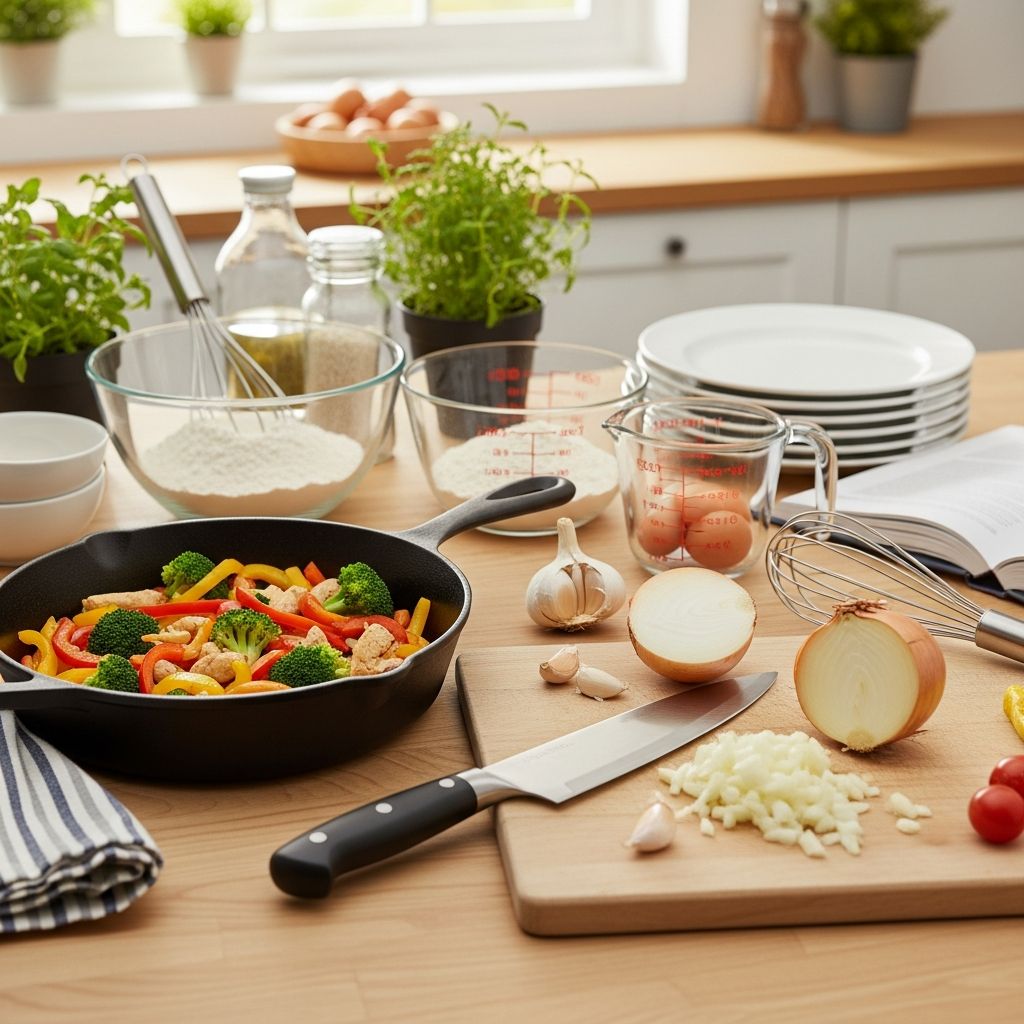
Developing cooking skills doesn’t require an extensive collection of expensive equipment. A thoughtfully curated set of basic tools enables efficient cooking in small kitchens and supports skill development without overwhelming your space or budget.
Essential tools that support successful home cooking include:
- A sharp chef’s knife for chopping and slicing vegetables and proteins
- Cutting boards for safe food preparation and preventing cross-contamination
- Measuring cups and spoons for accurate recipe following
- Mixing bowls in various sizes for ingredient preparation and combination
- A reliable food thermometer for ensuring proper cooking temperatures
- Wooden spoons and heat-resistant spatulas for stirring and flipping foods
- Pots and pans in basic sizes for various cooking methods
- A slow cooker for convenient, hands-off cooking
Rather than investing in specialized gadgets with single purposes, focus on versatile, multi-use tools that support various cooking techniques. This approach maximizes functionality while minimizing kitchen clutter.
7. Prioritize Food Safety Throughout Your Cooking
Developing basic cooking skills must include understanding and implementing proper food safety practices. These practices protect your health and the health of anyone you cook for, making them fundamental to responsible home cooking.
The foundation of food safety rests on four simple steps:
- Wash hands, surfaces, and kitchen utensils thoroughly with soap and warm water
- Keep raw meat, poultry, and seafood separate from cooked and ready-to-eat foods to prevent cross-contamination
- Cook food to proper temperatures as verified by a food thermometer
- Refrigerate promptly to 40°F or lower to prevent bacterial growth
These practices become habitual through repetition and intentional practice. As you develop your cooking skills, simultaneously cultivate strong food safety habits that will serve you throughout your life.
8. Start Small and Build Gradually
Perhaps the most important tip for developing cooking skills is to start with simple recipes and techniques, then gradually increase complexity as your confidence grows. Beginning with recipes that have only a few ingredients and straightforward instructions allows you to focus on fundamental techniques without becoming overwhelmed.
As you successfully complete basic recipes, you naturally develop the confidence and foundational knowledge to tackle more complex dishes. This gradual progression makes cooking enjoyable rather than stressful and helps you build a genuine understanding of how food behaves during cooking.
Budget-Friendly Cooking Strategies
Learning to cook at home inherently supports budget-conscious living. Buying ingredients in bulk, choosing seasonal produce, and preparing meals from basic components typically costs significantly less than purchasing prepared foods or eating out. Legumes, grains, frozen vegetables, and eggs are particularly economical ingredients that form the basis of countless nutritious meals.
Reduce waste and maximize your budget by planning meals, shopping with a list, and storing ingredients properly. Freezing portions of meals you’ve prepared also extends the value of ingredients and saves time on busy days when cooking from scratch isn’t feasible.
Adapting These Tips to Your Kitchen
Whether you have a full kitchen with abundant counter space and numerous appliances or a compact kitchen with minimal equipment, these eight tips adapt to your circumstances. The fundamental principles of choosing quality cookbooks, mastering simple cooking methods, prioritizing safety, and building gradually apply regardless of your kitchen’s size or your equipment inventory.
Small kitchen cooking often requires more planning and efficient use of space, but it doesn’t prevent you from preparing healthy, delicious meals. Similarly, having limited appliances means choosing multi-use tools carefully and becoming skilled with basic cooking methods that don’t depend on specialized equipment.
Frequently Asked Questions
Q: Do I need expensive kitchen equipment to cook at home?
A: No. Basic, versatile tools like sharp knives, cutting boards, mixing bowls, pots, pans, and a food thermometer support most home cooking needs. Pre-owned slow cookers and other appliances from thrift shops provide affordable options for expanding your cooking capabilities.
Q: What if I don’t have a lot of cooking experience?
A: Start with simple recipes that have few ingredients and straightforward instructions. Reading recipes multiple times before beginning and taking notes helps you prepare mentally and practically. Cookbooks by registered dietitian nutritionists often include beginner-friendly recipes with clear techniques.
Q: How can I ensure the food I cook is safe to eat?
A: Follow the four basic food safety steps: wash hands, surfaces, and utensils; keep raw and cooked foods separate; cook food to proper temperatures verified with a thermometer; and refrigerate promptly to 40°F or lower.
Q: Can I cook healthy meals on a tight budget?
A: Yes. Legumes, whole grains, frozen vegetables, and eggs are nutritious, affordable ingredients. Planning meals, shopping with a list, and cooking from basic components typically costs less than prepared foods or eating out.
Q: What cooking method is easiest for beginners?
A: Boiling legumes and grains using the basic method (1 cup ingredient plus 2–3 cups water, brought to a boil then simmered) is reliable and forgiving. Slow cooking is also beginner-friendly since the appliance manages most of the cooking process automatically.
Q: How long does it take to develop basic cooking skills?
A: Development timelines vary, but most people gain confidence within a few weeks of regular practice with simple recipes. Consistent practice with one technique at a time builds competence and understanding more effectively than attempting complex recipes immediately.
References
- Learn To Cook At Home — Academy of Nutrition and Dietetics. 2024. https://www.eatright.org/food/food-preparation/cooking-tips/learn-to-cook-at-home
- Teaching Kids to Cook — Academy of Nutrition and Dietetics. 2024. https://www.eatright.org/food/home-food-safety/safe-cooking-and-prep/teaching-kids-to-cook
- Safe Cooking and Prep — Academy of Nutrition and Dietetics. 2024. https://www.eatright.org/food/home-food-safety/safe-cooking-and-prep
- Cooking Tips for One or Two — Academy of Nutrition and Dietetics. 2024. https://www.eatright.org/food/food-preparation/cooking-tips/cooking-tips-for-one-or-two
- Make the Most of Your Time at Home — Academy of Nutrition and Dietetics. 2024. https://www.eatright.org/health/wellness/healthful-habits/make-the-most-of-your-time-at-home
Similar Articles








Read full bio of medha deb