Lebanese Fattoush Salad with Grilled Chicken
A refreshing Middle Eastern salad combining crisp vegetables, crunchy pita chips, and tender grilled chicken.
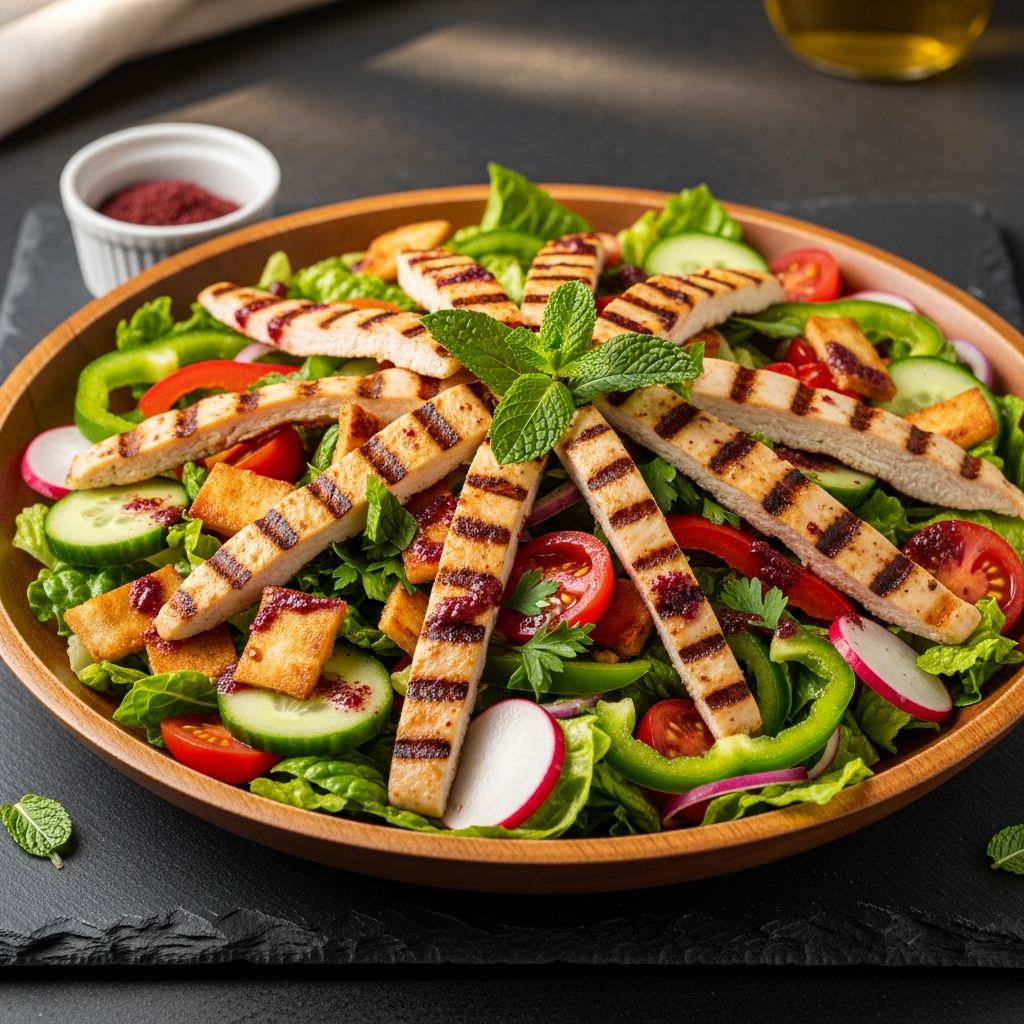
Fattoush is a vibrant Lebanese salad that combines fresh, crisp vegetables with the distinctive addition of crispy pita chips and a bright, lemony dressing. Traditionally served as a vegetarian appetizer or side dish, this recipe elevates the classic by adding tender grilled chicken, transforming it into a satisfying main course that’s both nutritious and delicious. The salad’s name comes from the Arabic word “fattoosh,” which means “to break into pieces,” referring to the torn pita bread that adds an irresistible crunch.
Understanding Fattoush: A Lebanese Classic
Fattoush salad has deep roots in Levantine cuisine, particularly in Lebanon and the surrounding regions. The dish represents the Mediterranean approach to healthy eating—combining fresh, locally-sourced ingredients with bold, complementary flavors. The signature element that distinguishes fattoush from other Middle Eastern salads is the inclusion of crispy pita chips, which not only add textural contrast but also absorb the flavorful dressing while maintaining their crunch.
When you add grilled chicken to this traditional salad, you create a protein-rich meal that’s perfect for lunch or dinner. The smoky char from grilling complements the bright, acidic notes of the dressing and the fresh herbs.
Key Ingredients for Fattoush Salad with Grilled Chicken
For the Grilled Chicken
The foundation of this dish starts with quality chicken breasts. Here’s what you’ll need for the marinade and preparation:
- 2 large boneless, skinless chicken breasts
- 1 tablespoon olive oil
- 1 teaspoon garlic powder
- 1 teaspoon paprika
- 1 teaspoon za’atar (a Middle Eastern spice blend)
- 1 teaspoon sea salt
- Black pepper to taste
For the Salad Base
The vegetable components provide freshness, crunch, and vibrant color:
- Romaine lettuce, chopped
- Cherry tomatoes, halved
- 1 Persian cucumber, diced
- Red radishes, thinly sliced
- Scallions, chopped
- Fresh parsley, chopped
- Fresh mint, chopped
- Red onion, thinly sliced
- Bell pepper, diced (optional)
For the Crispy Pita Chips
Homemade pita chips make all the difference in texture and flavor. You’ll need:
- 2–3 pita breads, cut into triangles
- 2 tablespoons olive oil
- 1 teaspoon za’atar
- Salt and pepper to taste
For the Sumac Dressing
The dressing is where fattoush achieves its distinctive tangy, refreshing character:
- 1/4 cup olive oil
- 3 tablespoons fresh lemon juice
- 2 cloves garlic, minced
- 1 teaspoon sumac (a tart spice made from ground sumac berries)
- 1/2 teaspoon dried mint
- Salt and black pepper to taste
Optional: crumbled feta cheese adds richness and authenticity.
Step-by-Step Instructions
Preparing the Pita Chips
Begin by making your pita chips, as they need time to cool before assembly. Preheat your oven to 425°F (220°C). Cut the pita breads into triangular pieces and place them in a bowl. Toss gently with olive oil, za’atar, salt, and pepper until evenly coated. Spread the pieces in a single layer on a baking sheet lined with parchment paper. Bake for 10–12 minutes, or until golden brown and crispy. Remove from the oven and allow to cool completely.
Marinating the Chicken
While the pita chips bake, prepare the chicken. Place the chicken breasts in a bowl and drizzle with olive oil. Sprinkle with garlic powder, paprika, za’atar, and sea salt. Toss to coat evenly and let the chicken marinate for at least 20 minutes at room temperature. This allows the spices to penetrate the meat and enhance its flavor.
Related Stories



Preparing the Salad Vegetables
In a large bowl, combine all the chopped vegetables: romaine lettuce, cherry tomatoes, cucumber, radishes, scallions, parsley, mint, and red onion. Toss gently to mix. This can be done while the chicken marinates.
Making the Dressing
In a small bowl, whisk together the olive oil, fresh lemon juice, minced garlic, sumac, and dried mint. Season with salt and pepper to taste. The dressing should have a bright, tangy flavor with a subtle earthiness from the sumac. Set aside.
Grilling the Chicken
Preheat your grill to medium-high heat (approximately 450°F or 230°C). Place the marinated chicken breasts directly on the grill grates. Grill for 5–6 minutes on the first side without moving them, allowing a nice char to develop. Flip and cook for another 5–6 minutes until the internal temperature reaches 165°F (74°C) and the chicken is cooked through. Remove from the grill and transfer to a cutting board. Let rest for 5 minutes before cutting into bite-sized pieces.
Alternative cooking methods: If you don’t have a grill, you can bake the chicken at 400°F (200°C) for 15–20 minutes, or pan-sear it in a skillet over medium-high heat for 6–8 minutes per side.
Assembling the Salad
Pour half of the dressing over the prepared vegetables and toss gently to coat. Add the cooled pita chips and crumbled feta cheese if desired. Toss again to combine. Top with the grilled chicken pieces and drizzle with the remaining dressing. Toss once more to ensure every component is well-coated.
Serving
Divide the salad among serving bowls or plates and serve immediately. The contrast of warm chicken against cool, crisp vegetables creates an appealing dining experience. If you’re preparing this ahead, keep the pita chips separate and add them just before serving to maintain their crispness.
Nutritional Benefits of Fattoush Salad
This dish offers impressive nutritional value. The grilled chicken provides lean protein, essential for muscle maintenance and repair. The abundance of fresh vegetables delivers vitamins, minerals, and dietary fiber. The olive oil in the dressing contains heart-healthy monounsaturated fats and antioxidants. The sumac adds flavor without added sodium and contains compounds with anti-inflammatory properties. This combination makes fattoush an excellent choice for those seeking balanced, nutritious meals.
Variations and Customizations
While the classic recipe is delicious, fattoush is highly adaptable:
- Protein variations: Substitute chicken with grilled shrimp, lamb, or keep it vegetarian with chickpeas or tofu.
- Vegetable swaps: Add or substitute with bell peppers, green onions, or leafy greens like arugula.
- Cheese options: Use halloumi, labneh, or goat cheese instead of feta.
- Spice adjustments: If sumac is unavailable, use zest from a lemon or a pinch of oregano.
- Dressing variations: Add pomegranate molasses for sweetness or tahini for creaminess.
Storage and Make-Ahead Tips
Fattoush is best served immediately after assembly, but you can prepare components in advance. Store chopped vegetables in an airtight container in the refrigerator for up to 2 days. The dressing keeps for 5–7 days. Cooked chicken can be refrigerated for 3–4 days. Pita chips stay crispy in an airtight container for 2–3 days. Assemble the salad just before serving, adding the pita chips last to prevent them from becoming soggy.
Serving Suggestions
Fattoush with grilled chicken works beautifully as the centerpiece of a Middle Eastern-inspired meal. Serve alongside warm pita bread, hummus, or tabbouleh salad. A chilled white wine like Sauvignon Blanc or a sparkling water with fresh lemon complements the flavors perfectly.
Frequently Asked Questions
Q: What is sumac and where can I find it?
A: Sumac is a tangy powder made from ground sumac berries, commonly used in Middle Eastern cooking. It adds a lemony flavor without added acidity. Look for it in Middle Eastern grocery stores, gourmet food shops, or online retailers. If unavailable, substitute with lemon zest or a pinch of oregano.
Q: Can I make this salad without a grill?
A: Absolutely. You can bake the chicken at 400°F for 15–20 minutes or pan-sear it in a skillet over medium-high heat for 6–8 minutes per side. The chicken will be equally tender and flavorful.
Q: Is fattoush salad vegetarian?
A: Traditional fattoush is vegetarian and serves as a side dish or appetizer. This recipe adds grilled chicken to make it a complete main course, but you can easily omit the chicken and add chickpeas, lentils, or tofu for a plant-based version.
Q: How can I make the pita chips at home?
A: Cut pita bread into triangles, toss with olive oil and seasonings (za’atar, salt, pepper), spread on a baking sheet, and bake at 425°F for 10–12 minutes until golden and crispy.
Q: Can I prepare this salad ahead of time?
A: You can prep all components separately—chopped vegetables, cooked chicken, dressing, and pita chips—up to 1 day in advance. Assemble just before serving to keep the pita chips crispy.
Q: What’s the best oil for the dressing?
A: Extra virgin olive oil is traditional and adds wonderful flavor. Cold-pressed varieties provide the best taste and nutritional benefits.
Q: Does this salad contain nuts or common allergens?
A: The basic recipe is naturally nut-free, but always check store-bought za’atar blends and pita bread for potential allergens. When preparing for guests, verify all ingredients and their sourcing.
References
- Lebanese Fattoush Salad — RecipeTin Eats. 2024. https://www.recipetineats.com/lebanese-fattoush-salad/
- Fattoush Salad Recipe with Grilled Chicken — The Healthy Maven. 2024. https://www.thehealthymaven.com/fattoush-salad-recipe/
- The Ultimate Fattoush Salad with Chicken — Kalejunkie. 2024. https://kalejunkie.com/the-ultimate-fattoush-salad-with-chicken/
- Grilled Chicken Fattoush Salad — Kitchy Cooking. 2024. https://www.kitchycooking.com/grilled-chicken-fattoush-salad/
- Chicken Tawook Fattoush Salad — The Lemon Bowl. 2024. https://thelemonbowl.com/chicken-tawook-fattoush-salad/
Similar Articles








Read full bio of Sneha Tete