Left Atrial Appendage Closure Procedures
Understanding LAA closure: A minimally invasive solution for stroke prevention in AFib patients.
Understanding Left Atrial Appendage Closure Procedures
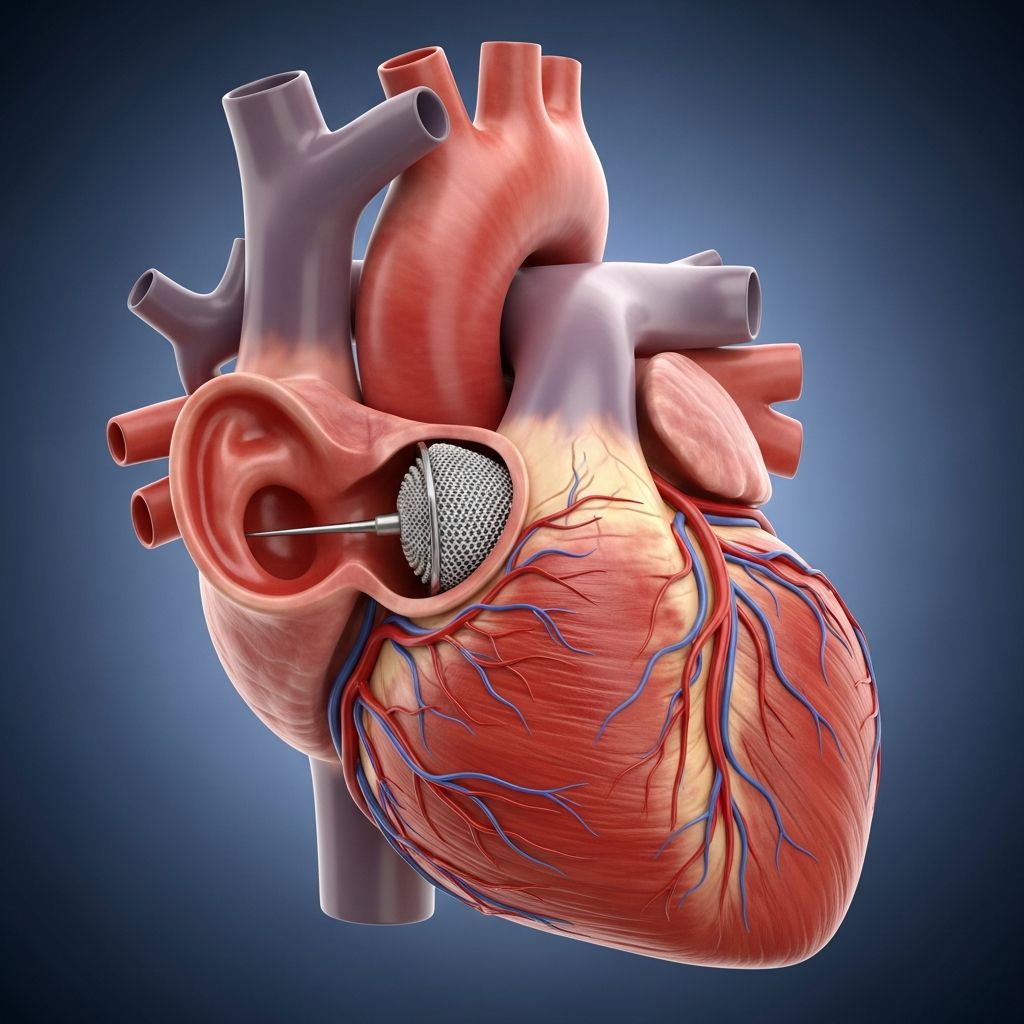
Left atrial appendage (LAA) closure is a minimally invasive medical procedure designed to reduce the risk of stroke in patients with atrial fibrillation (AFib). The left atrial appendage is a small, pouch-like extension of the left atrium—the upper left chamber of the heart. In patients with atrial fibrillation, the heart’s electrical system becomes disturbed, causing the heartbeat to become irregular and inefficient. This irregular rhythm prevents blood from being squeezed effectively out of the left atrium, causing it to pool in the left atrial appendage. When blood pools in this area, it increases the risk of clot formation, which can travel to the brain and cause a stroke.
The left atrial appendage is responsible for approximately 90% of stroke-producing blood clots in patients with atrial fibrillation. By closing off this pouch-like structure, healthcare providers can significantly reduce the risk of life-threatening strokes without the need for long-term blood-thinning medications in some cases. LAA closure procedures have become an increasingly important treatment option for patients who are unable to tolerate anticoagulation therapy or who seek an alternative to lifetime medication management.
Why LAA Closure May Be Recommended
Your healthcare provider may recommend a left atrial appendage closure procedure if you have been diagnosed with atrial fibrillation and meet certain criteria. The primary indication for this procedure is to reduce stroke risk in patients with AFib who have additional risk factors for thromboembolism. Several patient populations benefit significantly from LAA closure:
- Patients with atrial fibrillation who are unable to tolerate long-term anticoagulation therapy
- Individuals who have experienced bleeding complications from blood-thinning medications
- Patients with contraindications to warfarin or direct oral anticoagulants
- Those seeking an alternative to lifelong medication management
- Patients undergoing cardiac surgery for other conditions who also have AFib
Your doctor will evaluate your individual medical history, stroke risk factors, and overall cardiac status to determine whether LAA closure is an appropriate treatment option for your specific situation. Factors such as your CHA2DS2-VASc score, bleeding risk, renal function, and ability to tolerate medications will be considered in this assessment.
Types of LAA Closure Procedures
There are two primary approaches to closing the left atrial appendage, each with distinct advantages and considerations. Your cardiologist will recommend the approach best suited to your medical condition and anatomy.
Percutaneous (Catheter-Based) Closure
Percutaneous LAA closure is a minimally invasive procedure performed by an interventional cardiologist in a specialized cardiac catheterization laboratory. This approach uses catheter-based devices such as the Watchman, Amplatzer Amulet, or other FDA-approved occluders to seal the left atrial appendage from within the heart. The procedure typically takes 1-2 hours and requires only a small incision in the groin area through which a catheter is threaded into the heart.
During percutaneous closure, the cardiologist uses fluoroscopy and transesophageal echocardiography (TEE) to visualize the heart and precisely position the closure device. The device is advanced through the catheter and deployed at the entrance of the left atrial appendage, creating a permanent seal. Most patients undergoing percutaneous LAA closure are discharged within 24 hours and can resume normal activities relatively quickly.
Surgical Closure
Surgical LAA closure is performed by a cardiac surgeon and typically uses the AtriClip device to permanently close off the left atrial appendage at its base. This approach is generally recommended for patients who are already undergoing cardiac surgery for another condition, such as coronary artery bypass grafting or valve replacement. Surgical closure may also be considered for patients with anatomical features that make them unsuitable candidates for percutaneous procedures.
Related Stories



During surgical closure, the surgeon makes an incision in the chest to access the outside surface of the left atrial appendage. The AtriClip is positioned at the base of the appendage and applied like a clamp, permanently isolating the appendage from the rest of the heart. This approach provides excellent durability and complete closure in most cases.
The Percutaneous LAA Closure Procedure: Step-by-Step
Understanding what to expect during a percutaneous LAA closure procedure can help you feel more prepared and reduce anxiety. The procedure follows a standardized sequence of steps:
Step 1: Access
The procedure begins with establishing vascular access. Using sterile technique, the interventional cardiologist inserts a guidewire and vessel dilator into the femoral vein in your groin area. This is the same approach used for coronary angiography, stent placement, and other minimally invasive cardiac procedures. You will receive mild sedation to help you relax during this portion of the procedure.
Step 2: Transseptal Crossing
Once vascular access is established, the cardiologist advances a special catheter through the femoral vein into the right atrium of your heart. A needle is then used to carefully cross the interatrial septum—the thin wall separating the right and left atria. The access sheath is then advanced over the guidewire into the left atrium. This transseptal technique is a well-established procedure that has been safely performed for decades in interventional cardiology.
Step 3: LAA Navigation and Sizing
Once in the left atrium, the catheter is carefully navigated into the distal portion of the left atrial appendage. Real-time imaging with fluoroscopy and transesophageal echocardiography allows the cardiologist to visualize the LAA anatomy and measure its dimensions. This information is critical for selecting the appropriately sized closure device, as each patient’s LAA has unique anatomical characteristics.
Step 4: Device Deployment
The closure device is advanced through the catheter and positioned at the entrance of the left atrial appendage. Devices such as the Amplatzer Amulet use a dual-component design—one part seals the appendage opening while the other part secures the seal, similar to a lock-and-key mechanism. The Watchman device uses a self-expanding nitinol frame with polyester covering that deploys like an umbrella to occlude the LAA opening.
Step 5: Device Confirmation and Catheter Removal
After deployment, the cardiologist verifies proper device position and sealing using echocardiography and angiography. Any residual flow around the device edges (called “leak”) is assessed. Minor leaks may be expected and often resolve with tissue growth over time. Once the cardiologist confirms satisfactory device position and function, the catheter is removed and vascular access is closed.
The Surgical LAA Closure Procedure
Surgical LAA closure with the AtriClip device follows a different approach that may be performed as part of another cardiac surgery or as a standalone minimally invasive procedure. During surgical closure:
- A small incision is made in your chest to access the outside surface of the left atrial appendage
- The AtriClip is positioned at the base of the appendage using a specialized delivery system
- The clip is secured, permanently closing off the appendage from the rest of the heart
- The incision is closed after confirming complete LAA closure
Surgical LAA closure provides immediate and complete occlusion of the appendage and is highly durable, with excellent long-term outcomes reported in clinical studies.
Benefits of LAA Closure
The primary benefit of left atrial appendage closure is a significant reduction in stroke risk for patients with atrial fibrillation. Clinical studies have demonstrated that LAA closure devices are effective at preventing strokes caused by clots originating in the left atrial appendage. Additional benefits include:
- Reduced Stroke Risk: LAA closure reduces the risk of AFib-related stroke by approximately 90%, comparable to or exceeding the benefit of long-term anticoagulation in many patient populations
- Elimination of Anticoagulation: Following successful LAA closure and device healing, many patients may discontinue long-term blood-thinning medications
- Improved Quality of Life: Avoiding chronic anticoagulation eliminates medication side effects, dietary restrictions, and the need for regular monitoring
- Reduced Bleeding Risk: Patients no longer face the bleeding complications associated with long-term anticoagulant use
- Minimally Invasive: Percutaneous approaches require only a small groin incision and typically allow same-day or next-day discharge
- Single Procedure: LAA closure is a one-time procedure, unlike anticoagulation which requires ongoing medication management
Risks and Complications
While left atrial appendage closure is generally safe, all medical procedures carry potential risks. Your cardiologist will discuss these risks with you in detail before the procedure and will obtain your informed consent. Possible complications may include:
- Device-related thrombus: Blood clots may occasionally form on the device surface, particularly in the first months after implantation
- Pericardial effusion: Fluid may accumulate around the heart, which is usually managed conservatively but rarely may require drainage
- Stroke or transient ischemic attack: Although uncommon, stroke can occur during or shortly after the procedure
- Vascular access complications: Bleeding, hematoma, or vessel injury at the femoral puncture site
- Device embolization: The device may dislodge and travel through the bloodstream, requiring retrieval
- Atrial fibrillation: New or worsening AFib may occur following the procedure
- Infection: Although rare, infection can occur at the vascular access site
- Allergic reaction: Reactions to contrast dye or other materials may occur
The vast majority of patients tolerate LAA closure well without experiencing significant complications. Your medical team will monitor you closely during and after the procedure to identify and manage any issues promptly.
Pre-Procedure Preparation
Proper preparation is essential for a successful LAA closure procedure. Your cardiologist will provide specific instructions tailored to your situation, but general preparation typically includes:
- Medication adjustments: You may need to stop certain medications, particularly anticoagulants or antiplatelet agents, for a specific period before the procedure
- Imaging studies: Cardiac CT or TEE imaging may be performed to assess LAA anatomy and exclude existing thrombus
- Laboratory testing: Blood tests will assess kidney function, bleeding parameters, and other relevant values
- Fasting: You will be instructed not to eat or drink for 6-8 hours before the procedure
- Medication instructions: Take only the medications your doctor specifically instructs you to take on the morning of the procedure
- Hospital arrival: Plan to arrive at the hospital 1-2 hours before your scheduled procedure time
- Preoperative clearance: Your doctor may order an EKG or chest X-ray as part of preoperative assessment
Recovery and Follow-Up Care
Recovery after LAA closure is generally rapid, particularly following percutaneous procedures. Most patients are discharged within 24 hours and can return to normal activities within 1-2 weeks. However, complete healing of the device requires several weeks to months as tissue grows over the implanted device.
Immediate Post-Procedure Period
After the procedure, you will be monitored in a recovery area for several hours. Vital signs, heart rhythm, and oxygen levels will be continuously assessed. Pain at the vascular access site is usually minimal and managed with over-the-counter pain relievers. The femoral puncture site will be dressed with a bandage that should be kept clean and dry.
Activity Restrictions
In the first week after discharge, avoid heavy lifting and strenuous activity. Most patients can resume walking and light activities immediately. By 2 weeks post-procedure, you should be able to return to most normal activities. Your doctor will provide specific activity guidelines based on your individual recovery.
Medications After LAA Closure
After LAA closure, you will typically take aspirin and may be prescribed clopidogrel (Plavix) for 3-6 months to prevent device-related thrombosis while tissue is growing over the device. After this period, aspirin alone is usually continued long-term. Your cardiologist will discuss specific medication recommendations based on your individual risk factors and medical history.
Follow-Up Appointments
Follow-up appointments are essential to ensure your device is functioning properly. You will typically have:
- An office visit 4-6 weeks after the procedure with echocardiography to assess device function
- Additional follow-up visits at 3 months and 6 months
- Annual follow-up appointments thereafter with clinical assessment and periodic echocardiography
Frequently Asked Questions
Q: Is LAA closure surgery or a minimally invasive procedure?
A: LAA closure can be either minimally invasive or surgical, depending on which approach your doctor recommends. Percutaneous LAA closure is minimally invasive and requires only a small groin incision, typically allowing same-day or next-day discharge. Surgical LAA closure is a true surgical procedure that may be performed as part of another cardiac surgery. Most patients undergo the minimally invasive percutaneous approach.
Q: How long does the LAA closure procedure take?
A: Percutaneous LAA closure typically takes 1-2 hours, though the exact duration depends on the complexity of your individual anatomy and any difficulties encountered during the procedure. Surgical LAA closure typically takes 30-60 minutes when performed as an adjunct to other cardiac surgery.
Q: Will I need general anesthesia for LAA closure?
A: Most percutaneous LAA closure procedures are performed with conscious sedation—mild sedation that keeps you relaxed and comfortable but allows you to respond to commands. Some centers now perform LAA closure without general anesthesia or transesophageal echocardiography, allowing patients to go home the same day. Surgical LAA closure requires general anesthesia.
Q: Can I stop taking blood thinners after LAA closure?
A: After LAA closure, many patients can discontinue anticoagulation therapy once the device has healed (typically 3-6 months after the procedure). However, this decision must be made with your cardiologist based on your individual stroke risk factors, bleeding risk, and other medical conditions. You will continue aspirin long-term in most cases.
Q: Is LAA closure covered by insurance?
A: Yes, left atrial appendage closure is typically covered by Medicare and most insurance plans when performed for appropriate indications in patients with atrial fibrillation. Your insurance company may require pre-authorization before the procedure. Your cardiologist’s office can help verify your insurance coverage.
Q: What is the success rate of LAA closure?
A: Clinical studies have demonstrated high success rates for LAA closure procedures, with effective device placement and closure achieved in over 95% of cases. Long-term stroke prevention is comparable to or better than warfarin therapy in many patient populations. The durability of the devices is excellent, with successful closure maintained for many years of follow-up.
Q: Are there any lifestyle restrictions after LAA closure?
A: After the initial recovery period (typically 1-2 weeks), there are no significant lifestyle restrictions following LAA closure. You can return to regular exercise, travel, and all normal activities. Unlike warfarin therapy, you do not need to restrict dietary vitamin K intake, and you can participate in contact sports once fully healed.
References
- Left Atrial Appendage Ligation (LAL) — UPMC. Accessed December 1, 2025. https://www.upmc.com/services/heart-vascular/services/procedures/lal
- Left Atrial Appendage Closure — St Vincent’s Heart Health. Accessed December 1, 2025. https://www.svhhearthealth.com.au/procedures/procedures-treatments/left-atrial-appendage-closure
- Left Atrial Appendage Occlusion — Abbott Structural Heart. Accessed December 1, 2025. https://www.structuralheart.abbott/patients/treatment/afib-laa-occlusion
- About the WATCHMAN LAAC Implant Procedure for Physicians — Boston Scientific. Accessed December 1, 2025. https://www.watchman.com/en-us-hcp/about-the-procedure.html
- Left Atrial Appendage Closure — Stanford Health Care. Accessed December 1, 2025. https://stanfordhealthcare.org/medical-treatments/l/left-atrial-appendage-closure.html
- Left Atrial Appendage Closure: Therapy Overview and Future Perspectives — PubMed Central, National Institutes of Health. Published 2024. https://pubmed.ncbi.nlm.nih.gov/38910023/
Similar Articles








Read full bio of medha deb