Left vs. Right-Sided Heart Failure
Understand the key differences between left-sided and right-sided heart failure, including symptoms, causes, diagnosis, and treatment options for better management.
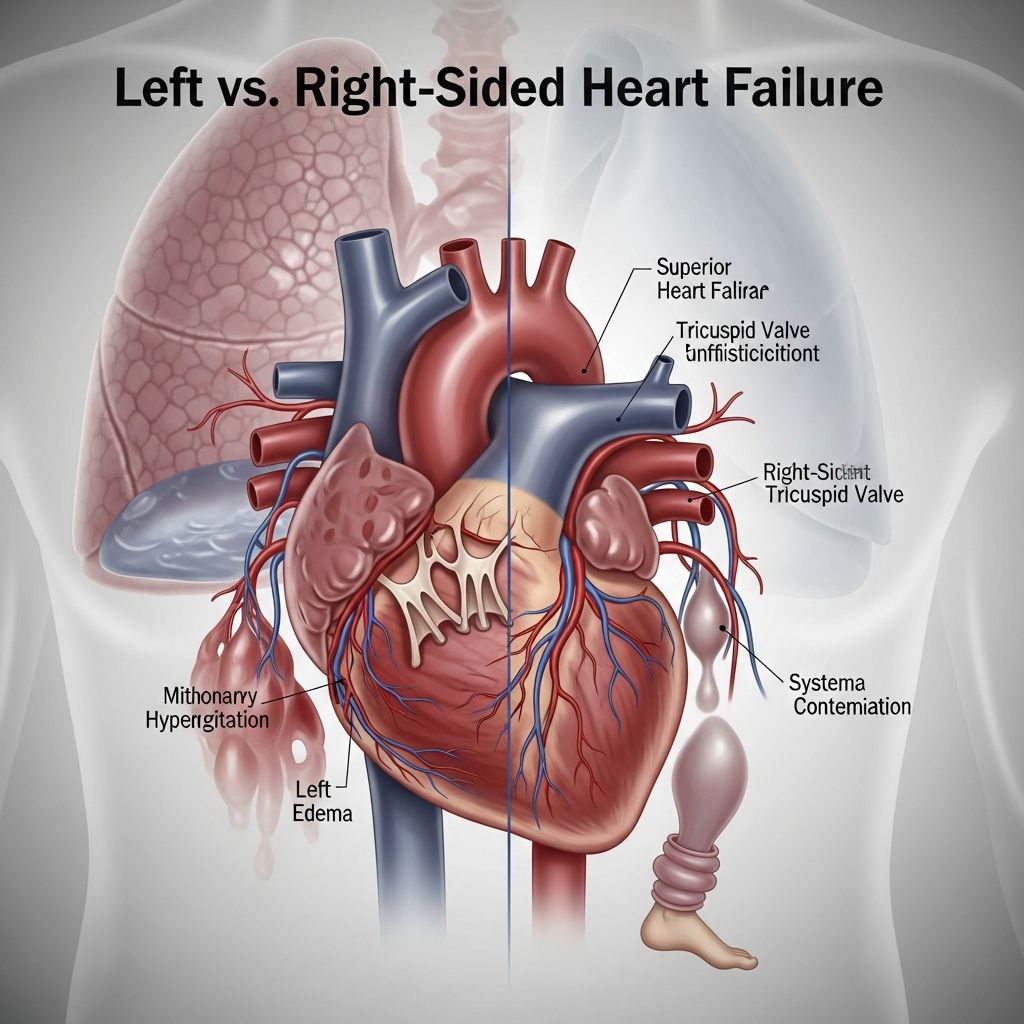
Heart failure occurs when the heart cannot pump blood effectively to meet the body’s needs, and it can affect the left side, right side, or both.
Left-sided heart failure
primarily impacts the lungs due to fluid backup, causing shortness of breath and fatigue, whileright-sided heart failure
leads to systemic swelling in the legs, abdomen, and other areas.What Is Heart Failure?
Heart failure, also known as congestive heart failure, is a chronic condition where the heart muscle weakens and cannot pump blood efficiently. This leads to inadequate oxygen and nutrient delivery to tissues. It affects over 6 million Americans and is often progressive. The heart has two main pumping chambers: the left ventricle pumps oxygenated blood to the body, and the right ventricle sends deoxygenated blood to the lungs. Failure on either side disrupts this balance.
Systolic heart failure involves reduced ejection fraction (HFrEF), where the heart cannot contract strongly enough. Diastolic heart failure (HFpEF) occurs when the heart cannot relax and fill properly. Both types can manifest as left- or right-sided.
Left-Sided vs. Right-Sided Heart Failure
The primary distinction lies in the affected ventricle. In
left-sided heart failure
, the left ventricle fails to pump blood effectively to the body, causing blood to back up into the lungs (pulmonary congestion). This results in respiratory symptoms. Conversely,right-sided heart failure
impairs the right ventricle’s ability to pump blood to the lungs, leading to backup in the body’s veins and peripheral edema.Left-sided failure is more common and often precedes right-sided failure. When the left ventricle weakens, pressure builds in the pulmonary circulation, overworking the right ventricle until it fails.
| Symptom | Left-Sided Heart Failure | Right-Sided Heart Failure |
|---|---|---|
| Shortness of Breath | Common, worsens when lying down (orthopnea) | Less common, may occur if biventricular |
| Fatigue | Common due to poor oxygenation | Common from reduced cardiac output |
| Swelling (Edema) | In lungs (crackles, wheezing) | In legs, ankles, abdomen (ascites) |
| Coughing | Frequent, possibly with frothy sputum | Rare |
| Weight Gain | Variable | Common from fluid retention |
Symptoms of Left-Sided Heart Failure
Left-sided heart failure manifests primarily through pulmonary symptoms because blood backs up into the lungs. Key signs include:
- Shortness of breath (dyspnea), especially during exertion or at night (paroxysmal nocturnal dyspnea)
- Persistent cough or wheezing, sometimes producing pink frothy sputum
- Crackles or rales heard in the lungs on exam
- Fatigue and weakness from reduced oxygen delivery
- Orthopnea: Need to sit up to breathe comfortably
These symptoms arise as the weakened left ventricle causes pulmonary edema, impairing gas exchange.
Symptoms of Right-Sided Heart Failure
Right-sided heart failure affects systemic circulation, leading to venous congestion. Common symptoms are:
- Peripheral edema in legs, ankles, and feet
- Abdominal swelling (ascites) and liver enlargement (hepatomegaly)
- Jugular venous distention (JVD)
- Weight gain from fluid retention
- Nausea, loss of appetite from gastrointestinal congestion
- Fatigue and exercise intolerance
These occur because the right ventricle cannot efficiently move blood to the lungs, causing backup in the body.
Causes of Left-Sided Heart Failure
Left-sided failure often stems from conditions that damage or overwork the left ventricle:
- Coronary artery disease (CAD) or heart attack, reducing blood flow to the heart muscle
- Chronic high blood pressure (hypertension), forcing the left ventricle to pump against resistance
- Heart valve disorders, like aortic or mitral regurgitation
- Cardiomyopathies (dilated, hypertrophic)
- Arrhythmias disrupting efficient pumping
These factors lead to systolic or diastolic dysfunction.
Causes of Right-Sided Heart Failure
Right-sided failure is less common in isolation and usually secondary to left-sided failure. Primary causes include:
- Left-sided heart failure progression
- Chronic lung diseases like COPD or pulmonary hypertension, increasing right ventricular workload
- Right ventricular infarction
- Pulmonary embolism
- Right-sided valve issues (tricuspid or pulmonic)
Lung conditions strain the right ventricle by raising pulmonary pressures.
| Cause | Left-Sided | Right-Sided |
|---|---|---|
| Coronary Artery Disease | Common | Less common |
| High Blood Pressure | Common | Indirect |
| Lung Disease (COPD) | Rare | Common |
| Left-Sided Failure | N/A | Primary cause |
Does Left-Sided Heart Failure Lead to Right-Sided?
Yes, left-sided heart failure frequently progresses to right-sided. When the left ventricle fails, blood accumulates in the lungs, elevating pulmonary pressures. This pulmonary hypertension overburdens the right ventricle, leading to its failure—a process called cor pulmonale in some cases. Early intervention in left-sided failure can prevent this cascade.
Isolated right-sided failure is rarer and typically linked to lung pathology rather than cardiac origins.
Diagnosis of Left- and Right-Sided Heart Failure
Diagnosis begins with a thorough history and physical exam, noting symptoms like JVD, edema, or lung crackles. Key tests include:
- Echocardiogram: Gold standard, measures ejection fraction, ventricular function, and pressures
- Blood tests: BNP/NT-proBNP levels elevated in failure; check kidney function, electrolytes
- Chest X-ray: Shows pulmonary edema or enlarged heart
- ECG: Detects arrhythmias or ischemia
- Stress testing or cardiac MRI for detailed assessment
These differentiate sidedness and classify as HFrEF or HFpEF.
Treatment for Left-Sided Heart Failure
Treatment aims to reduce workload, improve pumping, and alleviate congestion:
- Medications: ACE inhibitors/ARBs, beta-blockers, diuretics, SGLT2 inhibitors, aldosterone antagonists
- Lifestyle: Low-sodium diet, fluid restriction, exercise as tolerated
- Devices: Pacemakers, ICDs, or LVAD for advanced cases
- Treat underlying causes like hypertension or ischemia
Goal: Ejection fraction improvement and symptom relief.
Treatment for Right-Sided Heart Failure
Similar to left-sided but emphasizes right ventricular support and lung health:
- Diuretics for edema (loop diuretics like furosemide)
- Treat pulmonary hypertension with vasodilators (e.g., sildenafil)
- Oxygen therapy for hypoxemia
- Manage underlying lung disease
- In select cases, right ventricular assist devices
Addressing left-sided failure if present is crucial.
Prevention and Living with Heart Failure
Prevent progression through risk factor control: Quit smoking, maintain healthy weight, control blood pressure/cholesterol/diabetes, regular exercise, and vaccinations for flu/pneumonia. Monitor daily weights and symptoms; adhere to meds. Cardiac rehabilitation programs improve outcomes.
Prognosis varies; early biventricular failure has higher mortality, but treatments extend life and enhance quality.
Frequently Asked Questions (FAQs)
Which is worse: left- or right-sided heart failure?
Left-sided is often more immediately symptomatic due to pulmonary edema, but biventricular (both sides) is most severe. Right-sided alone may be less urgent if lung-related.
Can you have both left- and right-sided heart failure?
Yes, it’s common as left leads to right; called congestive heart failure.
How do doctors tell left from right heart failure?
Via echocardiogram assessing ventricular function and symptoms (pulmonary vs. peripheral).
Is right-sided heart failure curable?
Not curable but manageable; treat causes and symptoms to stabilize.
What are the first signs of heart failure?
Shortness of breath, swelling, fatigue—prompt medical evaluation is key.
References
- Left-Sided Heart Failure vs Right-Sided Heart Failure — YouTube (Next Generation NCLEX review). Accessed 2026. https://www.youtube.com/watch?v=mGchzG3Ya7c
- Left-Sided Heart Failure vs. Right-Sided Heart Failure — Baptist Health. Accessed 2026. https://www.baptisthealth.com/blog/heart-care/left-sided-heart-failure-vs-right-sided-heart-failure
- Compare Right-Sided Heart Failure Symptoms vs Left — London Cardiovascular Clinic. Accessed 2026. https://www.londoncardiovascularclinic.co.uk/blog/right-sided-heart-failure-symptoms-vs-left-28542.html
- Left Versus Right Sided Heart Failure – What’s The Difference? — Henry Ford Health. 2025-01. https://www.henryford.com/Blog/2025/01/Left-Versus-Right-Sided-Heart-Failure
- Left vs. right sided heart failure: Symptoms, treatment, and more — Medical News Today. Accessed 2026. https://www.medicalnewstoday.com/articles/left-vs-right-sided-heart-failure
- What’s the Difference Between HFrEF and HFpEF — CVRTI University of Utah. Accessed 2026. https://cvrti.utah.edu/whats-the-difference-between-hfref-and-hfpef-understanding-two-types-of-heart-failure/
- Types of Heart Failure — American Heart Association. Accessed 2026. https://www.heart.org/en/health-topics/heart-failure/what-is-heart-failure/types-of-heart-failure
Similar Articles








Read full bio of medha deb