Leg Ulcer Images: 19 Clinical Photos With Diagnostic Notes
Comprehensive visual guide to identifying and understanding various types of leg ulcers through clinical images.
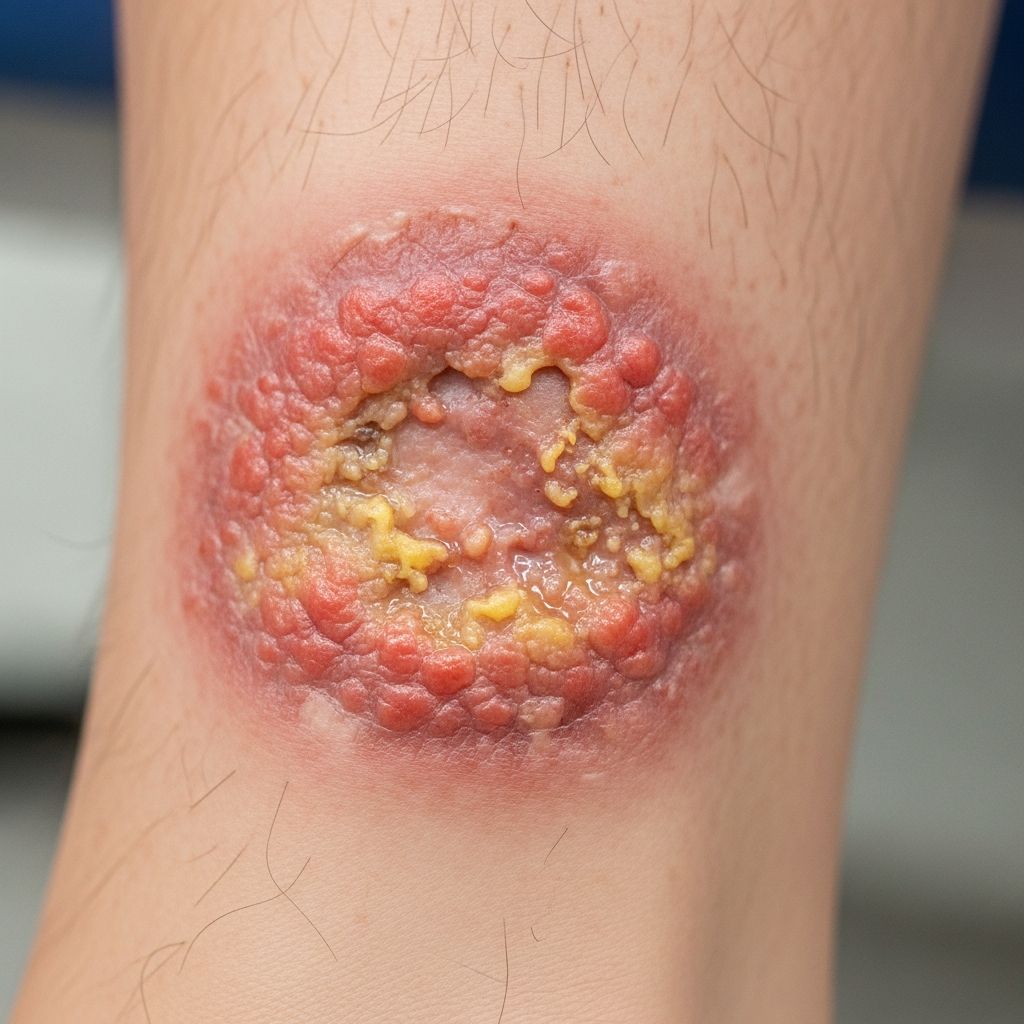
A leg ulcer is a full-thickness skin loss on the leg or foot due to any cause. Leg ulcers occur in association with a range of disease processes, affecting about 1% of the middle-aged and elderly population, often precipitated by minor injury. This gallery presents clinical images of various leg ulcers to aid in diagnosis and understanding. Images are categorized by type, highlighting key features, locations, and associated conditions.
Venous Leg Ulcer Images
Venous leg ulcers are the most common type, typically occurring above the medial or lateral malleolus (ankle) due to chronic venous insufficiency. They often present with irregular borders, shallow depth, and surrounding haemosiderin pigmentation, varicose eczema, or lipodermatosclerosis. Risk factors include age, varicose veins, obesity, and previous deep vein thrombosis.
- Image 1: Classic venous ulcer on the medial gaiter area with yellow slough, surrounding brown pigmentation, and stasis dermatitis. The ulcer has uneven edges and moderate exudate.
- Image 2: Large venous ulcer with rolled edges, heavy exudate, and limb oedema. Note the shiny, brawny skin indicative of lipodermatosclerosis.
- Image 3: Healed venous ulcer scar with residual pigmentation and telangiectasia, emphasizing the importance of compression therapy to prevent recurrence.
Venous ulcers heal better with compression therapy, which boosts venous return using multi-layer bandaging or stockings. Debridement and occlusive dressings promote moist wound healing.
Arterial Leg Ulcer Images
Arterial ulcers result from inadequate blood supply (ischaemia), often on the lower legs or feet. They appear punched-out with well-defined borders, pale or necrotic bases, and minimal exudate unless infected. Pain is severe, worsened by elevation.
- Image 4: Small arterial ulcer on the distal anterior shin with a ‘punched-out’ appearance, grey necrotic base, and surrounding atrophic skin. Gangrenous toes visible.
- Image 5: Extensive arterial ulceration with black eschar and exposed tendon on the foot, associated with peripheral artery disease.
- Image 6: Healed arterial ulcer post-revascularization, showing pale scar tissue and hairless skin.
Management focuses on revascularization if possible, avoiding compression, and meticulous wound care. Ankle-brachial pressure index (ABPI) <0.8 contraindicates compression.
Diabetic Neuropathic Ulcer Images
Neuropathic ulcers in diabetics arise from neuropathy and pressure points, commonly on the plantar foot. They have callused margins, painless due to sensory loss, and risk infection leading to osteomyelitis.
- Image 7: Plantar neuropathic ulcer under the metatarsal head with surrounding hyperkeratosis and fibrinous base.
- Image 8: Deep neuropathic ulcer with undermining, probe-to-bone test positive, indicating osteomyelitis risk.
- Image 9: Multiple neuropathic ulcers on the forefoot with cellulitis signs—erythema and warmth.
Treatment includes offloading (total contact casts), debridement, infection control, and glycemic management.
Pressure Ulcer Images
Pressure ulcers (decubitus) develop from prolonged pressure over bony prominences, typically in immobile patients. They progress from superficial to deep, with stages defined by depth.
Related Stories



- Image 10: Stage 2 pressure ulcer on the heel—partial thickness loss with blister or shallow crater.
- Image 11: Stage 3 sacral pressure ulcer exposing subcutaneous fat, undermined edges.
- Image 12: Stage 4 ulcer with extensive necrosis affecting muscle and bone, tunnel-like.
Prevention involves repositioning every 2 hours, pressure-relieving devices, and skin inspections. Management: debridement, dressings, and nutrition.
Malignant Leg Ulcer Images
Chronic ulcers may predispose to skin cancers like squamous cell carcinoma (Marjolin ulcer). Biopsy is essential for non-healing ulcers.
- Image 13: Hyperkeratotic squamous cell carcinoma arising in a chronic venous ulcer, with indurated rolled margins.
- Image 14: Basal cell carcinoma on the lower leg mimicking a rodent ulcer.
Surgical excision and reconstruction required.
Infective Leg Ulcer Images
Infections complicate ulcers, presenting with increased pain, exudate, odour, and surrounding cellulitis.
- Image 15: Pyogenic ulcer with purulent discharge and erythema from streptococcal infection.
- Image 16: Necrotizing fasciitis in a leg ulcer—rapidly spreading with crepitus and bullae.
Treat with systemic antibiotics; avoid topical to prevent resistance.
Pyoderma Gangrenosum Images
Pyoderma gangrenosum is an inflammatory ulcer with violaceous undermined borders, pathergy phenomenon.
- Image 17: Classic pyoderma on pretibial area with cribriform base and rapid expansion.
Immunosuppressants like corticosteroids are mainstay.
Other Leg Ulcer Images
Rare causes include vasculitic, calciphylaxis, and sickle cell ulcers.
- Image 18: Vasculitic ulcer with palpable purpura and retiform pattern.
- Image 19: Calciphylaxis ulcer in renal failure—painful with livedo racemosa.
Diagnosis and Management Overview
Diagnosis requires history, examination, ABPI, Doppler ultrasound, and biopsy if atypical. Management principles:
- Cleanse and debride (autolytic, sharp, enzymatic, larval).
- Control infection.
- Compression for venous (multi-layer, ABPI >0.8).
- Moist dressings (hydrocolloids, foams).
- Nutrition: protein, vitamin C, zinc.
- Offloading for neuropathic/pressure.
| Ulcer Type | Location | Key Features | Treatment Focus |
|---|---|---|---|
| Venous | Gaiter | Irregular, pigmented | Compression |
| Arterial | Toes/shin | Punched-out, painful | Revascularize |
| Neuropathic | Plantar | Callused, insensate | Offload |
| Pressure | Sacrum/heel | Staged depth | Reposition |
Frequently Asked Questions (FAQs)
Q: What causes leg ulcers?
A: Common causes include venous insufficiency, arterial disease, neuropathy, pressure, and infection. Risk factors: age, smoking, diabetes.
Q: How are leg ulcers diagnosed?
A: Clinical exam, ABPI, duplex ultrasound, biopsy for suspicious cases.
Q: Is compression safe for all ulcers?
A: No, contraindicated in arterial disease (ABPI <0.8).
Q: How long do leg ulcers take to heal?
A: Venous: 40-70% in 12 weeks with compression; others vary.
Q: Can leg ulcers lead to cancer?
A: Yes, chronic ulcers risk Marjolin ulcer (SCC); biopsy non-healers.
Q: What home care helps healing?
A: Elevate leg, exercise calf pump, nutrition, keep clean; seek medical advice.
References
- Leg ulcers – Wound healing – DermNet — DermNet NZ. 2023-10-15. https://dermnetnz.org/cme/wound-healing/leg-ulcers-cme
- Leg ulcers | Better Health Channel — Better Health Channel, Victoria Government. 2024-05-20. https://www.betterhealth.vic.gov.au/health/conditionsandtreatments/leg-ulcers
- Leg ulcers – DermNet — DermNet NZ. 2024-08-12. https://dermnetnz.org/topics/leg-ulcer
- A complete guide to managing venous leg ulcers — Essity Medical. 2023-11-01. https://medical-images.essity.com/images-c5/971/556971/original/a-complete-guide-to-managing-venous-leg-ulcers.pdf
- Australian and New Zealand Clinical Practice Guideline for Prevention and Management of Venous Leg Ulcers — NZWCS. 2022-06-10. https://www.nzwcs.org.nz/images/luag/2011_awma_vlug.pdf
Similar Articles








Read full bio of medha deb