Leg Ulcers: Comprehensive Guide To Healing And Prevention
Comprehensive guide to causes, diagnosis, and management of chronic leg ulcers for optimal wound healing.
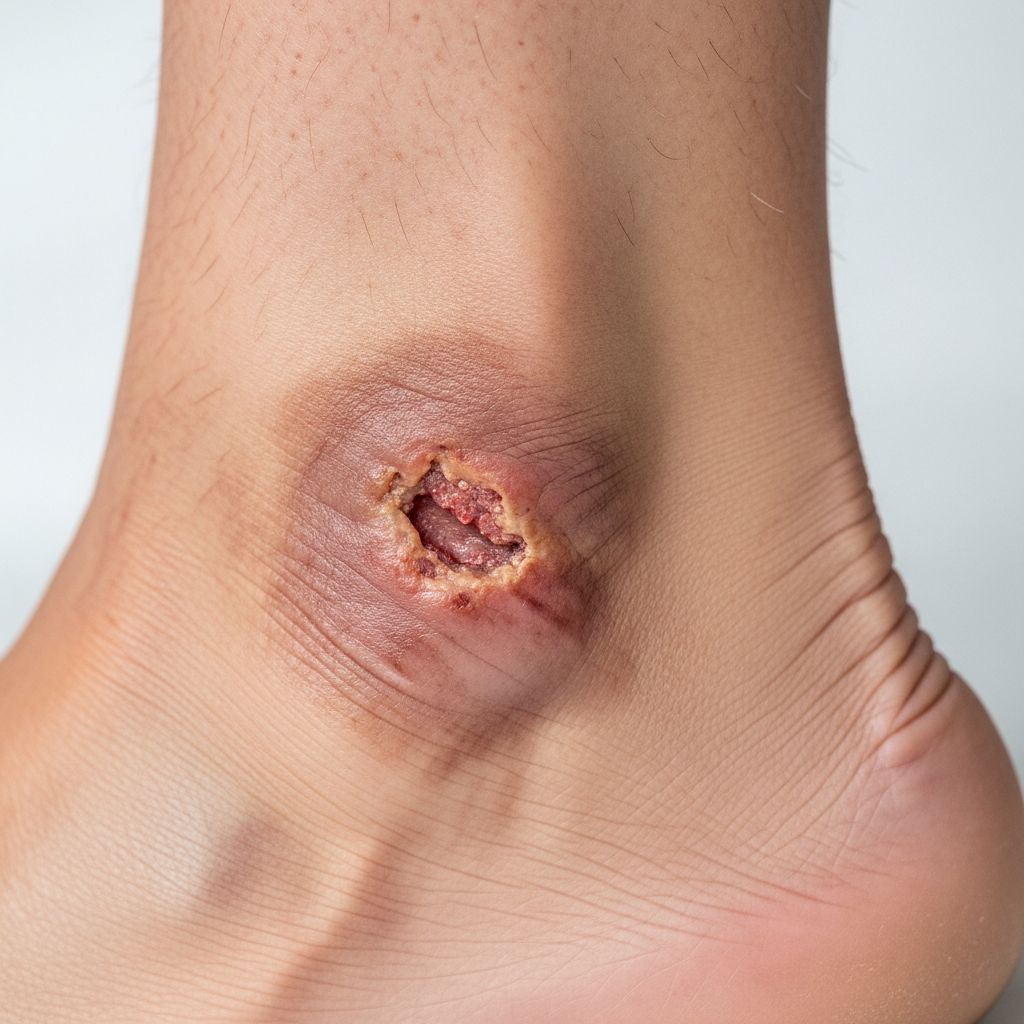
Leg ulcers represent a significant challenge in wound care, primarily resulting from venous insufficiency but also linked to arterial, neuropathic, and other causes. These chronic wounds affect quality of life and require multidisciplinary management to promote healing and prevent recurrence.
Introduction
Chronic leg ulcers are defined as full-thickness skin loss persisting for more than 3 months, often occurring below the knee. Venous leg ulcers account for 70-90% of cases in Western populations, with prevalence increasing with age, affecting up to 1-2% of adults over 60. They impose a substantial economic burden due to prolonged treatment and complications like infection. Effective management hinges on accurate diagnosis, addressing underlying pathology, and optimising wound bed preparation.
Aetiology
The primary cause of leg ulcers is
venous insufficiency
, where incompetent valves in the deep and superficial veins lead to ambulatory venous hypertension. This results in capillary damage, fibrin deposition, leucocyte trapping, and inflammation, culminating in ulceration.Key risk factors include:
- Previous deep vein thrombosis (DVT) or varicose veins
- Obesity and immobility
- Pregnancy and family history
- Advanced age and female sex
Arterial ulcers (10-20%) arise from peripheral arterial disease causing ischaemia, often on the feet or lateral malleoli. Neuropathic ulcers, common in diabetes, result from sensory loss and trauma. Less common causes encompass pressure ulcers, vasculitis, pyoderma gangrenosum, malignancy, infection (e.g., tuberculosis), haematological disorders (sickle cell, martorell ulcer), and drug-induced ulcers (e.g., hydroxyurea)[10].
Clinical Features
Venous ulcers typically present as shallow, exudative wounds on the medial gaiter area (lower third of leg), surrounded by haemosiderin pigmentation, eczema, lipodermatosclerosis (woody fibrosis), and atrophie blanche. Pain is variable but often worse on dependency. Surrounding skin shows brawny oedema and varicosities.
Arterial ulcers are deep, ‘punched-out’, with pale or necrotic bases, minimal exudate, and severe ischaemic pain relieved by elevation. Diabetic neuropathic ulcers are painless, callused, on pressure points. Hypertensive (martorell) ulcers are painful, on lateral legs, with surrounding livedo-like reticularis[10].
| Type | Location | Appearance | Pain | Associated Signs |
|---|---|---|---|---|
| Venous | Medial malleolus | Shallow, exudative, irregular | Mild-moderate | Pigmentation, lipodermatosclerosis |
| Arterial | Toes, lateral malleolus | Deep, necrotic | Severe | Cool skin, hair loss, pallor |
| Neuropathic | Pressure points | Callused base | Painless | Sensory loss |
| Martorell | Lateral leg | Deep, stellate | Severe | Reticularis, hypertension |
Differential Diagnosis
Distinguishing ulcer types is crucial as treatments differ markedly. Biopsy may be needed for atypical features, suspect malignancy, or pyoderma gangrenosum. Common mimics include basal cell carcinoma, squamous cell carcinoma, and infected wounds.
Investigations
Essential baseline assessment includes:
- Ankle brachial pressure index (ABPI): >0.9 normal; 0.8-0.9 mixed; <0.8 contraindicates compression.
- Duplex ultrasound: Gold standard for venous reflux and obstruction.
- Full blood count, ESR/CRP, glucose/HbA1c, renal/liver function.
- Bacterial swab if infected.
- Biopsy for non-healing ulcers (>6 weeks).
ABPI must be performed prior to compression therapy to exclude arterial disease.
Management
General Principles
Treatment targets underlying cause, wound bed preparation (debridement, infection control, moisture balance), and compression for venous disease. Multidisciplinary input from dermatology, vascular surgery, and tissue viability nurses optimises outcomes.
Debridement
Removal of slough, necrotic tissue, and biofilm converts chronic to acute wounds, promoting granulation. Methods include:
Related Stories



- Autolytic: Occlusive dressings.
- Mechanical: Wet-dry or saline gauze (painful).
- Enzymatic: Collagenase.
- Biological: Larval (maggot) therapy.
- Surgical: Sharp debridement for thick slough.
Wound Dressings
Moist healing environments accelerate epithelialisation. Change frequency minimised to preserve granulation tissue. Options:
- Foams, alginates for exudate.
- Hydrocolloids, hydrogels for dry/sloughy.
- Antimicrobial (silver, iodine) if infected.
- Honey dressings for debridement and antibiofilm.
Compression Therapy
Cornerstone for venous ulcers, healing 40-70% within 12 weeks by reducing oedema and improving venous return. Options:
- Multi-layer bandaging: 35-40 mmHg at ankle (gold standard).
- Hosiery: Class 3 (34-46 mmHg) for maintenance.
- Unna’s boot or short-stretch bandages.
Contraindicated if ABPI <0.8. Leg elevation (15-30 cm above heart) aids oedema control.
Treat Infection
Distinguish colonisation from infection (erythema, warmth, pus, systemic signs). Topical antibiotics avoided; systemic based on swab (e.g., flucloxacillin for Staph). Biofilm disruption essential.
Advanced Therapies
For non-healing ulcers:
- Skin grafts/flaps: Pinch, meshed, or shave grafts post-debridement.
- Skin substitutes: Amniotic membrane, dermal matrices (e.g., SIS, UBM) show efficacy in RCTs for venous and diabetic ulcers.
- Negative pressure wound therapy.
- Hyperbaric oxygen for refractory cases.
Adjuncts
Optimise nutrition: Protein, vitamin C, zinc, iron if deficient. Pain management, off-loading, and pentoxifylline (400mg TDS) may aid healing.
Prevention of Recurrence
Lifelong class 2 compression hosiery, leg elevation, exercise (calf pump), skin care, and weight management. Recurrence rates 20-40% without.
Frequently Asked Questions (FAQs)
What causes most leg ulcers?
Venous insufficiency due to valve incompetence leading to hypertension and tissue damage.
Is compression safe for all leg ulcers?
No, ABPI must be >0.8; arterial disease contraindicates it.
How long do leg ulcers take to heal?
With compression, 40-70% heal in 12 weeks; chronic ones may take months.
When should I see a doctor for a leg ulcer?
Immediately if painful, spreading, or not improving in 2 weeks; seek specialist if chronic.
Can leg ulcers be prevented?
Yes, via compression stockings, exercise, elevation, and treating varicose veins.
What if my leg ulcer doesn’t heal?
Investigate other causes (arterial, malignancy), consider biopsy, advanced therapies.
References
- Leg ulcers | Better Health Channel — Better Health Channel, State Government of Victoria. 2023. https://www.betterhealth.vic.gov.au/health/conditionsandtreatments/leg-ulcers
- Leg ulcers – DermNet — DermNet NZ. 2024-01-15. https://dermnetnz.org/topics/leg-ulcer
- Leg ulcers – Wound healing – DermNet — DermNet NZ. 2024. https://dermnetnz.org/cme/wound-healing/leg-ulcers-cme
- Skin substitutes as treatment for chronic wounds: current and future perspectives — PMC (PubMed Central), National Library of Medicine. 2023-09-12. https://pmc.ncbi.nlm.nih.gov/articles/PMC10498286/
- Hydroxyurea-induced cutaneous ulcer – DermNet — DermNet NZ. 2023. https://dermnetnz.org/topics/hydroxyurea-induced-cutaneous-ulcer
- Venous Insufficiency Ulcers, Symptoms and Treatment | WoundSource — WoundSource. 2024. https://www.woundsource.com/patientcondition/venous-ulcers
Similar Articles








Read full bio of medha deb