Lentigo Simplex: What It Is, Causes, And 4 Cosmetic Treatments
Understanding lentigo simplex: benign pigmented spots appearing in childhood, not caused by sun exposure, and how to differentiate from other skin lesions.
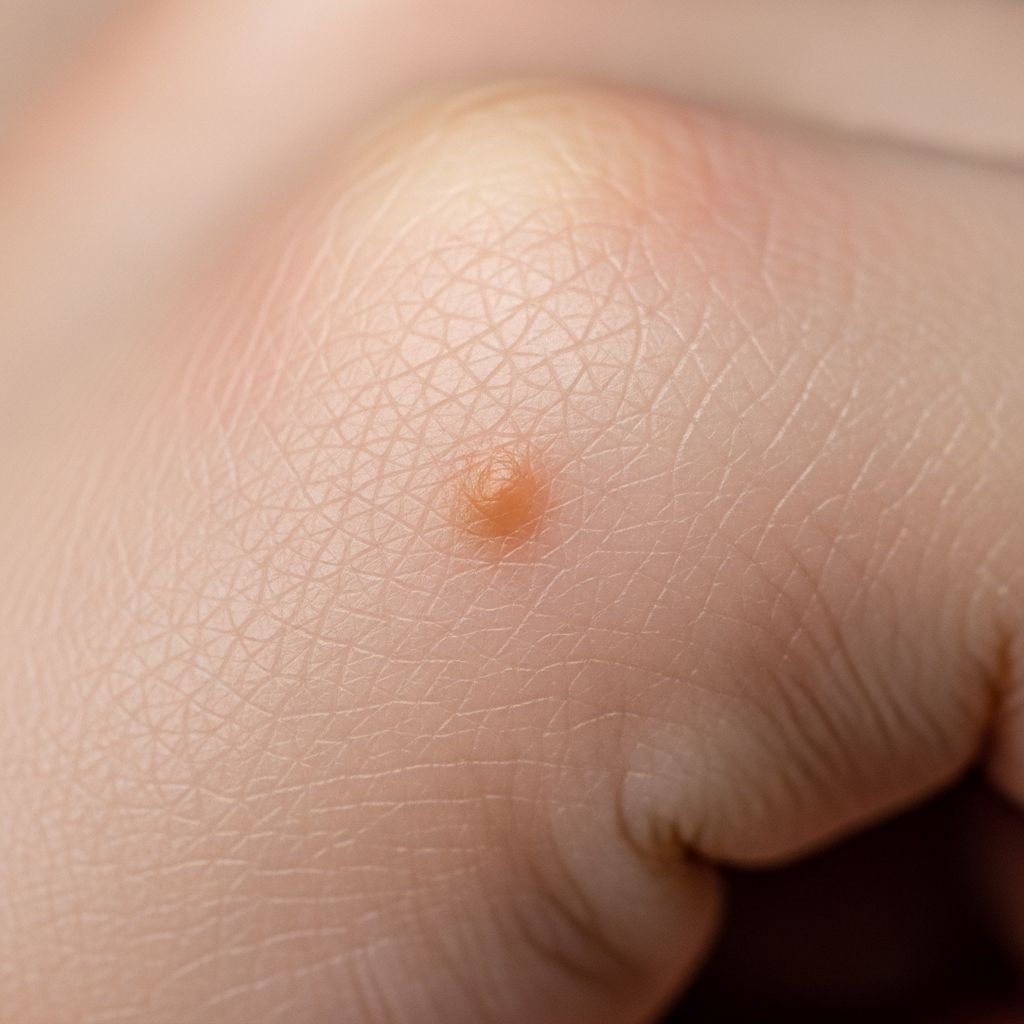
Lentigo simplex is the most common type of lentigo, characterised by small, sharply circumscribed pigmented macules that may be present at birth or develop during early childhood. These benign lesions are not caused by sun exposure and do not fade with time, distinguishing them from freckles.
What is lentigo simplex?
Lentigo simplex, also known as simple lentigo or juvenile lentigo, refers to one or more brown-black macules measuring 3–15 mm in diameter. A single lesion or multiple lesions (lentigines) may appear at birth, but they more commonly first develop in early childhood. Unlike solar lentigines, lentigo simplex is not induced by sun exposure and shows no predilection for sun-exposed sites. It is also not associated with any underlying medical diseases or conditions in most cases.
Histologically, lentigo simplex shows hyperplasia of the epidermis with elongation of rete ridges and increased pigmentation in the basal layer. There is a normal or slightly increased number of melanocytes without nesting or atypia, differentiating it from more concerning lesions like lentigo maligna.
Who gets lentigo simplex?
Lentigo simplex affects individuals of all skin types, with no specific racial or gender predilection reported. Lesions often first appear in infancy or early childhood, though single lesions can develop later in life. Multiple lesions may be scattered across the body, including covered areas such as the trunk, buttocks, palms, and soles.
- Infants and young children: Most common age of onset.
- Any skin phototype: No association with fair skin or sun sensitivity.
- Family history: May occur sporadically or in clusters without syndrome association.
What causes lentigo simplex?
The exact cause of lentigo simplex remains unknown. It arises from focal proliferation and increased activity of melanocytes (pigment-producing cells) in the basal layer of the epidermis, leading to localised hyperpigmentation. Unlike other lentigines, it is not triggered by ultraviolet radiation, ionising radiation, or chemical exposure.
Genetic factors may play a role, as multiple lesions can cluster in families. However, isolated lentigo simplex is not linked to germline mutations. When numerous lentigines occur with systemic features, specific syndromes should be considered (see below).
Clinical features of lentigo simplex
Lentigo simplex presents as small (2–10 mm), round or oval, uniformly pigmented macules ranging from light brown to dark brown or black. Borders are sharply defined and regular. Lesions are asymptomatic, flat, and stable in size and colour over time.
| Feature | Description |
|---|---|
| Size | 3–15 mm diameter |
| Shape | Round, oval, or irregular but well-circumscribed |
| Colour | Light to dark brown, black |
| Surface | Flat macule, no scaling or induration |
| Sites | Trunk, limbs, face, palms, soles, mucous membranes |
| Symptoms | None (asymptomatic) |
Lesions do not darken with sun exposure, unlike ephelides (freckles). They persist throughout life without spontaneous resolution in most cases, though some childhood lesions may fade.
Related Stories



Diagnosis of lentigo simplex
Diagnosis is primarily clinical, based on characteristic morphology, early age of onset, and distribution on non-sun-exposed sites. Dermoscopy may show a homogenous pigment network or structureless pattern without atypical features.
Biopsy is rarely needed but confirms epidermal hyperplasia, rete ridge elongation, and increased basal melanisation without cytological atypia or malignant features.
Differential diagnosis
- Freckles (ephelides): Smaller (<3 mm), fade in winter, sun-induced, more numerous on face/shoulders.
- Solar lentigo: Larger, irregular borders, sun-exposed sites (face/hands), older age.
- Lentigo maligna: Asymmetrical, colour variation, older patients, sun-damaged skin.
- Melanocytic naevus: Raised, may have hair, larger size.
- Melasma: Poorly defined, hormonal/sun trigger, facial.
Associated conditions and syndromes
Isolated lentigo simplex is benign and unrelated to systemic disease. However, multiple lentigines (lentiginosis) may signal genetic syndromes involving Ras-MAPK pathway dysregulation:
- Peutz-Jeghers syndrome: Mucocutaneous lentigines + gastrointestinal polyposis (cancer risk).
- LEOPARD syndrome: Lentigines, ECG abnormalities, ocular hypertelorism, pulmonic stenosis, abnormalities of genitals, retardation of growth, deafness.
- LAMB syndrome: Lentigines, atrial myxoma, mucocutaneous myxoma, blue naevi.
- Carney complex: Lentigines, myxomas, endocrine overactivity.
- Xeroderma pigmentosum: Lentigines + extreme UV sensitivity, skin cancers.
In these cases, genetic counselling and screening for extracutaneous features are recommended.
Management of lentigo simplex
Lentigo simplex requires no treatment as it is entirely benign, causes no symptoms, and poses no malignant potential. Reassurance is the mainstay of management. Regular skin surveillance is advised to monitor for changes suggestive of malignancy, though this risk is negligible.
Treatment options (cosmetic)
For lesions causing cosmetic concern:
- Topical bleaching agents: Hydroquinone 4% (limited efficacy on lentigo simplex).
- Cryotherapy: Liquid nitrogen for small lesions (risk of hypopigmentation).
- Lasers: Q-switched ruby/Nd:YAG for pigment-specific targeting.
- Electrosurgery/shave excision: For solitary lesions.
Treatment is not routinely recommended due to excellent prognosis without intervention.
Prevention
No specific prevention exists for lentigo simplex, as it is non-environmental. General sun protection (SPF 30+ broad-spectrum sunscreen, protective clothing) prevents other lentigines and skin cancers. Avoid tanning beds and excessive UV exposure.
Outlook
Lentigo simplex is a lifelong but harmless condition. Lesions remain stable and do not progress to malignancy. Patient education on self-examination using ABCDE criteria (Asymmetry, Border irregularity, Colour variation, Diameter >6 mm, Evolving) helps differentiate benign spots from melanoma.
Frequently Asked Questions (FAQs)
What is the difference between lentigo simplex and solar lentigo?
Lentigo simplex appears in childhood on any body site, unrelated to sun. Solar lentigo develops later on sun-exposed areas due to UV damage.
Is lentigo simplex cancerous?
No, it is entirely benign with no malignant potential. Monitor for changes.
Do lentigo simplex spots fade?
Most persist lifelong, unlike freckles which fade without sun exposure.
Can lentigo simplex appear on palms or mucous membranes?
Yes, common sites include palms, soles, lips, and gums.
When should I see a dermatologist for a spot?
If it changes in size, shape, colour, bleeds, or itches—prompt evaluation needed.
References
- Lentigo: Causes, Features, and Treatment — DermNet NZ. 2023. https://dermnetnz.org/topics/lentigo
- Lentigo Simplex: Causes, Symptoms, and Treatments — Healthline. 2023-05-15. https://www.healthline.com/health/lentigo-simplex
- Lentigo Simplex — DermNet NZ. 2006 (reviewed 2023). https://dermnetnz.org/topics/lentigo-simplex
- What is Lentigo? Lentigo Hyperpigmentation — Cyspera by Scientis. 2024. https://cyspera.com/what-is-hyperpigmentation/lentigo-hyperpigmentation/
- Lentigo Simplex: Causes, Symptoms, and Treatment Options (Video Transcript) — YouTube (Educational Channel). 2023. https://www.youtube.com/watch?v=xZvhsh9uk30
- Lentigo — The Skin Cancer Doctor. 2024. https://www.theskincancerdoctor.com.au/education/skincancerlesions/lentigo/
- Lentigo Simplex — Skinsight. 2023. https://skinsight.com/skin-conditions/lentigo-simplex/
Similar Articles








Read full bio of Sneha Tete