Leprosy (Hansen Disease): Comprehensive Guide
Chronic bacterial infection affecting skin and nerves: causes, types, diagnosis, treatment, and prevention strategies.
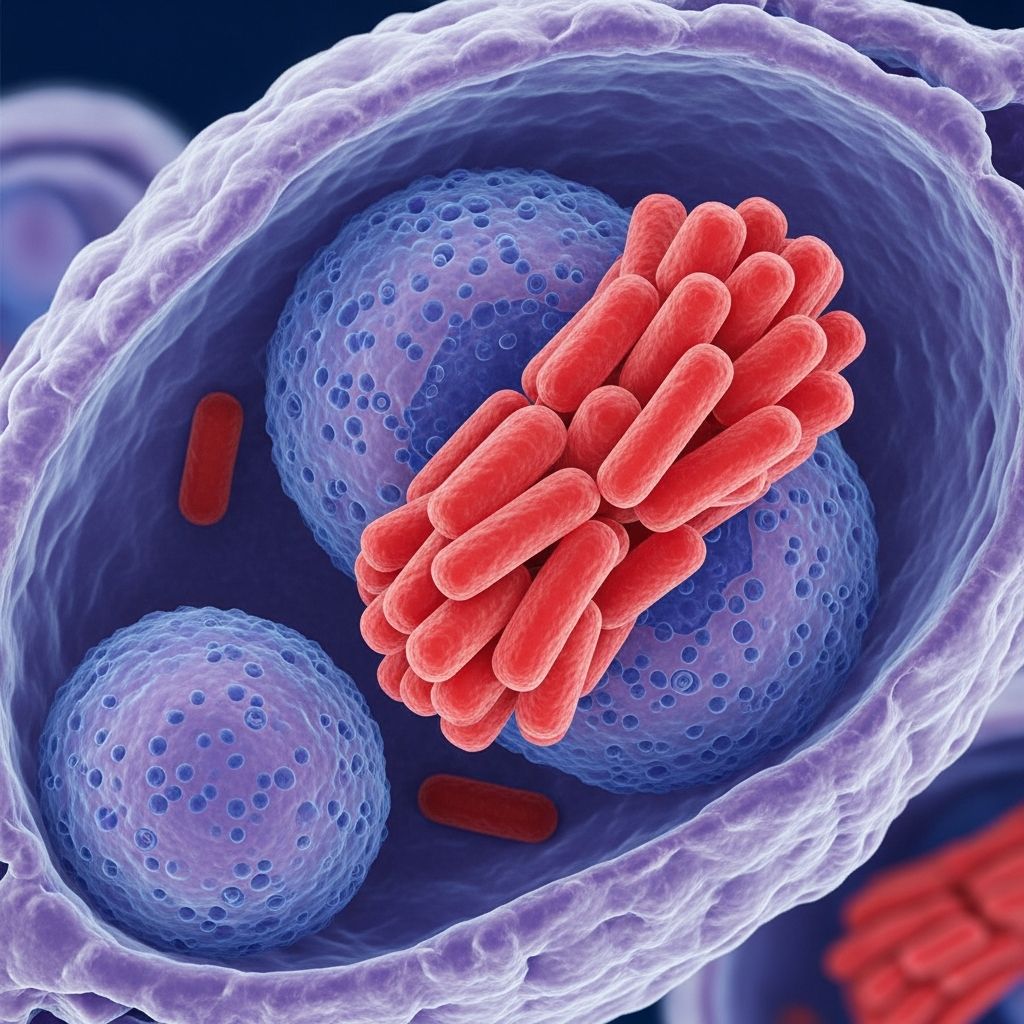
Leprosy, also known as Hansen disease, is a chronic infectious disease caused by the bacillus Mycobacterium leprae. It primarily affects the skin and peripheral nerves, leading to characteristic skin lesions and nerve damage. The disease manifests along a spectrum determined by the host’s immune response, ranging from paucibacillary tuberculoid leprosy (TT) with strong cell-mediated immunity to multibacillary lepromatous leprosy (LL) with poor immunity.
What is leprosy?
Leprosy is a slowly progressive granulomatous disease caused by Mycobacterium leprae, an obligate intracellular acid-fast bacillus that cannot be cultured in vitro. Discovered by Gerhard Hansen in 1873, it multiplies slowly with a generation time of 12–14 days, primarily targeting cooler body areas like skin, peripheral nerves, mucosa of the upper respiratory tract, and eyes. A related species, Mycobacterium lepromatosis, causes a similar diffuse form in some regions. Transmission occurs via respiratory droplets from untreated multibacillary cases, with an incubation period of 2–10 years (range 6 months to 20 years). Only about 5% of exposed individuals develop disease due to genetic susceptibility.
Who gets leprosy?
Leprosy affects approximately 200,000 new cases annually worldwide, mainly in tropical and subtropical regions. Over 90% of cases occur in India, Brazil, and Indonesia, per WHO data. It is rare in developed countries but can appear in immigrants or travelers from endemic areas. Children are more susceptible, and household contacts of multibacillary patients face higher risk. Genetic factors, such as PARK2 and LTA gene variants, influence susceptibility. Armadillos in the Americas serve as a zoonotic reservoir.
What causes leprosy?
M. leprae is an aerobic, non-motile rod (1–8 μm long) with a mycolic acid-rich cell wall, staining acid-fast with modified Ziehl-Neelsen (Wade-Fite) stain. It invades Schwann cells in peripheral nerves, causing demyelination and axonal degeneration. The bacterium lacks many biosynthetic genes, relying on the host for essential metabolites. Genomic studies reveal pseudogenes indicating reductive evolution. Virulence factors include phenolic glycolipid-I (PGL-I), which modulates immune response.
What are the clinical features of leprosy?
The Ridley–Jopling classification divides leprosy into a spectrum: TT (tuberculoid), BT (borderline tuberculoid), BB (mid-borderline), BL (borderline lepromatous), and LL (lepromatous). The WHO operational classification uses paucibacillary (1–5 lesions) and multibacillary (>5 lesions).
Tuberculoid leprosy (TT)
Characterized by 1–3 well-defined hypopigmented or erythematous macules/plaques with raised borders, anhidrosis, and anesthesia. Lesions are dry, scaly, hairless, with loss of sweat glands. One enlarged peripheral nerve (e.g., ulnar, median, peroneal) near the lesion. Slit-skin smears show no acid-fast bacilli (AFB); lepromin test positive.
Borderline tuberculoid leprosy (BT)
Multiple asymmetrical plaques with punched-out centers and satellite lesions. Nerve enlargement in 2–4 nerves. Smears may show scanty AFB.
Mid-borderline leprosy (BB)
Multiple annular lesions with external swelling and central clearing, resembling a ‘Swiss cheese’ appearance. Multiple nerves affected; smears Paucibacillary.
Borderline lepromatous leprosy (BL)
Numerous small macules and plaques, symmetrical. Infiltrated earlobes; 4+ nerve involvement. Smears show AFB.
Related Stories



Lepromatous leprosy (LL)
Symmetrical infiltration starting in cooler areas: face (leonine facies, madarosis, saddle nose), ears, buttocks, extremities. Plaques, nodules, and diffuse skin thickening. Glove-and-stocking anesthesia, tendon reflexes lost. Upper respiratory involvement leads to nasal stuffiness. Smears 5+ AFB; lepromin negative. Clinical variants include histoid (smooth nodules), lucio (necrotic infarcts), and diffuse LL.
Indeterminate leprosy
Hypopigmented macule with ill-defined margins, mild hypoaesthesia. Common first presentation, self-resolves or progresses.
Pure neural leprosy (PNL)
Predominant in India/Nepal: nerve thickening/tenderness without skin lesions initially. Leads to motor deficits, trophic ulcers. Diagnosis via nerve biopsy.
Leprosy reactions
- Type 1 (reversal reaction): Due to increased CMI in borderline cases. Features: inflamed existing lesions, nerve damage, fever. Occurs in 30% pre- or during treatment.
- Type 2 (ENL): Immune complex in LL/BL. Crops of tender erythematous nodules, fever, malaise, orchitis, iritis. 50% of LL patients.
- Lucio phenomenon: Angiopathic in Lucio LL, causing irregular infarcts.
Complications
Nerve damage causes anesthesia, muscle weakness, contractures, trophic ulcers, osteomyelitis. Eye involvement: lagophthalmos, keratitis, blindness. Systemic: nephropathy, orchitis, amyloidosis.
Dermoscopy of leprosy lesions
Dermoscopy aids non-invasive diagnosis. TT/BT: focal white areas, distorted pigment network, yellow-orange globules (granulomas), linear vessels. LL: diffuse erythema, yellow clods. Useful in dark skin.
Diagnosis of leprosy
Clinical: anesthetic hypopigmented patches + thickened nerves. Confirm with:
- Slit-skin smears: From lesions, ears. Bacterial index grades 0–6+.
- Skin/nerve biopsy: TT: granulomas, no AFB; LL: macrophage foam cells packed with AFB.
- Dermoscopy: As above.
- PCR: Detects M. leprae DNA.
- Lepromin test: Delayed hypersensitivity (positive in TT).
Differential diagnoses
| Type | Differentials |
|---|---|
| TT/BT | Tinea corporis, granuloma annulare, sarcoid, cutaneous leishmaniasis |
| LL | Post-kala-azar dermal leishmaniasis, cutaneous lymphoma |
| Reactions | Erythema nodosum, Sweet syndrome |
Treatment of leprosy
WHO multidrug therapy (MDT) is standard, free via WHO.
| Classification | Regimen | Duration |
|---|---|---|
| Paucibacillary (PB) | Rifampicin + dapsone (WHO: +clofazimine) | 6 months |
| Multibacillary (MB) | Rifampicin + dapsone + clofazimine | 12 months |
Rifampicin: 600 mg monthly. Dapsone: 100 mg daily. Clofazimine: 300 mg monthly + 50 mg daily. Alternatives: ofloxacin, minocycline for resistance. Reactions: steroids (prednisone 1 mg/kg), thalidomide for ENL. Nerve damage managed with physiotherapy, surgery. Relapse rare (<1%) if adherent.
What is the outcome for leprosy?
MDT cures infection; skin lesions fade over months–years. Nerve damage irreversible but preventable with early treatment. Disabilities affect 2–3 million globally. Stigma persists despite curability. Post-exposure prophylaxis: single-dose rifampicin reduces PB leprosy by 50%.
Prevention of leprosy
- Early case detection/treatment via MDT.
- Contact chemoprophylaxis (rifampicin).
- BCG vaccine: 50% protection in some trials.
- Immunoprophylaxis/immunotherapy trials ongoing.
- Health education to reduce stigma.
Frequently asked questions (FAQs) about leprosy
Q: Is leprosy contagious?
A: Low infectivity; requires prolonged close contact with untreated MB cases via respiratory droplets. Casual contact does not transmit.
Q: Can leprosy be cured?
A: Yes, fully curable with 6–12 months MDT; patients non-infectious after first dose.
Q: Does leprosy cause fingers to fall off?
A: Myth; digits lost due to untreated nerve damage causing trauma/ulcers, not direct bacterial effect.
Q: How is leprosy diagnosed?
A: Clinical exam + slit-smear/biopsy/PCR. Dermoscopy supports.
Q: What are leprosy reactions?
A: Type 1 (cell-mediated) and Type 2 (immune complex); treated with steroids ± thalidomide.
References
- Leprosy (Hansen disease) — DermNet NZ. 2023. https://dermnetnz.org/topics/leprosy
- Leprosy Classification, Clinical Features, Epidemiology, and Host… — PMC (PubMed Central). 2023-10-01. https://pmc.ncbi.nlm.nih.gov/articles/PMC10557090/
- Leprosy Symptoms, Causes, Treatment, Cure | NORD — National Organization for Rare Disorders. 2024. https://rarediseases.org/rare-diseases/leprosy/
- Dermoscopy of leprosy — DermNet NZ. 2023. https://dermnetnz.org/topics/dermoscopy-of-leprosy
- Leprosy pathology — DermNet NZ. 2023. https://dermnetnz.org/topics/leprosy-pathology
Similar Articles








Read full bio of medha deb