Lesch-Nyhan Syndrome: Causes, Symptoms, Diagnosis
Rare X-linked disorder causing hyperuricemia, severe neurological issues, and self-injurious behaviour in males.
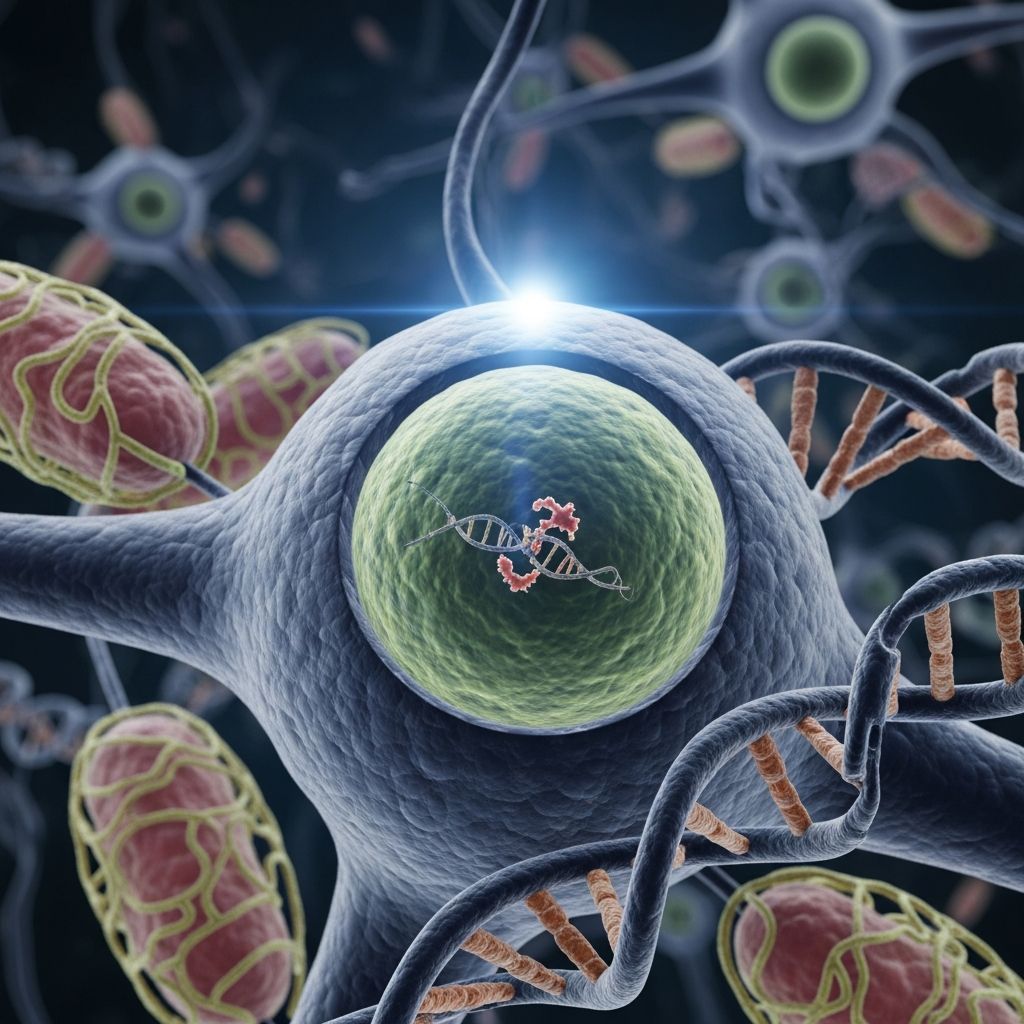
Lesch-Nyhan syndrome (LNS), also known as Lesch-Nyhan disease, is a rare inherited X-linked recessive disorder caused by complete deficiency of the enzyme hypoxanthine-guanine phosphoribosyltransferase (HPRT). This leads to defective purine salvage, resulting in overproduction of uric acid (hyperuricaemia), severe neurological dysfunction, and characteristic self-injurious behaviour.
What is Lesch-Nyhan syndrome?
Lesch-Nyhan syndrome is an inborn error of metabolism characterised by hyperuricaemia, neurodevelopmental abnormalities including global developmental delay, involuntary movements such as dystonia and choreoathetosis, cognitive impairment, and compulsive self-mutilation. It primarily affects males due to its X-linked inheritance, with females being carriers. The hallmark self-injurious behaviour, such as lip and finger biting, typically emerges with tooth eruption around 2–3 years of age and is pathognomonic for the full syndrome.
The disorder represents the most severe end of a spectrum of HPRT-related disorders. Partial HPRT deficiencies result in milder phenotypes like HPRT-related hyperuricaemia (Kelley-Seegmiller syndrome) with only gouty symptoms, or hyperuricaemia with neurological dysfunction but without self-injury.
Who gets Lesch-Nyhan syndrome?
Lesch-Nyhan syndrome has an estimated incidence of 1 in 235,000 to 1 in 380,000 live births, predominantly in males. It occurs worldwide with no racial or ethnic predilection. Over 600 mutations in the HPRT1 gene have been identified, explaining phenotypic variability within families.
- Affects males almost exclusively (X-linked recessive)
- Incidence: ~1:300,000 births
- No known risk factors beyond family history
What causes Lesch-Nyhan syndrome?
LNS results from mutations in the HPRT1 gene on Xq26-27, encoding the HPRT enzyme essential for purine recycling. Complete or near-complete enzyme deficiency (<1.5% activity) disrupts hypoxanthine and guanine salvage, shunting purines towards uric acid overproduction. While hyperuricaemia explains gout and renal issues, neurological and behavioural symptoms arise from purinergic dysfunction in the brain, particularly basal ganglia.
Genetic transmission: Affected males inherit the mutated X chromosome from carrier mothers. Carrier females have 50% risk per pregnancy; prenatal testing is available.
What are the clinical features of Lesch-Nyhan syndrome?
Metabolic features
Hyperuricaemia manifests early with orange ‘sand’ in nappies from urate crystals, progressing to nephrolithiasis, gouty arthritis, and tophi. Renal dysfunction affects nearly all patients.
- Neonatal: Orange gritty urine
- Childhood: Kidney stones, haematuria
- Adolescence/adulthood: Gout, tophi, chronic kidney disease
Neurological features
Motor dysfunction evolves predictably:
- 0–3 months: Hypotonia, poor head control, vomiting
- 4–12 months: Developmental delay, action dystonia
- 1–3 years: Choreoathetosis, ballismus, spasticity
- Wheelchair-bound by age 10 in most cases
Cognitive impairment is moderate (IQ 40–70), with relative preservation of speech comprehension over expression. Dysarthria and dysphagia are universal.
Behavioural features
Self-injurious behaviour (SIB) affects ~85% of patients, beginning with primary teeth eruption. Common forms:
- Lip/finger biting → auto-amputation
- Head banging
- Self-extraction of nails/teeth
SIB is compulsive yet aversive; patients request restraint. Aggression towards others decreases with age.
How is Lesch-Nyhan syndrome diagnosed?
Diagnosis combines clinical features, biochemical testing, and genetic confirmation:
| Test | Finding in LNS |
|---|---|
| Erythrocyte HPRT activity | <1.5% of normal |
| Serum uric acid | Elevated (>8 mg/dL) |
| Urinary uric acid/creatinine | >2.0 (postnatal) |
| HPRT1 sequencing | Pathogenic variant |
Prenatal diagnosis via amniocentesis/CVS measures HPRT activity or genetic testing in at-risk families.
Related Stories



What is the treatment for Lesch-Nyhan syndrome?
Metabolic management
- Allopurinol: Xanthine oxidase inhibitor reducing uric acid by 80–90%; prevents gout/renal complications but increases xanthine stones.
- Hydration, urine alkalinisation
- Febuxostat as alternative
Symptomatic neurological treatment
- Medications: Baclofen, benzodiazepines, botulinum toxin for dystonia; limited efficacy.
- Deep brain stimulation (DBS): Targets globus pallidus; modest motor benefits in select cases.
Behavioural management
- Protective dental splints, wrist/ankle restraints
- Behavioural therapy, atypical antipsychotics (risperidone)
- Multidisciplinary care essential
No curative therapy exists; management is palliative.
What is the outcome for Lesch-Nyhan syndrome?
Life expectancy is ~20–30 years, with death often from renal failure, aspiration pneumonia, or trauma. Quality of life improves with early intervention, family support, and complication prevention. Uric acid complications are well-controlled, but neurological/behavioural features persist.
Frequently asked questions about Lesch-Nyhan syndrome
Is Lesch-Nyhan syndrome curable?
No, there is no cure. Treatment focuses on symptom management, preventing complications, and improving quality of life.
Why do Lesch-Nyhan patients self-harm?
Self-injury is compulsive yet distressing; brain purine dysfunction in basal ganglia reward pathways is implicated. Patients often seek restraint.
Can females get Lesch-Nyhan syndrome?
Extremely rare; requires skewed X-inactivation or Turner syndrome. Females are typically asymptomatic carriers.
Does allopurinol stop self-injury?
No. Allopurinol treats hyperuricaemia but has no effect on neurological/behavioural symptoms.
What is the prognosis?
Most survive to 20s; wheelchair-bound, require total care. Early management improves comfort.
References
- Lesch-Nyhan Syndrome – StatPearls — Torrecilla MDC, Levine ND, Ledesma KJ, et al. National Center for Biotechnology Information (NCBI). 2023-07-17. https://www.ncbi.nlm.nih.gov/books/NBK556079/
- Lesch-Nyhan disease — Jinnah HA. MedLink Neurology. 2024-05-15. https://www.medlink.com/articles/lesch-nyhan-disease
- Lesch-Nyhan syndrome — Genetics Home Reference. MedlinePlus. 2023-11-01. https://medlineplus.gov/genetics/condition/lesch-nyhan-syndrome/
- Lesch-Nyhan Syndrome: Causes, Symptoms & Treatment — Cleveland Clinic. 2024-02-20. https://my.clevelandclinic.org/health/diseases/23493-lesch-nyhan-syndrome
- Lesch-Nyhan disease: from mechanism to model and back again — Jinnah HA. PMC (NIH). 2009-02-01. https://pmc.ncbi.nlm.nih.gov/articles/PMC2650214/
Similar Articles








Read full bio of Sneha Tete