Leukocytoclastic Vasculitis Pathology: Expert Guide To Diagnosis
Detailed histopathological analysis of leukocytoclastic vasculitis, covering clinical features, pathology, and diagnostic approaches for skin specialists.
Author: Dr. Catherine Moore, Dermatopathologist, Reviewed: Dr. Ian McColl, Dermatologist
- What is leukocytoclastic vasculitis?
- Microscopic
- Immunohistochemistry and special stains
- Electron microscopy
- Differential diagnosis
What is leukocytoclastic vasculitis?
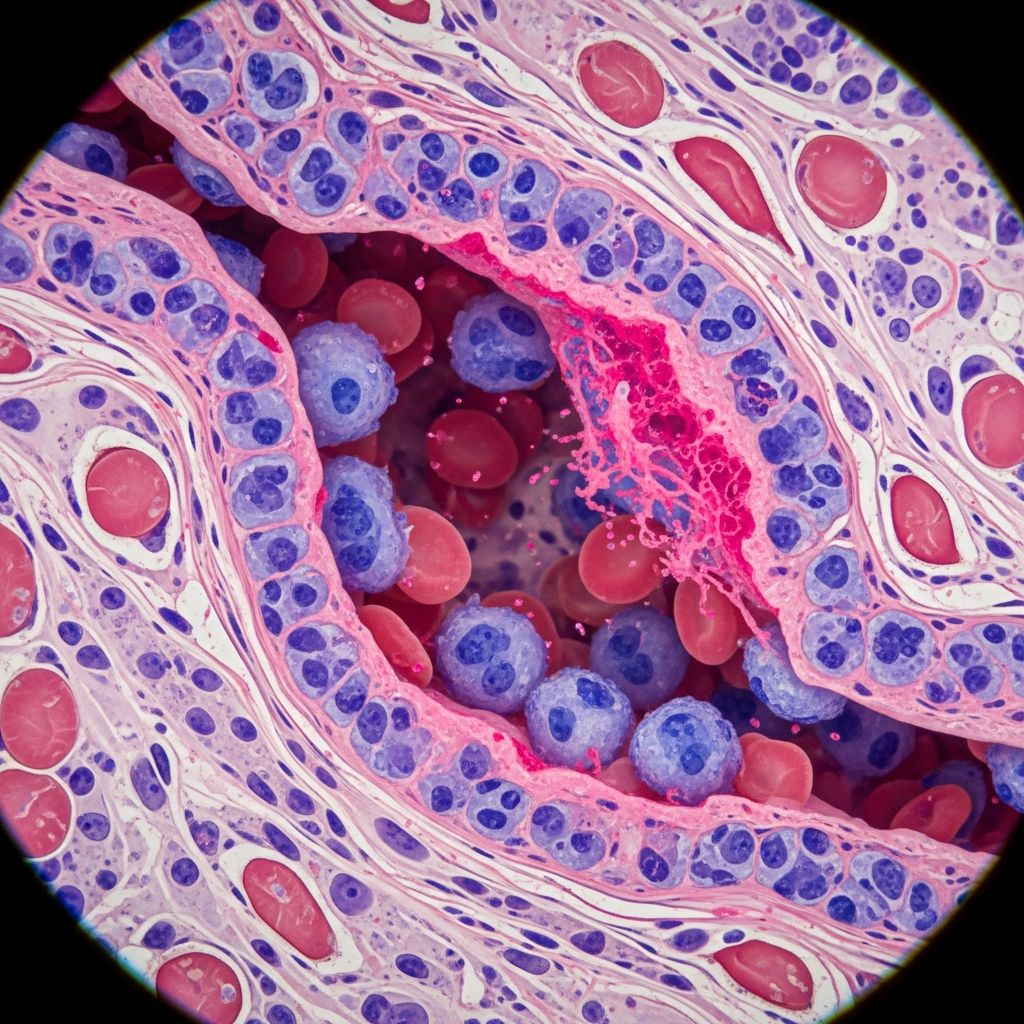
Leukocytoclastic vasculitis (LCV), also known as hypersensitivity vasculitis, represents a small-vessel vasculitis primarily affecting the post-capillary venules in the dermis. It is histopathologically defined by a neutrophilic infiltrate around and within vessel walls, accompanied by fibrinoid necrosis, leukocytoclasia (nuclear dust), and red blood cell extravasation. The term ‘leukocytoclastic’ derives from the fragmentation of neutrophils, resulting in nuclear debris characteristic of acute lesions.
LCV manifests clinically as palpable purpura, typically on the lower extremities, due to immune complex deposition triggering an inflammatory cascade. While predominantly cutaneous, systemic involvement can occur, affecting kidneys, joints, or gastrointestinal tract. Incidence is approximately 30 cases per million annually, with equal gender distribution. Common triggers include infections, drugs (e.g., antibiotics, NSAIDs), and autoimmune diseases.
Microscopic
Low power
At low magnification (x4-x10), LCV shows perivascular and interstitial infiltrates of neutrophils throughout the dermis, with striking involvement of the superficial papillary dermis. Affected vessels exhibit swollen endothelial cells and fibrinoid necrosis, leading to red blood cell leakage and purpura. The pattern spares the epidermis and deeper dermis unless chronic changes supervene.
Medium power
Higher magnification (x20-x40) reveals key features: fibrinoid necrosis as brightly eosinophilic material replacing vessel walls, karyorrhexis (leukocytoclasia) with nuclear dust, and endothelial swelling. Neutrophils predominate early, with variable eosinophils and lymphocytes. Extravasated erythrocytes create the purpuric hue, while occasional thrombi may form.
High power
Oil immersion (x100) highlights granular nuclear dust from fragmented neutrophils, fibrin tactoids within vessels, and perivascular haemorrhage. Endothelial cells appear reactive with enlarged nuclei. These findings confirm acute LCV, distinguishing it from chronic or pauci-immune vasculitides.
Immunohistochemistry and special stains
Direct immunofluorescence (DIF) on fresh frozen tissue is crucial, demonstrating granular C3 and IgM deposits in vessel walls (lump-hump pattern), indicative of immune complex vasculitis. IgG and IgA may also deposit, especially in IgA vasculitis overlap. IgA-dominant cases suggest Henoch-Schönlein purpura.
Special stains include Gram, PAS, GMS, and AFB for infections; Congo red for amyloid (negative in LCV); and phosphotungstic acid-haematoxylin for fibrin. CD61 highlights platelets in thrombi, while myeloperoxidase stains neutrophils. These aid in excluding mimics like infections or thrombotic disorders.
| Stain/Test | Findings in LCV | Differential Utility |
|---|---|---|
| Direct Immunofluorescence | Granular IgM/C3 in vessels | vs. Pauci-immune (ANCA) |
| Gram/GMS | Negative | Exclude infection |
| Congo Red | Negative | vs. Amyloid angiopathy |
Electron microscopy
Ultrastructural examination reveals electron-dense deposits in vessel walls and interstitium, confirming immune complexes. Neutrophils show degranulation with loss of cytoplasmic granules, endothelial cells exhibit vacuolisation, and widened interendothelial junctions permit RBC extravasation. These findings support the immune-mediated pathogenesis but are rarely needed clinically.
Differential diagnosis
LCV must be distinguished from other vasculopathies based on histopathology.
Vasculitis with vessel wall abnormalities and inflammation
- Urticarial vasculitis: Similar but with dermal oedema and urticarial clinical picture.
- Erythema elevatum diutinum: Neutrophilic with fibrosis in chronic lesions.
- Sweet syndrome: Dense dermal neutrophilic infiltrate without vasculitis.
Related Stories



Vasculitis with vessel wall abnormalities without inflammation
- Pigmented purpuric dermatoses: Lymphocytic with haemosiderin, no necrosis.
- Scurvy: Perifollicular haemorrhage, corkscrew hairs.
- Trauma/steroid purpura: No inflammation.
Non-inflammatory purpura
- Thrombocytopenia: Normal vessels, reduced platelets.
- Coagulopathies: Fibrin thrombi without inflammation.
Systemic vasculitides like granulomatosis with polyangiitis show granulomatous inflammation or pauci-immunity. Clinical correlation and DIF are pivotal.
Frequently asked questions
What is the hallmark histological feature of leukocytoclastic vasculitis?
Fibrinoid necrosis of small vessels with neutrophilic infiltrate and leukocytoclasia.
Where do lesions typically occur?
Lower legs (gravity-dependent), palpable purpura.
What immunofluorescence pattern is seen?
Granular deposits of IgM and C3 in vessel walls.
Is biopsy always required?
Yes, to confirm diagnosis and exclude mimics. Punch biopsy of recent lesion preferred.
What are common causes?
Idiopathic (50%), drugs, infections, connective tissue diseases.
How is it treated?
Remove trigger, leg elevation, NSAIDs/steroids for symptoms; immunosuppressants if systemic.
Clinical features and management
Patients present with acute, painful purpura on legs, sometimes burning or itchy. Systemic symptoms like arthralgia (50%), fever, or renal involvement warrant full workup: CBC, ESR, ANA, hepatitis serology, urinalysis. Biopsy is diagnostic gold standard.
Mild cases self-resolve in 3-4 weeks with rest and elevation. Severe/recurrent: prednisone 1mg/kg tapered; colchicine or dapsone alternatives. Monitor for scarring or hyperpigmentation.
References
- Dermatologic Diagnosis: Leukocytoclastic Vasculitis — PMC – NIH. 2015-07-01. https://pmc.ncbi.nlm.nih.gov/articles/PMC4500485/
- Leukocytoclastic Vasculitis — Rheumatology Advisor. 2023-01-01. https://www.rheumatologyadvisor.com/ddi/leukocytoclastic-vasculitis/
- Leukocytoclastic Vasculitis — JAMA Dermatology. 1999-01-01. https://jamanetwork.com/journals/jamadermatology/fullarticle/535664
- Cutaneous Small-Vessel Vasculitis — Vasculitis Foundation. 2024-01-01. https://vasculitisfoundation.org/education/vasculitis-types/cutaneous-small-vessel-vasculitis/
- Leukocytoclastic Vasculitis: Depiction of the Diagnostic Dilemma — Cureus. 2021-01-01. https://www.cureus.com/articles/68762-leukocytoclastic-vasculitis-depiction-of-the-diagnostic-dilemma
Similar Articles








Read full bio of Sneha Tete