Leukoderma: 6 Key Causes, Diagnosis And Treatment Strategies
Understanding leukoderma: causes, clinical features, diagnosis, and treatment of white skin patches due to melanin loss.
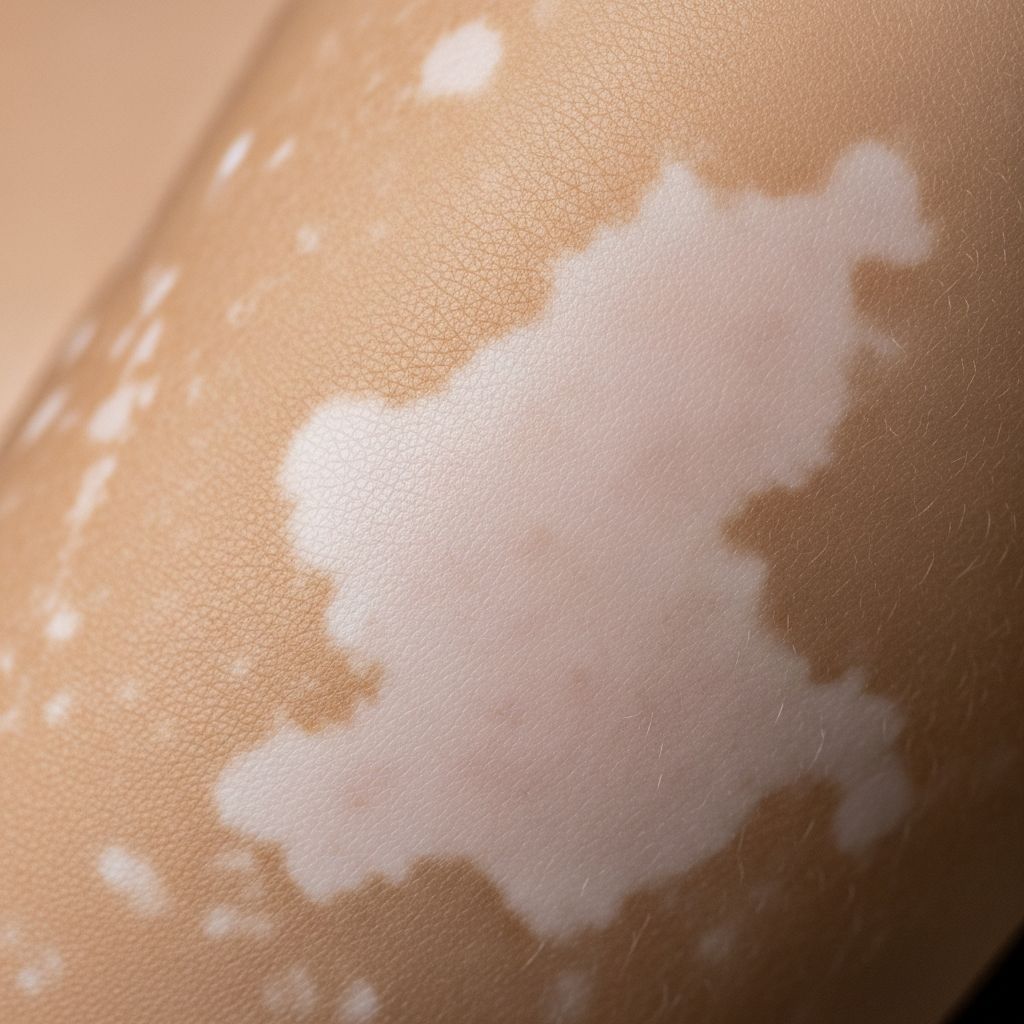
Leukoderma, also called achromoderma, is a clinical sign describing a localised area of white depigmented skin due to total loss of epidermal melanin. It is not a diagnosis in itself and has many causes, requiring distinction from hypopigmentation, which involves reduced rather than total pigment loss.
Introduction
Leukoderma represents the visible outcome of disrupted melanin production or melanocyte function in the epidermis. Melanocytes, the pigment-producing cells, may be absent, present but unable to synthesize melanin, or unable to transfer it to keratinocytes (skin cells). This condition manifests as stark white patches contrasting sharply with surrounding skin, often prompting cosmetic concerns.
Unlike hypopigmentation, where skin appears pale due to partial melanin reduction, leukoderma shows complete depigmentation. It can arise from diverse etiologies, including chemical exposures, genetic factors, inflammatory processes, or neoplastic conditions, making accurate identification of the underlying cause essential for management.
Demographics
Leukoderma affects individuals of all ages, races, and both sexes. A perceived female predominance may stem from greater cosmetic concerns among women, leading to higher reporting rates. The condition is more visually apparent in darker skin types (skin of colour) compared to lighter ethnic white skin, though true prevalence rates remain challenging to quantify due to underdiagnosis in fair-skinned populations.
In occupational settings, such as chemical industries, it may disproportionately impact workers with genetic susceptibility, regardless of ethnicity. Cosmetic-related cases often involve facial areas, aligning with product application sites.
Causes
Leukoderma results from melanocyte destruction or dysfunction. Key causes include:
- Chemical or contact leukoderma: Exposure to depigmenting agents, particularly phenolic and catecholic derivatives, destroys melanocytes. Common in workplaces (e.g., leather manufacturing, rubber production) or via cosmetics. Monobenzyl ether of hydroquinone (MBH), para-tertiary butylphenol (PTBP), para-phenylenediamine (PPD) in hair dyes, and azo dyes in facial products are frequent culprits. Genetic predisposition increases susceptibility, explaining variable responses to the same exposure.
- Idiopathic or vitiligo-associated: Autoimmune destruction of melanocytes, potentially triggered or exacerbated by chemicals.
- Post-inflammatory: Following resolution of dermatitis, psoriasis, or lichen planus.
- Congenital patterned: Stable forms like piebaldism.
- Neoplastic: Melanoma-associated leukoderma as regression sign.
- Infectious or other: Guttate leukoderma in Darier disease, onchocerciasis, or leprosy.
Chemical leukoderma often starts at contact sites but can spread remotely (confetti-like spots), mimicking vitiligo. PPD in hair dyes or henna tattoos commonly affects hairlines, faces, or feet; PTBP in deodorants targets axillae.
Clinical features
Leukoderma appears as well-demarcated macules or patches of white skin with normal surface texture or mild epidermal atrophy. The patches are asymptomatic, though underlying conditions may cause itch or scaling.
- Contact leukoderma: Initial white patch at exposure site, spreading to multiple small confetti-sized spots beyond. Face (eyelids), hair margins, hands, or feet commonly affected. Sharply defined margins; no scaling. Wood’s lamp accentuates depigmentation.
- Guttate leukoderma: Small droplet-like white spots, early Darier disease sign in skin of colour, preceding keratotic papules.
- Melanoma-associated: White regression areas in primary lesion or distant patches.
Itch may precede or accompany patches more in chemical cases than vitiligo. No preceding allergic dermatitis in most.
Variation in skin types
Leukoderma starkly contrasts in darker phototypes (Fitzpatrick IV-VI), appearing as vivid white patches highly visible on brown or black skin. In lighter types (I-III), patches blend subtly, often requiring UV light for detection. This visibility drives higher psychological impact and seeking care in skin of colour populations.
Chemical leukoderma from cosmetics like hair dyes shows no phototype preference but is reported more in those using such products frequently.
Complications
- Cosmetic and psychological: Visible patches cause distress, social stigma, especially on face or hands.
- Progression: Chemical cases may evolve to widespread vitiligo-like depigmentation despite avoidance.
- Associated conditions: Thyroid/liver disease in some; increased non-melanoma skin cancer risk in depigmented areas due to UV vulnerability.
- Koebner phenomenon: Trauma-induced spread in susceptible individuals.
Related Stories



Diagnosis
Diagnosis relies on history (exposures, products), clinical exam, and tools:
- Wood’s lamp: Enhances depigmentation visibility (coral pink-white glow).
- Dermoscopy: Absent pigment network, sharp borders.
- Biopsy: Confirms absent melanocytes/melanin; indistinguishable from vitiligo histologically.
- Patch testing: Identifies chemical culprits (e.g., PPD).
History of chemical contact differentiates from idiopathic vitiligo.
Differential diagnoses
| Condition | Key Distinguishing Features |
|---|---|
| Vitiligo | Autoimmune, symmetrical, family history; no chemical trigger. |
| Hypopigmentation | Pale, not stark white; reduced melanin. |
| Piebaldism | Congenital, stable white forelock/patches. |
| Post-inflammatory | History of inflammation; irregular borders. |
| Tinea versicolor | Scaling, fungal KOH+; yellow-white under Wood’s. |
| Idiopathic guttate hypomelanosis | Small, sun-exposed; anogenital in elderly. |
Treatment
Treatment targets underlying cause:
- Avoidance: Key for chemical/contact; repigmentation often spontaneous if early and no vitiligo history.
- Topicals: Corticosteroids, calcineurin inhibitors (tacrolimus) hasten recovery.
- Phototherapy: Narrow-band UVB, PUVA for persistent cases.
- Camouflage: Makeup for cosmetics.
- Surgical: Rare, for stable patches (grafts).
MBH deliberately used for vitiligo depigmentation elsewhere.
Outcome
Reversible if cause removed early (e.g., chemical avoidance). Congenital/scarring forms persist. Chemical cases risk vitiligo progression; monitor long-term. Repigmentation slow, perifollicular.
Frequently Asked Questions (FAQs)
Q: What is the difference between leukoderma and vitiligo?
A: Leukoderma is a descriptive sign of white patches from melanin loss with various causes; vitiligo is a specific autoimmune disease causing similar patches.
Q: Can chemical leukoderma be reversed?
A: Yes, often with strict avoidance of the chemical; phototherapy aids if needed.
Q: Is leukoderma contagious?
A: No, it is not infectious; caused by non-contagious factors like chemicals or autoimmunity.
Q: Does hair dye cause permanent white patches?
A: PPD in dyes can cause contact leukoderma; reversible in most with avoidance, but may spread.
Q: How is leukoderma diagnosed?
A: Via clinical exam, history, Wood’s lamp; biopsy if unclear.
References
- Contact leukoderma — DermNet NZ. 2023. https://dermnetnz.org/topics/contact-leukoderma
- Leukoderma — DermNet NZ. 2023. https://dermnetnz.org/topics/leukoderma
- Chemical leukoderma — eScholarship, University of California. 2010-01-01. https://escholarship.org/uc/item/6nc1w0nk
- Chemical Leukoderma — Dermatitis Journal (Sage). 2014. https://journals.sagepub.com/doi/10.1097/DER.0000000000000167
Similar Articles








Read full bio of medha deb