Leyland Cypress: Expert Guide To Uses, Risks, And Care
Exploring the Leyland cypress tree: its rapid growth, ornamental uses, and emerging role in allergic contact dermatitis and respiratory issues.
Author: Hon A/Prof Marius Rademaker, Dermatologist, Hamilton, New Zealand. 1999. Updated January 2026
| Common name | Cypress |
|---|---|
| Botanical name | Cupressocyparis leylandii |
| Family | Cupressaceae |
What is Leyland cypress?
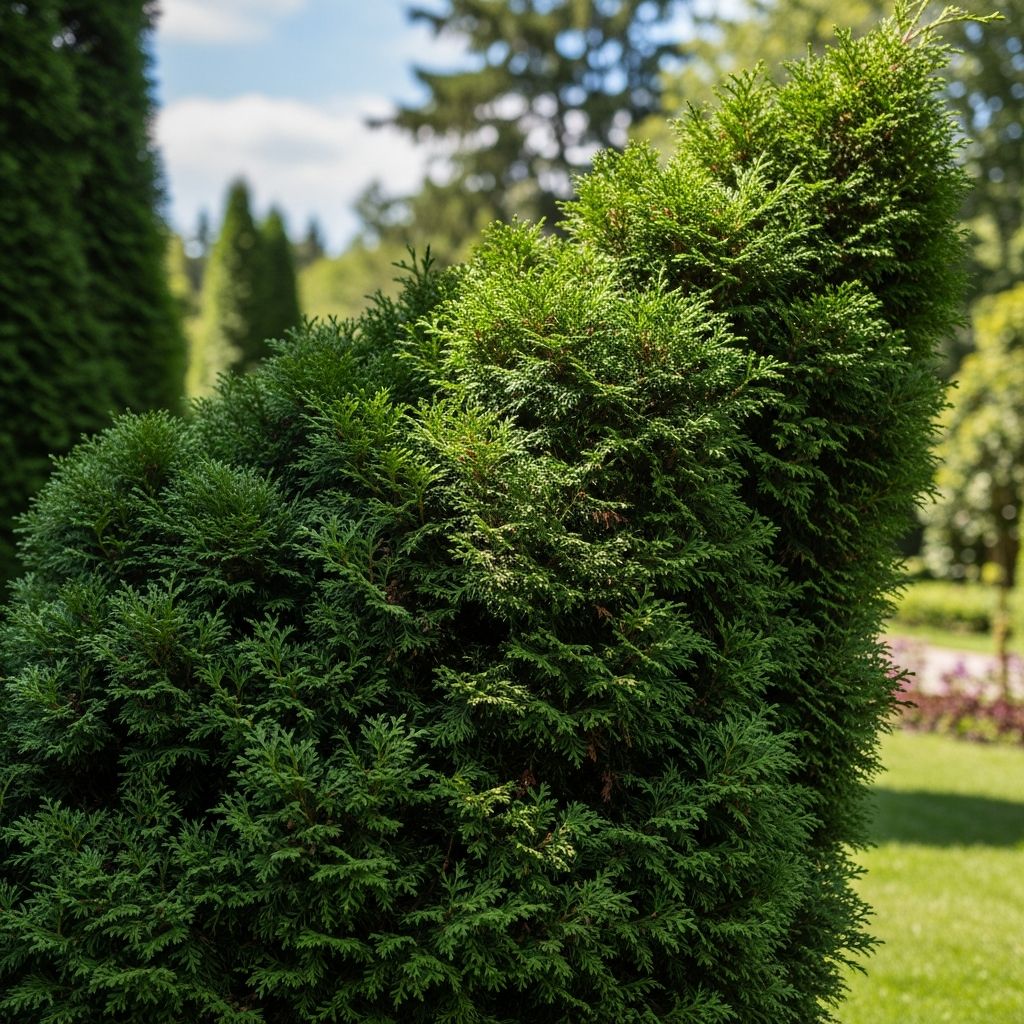
Leyland cypress (X Cupressocyparis leylandii), also known simply as Leylandii, is a fast-growing evergreen conifer widely planted for ornamental purposes, windbreaks, and even as Christmas trees. This hybrid tree results from a cross between Monterey cypress (Cupressus macrocarpa) and Nootka cypress (Chamaecyparis nootkatensis, formerly X Cupressus nootkatensis), first developed in England in 1888 at Leighton Hall, Powys. Its rapid growth rate of approximately 1 meter per year makes it popular for hedging and screening, though it can reach heights of 20-30 meters, often leading to disputes over boundary hedges in residential areas.
The tree’s origin traces back to temperate regions, with ancestral roots in the eastern Mediterranean and coastal forests of California and Alaska. Historical accounts, such as those from Roman philosopher Plinius, describe cypress trees sprouting spontaneously on Mount Ida in Crete when the soil is disturbed, highlighting their resilience and adaptability. Today, Leyland cypress is cultivated globally, but its pollen and plant materials are increasingly recognized as allergens causing skin, respiratory, and ocular issues, particularly in Mediterranean climates.
Description of Leyland cypress
Leyland cypress is characterized by its vigorous growth and distinctive morphology. The tree can attain heights of 20-30 meters, with a conical shape when young that broadens with age. Its bark starts as reddish-brown and scaly in youth, maturing to gray, weathered strips that peel in longitudinal fashion. The foliage consists of fine, scale-like leaves arranged in decussate pairs—opposite pairs at right angles to those above and below—colored green to bluish-green, emitting a pleasant resinous aroma when crushed.
Reproductive structures are monoecious, meaning both male and female flowers occur on the same tree. Male cones are small, reddish-brown, and terminal, releasing abundant pollen in spring. Female cones are slightly larger, round, and yellow-green, developing into small brown cones measuring 1-2 cm in diameter. These cones contain winged seeds dispersed by wind. The tree’s dense foliage and rapid vertical growth make it ideal for privacy screens, but its shallow root system can cause structural damage to nearby buildings and pavements if not managed.
In cultivation, Leyland cypress thrives in well-drained soils and full sun, tolerating coastal conditions and moderate drought once established. However, it is susceptible to diseases like cypress canker (Seiridium cardinale) and honey fungus (Armillaria mellea), which can defoliate or kill mature specimens. Pruning is essential for hedges, typically done twice yearly to maintain shape and density, though severe topping can lead to bare patches.
Uses of Leyland cypress
Leyland cypress is extensively used in landscaping due to its speed of growth and evergreen nature. Key applications include:
- Ornamental planting: As specimen trees in large gardens or parks for year-round greenery.
- Windbreaks and hedges: Forms impenetrable screens up to 15 meters high, popular in rural and suburban settings.
- Christmas trees: Increasingly favored for its dense foliage and pleasant scent over traditional firs.
- Forest plantations: In some regions for timber, though its wood is soft and mainly used for fencing or pulp.
Despite these benefits, its aggressive growth has led to legal restrictions in places like the UK, where hedges over 2 meters require neighbor consent. Environmentally, it supports wildlife like birds nesting in its branches but can outcompete native flora in plantations.
Related Stories



Allergens in Leyland cypress
The primary allergens in Leyland cypress are volatile organic compounds found in its pollen, leaves, bark, and sap. Key sensitizers include:
- Carvacrol: A phenolic monoterpene with antimicrobial properties but potent skin irritant.
- Terpenes: Monoterpenes like limonene and pinene responsible for the tree’s aroma, known contact allergens.
- Sesquiterpenes: Such as costunolide and dehydrocostus lactone, implicated in Compositae and conifer allergies.
- Possibly daucadienes or acoradienes: Less common polyacetylenes potentially contributing to reactivity.
Pollen grains are small (20-30 microns), wind-dispersed, and abundant from February to April in the Northern Hemisphere, coinciding with peak allergy seasons. Bark contains colophony-like resins, while sawdust from pruning generates respirable particles laden with these compounds.
Clinical features of Leyland cypress allergy
Contact with Leyland cypress can elicit two main reaction types: irritant and allergic.
Irritant contact dermatitis: Acute exposure to sap or crushed foliage causes immediate burning, erythema, and vesiculation, resolving without intervention. Common in gardeners pruning without gloves.
Allergic contact dermatitis (ACD): Delayed type IV hypersensitivity, peaking 48-72 hours post-exposure. Features include:
- Pruritic, erythematous papules and vesicles on exposed sites (hands, forearms, face).
- Linear streaking from sap contact.
- Chronic lichenification in frequent handlers like nursery workers.
Bark handling has been linked to ACD via cross-reactivity to colophony (rosin), used in adhesives and soldering fluxes. Respiratory effects are rising: pollen induces asthma, rhinoconjunctivitis, and allergic rhinitis, especially in Mediterranean areas where cypress pollen constitutes 20-30% of seasonal aerobiology. Symptoms include sneezing, itchy eyes, wheezing, and dyspnea during pollination.
Cross reactions to Leyland cypress
Leyland cypress shares allergens with other conifers and unrelated plants:
- Colophony (rosin): From pine resin; positive in 70% of tree ACD cases.
- Other cypresses: Cupressus sempervirens (Mediterranean cypress), C. arizonica.
- Chamaecyparis and Thuja species: False cypresses used in landscaping.
- Fragrance mix: Due to terpenes like limonene.
- Compositae plants: Via sesquiterpenes (e.g., chrysanthemum, ragweed).
Patients with woodworker occupational dermatitis often react multiply to conifer extracts.
Patch testing for Leyland cypress allergy
Diagnosis of ACD employs epicutaneous patch testing:
| Allergen | Concentration | Vehicle |
|---|---|---|
| Colophony | 20% | Pet. |
| Sesquiterpene lactone mix | 0.1% | Pet. |
| Leyland cypress sawdust | 10-20% | Pet. or water |
| Ether extract of leaves | 1-10% | Pet. |
Read at D2 (day 2) and D4. Positive reactions (++ or +++) confirm sensitization. Prick testing or specific IgE assays diagnose respiratory allergy. Avoidance is primary management; topical corticosteroids treat dermatitis, inhaled therapies for asthma.
Frequently Asked Questions (FAQs)
What is Leyland cypress used for?
Primarily as fast-growing hedges, windbreaks, ornamental trees, and Christmas trees due to its dense evergreen foliage.
Can Leyland cypress cause skin rashes?
Yes, it causes irritant and allergic contact dermatitis from sap, pollen, and bark, presenting as itchy vesicles on hands and face.
Does Leyland cypress trigger asthma?
Increasingly yes, its pollen is a major cause of occupational asthma and seasonal rhinoconjunctivitis, especially in Mediterranean regions.
How do you test for Leyland cypress allergy?
Patch testing with colophony 20% pet., sesquiterpene mix 0.1% pet., sawdust 10-20% pet., and leaf extracts.
What plants cross-react with Leyland cypress?
Other cypresses, Chamaecyparis, thuja, colophony, and Compositae plants due to shared terpenes and sesquiterpenes.
How fast does Leyland cypress grow?
Up to 1 meter per year, reaching 20-30 meters tall, making it ideal but problematic for tall hedges.
References
- Leyland Cypress — DermNet NZ (Hon A/Prof Marius Rademaker). 1999 (updated 2026). https://dermnetnz.org/topics/leyland-cyprus
- Plants that Cause Skin Problems — DermNet NZ. 1999. https://dermnetnz.org/topics/plants-that-cause-skin-problems
- Cupressus and Cupressocyparis Pollen Allergy — World Health Organization (WHO) Allergen Nomenclature. 2024. http://www.allergen.org/tree.pdf
- Occupational Contact Dermatitis from Cypress Trees — Contact Dermatitis Journal (Wiley). 2023-10-15. https://doi.org/10.1111/cod.14412
- Cypress Pollen as a Cause of Allergic Disease — European Academy of Allergy and Clinical Immunology (EAACI). 2025-01-10. https://www.eaaci.org/resources
Similar Articles








Read full bio of medha deb