Lhermitte’s Sign: Causes, Symptoms, and Treatment
Understanding the electric shock sensation in the spine and its underlying causes.
What Is Lhermitte’s Sign?
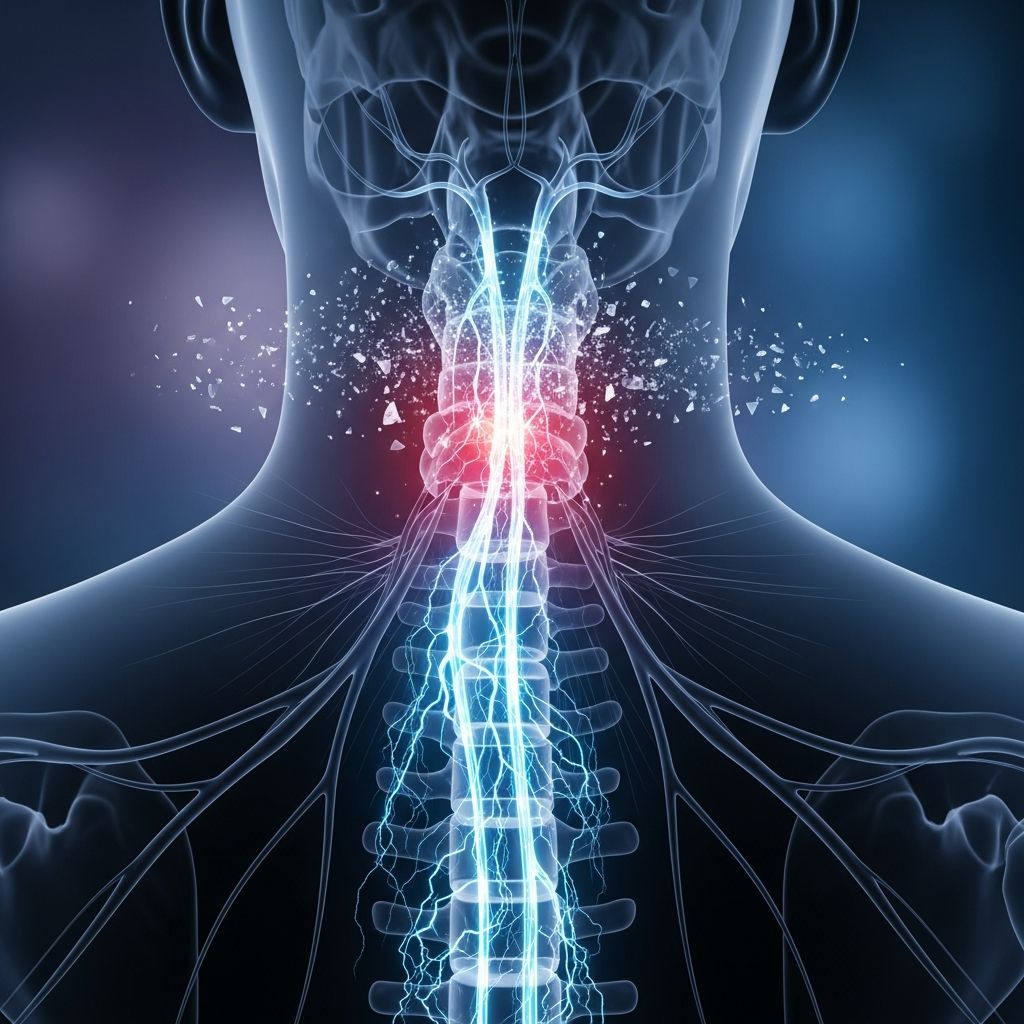
Lhermitte’s sign, also known as the barber chair phenomenon, is a sudden, uncomfortable sensation that feels like an electric shock or buzzing running down the neck and spine. This sensation is typically triggered by flexing the neck, such as when bringing the chin to the chest. While it is most commonly associated with multiple sclerosis (MS), Lhermitte’s sign can also occur in other conditions affecting the spinal cord.
Causes of Lhermitte’s Sign
Lhermitte’s sign is not a disease itself but rather a symptom indicating an underlying issue with the spinal cord or brainstem. The most frequent cause is multiple sclerosis, but other conditions can also lead to this sensation. These include:
- Multiple sclerosis (MS)
- Cervical spondylotic myelopathy
- Transverse myelitis
- Behcet’s disease
- Systemic lupus erythematosus (SLE)
- Herpes zoster
- Arnold-Chiari malformation
- Tumor progression causing spinal cord compression
- Radiculopathy
- Cervical spondylitis
- Syringomyelia
- Vitamin B12 deficiency
- Nitric oxide toxicity
- Subacute combined degeneration of the cord
- Radiation myelopathy
- Chemoradiation
- Physical trauma
- Spinal cord injury
- Parasitic invasion of the spinal cord
- Arachnoiditis
Pathophysiology
The pathophysiology of Lhermitte’s sign is related to the demyelination of the dorsal columns of the cervical spine. When the myelin sheath is damaged, the nerves become hypersensitive and can fire abnormally when the neck is flexed. This movement activates the ascending spinothalamic tracts at the cervical level, which have been sensitized by the underlying process causing the cervical spine lesion. The sensation is thought to result from ectopic firing and hyperexcitability of demyelinated sensory neurons, affecting the ascending spinothalamic nociceptive signal transduction and impaired function of inhibitory GABAergic interneurons. Other proposed molecular mechanisms include downstream activated microglia that enhance pro-inflammatory cytokine signaling, activation of proteins like bradykinin with B1 and B2 receptors, upregulation of Wnt signaling, CREB phosphorylation, and other transcription factors in the CNS that augment hyperexcitability and pain.
Symptoms and Clinical Presentation
The primary symptom of Lhermitte’s sign is a sudden, sharp, electric shock-like sensation that travels down the neck and spine, often extending into the arms and legs. This sensation is typically brief, lasting only a few seconds. Patients may also experience:
- Numbness or tingling
- Lack of coordination
- Trouble with walking or not being able to walk at all
- Weakness
- Partial or complete loss of vision, usually in one eye at a time, often with pain during eye movement
Diagnosis
There is no routine laboratory, radiological, or ancillary test specifically for Lhermitte’s sign. The diagnosis is primarily based on the patient’s history and physical examination. However, some prospective studies have linked the sign with radiographic and electrodiagnostic findings. For example, one study showed a correlation between the clinical signs, the presence of a demyelinating lesion on cervical MRI, and the conduction delay of median and tibial somatosensory evoked potentials (SSEP). The results were clinically and statistically significant. The consensus is that the history and physical exam findings are sufficient for diagnosis.
Differential Diagnosis
The differential diagnosis of Lhermitte’s sign includes a wide range of conditions, such as:
- Tumor progression causing spinal cord compression
- Radiculopathy
- Cervical spondylitis
- Transverse myelitis
- Subacute combined degeneration of the cord
- Radiation myelopathy
- Parasitic invasion of the cord
- Arnold-Chiari malformation
- High dose chemoradiation (cisplatin)
- Trauma
- Arachnoiditis
- Herpes zoster toxicity
- Syringomyelia
- Behcet disease
- Vitamin B12 deficiency
- Nitric oxide toxicity
- Systemic lupus erythematosus
- Post-dural puncture headache
Treatment and Management
The treatment of Lhermitte’s sign depends on the underlying cause. For multiple sclerosis, disease-modifying therapies and symptomatic treatments are used. For other conditions, the focus is on managing the specific cause. Some general strategies include:
Related Stories



- Medications to reduce neuropathic pain, such as gabapentin, pregabalin, or amitriptyline
- Physical therapy to improve strength and coordination
- Occupational therapy to assist with daily activities
- Management of underlying conditions, such as vitamin B12 deficiency or spinal cord compression
- Supportive care, including pain management and psychological support
Prognosis
The prognosis for Lhermitte’s sign varies depending on the underlying cause. In multiple sclerosis, the sign may improve with disease-modifying therapies and symptomatic treatments. For other conditions, the prognosis is generally good if the underlying cause is treated effectively. However, in some cases, the sensation may persist or recur, requiring ongoing management.
Frequently Asked Questions (FAQs)
What does Lhermitte’s sign feel like?
Lhermitte’s sign feels like a sudden, sharp, electric shock or buzzing sensation that travels down the neck and spine, often extending into the arms and legs. It is typically brief, lasting only a few seconds.
Can you have Lhermitte’s sign without multiple sclerosis?
Yes, Lhermitte’s sign can occur in other conditions affecting the spinal cord, such as transverse myelitis, spinal cord injury, or vitamin B12 deficiency.
What triggers Lhermitte’s sign?
The main trigger of Lhermitte’s sign is bending or flexing the neck forward, such as when putting your chin to your chest.
Is Lhermitte’s sign a sign of multiple sclerosis?
Lhermitte’s sign is often associated with multiple sclerosis, but it can also be an early sign of other spinal cord conditions. If you experience this sensation, it is important to consult a healthcare provider for a proper diagnosis.
How is Lhermitte’s sign diagnosed?
Lhermitte’s sign is diagnosed based on the patient’s history and physical examination. Additional tests, such as MRI or somatosensory evoked potentials, may be used to confirm the underlying cause.
What is the treatment for Lhermitte’s sign?
The treatment for Lhermitte’s sign depends on the underlying cause. General strategies include medications to reduce neuropathic pain, physical therapy, occupational therapy, and management of underlying conditions.
Can Lhermitte’s sign be prevented?
Preventing Lhermitte’s sign involves managing the underlying condition. For multiple sclerosis, this includes disease-modifying therapies and symptomatic treatments. For other conditions, it involves addressing the specific cause.
When should I see a doctor?
If you experience a sudden, sharp, electric shock-like sensation down your neck and spine, especially if it is accompanied by other symptoms such as numbness, weakness, or difficulty walking, you should see a healthcare provider for a proper evaluation.
References
- Lhermitte’s Sign — StatPearls, NCBI Bookshelf. 2023. https://www.ncbi.nlm.nih.gov/books/NBK493237/
- Lhermitte’s Sign: What It Feels Like, Causes, and More — Healthline. 2023. https://www.healthline.com/health/multiple-sclerosis/lhermittes-sign
- Lhermitte’s Sign — Physiopedia. 2023. https://www.physio-pedia.com/Lhermitte’s_Sign
- Lhermitte’s sign — MS Trust. 2023. https://mstrust.org.uk/a-z/lhermittes-sign
- Multiple sclerosis – Symptoms and causes — Mayo Clinic. 2023. https://www.mayoclinic.org/diseases-conditions/multiple-sclerosis/symptoms-causes/syc-20350269
- Lhermitte’s sign — MS Society. 2023. https://www.mssociety.org.uk/about-ms/signs-and-symptoms/pain/lhermittes-sign
- Lhermitte’s Sign in MS: What It Is & How To Treat It — WebMD. 2023. https://www.webmd.com/multiple-sclerosis/lhermittes-sign-what-is-how-treat
- Lhermitte’s Sign — Multiple Sclerosis Foundation. 2023. https://msfocus.org/Magazine/Magazine-Items/Posted/Lhermitte-s-Sign
Similar Articles








Read full bio of Sneha Tete