Lichen Nitidus Pathology: Histological Features
Understanding the distinctive microscopic pathology and histological characteristics of lichen nitidus.
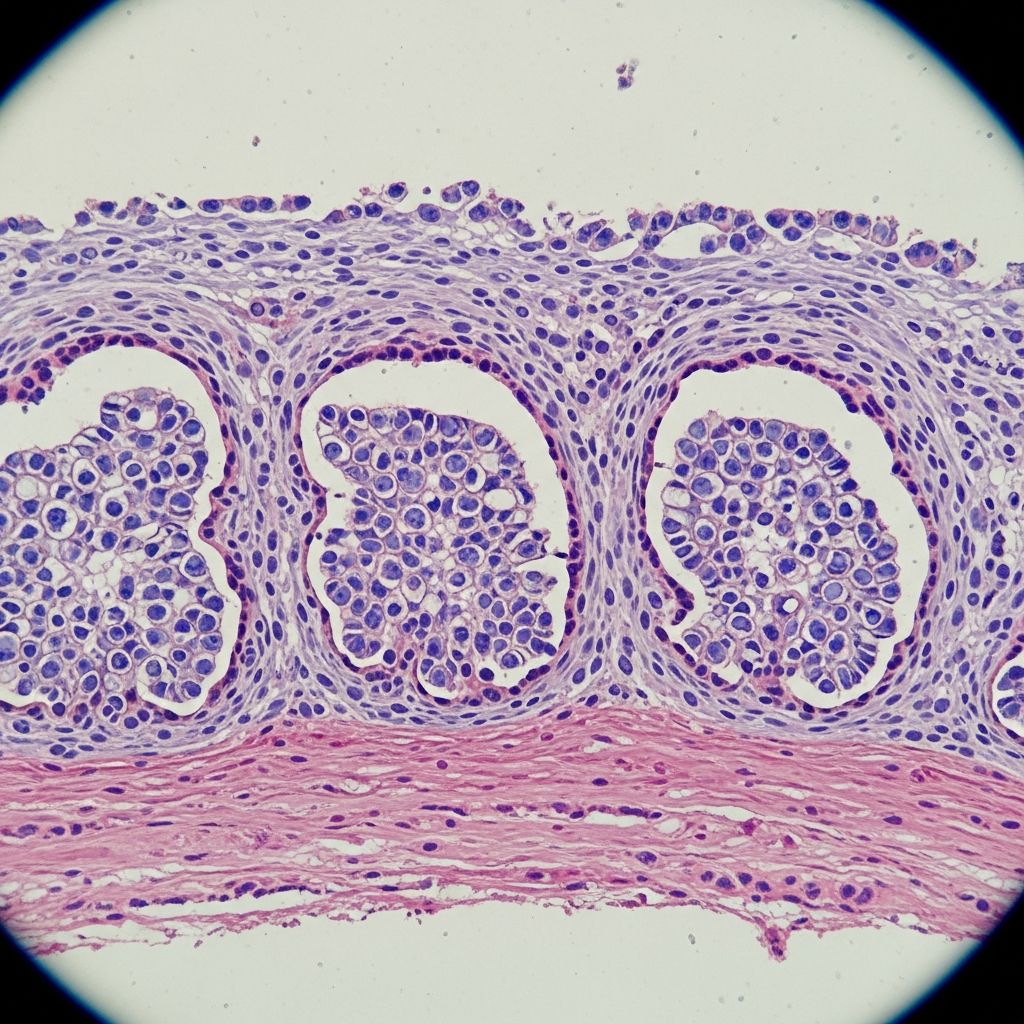
Introduction to Lichen Nitidus Pathology
Lichen nitidus is an uncommon inflammatory skin condition that presents with characteristic microscopic and histological features distinguishing it from other lichenoid dermatoses. While clinically apparent as tiny skin-colored papules, the pathological examination reveals distinctive patterns that are essential for accurate diagnosis and understanding the disease mechanism. The histopathological appearance of lichen nitidus is remarkably consistent and identifiable, making skin biopsy a reliable diagnostic tool when clinical presentation alone is uncertain.
Scanning Power Microscopy Findings
At low magnification, lichen nitidus demonstrates a characteristic architectural pattern that immediately suggests the diagnosis. The scanning power view reveals a focal dermal inflammatory infiltrate that is distinctly enclosed within collarettes of epidermal acanthosis. This distinctive arrangement creates the foundation for the classic histological appearance that pathologists recognize across cases.
The focal nature of the inflammatory process is a defining feature, with lesions remaining circumscribed rather than diffuse. The dermis shows a well-demarcated area of inflammation concentrated primarily in the papillary dermis, often extending slightly into the superficial reticular dermis. This localized presentation contrasts with other lichenoid conditions that may demonstrate more extensive or diffuse infiltration patterns.
Epidermal Changes and Architecture
The epidermis overlying the inflammatory infiltrate undergoes characteristic alterations that are integral to the pathological diagnosis. Several distinctive features are observed at higher magnification:
- Epidermal Acanthosis: The epidermis displays prominent acanthosis with elongated rete ridges that appear to extend downward, creating the appearance of enclosing or grasping the underlying inflammatory infiltrate.
- Thinning of Overlying Epidermis: The epidermis directly above the inflammatory infiltrate becomes thinned and flattened in focal areas, sometimes showing focal disruption.
- Basal Cell Liquefaction: Vacuolar degeneration or liquefaction of the basal cell layer occurs, with disruption of the dermal-epidermal junction.
- Parakeratosis: Focal areas of parakeratosis may be observed, indicating incomplete keratinization of the superficial epithelium.
- Focal Erosion: In cases showing evidence of excoriation from scratching (Köbner phenomenon), focal erosion of the epidermis may be present.
The Characteristic “Ball and Claw” Appearance
One of the most distinctive and diagnostically significant features of lichen nitidus pathology is the “ball and claw” or “claw and ball” pattern. This unique histological appearance occurs because the elongated rete ridges of the epidermis appear to grasp or encircle the circumscribed ball-like inflammatory infiltrate located in the upper dermis. The rete ridges seem to clasp around the lesion, creating this characteristic visual impression at moderate magnification.
This feature is remarkably consistent across cases and serves as a hallmark identifier for pathologists examining tissue specimens. The pattern becomes particularly clear when examining serial sections through the lesion, as the three-dimensional architecture reveals how the epidermal ridges surround the dermal infiltrate. The “ball and claw” appearance is so characteristic that its presence strongly supports the diagnosis of lichen nitidus and helps differentiate it from histologically similar conditions.
Related Stories



Dermal Inflammatory Infiltrate Characteristics
Higher power examination of the dermal inflammatory infiltrate reveals its precise cellular composition and organization. The infiltrate demonstrates the following characteristics:
- Lymphohistiocytic Composition: The infiltrate is composed predominantly of lymphocytes and histiocytes, representing a cell-mediated immune response typical of lichenoid dermatoses.
- Well Circumscribed Boundaries: The infiltrate maintains distinct, well-demarcated borders rather than gradually blending into surrounding dermis, emphasizing its focal nature.
- Multinucleated Giant Cells: A notable feature is the presence of multinucleated giant cells within the inflammatory infiltrate, which may represent foreign body-type or Langhans-type giant cells.
- Epithelioid Cells: Epithelioid histiocytes contribute to the inflammatory component, lending a granulomatous quality to the infiltrate.
- Dermal Location: The infiltrate localizes to the papillary dermis and superficial reticular dermis, with the density concentrated in the upper dermis immediately beneath the epidermis.
Differential Diagnosis at the Histological Level
Several dermatological conditions present with similar histological features, requiring careful examination to distinguish lichen nitidus from related entities. Understanding these differences is essential for accurate pathological diagnosis.
Micropapular Sarcoidosis
Micropapular sarcoidosis also presents with an inflammatory infiltrate localized to the papillary dermis. However, the histological distinction lies in the nature of the granulomas. In micropapular sarcoidosis, the infiltrate is predominantly histiocytic, forming non-caseating epithelioid granulomas that are more organized and cohesive than those typically seen in lichen nitidus.
Lichen Scrofulosorum
Lichen scrofulosorum shares the presence of non-caseating granulomas with micropapular sarcoidosis but differs in topographic location. In lichen scrofulosorum, the non-caseating granulomas are typically centered on hair follicles or sweat ducts, whereas in lichen nitidus, the infiltrate is not specifically associated with adnexal structures. This distinction in anatomical relationship provides a useful diagnostic criterion.
Lichen Planus
Although lichen nitidus was historically considered a variant of lichen planus, histological examination reveals important differences. Lichen planus demonstrates a dense, continuous lymphocytic infiltrate along the dermal-epidermal junction affecting the entire thickness of the rete ridges, whereas lichen nitidus shows a focal, circumscribed infiltrate. Additionally, lichen planus typically lacks the prominent multinucleated giant cells seen in lichen nitidus.
Immunohistochemical Considerations
While routine histopathological examination is generally sufficient for diagnosis, immunohistochemical studies may provide additional insight into the nature of the inflammatory infiltrate. The lymphohistiocytic infiltrate is predominantly composed of T lymphocytes, reflecting the T-cell mediated nature of the inflammatory response. The presence of epithelioid histiocytes and multinucleated giant cells suggests a granulomatous component that may require clarification in cases with atypical features.
Direct immunofluorescence studies are not routinely required for the diagnosis of lichen nitidus, as the histopathological findings are typically diagnostic. However, in atypical presentations or when distinguishing from other lichenoid dermatoses, immunofluorescence may be utilized to exclude conditions with characteristic immunoglobulin or complement deposition patterns.
Variant Histological Presentations
While the classic histopathological pattern of lichen nitidus is consistent across most cases, certain clinical variants may display modified histological features. Lichen nitidus involving the palms and soles may show variations in epidermal thickness and infiltrate density compared to lesions on typical flexural sites. Oral mucosal involvement may present with different degrees of epithelial ulceration and inflammatory response, reflecting the distinct microenvironment of mucosal surfaces.
The Köbner Phenomenon in Lichen Nitidus Pathology
The Köbner phenomenon, or isomorphic response, is frequently observed clinically in lichen nitidus, with papules arranged in lines along scratch mark sites. Histologically, lesions appearing in response to trauma show the characteristic inflammatory infiltrate and epidermal changes identical to spontaneous lesions. The presence of focal epidermal erosion or ulceration may be more prominent in lesions at trauma sites, reflecting the triggering mechanism of the isomorphic response.
Nail and Mucosal Involvement Pathology
Although lichen nitidus rarely affects the nails, when present, histological examination may reveal infiltration of the nail matrix or nail bed with the characteristic inflammatory pattern. Changes to nail appearance, including nail ridging, thinning, or dystrophy, correlate with inflammatory involvement of these structures.
Oral involvement of lichen nitidus demonstrates similar histopathological features to cutaneous lesions but with modifications related to the mucosal environment. Erosions or ulcerations may be more prominent in the mouth due to the mechanical trauma of eating and speaking, with the characteristic infiltrate still evident in the submucosa.
Temporal Histological Changes
As lichen nitidus evolves over time, the histopathological appearance may show progressive changes. Early lesions display active inflammation with a robust infiltrate and prominent epidermal changes. In resolving lesions, the inflammatory infiltrate may diminish, with residual hyperpigmentation persisting in the basal layer and papillary dermis due to melanophages. The epidermis gradually returns to normal thickness as inflammation subsides, though post-inflammatory changes may persist.
Clinical-Pathological Correlation
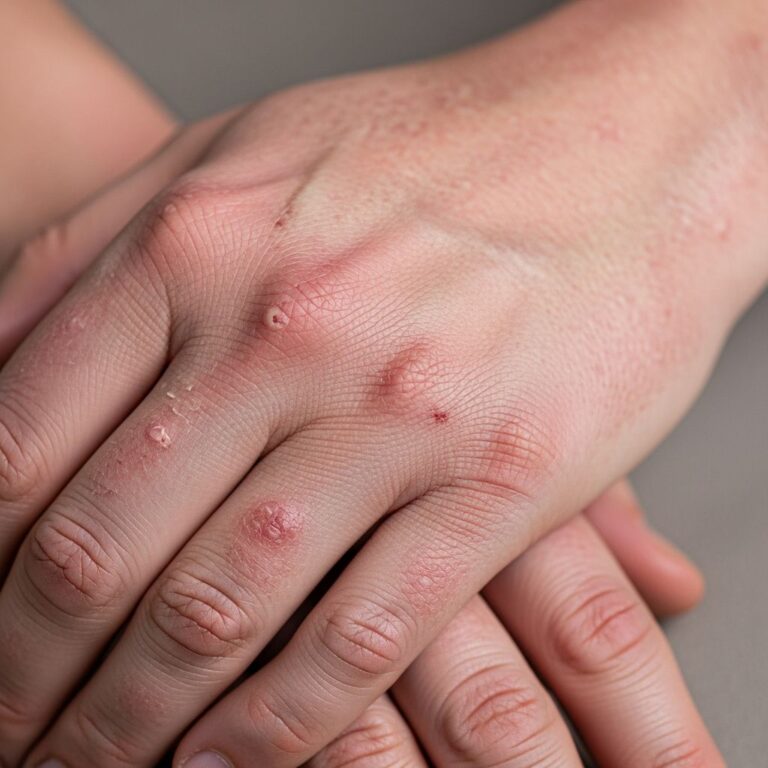
The tiny, discrete papules clinically observed in lichen nitidus directly correlate with the focal dermal inflammatory infiltrates identified histologically. Each individual papule represents one of these circumscribed infiltrates enclosed by epidermal ridges. The grouped distribution and linear arrangement following trauma (Köbner phenomenon) reflect the pattern of these focal lesions on the skin surface. Understanding this clinical-pathological correlation aids both clinicians and pathologists in recognizing and diagnosing the condition accurately.
Diagnostic Confirmation Through Biopsy
While clinical presentation often suggests lichen nitidus, skin biopsy remains the gold standard for diagnostic confirmation. The histopathological examination, particularly the identification of the characteristic “ball and claw” appearance, the focal lymphohistiocytic infiltrate with giant cells, and the distinctive epidermal changes, reliably confirms the diagnosis. The consistency of histological findings across cases makes biopsy a valuable diagnostic tool, particularly when clinical presentation is atypical or when differentiation from other lichenoid dermatoses is necessary.
Frequently Asked Questions
Q: What is the most distinctive histological feature of lichen nitidus?
A: The “ball and claw” appearance is the most characteristic feature, where elongated rete ridges appear to grasp a circumscribed inflammatory infiltrate in the upper dermis, making it highly diagnostic.
Q: How does lichen nitidus histology differ from lichen planus?
A: Lichen nitidus shows a focal, circumscribed infiltrate with multinucleated giant cells, while lichen planus demonstrates a dense, continuous lymphocytic infiltrate affecting the entire dermal-epidermal junction.
Q: What types of cells comprise the inflammatory infiltrate?
A: The infiltrate is predominantly lymphohistiocytic, consisting of lymphocytes, histiocytes, epithelioid cells, and multinucleated giant cells.
Q: Is immunohistochemistry necessary for diagnosing lichen nitidus?
A: No, routine histopathological examination is typically sufficient for diagnosis. The characteristic microscopic features are distinctive enough to confirm lichen nitidus without additional staining.
Q: Where is the inflammatory infiltrate located in lichen nitidus?
A: The infiltrate is localized to the papillary dermis and superficial reticular dermis, appearing as a well-circumscribed focus beneath the epidermis.
References
- Lichen Nitidus — DermNet NZ. 2011. https://dermnetnz.org/topics/lichen-nitidus
- Lichen Nitidus Pathology — DermNet NZ. 2011. https://dermnetnz.org/topics/lichen-nitidus-pathology
- Lichen Nitidus – Pathology Mini Tutorials — YouTube. https://www.youtube.com/watch?v=gbOBWfhPo8g
- Lichen Nitidus — StatPearls, National Center for Biotechnology Information. https://www.ncbi.nlm.nih.gov/books/NBK551709/
Similar Articles








Read full bio of medha deb