Lichen Planopilaris: Diagnosis, Treatment, And Outlook
Understanding lichen planopilaris: causes, symptoms, diagnosis, and treatments for this scarring alopecia condition affecting hair follicles.
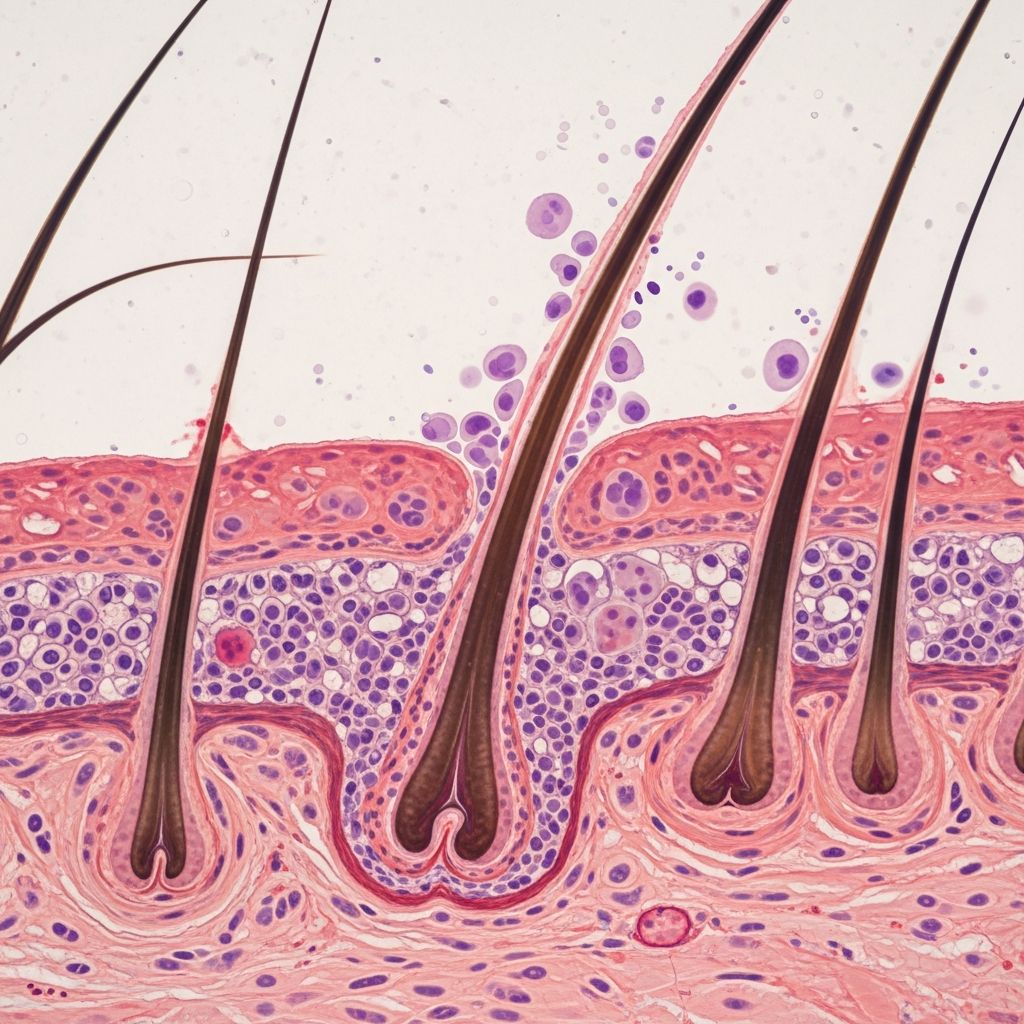
Lichen planopilaris is an uncommon inflammatory condition that can lead to permanent hair loss. The disease is considered to be a form of lichen planus which affects the hair follicles. It results in patchy, progressive, permanent hair loss mainly on the scalp, although other hair-bearing skin such as the brows, pubic area, and body may be affected. Several forms are recognised.
Introduction
Lichen planopilaris (LPP) is a primary cicatricial alopecia characterised by inflammation targeting the hair follicle bulge region, leading to irreversible destruction of hair stem cells and subsequent scarring hair loss. This condition primarily manifests on the scalp but can extend to other hair-bearing areas like eyebrows, body hair, and pubic regions. As an autoimmune-mediated disorder akin to lichen planus, LPP involves a cell-mediated immune attack on follicular epithelium, resulting in perifollicular inflammation, hyperkeratosis, and fibrosis.
The condition’s progressive nature underscores the importance of early intervention to halt inflammation and preserve remaining follicles. While regrowth in scarred areas is unlikely, timely treatment can slow progression and alleviate symptoms such as itching and pain.
Demographics
LPP predominantly affects adults, with a peak incidence between 40 and 60 years of age. It is more common in women than men, with a reported female-to-male ratio of approximately 1.8:1 to 9:1 across studies. The epidemiology remains incompletely defined due to its rarity, but it occurs worldwide across all ethnicities, though some reports suggest a higher prevalence in Caucasian populations. Children and adolescents are rarely affected, comprising less than 5% of cases.
Factors such as genetic predisposition, including variations in MHC class I proteins, may influence susceptibility, particularly in individuals where the immune system fails to recognise hair follicles as self.
Causes
The exact aetiology of lichen planopilaris is unknown, but it is presumed to share mechanisms with lichen planus, involving a T-cell mediated autoimmune attack on the hair follicle bulge stem cells. Lymphocytes infiltrate the follicular epithelium, triggered potentially by endogenous or exogenous agents such as drugs, viruses, or contact sensitisers (e.g., gold, mercury, cobalt acting as haptens).
Genetic factors play a role, with some patients exhibiting MHC class I polymorphisms that impair self-recognition of follicular antigens. Environmental triggers like medications (e.g., beta-blockers, NSAIDs, antimalarials) or viral infections may initiate the immune dysregulation. Unlike non-scarring alopecias, LPP’s inflammatory process leads to permanent fibrosis, destroying regenerative capacity.
Clinical Features
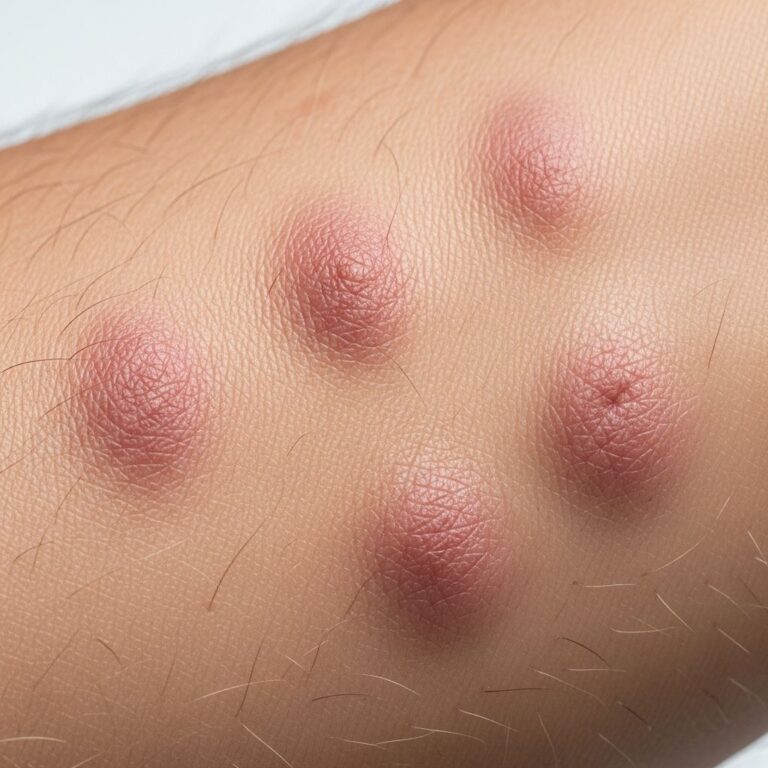
Early clinical features include perifollicular erythema, scaling, and follicular hyperkeratosis, often most prominent at the margins of developing alopecic patches. Patients commonly report scalp symptoms such as itching, burning, pain, tenderness, or dysaesthesia. Hair loss manifests as irregular, patchy areas that may coalesce into larger scarred plaques with atrophic, shiny, hairless skin devoid of follicular openings.
A positive pull test yielding anagen hairs indicates active disease. Associated lichen planus may involve skin (violaceous papules), nails (longitudinal ridging, pterygium), mucous membranes (oral Wickham striae), or genitals. Trichoscopy reveals characteristic white scaling, perifollicular scales, and absent follicles in scarred areas.
Related Stories



Variation in Skin Types
In lighter skin types (Fitzpatrick I-III), LPP presents with prominent erythema and violaceous discoloration around follicles, with scaling appearing white or grey. Scars are pale and shiny. In darker skin types (Fitzpatrick IV-VI), inflammation may manifest as hyperpigmentation or hypopigmentation rather than overt redness, with post-inflammatory pigmentary changes more pronounced in scarred areas. Follicular hyperkeratosis appears as spiny projections, and symptoms like pain or itching may be equally severe across types, though diagnosis can be delayed due to subtler erythema.
Complications
- Permanent scarring alopecia: Irreversible hair loss due to follicular destruction and fibrosis.
- Follicular hyperkeratosis: Accumulation of keratin around follicles, causing rough, scaly patches and intensified itching.
- Secondary infections: Compromised barrier function predisposes to bacterial or fungal scalp infections, exacerbating symptoms.
- Psychosocial impact: Visible hair loss leads to distress, anxiety, and reduced quality of life.
- Extrafollicular lichen planus: Involvement of skin, nails, mucosa, increasing morbidity.
Diagnosis
Diagnosis relies on clinical examination, dermoscopy, and confirmatory scalp biopsy. Key histopathological features include lichenoid lymphocytic infiltrate at the infundibulo-isthmic region (bulge), follicular destruction, concentric perifollicular fibrosis (“onion sign”), and vacuolar interface changes. Trichoscopic hallmarks are perifollicular scales, white dots, and absent follicular ostia in scarred zones. A pull test and symptoms guide assessment of activity.
Differential Diagnoses
| Condition | Key Distinguishing Features |
|---|---|
| Discoid lupus erythematosus | More interface dermatitis, basement membrane thickening, mucin; interface dermatitis on histopathology; malar rash possible. |
| Frontal fibrosing alopecia | Band-like recession of frontal/temporal hairline; eyebrow loss common; variant of LPP. |
| Central centrifugal cicatricial alopecia | Centripetal spread from vertex; common in African women; trauma association. |
| Folliculitis decalvans | Pustules, tufted hairs; staphylococcal colonisation; neutrophilic infiltrate. |
| Pseudopelade of Brocq | Minimal inflammation; ‘footprints in the snow’ atrophic patches; end-stage scarring. |
Treatment
The primary aim is to suppress inflammation, halt progression, and relieve symptoms; regrowth is not anticipated in scarred areas. Treatment is tailored to severity, with response variable and monitored clinically/trichoscopically. Early intervention yields better outcomes.
First-line:
- Topical corticosteroids (e.g., clobetasol 0.05% foam/solution) daily for mild disease.
- Intralesional triamcinolone acetonide (2.5-10 mg/mL) every 4-6 weeks for localised active patches.
- Anti-inflammatory shampoos (e.g., ketoconazole, ciclopirox, tea tree oil).
Systemic for moderate-severe:
- Oral corticosteroids (prednisone 0.5-1 mg/kg/day taper) short-term for flares.
- Hydroxychloroquine (200-400 mg/day; 6-12 months for response).
- Tetracyclines (doxycycline 100 mg BID) for anti-inflammatory effects.
Refractory cases:
- Immunosuppressants: methotrexate (15-25 mg/week), cyclosporine, mycophenolate mofetil, azathioprine.
- JAK inhibitors (e.g., tofacitinib, baricitinib) emerging for refractory LPP.
- Minoxidil 5% to support remaining follicles.
Adjuncts include avoiding scalp trauma (dyes, tight hairstyles), photoprotection, and patient education. Multidisciplinary care for extrafollicular involvement.
Outcome
Prognosis is unpredictable; some cases burn out spontaneously, while others progress relentlessly. Treatment may stabilise disease in 50-70% of patients, but relapse is common upon tapering. Long-term maintenance therapy is often required. Permanent alopecia affects quality of life, necessitating psychological support. Regular follow-up (every 3-6 months) monitors activity via symptoms, pull test, and trichoscopy.
Frequently Asked Questions
What is lichen planopilaris?
Lichen planopilaris is a rare inflammatory scarring alopecia targeting hair follicles, leading to permanent patchy hair loss primarily on the scalp.
Is lichen planopilaris curable?
No cure exists; treatment aims to control inflammation and prevent further loss. Regrowth in scarred areas is unlikely.
How is lichen planopilaris diagnosed?
Via clinical exam, dermoscopy, and scalp biopsy showing lichenoid infiltrate and fibrosis.
What are the first symptoms of LPP?
Itching, burning, scalp tenderness, perifollicular redness, and scaling precede visible hair loss.
Can LPP affect areas other than the scalp?
Yes, eyebrows, body hair, and pubic areas may be involved, along with skin, nails, and mucosa.
How long does treatment take to work?
Response may take 3-9 months; hydroxychloroquine often requires 6 months.
References
- Lichen Planopilaris – Scarring Alopecia Foundation — Scarring Alopecia Foundation. 2023. https://scarringalopecia.org/lichen-planopilaris
- Lichen Planopilaris – StatPearls – NCBI Bookshelf — NCBI/NIH. 2023-10-15. https://www.ncbi.nlm.nih.gov/books/NBK470325/
- Lichen Planopilaris – DermNet — DermNet NZ. 2023. https://dermnetnz.org/topics/lichen-planopilaris
- Lichen Planopilaris: Understanding Hair Loss Causes & Care — Indiana University School of Medicine. 2024. https://dermatrials.medicine.iu.edu/blogs/lichen-planopilaris-overview
- Lichen Planopilaris – Melbourne Skin & Dermatology Clinic — Melbourne Skin & Dermatology Clinic. 2023. https://dermatology.melbourne/services/lichen-planopilaris/
Similar Articles








Read full bio of medha deb