Lichen Planus Pathology: Histological Features
Comprehensive guide to the microscopic pathological findings in lichen planus.
Lichen Planus Pathology: Understanding the Histological Basis
Lichen planus (LP) is a chronic inflammatory condition affecting the skin and mucosal surfaces characterized by a distinctive pathological pattern known as a lichenoid tissue reaction. The diagnosis of lichen planus is often confirmed through histopathological examination, which reveals characteristic microscopic features that help differentiate this condition from other dermatological disorders. Understanding the pathological basis of lichen planus is essential for accurate diagnosis and distinguishing it from related conditions with similar clinical presentations.
The Lichenoid Reaction Pattern
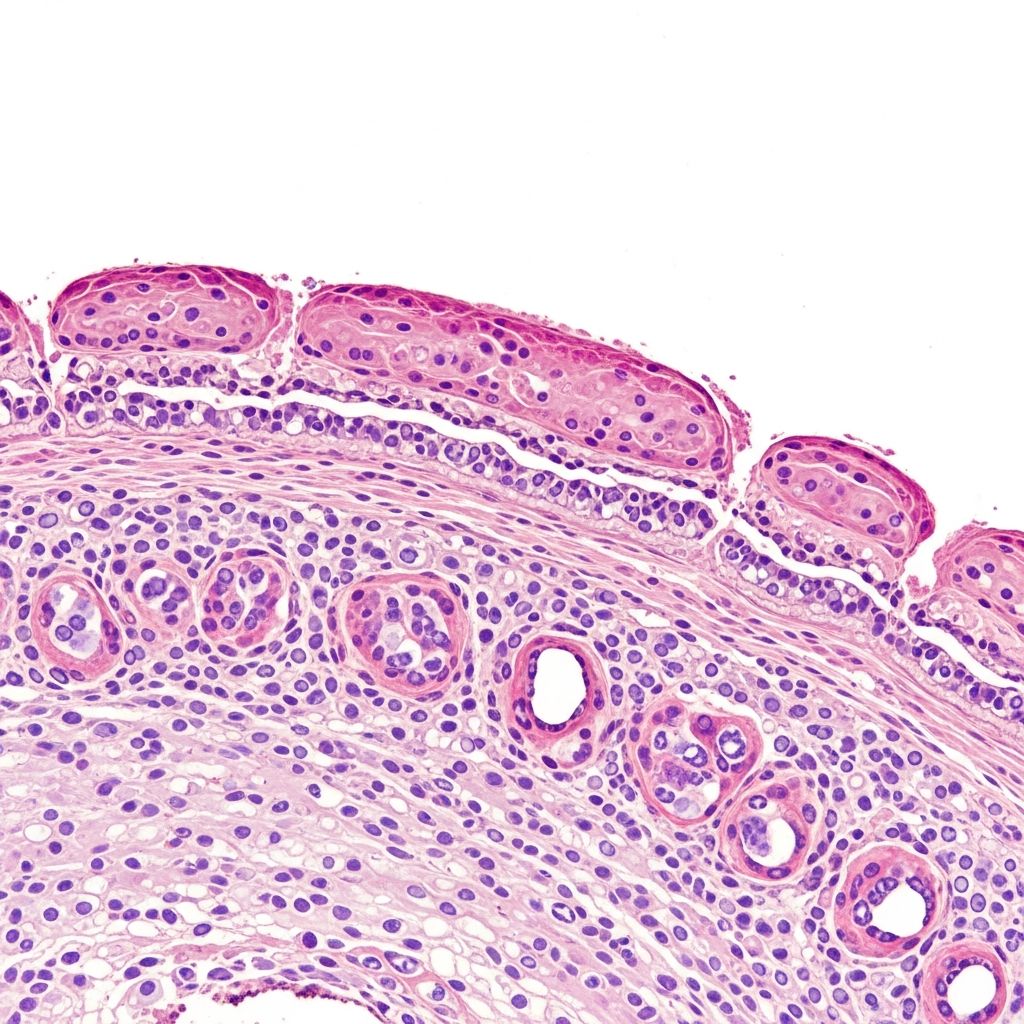
At scanning power microscopy, lichen planus demonstrates a characteristic
lichenoid reaction pattern
defined by specific combinations of histological findings. This pattern is characterized by the degeneration of the basal layer of the epidermis combined with a dense, band-like lymphocytic infiltrate that obscures the dermoepidermal junction. The lichenoid reaction represents a T-cell mediated immune response in which inflammatory cells attack an unknown protein within the skin and basal keratinocytes. This distinctive inflammatory pattern is the hallmark of lichen planus histopathology and serves as a critical diagnostic feature distinguishing it from other cutaneous conditions.Epidermal Changes and Architecture
The epidermis in lichen planus undergoes characteristic alterations that contribute to its distinctive appearance under microscopy. There is
irregular epidermal hyperplasia
forming a distinctive saw-tooth appearance, a feature that provides another diagnostic clue to pathologists examining tissue samples. This saw-tooth pattern results from the irregular pattern of downward extending rete ridges alternating with atrophic areas. Additionally,wedge-shaped hypergranulosis
is present, which refers to thickening of the granular layer that widens toward the center of the lesion and narrows at the edges.The basal layer of the epidermis exhibits
vacuolar degeneration
, a process in which the cells at the basal layer undergo fluid accumulation and cellular damage. Typically prominent necrosis of individual keratinocytes occurs within this layer, representing programmed cell death triggered by the immune infiltrate above. This basal layer damage distinguishes lichen planus from many other inflammatory dermatoses and is a defining feature of the interface dermatitis pattern characteristic of lichenoid reactions.Inflammatory Infiltrate Characteristics
The inflammatory component of lichen planus is
chiefly lymphocytic
, meaning that T lymphocytes comprise the predominant cell type within the infiltrate. These inflammatory cells form adense band in the superficial dermis
, appearing as a densely packed layer of immune cells immediately beneath the epidermis. This band-like distribution distinguishes lichen planus from other inflammatory conditions where the infiltrate may be more diffuse or located in deeper dermal layers.The lymphocytic infiltrate demonstrates increased numbers of Langerhans cells, which are antigen-presenting cells involved in the immune response. However, absolute numbers of Langerhans cells alone cannot discriminate between lichen planus and histologically similar conditions such as lichenoid keratosis or keratosis lichenoides chronical.
Direct Immunofluorescence Findings
Direct immunofluorescence (DIF) examination of lichen planus tissue reveals distinctive patterns that provide additional diagnostic information. The characteristic findings include:
- Shaggy linear basement membrane staining of fibrinogen deposition along the basement membrane zone
- Colloid body staining within the papillary dermis with fibrinogen
While direct immunofluorescence studies are not routinely needed for diagnosis, they can provide supportive evidence when the clinical and routine histological findings are equivocal. The colloid bodies visible on DIF represent necrotic keratinocytes that have undergone apoptosis and contain immunoglobulin and complement deposits.
Related Stories



Differential Diagnosis: Distinguishing Similar Entities
Lichenoid Keratosis
Lichenoid keratosis, also called lichen planus-like keratosis, presents with largely similar histologic findings to lichen planus, making distinction challenging. However, several features may distinguish lichenoid keratosis from typical lichen planus. The presence of
parakeratosis
(retention of nuclei in the stratum corneum) and an infiltrate containingincreased numbers of eosinophils and neutrophils
are more suggestive of lichenoid keratosis. In contrast, lichen planus infiltrates are predominantly composed of lymphocytes with few eosinophils or neutrophils. Clinical correlation is essential, as lichenoid keratosis is often a solitary lesion on sun-exposed skin in older individuals, whereas lichen planus typically presents with multiple lesions and has different clinical characteristics.Keratosis Lichenoides Chronical
Keratosis lichenoides chronical shares some histopathological features with lichen planus, including numerous necrotic keratinocytes within the epidermis. However, this entity characteristically demonstrates
parakeratosis containing neutrophils
, contrasting with the orthokeratosis typically seen in lichen planus. The presence of neutrophils within the parakeratotic layer is a distinguishing feature. Because histological overlap exists between these conditions, clinical correlation is essential for accurate diagnosis. The chronic nature of keratosis lichenoides chronical and its distinct clinical presentation help differentiate it from classic lichen planus.Variations in Lichen Planus Subtypes
Different clinical variants of lichen planus may demonstrate variations in their histopathological features while maintaining the core lichenoid reaction pattern. For example, in lichen planus pigmentosus, a variant primarily affecting individuals with darker skin types, the histology shows
vacuolar degeneration of the basal cell layer with pigment incontinence
. The dermis exhibitsincontinence of pigment with scattered melanophages
, representing melanin that has escaped from the epidermis and been phagocytosed by dermal cells. This variant maintains the characteristic interface dermatitis but with additional prominent pigment changes reflecting the clinical presentation of hyperpigmentation followed by hypopigmentation.Key Histopathological Summary
| Feature | Description | Diagnostic Significance |
|---|---|---|
| Lichenoid Reaction | Basal layer degeneration with band-like lymphocytic infiltrate | Hallmark pattern diagnostic of lichen planus |
| Epidermal Architecture | Saw-tooth appearance with irregular hyperplasia | Characteristic microscopic finding aiding diagnosis |
| Hypergranulosis | Wedge-shaped thickening of granular layer | Contributes to diagnostic pattern recognition |
| Basal Layer Changes | Vacuolar degeneration with keratinocyte necrosis | Indicates interface dermatitis and immunological attack |
| Inflammatory Infiltrate | Dense band of lymphocytes in superficial dermis | Confirms T-cell mediated immune response |
| Direct Immunofluorescence | Shaggy basement membrane and colloid body staining | Supportive evidence in equivocal cases |
Clinical Correlation and Diagnostic Approach
While histopathological examination is often recommended to confirm the diagnosis of lichen planus and to exclude other conditions, clinical correlation remains essential for accurate interpretation. A skin biopsy is frequently recommended not only to confirm the diagnosis but also to look for potential malignant transformation, as erosive forms of lichen planus carry a small risk of squamous cell carcinoma development. The combination of characteristic clinical presentation with supporting histopathological findings provides the most reliable diagnostic approach.
Pathologists must remain vigilant for features that might suggest alternative diagnoses or warrant additional clinical investigation. The absence of certain features can be as diagnostically important as their presence—for example, the lack of significant eosinophilic infiltration helps exclude lichenoid keratosis, while the absence of prominent parakeratosis helps distinguish lichen planus from some keratotic disorders.
Frequently Asked Questions About Lichen Planus Pathology
Q: What makes the histopathological pattern of lichen planus “lichenoid”?
A: The term “lichenoid” refers to the distinctive pattern of basal layer degeneration combined with a band-like lymphocytic infiltrate in the superficial dermis that obscures the dermoepidermal junction. This specific combination of features characterizes the lichenoid tissue reaction pattern unique to lichen planus and related conditions.
Q: How does the saw-tooth appearance of the epidermis form?
A: The saw-tooth appearance results from irregular epidermal hyperplasia where the rete ridges extend downward in an uneven pattern, alternating between areas of prominent extension and areas of atrophy, creating a jagged silhouette reminiscent of a saw blade under microscopy.
Q: Are direct immunofluorescence studies always necessary for diagnosing lichen planus?
A: No, direct immunofluorescence studies are not routinely needed for diagnosis. The clinical presentation combined with standard histopathological findings is usually sufficient. DIF may be helpful in equivocal cases where the diagnosis is uncertain based on conventional microscopy alone.
Q: What is the significance of colloid bodies in lichen planus?
A: Colloid bodies represent necrotic keratinocytes undergoing apoptosis in response to the T-cell mediated immune attack. They are visible on direct immunofluorescence as hyaline bodies in the papillary dermis and reflect the active inflammatory destruction characteristic of lichen planus.
Q: How can lichenoid keratosis be differentiated from lichen planus histologically?
A: Key distinguishing features of lichenoid keratosis include the presence of parakeratosis and an infiltrate containing increased numbers of eosinophils and neutrophils, rather than the predominantly lymphocytic infiltrate seen in lichen planus. Clinical correlation is essential, as lichenoid keratosis typically presents as a solitary lesion on sun-exposed skin.
Q: What does vacuolar degeneration of the basal layer indicate?
A: Vacuolar degeneration indicates fluid accumulation and cellular damage within the basal layer keratinocytes, resulting from the immune attack by T lymphocytes. This represents the interface between the epidermis and the inflammatory infiltrate in the dermis.
Q: Is the histological pattern of lichen planus always identical across all clinical variants?
A: While all variants maintain the core lichenoid reaction pattern, some variants show additional distinctive features. For example, lichen planus pigmentosus demonstrates prominent pigment incontinence with melanophages in addition to the standard lichenoid pattern, reflecting its unique clinical characteristics.
References
- Lichen Planus Pathology — DermNet. Accessed January 2026. https://dermnetnz.org/topics/lichen-planus-pathology
- Lichen Planus: Symptoms, Types, and Treatment with Images — DermNet. Reviewed by Dr Ian Coulson, 2023. https://dermnetnz.org/topics/lichen-planus
- Lichen Planus Pigmentosus: The Controversial Consensus — PubMed Central. https://pmc.ncbi.nlm.nih.gov/articles/PMC5029231/
- Lichen Planus — Primary Care Dermatology Society. https://www.pcds.org.uk/clinical-guidance/lichen-planus
Similar Articles








Read full bio of Sneha Tete