Lichen Planus: Symptoms, Causes, And Treatment Guide
Comprehensive guide to lichen planus: symptoms, causes, diagnosis, and effective treatments for skin, mouth, and nails.
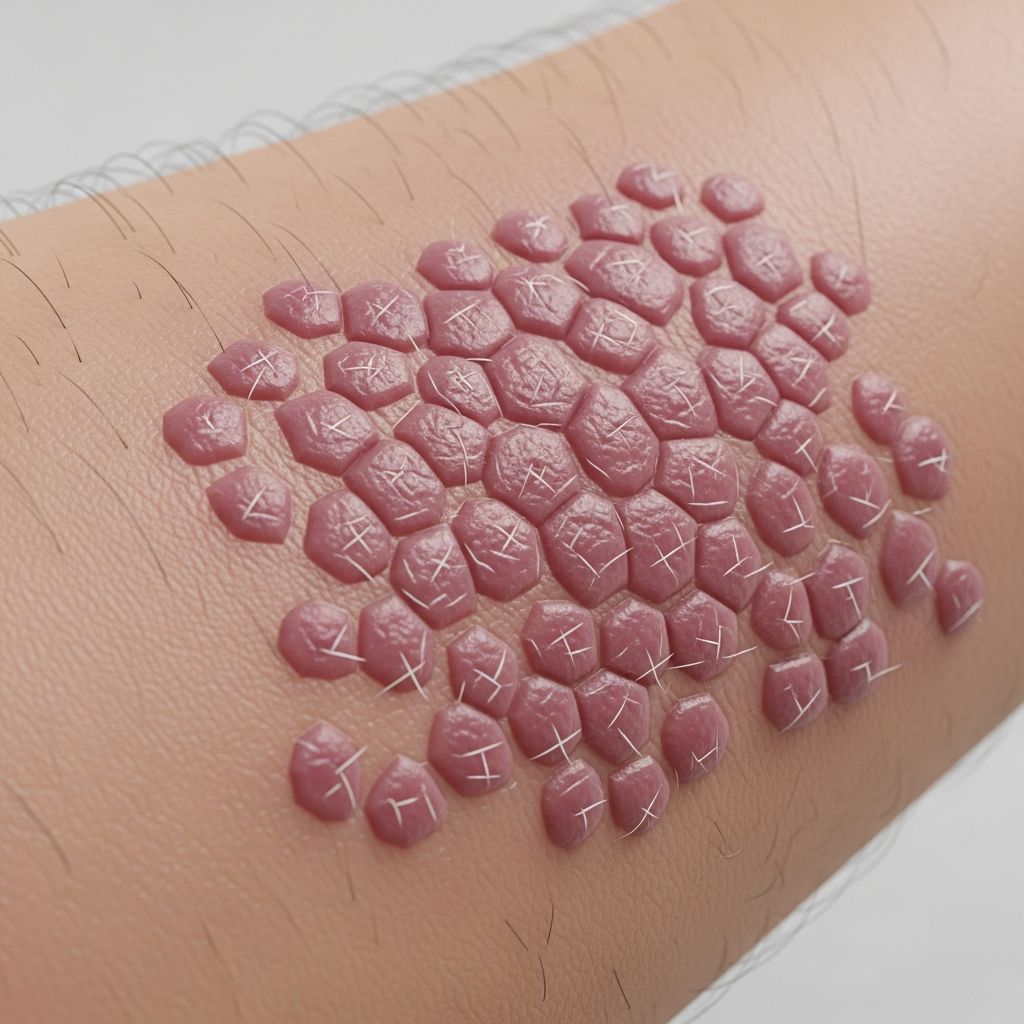
Lichen planus is a common inflammatory condition that affects the skin, mucous membranes, nails, and hair. It is characterized by flat-topped, shiny, violaceous papules and plaques, often accompanied by intense itching. The condition typically affects adults aged 30-60 years and has a female predominance in some forms. While the exact cause is unknown, it is thought to be an immune-mediated reaction, possibly triggered by medications, viral infections like hepatitis C, or other stressors. Lichen planus can resolve spontaneously within 1-2 years but often requires symptomatic treatment to alleviate discomfort and prevent complications such as scarring or malignancy in chronic cases.
What is Lichen Planus?
Lichen planus derives its name from the resemblance of its lesions to lichens (flat moss-like growths) and their planar (flat-topped) appearance. It is a T-cell mediated autoimmune disorder where cytotoxic CD8+ T cells attack basal keratinocytes in the epidermis, leading to characteristic histopathological findings like saw-tooth rete ridges, civatte bodies, and a band-like lymphocytic infiltrate. The disease manifests in various subtypes: cutaneous, hypertrophic, atrophic, oral, genital, nail, scalp (lichen planopilaris), and esophageal. Cutaneous involvement is most common, presenting as pruritic, polygonal, purple papules with Wickham striae—fine white reticulate lines best seen under dermoscopy or with application of oil/ether.
The “six P’s” of lichen planus—purple, polygonal, planar (flat-topped), pruritic (itchy), papules, and plaques—aid in clinical diagnosis. Lesions favor flexural surfaces like wrists, ankles, and lower legs but can be widespread. Koebner phenomenon (appearance of lesions at sites of trauma) is common. Oral lichen planus affects up to 50% of patients, showing lacy white plaques or erosions on buccal mucosa, tongue, and gingivae, sometimes causing burning pain.
Who Gets Lichen Planus?
Lichen planus affects approximately 1% of the population, with peak incidence between 30-60 years. It is more common in females, particularly for oral and genital forms. Risk factors include:
- Association with hepatitis C virus (HCV) infection, warranting screening in all patients
- Medications such as beta-blockers, antimalarials, thiazides, gold, penicillamine, or NSAIDs
- Other autoimmune diseases like primary biliary cholangitis, vitiligo, or alopecia areata
- Stress, dental materials (for oral LP), or graft-versus-host disease
Genetic predisposition may play a role, with higher prevalence in certain ethnic groups. Nail and scalp involvement is less common (10-20%), often indicating more severe disease.
What Causes Lichen Planus?
The precise etiology remains idiopathic, but it is widely regarded as an aberrant immune response where antigens on keratinocytes trigger CD8+ T-cell activation. Key triggers include:
- Viral infections: Strong link with HCV (up to 30% of LP patients); also hepatitis B, HIV
- Drugs: Over 100 medications implicated, with resolution upon discontinuation in drug-induced LP
- Autoimmunity: Shared epitopes with self-antigens
- Contact allergens: Mercury in dental fillings for oral LP; gold, etc., for cutaneous
- Other: Trauma (Koebner), stress, smoking (worsens oral LP)
No single cause is identified in most idiopathic cases. Importantly, oral lichen planus has a small risk (1-2%) of malignant transformation to squamous cell carcinoma, necessitating long-term surveillance.
What are the Clinical Features of Lichen Planus?
Cutaneous Lichen Planus
Classic lesions are 2-10 mm, shiny, flat-topped, violaceous papules coalescing into plaques. Sites: flexor wrists, forearms, legs, ankles, genitalia. Pruritus is intense; Wickham striae visible on 90% with magnification. Variants include:
- Hypertrophic: Thick, verrucous plaques on shins/ankles, hyperkeratotic, chronic
- Atrophic: Hypopigmented depressed scars
- Actinic: On photo-exposed areas post-sun
- Follicular: Spinous papules around hair follicles
- Annular: Central clearing forming rings
Mucosal Lichen Planus
Affects 50-70% of patients, bilateral on buccal mucosa.
Related Stories



- Oral: Reticular (white lacy), erosive (painful ulcers), plaque-like, atrophic (red). Burning on spicy/acidic foods
- Genital: Vaginal/penile erosions, scarring, dyspareunia. Vulvovaginal-gingival syndrome: desquamative vaginitis + erosive gingivitis
Nail Lichen Planus
Idiopathic in 10%; destructive, causing permanent ridging, pterygium, or anonychia. Twenty-nail dystrophy possible; high scarring risk
Lichen Planopilaris
Scarring alopecia with perifollicular erythema/scaling; frontal fibrosing alopecia variant common in postmenopausal women
Other Sites
Lacrimal/nasal/esophageal (dysphagia), rarely palms/soles. Palmoplantar LP: hyperkeratotic with cysts
Diagnosis of Lichen Planus
Primarily clinical using “six P’s” and dermoscopy for Wickham striae. Confirm with:
- Skin biopsy: Essential for atypical cases; shows basal vacuolization, civatte bodies, Max-Joseph spaces
- HCV serology: Screen all patients; risk factors prompt liver enzymes
- Nail/oral biopsy: If needed for confirmation
Differential: Psoriasis, pityriasis rosea, lichen nitidus, drug eruption, secondary syphilis. Oral: Candidiasis, leukoplakia, pemphigus
Treatment of Lichen Planus
Treatment targets symptoms and prevents complications; spontaneous resolution in 1-2 years for cutaneous LP, but mucosal/nail forms persist.
General Measures
Emollients, avoid irritants, oral antihistamines (hydroxyzine) for itch
Topical Therapies (First-Line)
| Site | Treatment | Dosage/Notes |
|---|---|---|
| Cutaneous | High-potency TCS (clobetasol) | BD x 2-4wks; occlude if needed |
| Genital/Oral | TCS gel/ointment; tacrolimus 0.1% | BD; tacrolimus 2nd-line, esp. erosive |
| Hypertrophic | Intralesional triamcinolone 5-10mg/ml | 0.5-1ml/2cm lesion q4wks |
Systemic Therapies
- Severe/widespread: Prednisone 30-60mg/d x3-6wks, taper
- Refractory cutaneous: Acitretin 0.5-1mg/kg/d; monitor lipids/liver
- Nail: Prednisone + intralesional steroids
Phototherapy
Narrow-band UVB 2-3x/wk for extensive disease; PUVA alternative
Other
Retinoids, cyclosporine, methotrexate for recalcitrant cases. Refer to dermatology for systemic Rx
Frequently Asked Questions
What is the prognosis of lichen planus?
Cutaneous LP resolves in 1-2 years (80%), but recurrences common (20%). Mucosal/nail persistent; monitor oral for SCC risk
Is lichen planus contagious?
No, it is not infectious or contagious.
Should I be tested for hepatitis C?
Yes, all LP patients should be screened for HCV
Can lichen planus affect nails permanently?
Yes, untreated nail LP causes scarring/onycholysis; early treatment prevents
Does stress worsen lichen planus?
Stress is a trigger; manage with relaxation techniques.
References
- Diagnosis and Treatment of Lichen Planus — American Academy of Family Physicians. 2011-07-01. https://www.aafp.org/pubs/afp/issues/2011/0701/p53.html
- Lichen planus: Diagnosis and treatment — American Academy of Dermatology. Recent (post-2020). https://www.aad.org/public/diseases/a-z/lichen-planus-treatment
- Lichen planus – Diagnosis and treatment — Mayo Clinic. Recent. https://www.mayoclinic.org/diseases-conditions/lichen-planus/diagnosis-treatment/drc-20351383
- Diagnosis and treatment of lichen planus — PubMed (Am Fam Physician). 2011-07-15. https://pubmed.ncbi.nlm.nih.gov/21766756/
- Lichen Planus: What It Is, Causes, Types & Treatments — Cleveland Clinic. Recent. https://my.clevelandclinic.org/health/diseases/17723-lichen-planus
Similar Articles








Read full bio of medha deb