Lichen Striatus Pathology: Key Insights For Accurate Diagnosis
Comprehensive pathology of lichen striatus: histological features, diagnosis, and management of this self-limiting linear dermatosis in children.
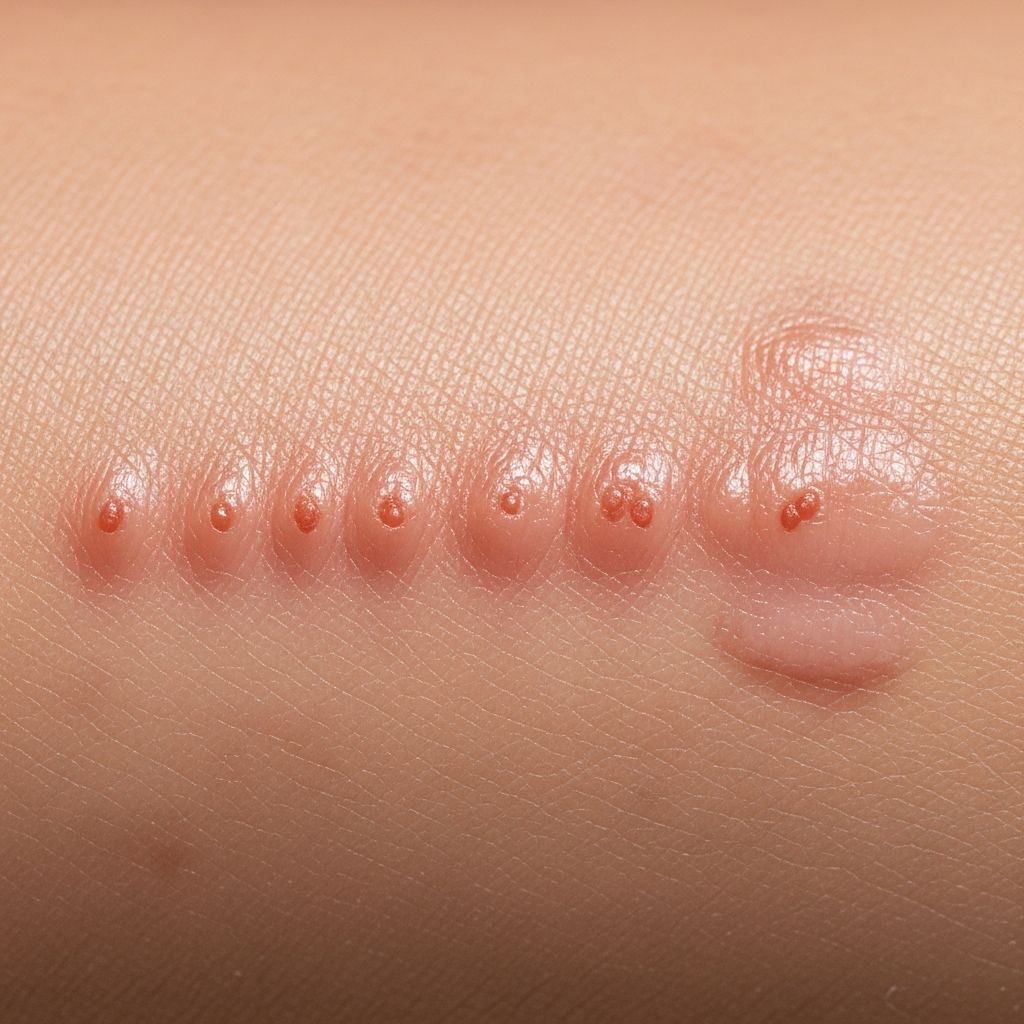
Lichen striatus is a benign, self-limited inflammatory dermatosis characterised by a linear arrangement of papules following the lines of Blaschko, primarily affecting children. This condition arises from T-cell mediated immune responses targeting epidermal keratinocytes, leading to distinctive histopathological changes observable under microscopy.
Introduction
Lichen striatus, also known as Blaschko linear acquired inflammatory skin eruption, manifests as pink or skin-coloured papules coalescing into linear bands. It is uncommon, with an estimated incidence of 1 in 100,000 children annually, though exact figures vary due to underreporting of mild cases. The pathology involves clonal keratinocyte abnormalities distributed along embryonic migration pathways, triggered by genetic mosaicism or environmental factors. Histologically, it shows interface dermatitis with lichenoid infiltration, distinguishing it from other linear dermatoses.
The condition’s self-limiting nature typically sees resolution within 3-12 months without scarring, though post-inflammatory pigmentary changes may persist. Understanding its pathology is crucial for accurate diagnosis, as clinical features alone can mimic infections or other eruptions.
Demographics
Lichen striatus predominantly affects children under 15 years, with peak onset between 1-5 years. Approximately 80-90% of cases occur in this age group, with females slightly more affected (ratio 1.5:1). It is rare in adults and neonates. No strong racial predilection exists, though hypopigmented variants are noted in darker skin types. Familial cases are exceptional, suggesting sporadic somatic mutations rather than inherited traits.
- Age distribution: 94% under 15 years; median age 3 years.
- Gender: Slight female predominance.
- Risk factors: Atopy (20-30% association), recent viral infections, vaccinations, or trauma.
Clinical Features
The eruption begins abruptly with small (1-3 mm), flat-topped papules that are pink, red, flesh-coloured, or hypopigmented, especially in darker skin. Over 1-2 weeks, these coalesce into dull red, slightly scaly linear bands (2 mm-2 cm wide), following Blaschko’s lines—patterns of embryonic ectodermal cell migration invisible on normal skin. Lesions are typically unilateral and solitary, affecting extremities (70%), but can involve trunk, neck, or face.
Symptoms are minimal; mild pruritus occurs in 20-50% of cases. Nail involvement (5-10%) presents as ridging, thickening, splitting, or onycholysis, occasionally without skin lesions. In dark-skinned individuals, initial hypopigmentation predominates, resolving to post-inflammatory hyperpigmentation.
| Site | Frequency | Typical Appearance |
|---|---|---|
| Extremities (arms/legs) | 70% | Continuous linear band |
| Trunk | 20% | S-shaped or V-pattern |
| Neck/Face | 5-10% | Short discontinuous streaks |
| Nails | 5-10% | Ridging, pterygium |
Blaschko’s lines on limbs run longitudinally, curve into S-shapes on the abdomen, and form V-shapes on the back, explaining the morphology.
Pathogenesis
The exact aetiology remains elusive, but lichen striatus is considered a T-cell mediated reaction to mosaic keratinocyte clones arising from somatic mutations during embryogenesis. These clones express neoantigens, provoking CD8+ T-lymphocyte infiltration along Blaschko’s lines. Atopy predisposes via impaired skin barrier function, and triggers include viruses (e.g., adenovirus, EBV), vaccinations, or trauma, activating inflammatory cascades.
Genetic studies reveal loss-of-heterozygosity in affected skin, supporting mosaicism. Cytokine profiles show elevated IL-2 and IFN-γ, consistent with type 1 immune responses. Unlike genetic mosaic disorders (e.g., incontinentia pigmenti), lichen striatus is acquired postnatally.
Histopathology
Skin biopsy reveals a lichenoid interface dermatitis: dense band-like lymphocytic infiltrate at the dermo-epidermal junction, obscuring the basal layer. Parakeratosis, hyperkeratosis, and spongiosis are mild. Vacuolar degeneration of basal keratinocytes, Civatte bodies (dyskeratotic cells), and exocytosis of lymphocytes into the epidermis are hallmarks. Melanophages in the dermis account for post-inflammatory pigmentation.
- Key features: Lichenoid infiltrate (perivascular and interface), basal vacuolization, scattered dyskeratosis.
- Absent: Granular cell layer changes (vs. lichen planus), viral inclusions.
- Nail biopsy (rare): Similar interface changes in matrix epithelium.
Related Stories



Immunohistochemistry shows CD8+ T-cells predominant, with CD4+ helpers; rare eosinophils differentiate from eczematous conditions. Electron microscopy (historical) demonstrates tonofilament clumping in keratinocytes.
Diagnosis
Diagnosis is primarily clinical, based on linear papules along Blaschko’s lines in a child. Dermoscopy reveals structureless pink bands with white scales. Biopsy confirms in atypical cases. Wood’s lamp may highlight hypopigmentation.
Differential Diagnosis
| Condition | Distinguishing Features |
|---|---|
| Linear lichen planus | Violaceous, Wickham striae, oral involvement, adults. |
| Lichen nitidus | Minute papules, no linear pattern, shiny surface. |
| Adult Blaschkitis | Flexural, vesiculo-papular, adults. |
| Incontinentia pigmenti | Neonatal, vesicular stage, X-linked, scarring. |
| Phytophotodermatitis | History of plant contact/sun, bizarre shapes. |
| HSV zoster | Dermatomal, vesicles, pain, adults. |
Rule out contact dermatitis or infections via history and swabs.
Treatment
Asymptomatic cases require reassurance; spontaneous resolution occurs in 6-12 months (range 1 month-3 years). Post-inflammatory hypopigmentation/hyperpigmentation fades over months, affecting 50%.
- First-line: Emollients for dryness.
- Pruritus: Low-mid potency topical corticosteroids (e.g., hydrocortisone 1% twice daily, 2-4 weeks).
- Resistant: Topical calcineurin inhibitors (tacrolimus 0.03%, pimecrolimus 1%).
- Nails: High-potency steroids under occlusion.
- Other: Topical retinoids + steroids, photodynamic therapy (rare).
Avoid systemic steroids unless extensive. Monitor for recurrence (rare, <5%).
Complications and Prognosis
Complications are minimal: transient pigmentary changes (most common), nail dystrophy (reversible), rare koebnerization. Prognosis is excellent; no scarring or long-term sequelae. Recurrence is uncommon but reported post-trauma.
Frequently Asked Questions (FAQs)
Q: Is lichen striatus contagious?
A: No, it is a non-infectious inflammatory condition, not spread by contact.
Q: How long does lichen striatus last?
A: Typically 3-12 months, averaging 9 months; full resolution without marks in most cases.
Q: Can adults get lichen striatus?
A: Rare, but possible; termed ‘adult Blaschkitis’ if flexural.
Q: Does lichen striatus scar?
A: No permanent scarring; temporary pigment changes may occur.
Q: Is biopsy always needed?
A: No, clinical diagnosis suffices; biopsy for atypical presentations.
Q: Can lichen striatus follow vaccination?
A: Yes, temporal association reported with viral vaccines, including COVID-19.
References
- Lichen Striatus: Linear Dermatosis that Follows the Lines of Blaschko — Dermatology Advisor. 2023. https://www.dermatologyadvisor.com/ddi/lichen-striatus/
- Lichen Striatus: An Updated Review — PubMed/NCBI. 2024-01-22. https://pubmed.ncbi.nlm.nih.gov/38279714/
- Lichen Striatus: Causes, Symptoms, and Treatment — WebMD. 2025. https://www.webmd.com/skin-problems-and-treatments/lichen-striatus
- Lichen Striatus — DermNet NZ. 2024. https://dermnetnz.org/topics/lichen-striatus
- Lichen Striatus — Primary Care Dermatology Society (PCDS). 2022-05-12. https://www.pcds.org.uk/clinical-guidance/lichen-striatus
- Lichen Striatus – StatPearls — NCBI Bookshelf. 2023. https://www.ncbi.nlm.nih.gov/books/NBK507830/
Similar Articles








Read full bio of medha deb