Lichenoid Drug Eruption: Causes, Symptoms, and Treatment
Understanding medication-induced lichenoid reactions: clinical features, diagnosis, and management strategies.
Lichenoid Drug Eruption: A Comprehensive Clinical Guide
Lichenoid drug eruption is a medication-induced hypersensitivity reaction that produces skin and oral manifestations resembling idiopathic lichen planus. This adverse drug reaction occurs when certain medications trigger an inflammatory response in the skin, resulting in distinctive papules, plaques, and associated symptoms. Understanding the causative agents, clinical presentation, and management strategies is essential for healthcare providers and patients experiencing these reactions.
Definition and Classification
Lichenoid drug eruptions represent a category of cutaneous adverse drug reactions characterized by lichen planus–like hypersensitivity responses induced by medications. These reactions are classified into several types based on their clinical presentation and distribution patterns. Classic cutaneous lichenoid drug eruptions manifest as widespread skin involvement, while photodistributed variants appear in sun-exposed areas. Oral lichenoid reactions occur within the oral mucosa, and cutaneous-oral combinations involve both sites simultaneously.
The condition is relatively uncommon but clinically significant due to its potential impact on quality of life. Research indicates that approximately 12% of drug eruption cases submitted for dermatopathological analysis are classified as lichenoid drug reactions, highlighting the importance of accurate diagnosis and medication review in affected patients.
Medications Associated with Lichenoid Drug Eruptions
Multiple pharmaceutical agents have been documented as causative agents for lichenoid drug eruptions. Understanding which medications carry this risk is crucial for clinical practice and patient education.
Classic Cutaneous Lichenoid Drug Eruptions
The following medications are well-established triggers for classic cutaneous lichenoid drug eruptions:
- Angiotensin-converting enzyme (ACE) inhibitors
- Antimalarial agents
- Beta-blockers
- Gold salts
- Lithium
- Mercury amalgam
- Methyldopa
- Penicillamine
- Quinidine
- Sulfonylureas
- Thiazide diuretics
- Tumor necrosis factor (TNF)-α inhibitors
- Tyrosine kinase inhibitors
Cutaneous and Oral Lichenoid Reactions
Several medications can produce both cutaneous and oral manifestations:
- ACE inhibitors
- Allopurinol
- Anticonvulsants
- Antiretroviral agents
- Gold compounds
- Ketoconazole
- Nonsteroidal anti-inflammatory drugs (NSAIDs)
Photodistributed Lichenoid Drug Eruptions
Certain medications trigger lichenoid reactions specifically in sun-exposed areas:
- Carbamazepine
- Chlorpromazine
- Diltiazem
- Ethambutol
- Quinidine
- Quinine
- Tetracyclines
- Thiazide diuretics
Additional Medications Implicated in Lichenoid Eruptions
Other medications associated with lichenoid drug eruptions include antihypertensives (such as nifedipine), chemotherapy agents (including fluorouracil, hydroxyurea, and imatinib), and diuretics (such as furosemide, hydrochlorothiazide, and spironolactone). Griseofulvin and phenytoin are rare causes despite their frequent use in pediatric populations.
Clinical Presentation and Symptoms
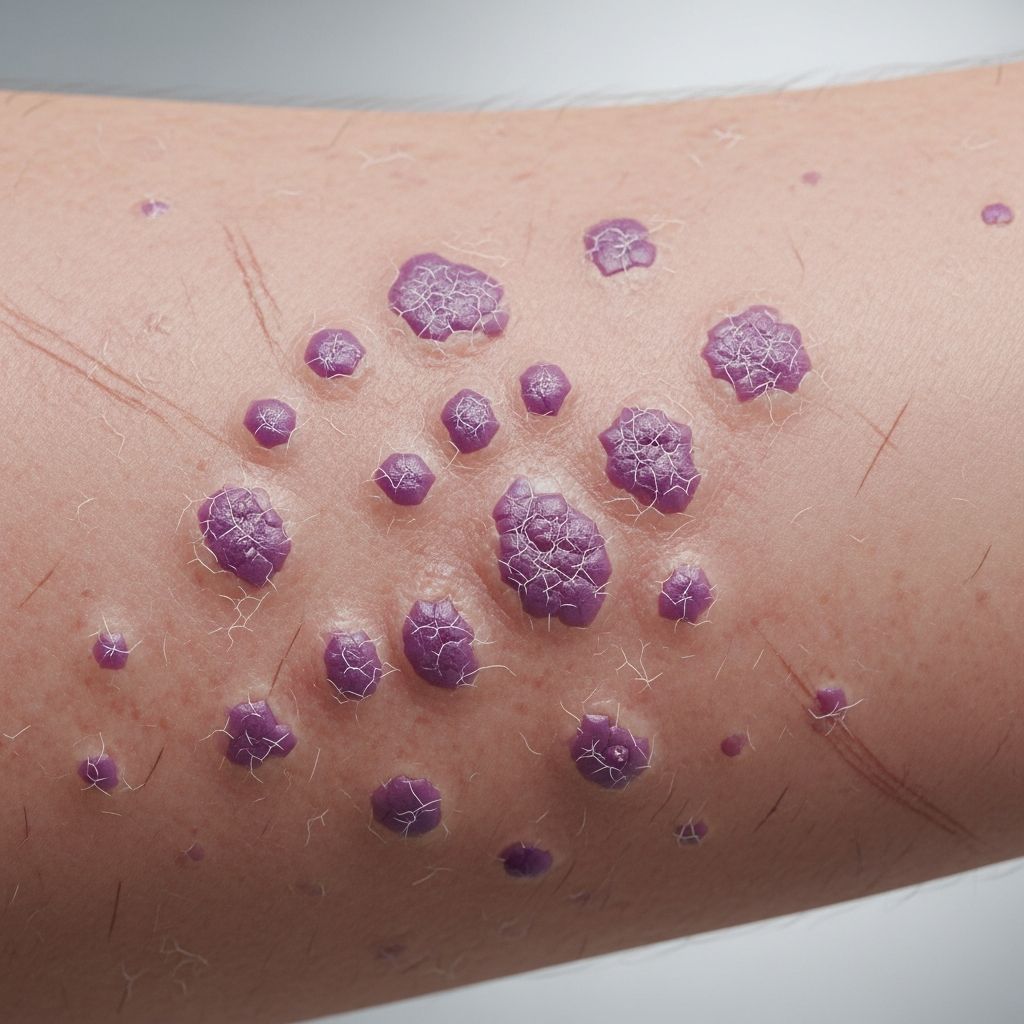
Lichenoid drug eruptions present with distinctive clinical features that can vary in distribution and morphology. The characteristic appearance includes extremely pruritic, scaly papules and plaques that typically affect the extensor surfaces and trunk. Lesions frequently appear on the face, chest, back, and legs, with widespread distribution being common.
Morphological Variations
While lichenoid papules and plaques represent the classic presentation, lichenoid drug eruptions may exhibit variable morphology including:
- Eczematous lesions
- Psoriasiform papules
- Pityriasis rosea-like presentations
- Lichenified plaques with eczematous components
The pruritic nature of these eruptions significantly impacts patient quality of life, often necessitating intervention to manage discomfort and prevent secondary complications from scratching.
Related Stories



Oral Manifestations
Oral lichenoid drug eruptions occur predominantly in adults, although pediatric cases have been documented. These reactions affect the oral mucosa and may coexist with cutaneous manifestations. Approximately 13.3% of patients in clinical studies demonstrated oral mucosa involvement, with antimycobacterial agents (rifampicin and isoniazid) identified as common culprits in these cases.
Timeline of Development and Resolution
The temporal relationship between medication initiation and eruption onset is an important diagnostic consideration. Typically, lichenoid drug eruptions develop 2-3 months after starting the culprit medication, although onset may occur as early as a few weeks or be delayed for several years. This considerable temporal delay between medication exposure and clinical manifestation can complicate the identification of the responsible drug.
Resolution timelines are similarly variable. Complete resolution may require several months to one year following medication discontinuation. However, some cases have demonstrated resolution while patients continued taking the medication, suggesting spontaneous adaptation in certain individuals. When medication is discontinued with appropriate treatment, lesions may resolve within 1-4 weeks, though variable resolution periods ranging from 2 weeks to 2 years have been documented in clinical practice.
Diagnosis and Differential Diagnosis
Accurate diagnosis of lichenoid drug eruption requires careful clinical evaluation and often histopathological confirmation. The diagnostic challenge stems from clinical and histological similarities with idiopathic lichen planus, complicated by considerable delays in symptom onset and slow resolution even after drug discontinuation.
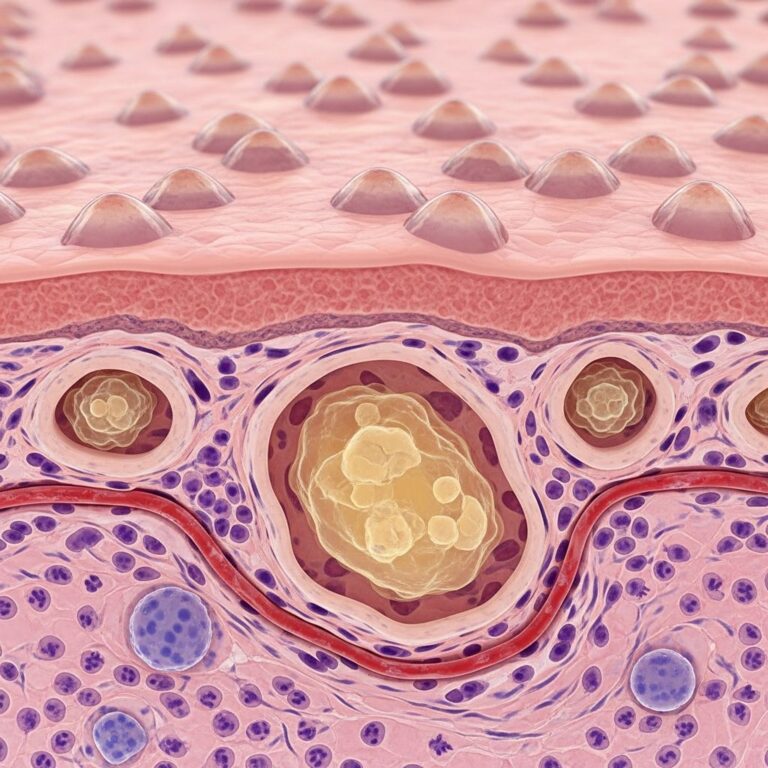
Histopathological Findings
Skin biopsy specimens reveal characteristic lichen planus–like changes that form the histological basis for diagnosis:
- Hyperkeratosis (thickened outer layer)
- Irregular acanthosis (abnormal thickness of the epidermis)
- Lichenoid interface dermatitis
- Presence of eosinophils
- Parakeratosis (abnormal keratinization)
These findings distinguish lichenoid drug eruptions from some other dermatological conditions, particularly through the prominence of eosinophils and parakeratosis, which are more commonly observed in drug-induced reactions than in idiopathic lichen planus.
Differential Diagnosis Considerations
Idiopathic lichen planus represents the primary differential diagnosis given the morphological similarities. Healthcare providers must carefully evaluate medication histories, temporal relationships, and histopathological findings to differentiate between these conditions. A thorough medication review is essential, as identifying and discontinuing the offending agent is the cornerstone of management.
Treatment Approaches
The primary treatment strategy for lichenoid drug eruption involves identification and discontinuation of the culprit medication. However, comprehensive management often includes adjunctive therapies to manage symptoms and promote faster resolution.
Primary Intervention: Medication Discontinuation
Stopping the trigger medication should result in improvement of the rash, although resolution can take weeks to months. Before discontinuing any medication, consultation with the treating physician is essential to weigh the benefits of continued medication against the adverse reaction risk.
Topical Corticosteroid Therapy
Topical corticosteroids represent the mainstay of symptomatic treatment for lichenoid drug eruptions. Treatment regimens are typically tailored to affected body regions:
- Trunk and extremities: Potent corticosteroids such as clobetasol propionate 0.05% cream
- Facial lesions: Midpotency corticosteroids including mometasone furoate 0.1% cream to minimize atrophy risk
- Oral mucosa: Triamcinolone acetonide 0.1% oral paste
While topical corticosteroids provide symptomatic relief, data indicates that eruptions can persist despite steroid treatment, underscoring the importance of medication discontinuation.
Systemic Corticosteroid Therapy
Oral corticosteroids may be considered in cases with extensive involvement or severe symptoms, though their use requires careful medical judgment and monitoring for systemic effects.
Supportive Care Measures
Additional therapeutic approaches to enhance comfort and prevent complications include:
- Emollient creams and moisturizers to reduce xerosis
- Broad-spectrum sunscreen lotion to protect healing skin and prevent photosensitive reactions
- Oral antihistamines to manage pruritus and improve sleep quality
- Soothing oatmeal baths to relieve itching
- Careful skin hygiene with gentle cleansing agents
- Avoidance of potentially irritating products containing alcohol or perfumes
Patients should be counseled to avoid scratching or rubbing affected areas, as these actions may lead to secondary bacterial infection requiring additional intervention.
Prognosis and Long-term Outcomes
Lichenoid drug eruptions generally demonstrate favorable prognosis when the offending medication is identified and discontinued. The condition is not life-threatening and does not cause permanent scarring in most cases. However, the variable resolution timeline and ongoing pruritus can significantly impact quality of life during the active phase.
Resolution timelines depend on multiple factors including the specific offending drug, patient age, concomitant diseases, and concurrent medications. Younger patients and those with fewer comorbidities may experience faster resolution compared to older individuals with complex medical histories.
Important Considerations for Patient Management
Several clinical pearls facilitate optimal management of lichenoid drug eruption:
- Maintain detailed medication histories to identify potential culprits when eruptions develop
- Consider skin biopsy when diagnosis is uncertain, as histopathological confirmation guides clinical decisions
- Consult with appropriate specialists (cardiology, rheumatology, infectious disease) before discontinuing essential medications
- Monitor for signs of secondary bacterial infection, particularly in patients who scratch lesions
- Document response to treatment to differentiate drug-induced reactions from idiopathic lichen planus
- Educate patients about the expected timeline for resolution and importance of medication adherence during tapering
Frequently Asked Questions
Q: How long does it take for a lichenoid drug eruption to develop after starting a new medication?
A: Lichenoid drug eruptions typically develop 2-3 months after medication initiation, though onset may range from several weeks to several years, making temporal correlation with drug exposure challenging.
Q: Can lichenoid drug eruption resolve while continuing the offending medication?
A: While medication discontinuation is the standard approach, some cases have demonstrated spontaneous resolution while patients continued taking the medication, though this is less common.
Q: What is the difference between lichenoid drug eruption and idiopathic lichen planus?
A: While clinically and histologically similar, lichenoid drug eruptions are associated with eosinophils and parakeratosis more frequently than idiopathic lichen planus, and they resolve upon medication discontinuation.
Q: How quickly can symptoms improve after stopping the offending medication?
A: With medication discontinuation and appropriate topical steroid treatment, lesions may resolve within 1-4 weeks, though complete resolution can take several months.
Q: Are there any topical treatments that can be used while waiting for the rash to resolve?
A: Yes, potent topical corticosteroids, oral antihistamines, emollients, sunscreen, and supportive measures like oatmeal baths can help manage symptoms and improve comfort during resolution.
Q: Can lichenoid drug eruptions leave permanent scars?
A: No, lichenoid drug eruptions do not typically cause permanent scarring. With appropriate management and medication discontinuation, complete resolution without permanent sequelae is the expected outcome.
References
- Lichenoid drug eruption — Visual Dx. 2024. https://www.visualdx.com/visualdx/diagnosis/lichenoid+drug+eruption
- Clinical Profile of Patients with Lichenoid Drug Eruption — Bhanja DB et al., PubMed Central. 2024. https://pmc.ncbi.nlm.nih.gov/articles/PMC11149809/
- Cutaneous lichenoid drug eruptions: A narrative review — Maul JT et al., Journal of the European Academy of Dermatology and Venereology. 2023. https://onlinelibrary.wiley.com/doi/10.1111/jdv.18879
- Lichenoid Drug Eruption Secondary to Apalutamide Treatment — Class MM, The Hospitalist. 2024. https://blogs.the-hospitalist.org/content/lichenoid-drug-eruption-secondary-apalutamide-treatment
- Lichenoid Drug Eruption: What You Should Know — Healthline Medical Network. 2024. https://www.healthline.com/health/lichenoid-drug-eruptions
Similar Articles








Read full bio of medha deb